




Cold pressed vs wet dog food gets framed as soft versus dry, and that is where people go wrong. You can buy better food and still end up with loose stools, itchy skin, or a dog who walks away from the bowl.
What matters is processing, ingredient quality, and how your dog feels after eating. We don't care much about labels if the poop is off.
Start with these:
- Watch stool consistency after the switch.
- Compare nutrition on a dry matter basis, not straight off the label.
- Choose the food that keeps digestion steady, then feed it with confidence.
Why This Comparison Feels So Confusing
If you're stuck on cold pressed vs wet dog food, you're probably not casually browsing. Most owners who ask this are already trying. They've upgraded the bowl, read ingredient lists, paid more, and still aren't getting the steady digestion they expected.
The confusion usually starts with a simple shortcut. Wet food looks softer, so it feels gentler. Dry food feels more processed, so it seems harsher by default. That logic makes sense at first glance, but it falls apart once you look at what actually affects gut health.
A dog with loose stools, itchy skin, patchy appetite, or uneven energy doesn't need a prettier format. They need food their body can handle well, use well, and stay consistent on.
So when we compare cold pressed vs wet dog food for better gut health, texture is only one small piece. The better question is this:
How was the food made, what ingredients made it in, and how does your dog actually do on it day after day?
That shifts the whole conversation. Now you're looking at processing method, ingredient quality, nutrient survival, moisture, digestibility, and individual response. That's where the useful answers are.
What Cold-Pressed Dog Food Actually Is
Cold-pressed dog food is a dry food made by pressing ingredients together at lower temperatures, usually around 40 to 80°C. It's still processed. It's still cooked to some degree. "Cold-pressed" does not mean raw.
The pellets are usually compact and dense rather than puffed like typical kibble. Moisture tends to land around 8 to 12%, so it's still firmly in the dry-food category.
The real promise of cold pressing is lower heat exposure. Less aggressive processing may help preserve more heat-sensitive nutrients and more of the original character of the ingredients. That's the appeal for owners who care about what survives the manufacturing step, not just what gets listed on the bag.
There is an important limit here. Research on whether cold-pressed food is consistently more digestible than other formats is mixed. Ingredient choice, starch source, and formulation still matter a lot. A weak formula doesn't become great because the process sounds better.
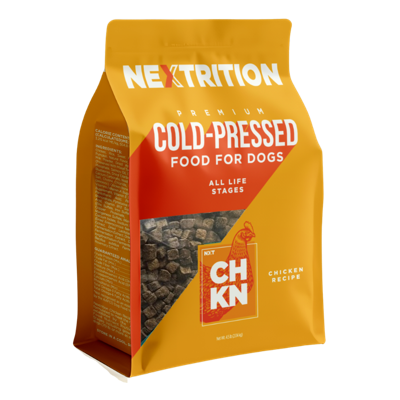
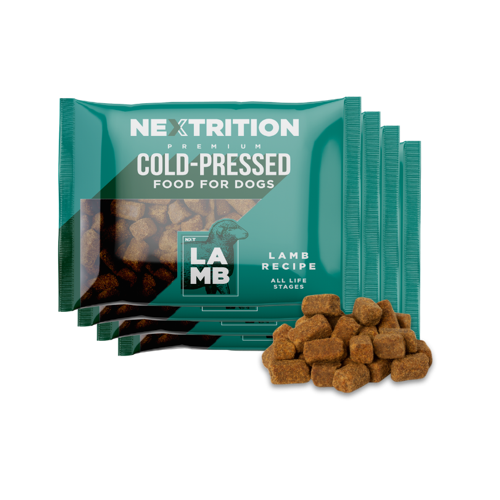
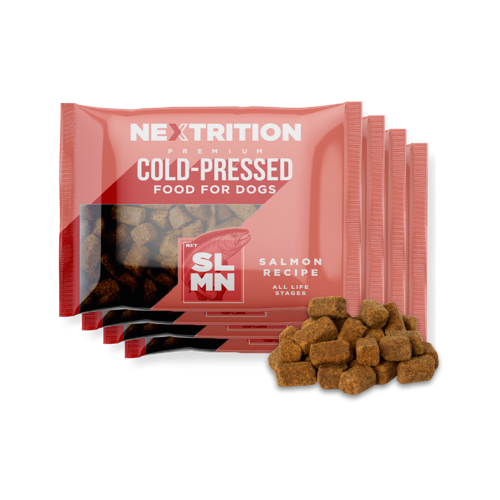
We've always looked at cold pressing as a practical middle ground. You get the convenience of dry feeding, but with less heat than conventional extrusion. Our recipes follow that same logic. We make them at 3x lower temperatures using real meat, fruits, vegetables, natural ingredients, and Rocky Mountain waters because a lot of dog owners want daily digestive comfort without giving up ingredient integrity.

What Wet Dog Food Actually Is
Wet dog food comes in cans, pouches, or trays and carries much higher moisture, usually around 60 to 84%. That's the most obvious difference, and for many dogs it's a meaningful one.
It also goes through real processing. Wet food is cooked and sealed so it stays shelf stable. Because it looks closer to "real food" in the bowl, some owners assume it must be less processed. That's not a safe assumption.
Wet food is popular for good reasons:
- it has strong aroma, which helps picky eaters
- it offers soft texture, which can help dogs with chewing trouble
- it adds fluid through the meal itself
- it often feels more satisfying to serve
Some dogs clearly do better with that setup, especially if hydration is an issue or eating has become a struggle.
Still, not every wet product is meant to be a full everyday diet. Some are complete and balanced. Some are toppers or complementary foods. That distinction gets missed all the time, especially when a product looks premium.
Soft isn't the same as digestive support. We'll come back to that.

Gut Health Is About More Than Texture
When owners focus on gut health, they're usually watching stools. Fair enough. Stool quality is visible. But the gut shows up in more places than that.
A lot of your dog's immune function is connected to the gut. That's why food decisions often echo outward into skin, coat, appetite, energy, and general resilience. You see the surface signals first. Underneath, the body is doing more work than the bowl suggests.
Here are the factors that shape gut response more than texture alone:
- ingredient quality
- nutrient composition
- processing intensity
- moisture level
- fiber profile
- fat level
- how well starches and proteins are digested
- whether the food agrees with your dog consistently
That's the piece many people miss. A food can sound clean on paper and still not settle well in the dog in front of you. Or it can look less impressive and feed beautifully for months.
Gut health is rarely fixed by one feature. It's built by the whole feeding system.
Cold Pressed vs Wet Dog Food at a Glance
A quick comparison helps, as long as you don't stop there.
| Factor | Cold-pressed | Wet food |
|---|---|---|
| Moisture | Around 8 to 12% | Around 60 to 84% |
| Processing | Lower-temperature pressing | Cooked and sealed for preservation |
| Texture | Firm, dense pellets | Soft, aromatic, easy to chew |
| Storage | Easy to portion and store | Refrigerate after opening |
| Calorie density | More concentrated | Less calorie-dense per gram |
| Typical appeal | Lower-heat preparation | Hydration and palatability |
| Common gut-health use case | Dogs doing well on nutrient-dense dry food | Dogs needing moisture or appetite support |
That table is helpful, but the decision usually gets clearer in real life.
If you need something clean to portion, easy to store, and steady from meal to meal, cold-pressed has real advantages. If your dog is under-hydrated, turning away from meals, or struggling with chewing, wet food may solve a problem faster.
Different tools. Different reasons.

Is Cold Pressed Better Than Wet Dog Food for Gut Health?
The honest answer to is cold pressed better than wet dog food is: it depends on what your dog needs most.
Cold-pressed often comes out ahead when:
- you want lower-temperature preparation
- you want a dry format without the usual high-heat kibble profile
- your dog does well on measured, concentrated meals
- you're trying to support digestion through ingredient integrity, not just added moisture
Wet food often comes out ahead when:
- your dog needs more fluid intake
- appetite is unreliable
- chewing is uncomfortable
- you're managing illness, recovery, or age-related softness needs
If we step back and look at everyday feeding for health-conscious owners, cold-pressed is often the stronger long-term choice. Not because wet food is bad, but because many people want better nourishment with less aggressive processing in a format they can feed consistently.
A lot of gut improvement comes from boring consistency. That's not a glamorous answer, but it's usually the right one.
How Processing Changes What Your Dog Actually Gets
Processing deserves more attention than most marketing gives it. The food isn't just ingredients. It's ingredients after heat, pressure, moisture changes, and preservation.
Lower heat may preserve more heat-sensitive nutrients and more native ingredient qualities. That's a real reason some owners prefer cold-pressed food.
At the same time, higher heat can improve starch digestibility and reduce certain anti-nutritional factors. So the usual online argument of "less processed equals automatically better" doesn't hold up cleanly either.
Some vitamins and amino acids can be reduced by stronger heat. Manufacturers often compensate by adding nutrients back later. That's legal, common, and sometimes necessary. But plenty of ingredient-conscious owners still prefer to start with less loss upfront.
Here's the practical lens we use:
Don't ask whether the food sounds natural. Ask what the process likely did to the proteins, fats, vitamins, and the final meal your dog actually eats.
That's where the real difference lives.
What the Research Suggests About Digestibility
This part needs honesty. Research comparing pressed and extruded dry foods has shown mixed results, depending on ingredients and how digestibility was measured.
One line of research found higher apparent protein digestibility in pressed diets under certain starch conditions. Other work found the opposite when different grain forms were used. That's not neat. But it's useful.
It means there isn't a universal rule that one format is always easier to digest.
For owners, the takeaway is pretty simple:
- don't rely on category claims alone
- watch your dog's real outcomes
- give the food enough time to show you something consistent
"Digestible" in a study isn't the same as "best for my dog at home." Stool quality, gas, post-meal comfort, coat, and energy still matter. Sometimes the bowl tells you faster than the label does.
Nutrient Retention vs Added-Back Nutrition
All complete foods are expected to meet nutrient requirements in the final product. On paper, wet food, cold-pressed food, and conventional kibble can all be nutritionally adequate.
But adequacy isn't the only question thoughtful owners ask.
Some nutrients survive processing from the original ingredients. Others are restored or supplemented later. Both count toward the final nutritional profile. Still, many owners care about how much nourishment remains intact from real ingredients before the fixing starts.
That's a values-based distinction, but it's also practical. If you want real meat, fruits, vegetables, and natural ingredients doing more of the work, lower-temperature preparation makes more sense.
Minimums keep a food compliant. They don't tell you how the food got there.
Hydration Matters, but It Is Not the Whole Story
Wet food has the clearest advantage in one area: moisture. That matters for dogs who don't drink well, need extra hydration support, or simply eat better when meals are soft.
Hydration can improve feeding comfort. It can help some dogs feel better quickly. But moisture alone doesn't guarantee better digestion, better stools, or better ingredient quality.
This is where owners get tripped up. They see improvement from higher moisture and assume the format itself is superior for gut health. Sometimes the dog just needed more fluid and a more appealing meal. Those aren't small things, but they aren't the whole nutrition picture either.
A balanced way to look at it:
- wet food may help because of moisture and palatability
- cold-pressed may help because of formulation, ingredient quality, and lower-temperature preparation
Separate hydration from nourishment quality. They overlap sometimes, not always.
The Real Tradeoffs for Stool Quality, Appetite, Skin, and Energy
This is where the decision stops being theoretical.
Stool quality
Stool consistency is often the first sign that a food agrees with your dog. You're looking for stools that are easy to pass, consistent, and not overly soft, bulky, or erratic from one day to the next. By the second or third day of a poor fit, you usually know something is off.
Appetite and meal enthusiasm
Wet food often wins on smell alone. That's real. But good ingredient quality in cold-pressed food can still drive strong meal interest, especially once a dog settles into the routine.
Skin and coat
Skin and coat are slower signals. They reflect whether the dog is receiving and handling nourishment well over time, not just whether they liked breakfast.
Energy and post-meal comfort
Watch how your dog feels after eating. Not just whether the bowl is empty. A dog with steady energy and calm post-meal behavior is telling you more than a marketing claim ever will.
The best food is the one that creates visible stability.
When Cold-Pressed Is the Better Fit
Cold-pressed makes the most sense for a specific kind of owner and a specific kind of dog. Usually the owner wants more control and less guesswork.
It tends to fit well when:
- you care about lower-temperature processing
- your dog does fine on dry food but seems underwhelming on heavily processed options
- you want easier storage and cleaner feeding
- repeatable portions matter to your routine
- you want to stop making food choices based on guilt or soft-texture assumptions
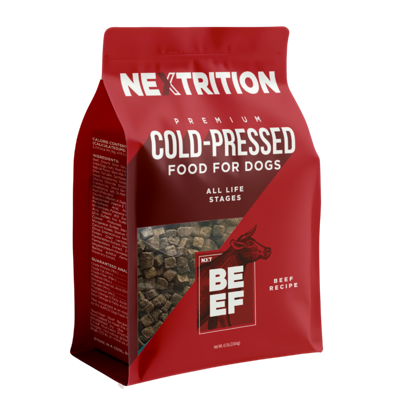
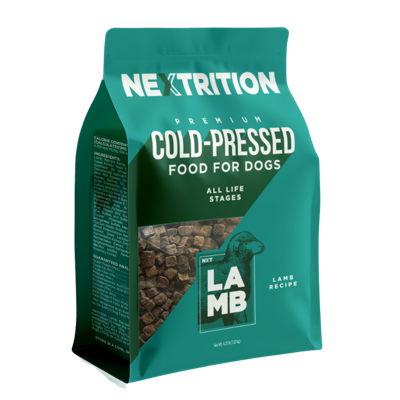
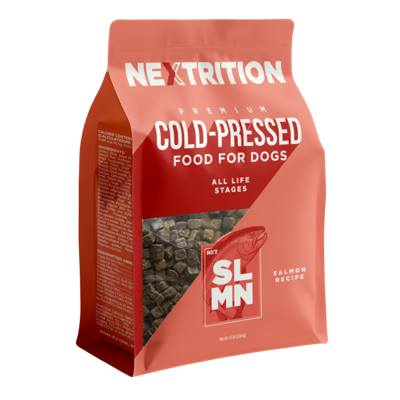
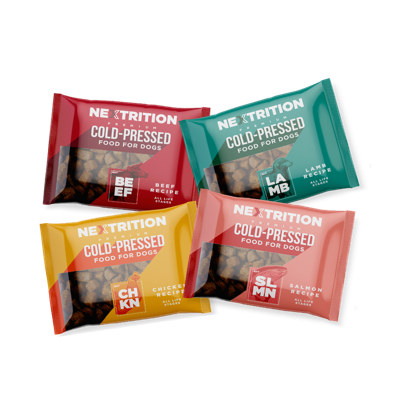
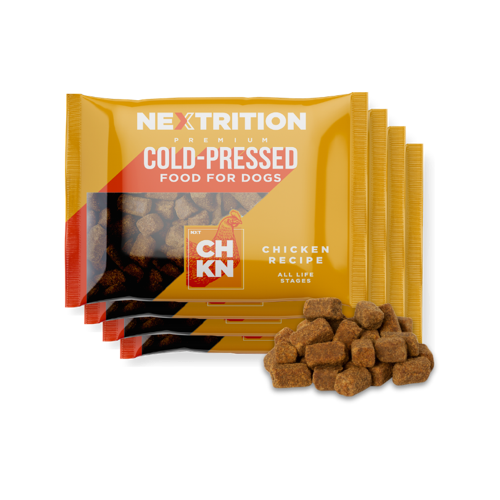
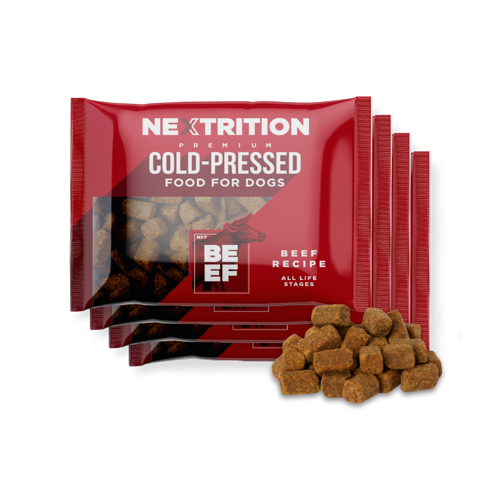
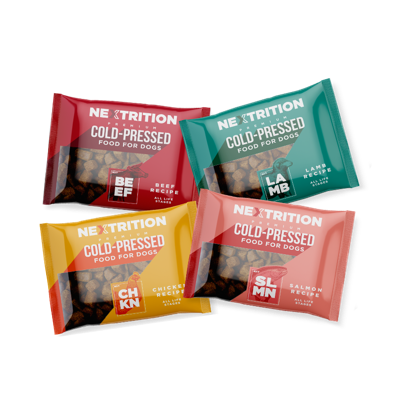
This is also why our format works for a lot of health-conscious households. We offer four real-meat recipes, lamb, chicken, salmon, and beef, so you can match the dog rather than forcing the dog into one formula. And a personalized meal plan helps narrow that down without turning feeding into a full-time project.
When Wet Food Makes More Sense
Wet food deserves a fair read because in the right situation, it's exactly the right tool.
It makes more sense for:
- dogs that need more moisture in the diet
- picky eaters who rely on aroma and softness
- senior dogs or dogs with dental discomfort
- short-term recovery periods or appetite dips
- owners who don't mind refrigeration and higher feeding volume
Choosing wet food for one of those reasons is sensible. Choosing it because soft must equal better digestion is where people drift off course.
Sometimes wet food is the better answer. Just be clear about the problem you're solving.
How to Choose Between Cold Pressed and Wet Dog Food for Your Dog
Start with your dog, not the format. That's the cleanest way through the noise.
Look at:
- hydration habits
- stool consistency
- appetite
- chewing comfort
- skin and coat
- activity level
- known sensitivities
Then check whether the food is complete and balanced for your dog's life stage. After that, read the ingredient list and the processing story together. They belong together.
A simple trial works better than endless comparison:
- choose one food that fits your priorities
- transition properly
- feed it consistently for 10 to 14 days unless your vet says otherwise
- track stools, gas, appetite, comfort after meals, and coat changes
Make the call from outcomes, not online noise. That's how experienced owners get clearer, faster.

Mistakes Dog Owners Make When Comparing These Formats
Most bad feeding decisions aren't reckless. They're just slightly off in the same predictable ways.
Common mistakes include:
- assuming soft food is automatically gentler
- comparing wet and dry labels without accounting for moisture differences
- treating all dry food as the same, when cold-pressed and extruded foods differ meaningfully
- believing the word "natural" explains digestibility
- switching too fast and blaming the format
- forgetting to check whether the product is complete or only complementary
- chasing single claims like grain-free or high-protein without watching the dog's response
The pattern is familiar. Owners chase the loudest feature and miss the daily result.
A Smarter Everyday Feeding Routine for Gut Health
Gut health usually improves through steadiness, not constant food-hopping. That's less exciting than a dramatic switch, but it works better.
Pick a format you can feed reliably. Portion it well. Observe honestly. Give it enough time.
If you choose cold-pressed, keep it simple. Use a personalized meal plan to match the formula to your dog's needs, then stay consistent. One-time orders work fine. Subscriptions help some households avoid the last-minute scramble that turns feeding into improvisation.
If you choose wet food, handle storage carefully and watch total calories. High moisture changes how much food is needed, and the bowl can look generous while the nutrition lands differently than you think.
Routine is underrated. In gut health, routine is often the intervention.
Conclusion
The real decision in cold pressed vs wet dog food isn't dry versus soft. It's hydration, processing method, ingredient integrity, and how well the food supports your dog's digestion, stools, appetite, skin, and daily resilience.
So, is cold pressed better than wet dog food? Often yes for owners who prioritize lower-temperature preparation and want more of the original nourishment preserved in a convenient everyday format. But not always. If hydration, softness, or appetite support is the more urgent need, wet food may be the better fit.
Choose the format that matches your dog's actual symptoms and your real routine. Then feed it consistently enough to judge results with confidence. That's when the guesswork starts to drop away.


