




Dog bad breath and gut health can be connected, but most owners miss the obvious: a stinky mouth may be plaque, a stressed gut, or both. Breath mints for dogs don’t solve what’s brewing after dinner.
Look past the smell. Check the gums, then watch the poop, gas, burping, and appetite for a few days—those small details matter.
Start by noticing:
- Yellow tartar or red, tender gums
- Breath that worsens with loose stools or gas
- Treats and food changes that keep digestion unsettled
Is Dog Bad Breath Related to Gut Health?
Yes, sometimes. But if we're being honest, gut health is not the first thing we'd blame.
Most bad breath in dogs starts in the mouth. Plaque, tartar, irritated gums, trapped debris, and periodontal disease are still the usual suspects. If your dog’s breath has gone from normal dog breath to something that clears the room, dental issues deserve serious attention before you assume it's a stomach problem.
Still, the dog bad breath gut health connection is real. We see it more often when bad breath shows up next to digestive changes like gas, loose stool, burping, reflux-like lip licking, or a sudden shift in appetite. That's when breath stops looking like a simple hygiene issue and starts looking like a body-wide clue.
A few ground rules help here:
- Breath odor is a clue, not a diagnosis
- Mouth problems are more common than gut causes
- Some dogs have both at the same time
- The pattern matters more than the smell alone
That last point is easy to miss. A lot of owners fixate on the odor itself, trying to label it as sour, fishy, or rotten. We wouldn't overread that. Smell is messy. Context is better.
If you take one thing from this article, let it be this:
Bad breath isn't always just about the teeth, but it almost never makes sense to look at breath in isolation.
Once you start looking at the whole pattern, oral microbiome balance, digestion, diet quality, and even immune resilience all come into view.
What UK Primary-Care Data Says About the Dental Starting Point
The dental-first approach is not just a rule of thumb. In a random 2016 sample of 22,333 UK dogs receiving primary veterinary care, 12.52% were diagnosed with periodontal disease during the year (95% confidence interval: 12.09% to 12.97%). That does not tell us how many dogs had bad breath specifically, but it does show why a mouth check belongs at the start of the process.
Risk was not evenly distributed. In the same study, several breeds had higher odds of a periodontal-disease diagnosis than crossbred dogs, including the four breeds shown here. Read the study.
| Breed | Odds ratio | 95% CI lower | 95% CI upper |
|---|---|---|---|
| Toy Poodle | 3.97 | 2.21 | 7.13 |
| King Charles Spaniel | 2.63 | 1.50 | 4.61 |
| Greyhound | 2.58 | 1.75 | 3.80 |
| Cavalier King Charles Spaniel | 2.39 | 1.85 | 3.09 |
These are associations, not a way to diagnose your dog from breed alone. The figures compare diagnosed periodontal disease with crossbred dogs in UK primary-care records, and they do not establish whether a given dog's breath odor is dental, digestive, or both. But they strengthen the practical order of operations: inspect the mouth and involve a vet when dental signs are present, even if gas or stool changes are also part of the picture.
Why the Mouth and Gut Are Connected
The mouth and digestive tract are one continuous system. That sounds obvious, but people often treat them like separate departments. They aren't.
Microbes live in both places. When the balance shifts, odor often follows. In the mouth, certain microbes break down proteins and leftover debris and release volatile sulfur compounds. Those compounds are a big driver of classic bad breath. When sulfur compounds rise, breath tends to smell worse. In canine research, measured sulfur levels tracked closely with how bad the breath smelled to people. That lines up with what we'd expect in real life.
The gut can feed into this indirectly too. If food isn't being broken down well, more material is left behind for fermentation. If a dog is burping more, refluxing, or dealing with digestive slowdown, odor can travel back up. It's not always dramatic. Sometimes it's just that breath gets noticeably worse after meals and stool quality starts getting weird around the same time.
Health-conscious owners usually care about gut health for digestion first. Fair enough. But it goes further than that. Around 70 percent of immune activity is centered in the gut, so when the digestive system is irritated or off balance, the effects rarely stay neatly contained.
A dog's body doesn't separate "breath problems" from "gut problems" the way a shopping aisle does. The bowl, the microbiome, the stool, the mouth, the immune system, they're all in the same conversation.

What Bad Breath Usually Means and When It May Point Beyond the Mouth
Let's keep this medically honest. Most of the time, bad breath is still a mouth issue.
A dental source is more likely when you notice signs like these:
- Yellow or brown buildup on the teeth
- Red, swollen, or bleeding gums
- Chewing on one side
- Pawing at the mouth
- Extra drooling
- Pain when eating harder food
That list matters because dogs are good at hiding discomfort. A dog can keep eating and still have a very sore mouth. Owners often assume "he's still eating, so it can't be dental." We wouldn't make that assumption.
Now for the other side. A digestive component moves higher on the list when bad breath comes with:
- Gas or bloating
- Breath that gets worse after meals
- Frequent burping or lip licking
- Soft stools or inconsistent stools
- Stool odor changes
- Vomiting, regurgitation, or a sensitive-stomach pattern
The tricky part is that smell alone won't reliably tell you which system is driving it. Rotten breath can come from periodontal disease. Sour breath can show up with reflux. And some dogs have both problems at once, especially when diet quality is poor or the gut has been under chronic stress for a while.
That overlap is where owners get stuck. They brush the teeth, the breath improves a little, but the gas and loose stool stay. Or they switch food and stool gets better, but tartar is still sitting there. Both can be true.
Digestive Patterns That Commonly Show Up Alongside Breath Changes
When digestion is inefficient, more food escapes full breakdown. That leftover material becomes fuel for fermentation and odor. You won't see the fermentation, but you'll usually see the consequences somewhere else.
Common patterns that tend to travel with gut-related breath issues include:
- Loose or soft stools
- More flatulence than usual
- Stomach gurgling
- On-and-off appetite
- Clear food sensitivity patterns
- Intermittent vomiting or regurgitation
Here's the non-obvious part. Owners often notice stool changes before they make the breath connection. They'll say the dog has had softer stools for a few weeks, a little more gas at night, and only later realize the breath has shifted too. That's not rare.
Food choices can stir this up fast. Abrupt diet changes, rich table scraps, heavily processed treats, and lower-quality foods with harder-to-digest ingredients can all disrupt digestive balance. Sometimes the main food gets blamed when the real problem is everything orbiting around it. The random chews. The weekend leftovers. The "just one" new topper that turns into five.
We'd look at the full intake, not just the bag of food.
Some dogs are also more sensitive to specific proteins or ingredients. In those dogs, breath changes can be part of a larger sensitive-stomach pattern rather than an isolated issue. If a dog gets bad breath, softer stool, and more burping every time a certain food rotates in, that's useful information. Not proof, but useful.
What the Research Suggests About Odor, the Microbiome, and Biotics
The research is moving in a direction that makes sense: when microbial balance improves, odor often improves too.
On the oral side, a randomized double-blind canine trial looked at a postbiotic oral health ingredient and found that the sulfur compounds tied to bad breath dropped within 7 days. By day 14, those odor-related compounds were 27 percent lower than placebo. Just as interesting, the measured sulfur levels tracked strongly with how bad the breath smelled to people. That matters because it connects the lab measurement to what owners actually notice across the room.
On the digestive side, a prebiotic and postbiotic supplement study in dogs found digestive signs improved within 7 days. Stool odor improved in the first week, and flatulence in dogs was reduced by 45 percent by day 28. That's not subtle.
Other canine nutrition work has also shown that targeted prebiotic and postbiotic approaches can lower markers associated with gut barrier stress, inflammation, and fecal odor compounds like indole and phenol. Separate diet research using fiber-rich, polyphenol-supporting formulas has shown shifts away from more putrefactive metabolism and toward a healthier fermentative pattern.
In plain English:
- Better microbial balance can reduce odor
- Gut support can change stool and gas pretty quickly in some dogs
- Biotics look promising, but they aren't a magic eraser
That's the key restraint. If you're asking "is dog bad breath related to gut health," the science says it can be. It does not say every case of bad breath can be fixed with one chew, one powder, or one trendy ingredient. We wouldn't trust any plan that pretends otherwise.
| Evidence lane | Approach | Main finding | Why it matters |
|---|---|---|---|
| Oral malodor trial | Randomized double-blind canine trial of a postbiotic oral health ingredient | Volatile sulfur compounds dropped within 7 days and were 27 percent lower than placebo by day 14; sulfur levels correlated with perceived malodor | It links a lab marker of bad breath to what people actually smell |
| Digestive supplement study | Prebiotic and postbiotic supplement in dogs with mild digestive imbalances | Digestive signs improved by day 7, stool odor improved in the first week, and flatulence was reduced 45 percent by day 28 | It shows gut-focused support can change odor-related signs on a short timeline in some dogs |
| Gut barrier and fecal odor markers | Targeted prebiotic and postbiotic supplementation | Lowered markers associated with gut barrier stress, inflammation, and fecal odor compounds such as indole and phenol | It suggests odor-related gut metabolites can shift alongside broader gut health markers |
| Fiber-rich diet study | Fiber-rich, polyphenol-supporting formula with a prebiotic fiber bundle | Shifted fecal metabolism away from more putrefactive patterns and toward a healthier fermentative pattern | It supports the idea that diet can change the metabolic environment that drives odor byproducts |
How Diet Can Help if the Breath Problem Starts in the Gut
If the gut is part of the problem, diet usually has more leverage than breath sprays ever will.
The logic is simple. When food is easier to digest and does a better job supporting microbial balance, there's often less gas, less fermentation, and fewer odor-producing byproducts hanging around. You may also get firmer stools and a calmer stomach, which tends to tell you you're heading in the right direction.
When we're evaluating a gut-supportive food, we want to see:
- Real meat as the core protein source
- Recognizable ingredients
- Fruits and vegetables that bring useful fiber and nutrients
- Functional fiber
- A format built around digestibility, not just shelf life
Processing matters more than most labels admit. Conventional kibble is made with high heat. We take a different view. Our cold-pressed food is made at 3x lower temperatures, which is meant to preserve more nutrients than standard high-heat kibble. For dogs with digestive friction, gentler processing can matter. Better nutrient retention and easier digestion aren't marketing details when you're the one picking up loose stool at 6 a.m.
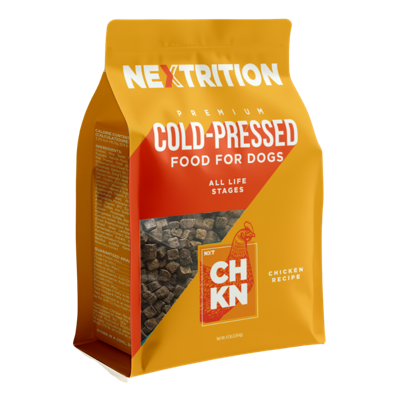
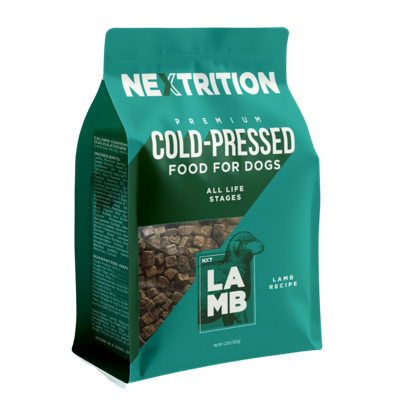
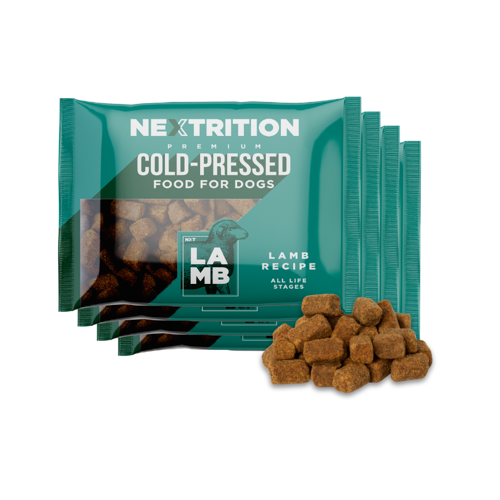
For owners who want a dry food that supports digestion without defaulting to standard kibble, our Dog Food for Gut Health collection is the cleanest place to start. If your dog has a more obvious sensitive-stomach pattern, our All-Natural Lamb Recipe is a practical example. It's a lamb-based cold-pressed option positioned for easier digestion, and that's often a useful lane for cautious switchers.
One caution here. Don't change the main food while also rotating treats, scraps, chews, and toppers every other day. That makes the gut harder to read. Consistency is boring, but boring is how you learn what's actually helping.
A Simple At-Home Plan Before You Reach for a Breath Masker
Before you buy anything meant to cover odor, do a quick check that gives you real information.
Start with the mouth. Look for:
- Tartar buildup
- Red or inflamed gums
- Broken teeth
- Debris stuck between teeth
- Signs of obvious pain
Then track the broader pattern for several days. Not mentally. Write it down. A simple note on your phone works fine. Watch:
- Breath intensity
- Stool quality
- Gas
- Burping or lip licking
- Vomiting or regurgitation
- Appetite and energy
After that, review everything going into the bowl and around it. Main food is only part of the story. Check treats, chew products, table scraps, supplements, and any recent protein changes. We've seen plenty of cases where the "mystery" turned out to be daily extras, not the core diet.
If you do change food, give the gut some runway. Use a gradual 5 to 7 day transition. Fast switches create noise. Then people blame the new food for transition stress they created themselves.
And we'd skip quick-fix breath products as the first move. If they only cover odor, you've learned nothing and solved very little.
Fresh-smelling breath is not the goal. A steadier dog is.
Keep water intake and feeding times consistent too. Inconsistency muddies the read on both digestion and breath.
When to See Your Vet Rather Than Wait It Out
Some cases need a vet conversation early, not after three weeks of guessing.
Persistent or severe bad breath deserves attention, especially if it's new, intense, or clearly getting worse. The same goes for any bad breath paired with bigger systemic changes.
Get your vet involved sooner if you notice:
- Refusal to eat
- Repeated vomiting
- Diarrhea that isn't improving
- Weight loss
- Lethargy
- Obvious mouth pain
- Bleeding gums
- Excessive drooling
Very unusual breath odors can also point to broader health issues. That's not something to self-diagnose from a search result or a social post.
You'll get more out of the appointment if you bring useful observations:
- How long the odor has been present
- Whether it changes after meals
- Recent food changes
- Stool and gas patterns
- Photos of the gums or teeth if your dog allows it
We'd frame vet care as part of a smart plan, not proof you missed something. Good owners don't catch everything alone. They notice patterns and act on them.
How to Choose a Better Food if Gut Health Seems to Be Part of the Problem
If the pattern points toward digestion, choose food the same way you'd troubleshoot any recurring issue: strip out noise and look for the setup that gives you cleaner feedback.
A simple checklist helps:
- Does the food use real meat as the lead ingredient?
- Is the ingredient list recognizable and fairly simple?
- Is it built for digestibility rather than flashy shelf appeal?
- Does it support stool quality and digestive comfort?
- Can you feed it consistently without making your life harder?
This is why health-conscious owners often move toward minimally processed food with whole-food ingredients instead of generic filler-heavy options. It's not about being trendy. It's about reducing friction in the gut and making the dog's response easier to read.
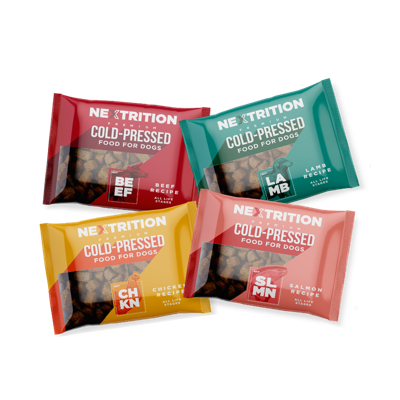
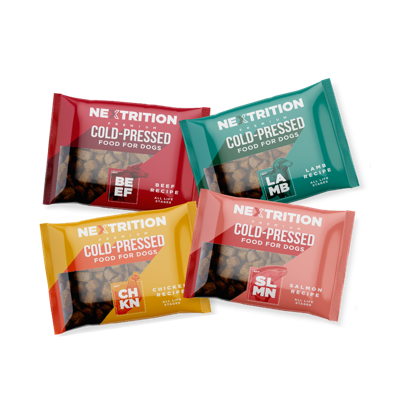
If you're cautious about switching, that's reasonable. Our Trial Variety Pack gives you a low-risk way to compare proteins and watch tolerance before committing to a full-size bag. That can be especially useful when you're trying to sort out whether one protein lands better than another.
Consistency matters just as much as formula. We offer a personalized meal plan, plus the option to buy once or set up subscription delivery, because regular feeding makes it easier to judge whether a change is actually working. Random gaps, last-minute substitutions, and panic-buys from the pet store don't help the gut settle.
The real goal isn't just fresher breath. It's a calmer digestive baseline, better stool quality, and fewer low-grade issues piling up in the background.
Conclusion
Bad breath is often a mouth problem first. That's still the right starting assumption. But when bad breath shows up with gas, loose stools, burping, regurgitation, or a wider sensitive-stomach pattern, gut health may be part of the picture too.
That's the better frame for dog bad breath gut health. Not every smelly breath case is digestive. Not every digestive issue shows up in the breath. But the mouth, microbiome, digestion, and immune system don't operate alone, and your dog usually gives you more than one clue if you slow down enough to see the pattern.
Start simple:
- Check the mouth
- Track digestive signs
- Bring in your vet when needed
- Look hard at whether the daily diet is helping or quietly making things harder
Better breath usually comes from better balance, not a stronger cover-up. And in our experience, that's the version that actually lasts.
Article Record
ReferencesPrimary sources used for this article
- Epidemiology of periodontal disease in dogs in the UK primary‐care veterinary setting
- Frontiers | Adding a polyphenol-rich fiber bundle to food impacts the gastrointestinal microbiome and metabolome in dogs
- Frontiers | Beneficial effects of a prebiotic-postbiotic supplement on digestive health and fecal microbiota in dogs and cats
- Revisiting Periodontal Disease in Dogs: How to Manage This New Old Problem?
- Influence of dietary protein and fructooligosaccharides on fecal fermentative end-products, fecal bacterial populations and apparent total tract digestibility in dogs
- Ecological network collapse and functional potential shifts in the canine oral microbiota associated with periodontal disease: a pilot study


