




Dog food for skin allergies gets messy fast. Too many bags promise "skin and coat" help, and a lot of them are just regular kibble with nicer wording. If your dog is dealing with itching, hot spots, or a rough coat, that matters.
The good options are usually pretty clear once you stop falling for label fluff. Better protein, fewer problem ingredients, and formulas that actually make sense for repeat flare-ups. That's it.
We cut this down to 8 picks after leaving a lot out. These are the ones worth your attention.

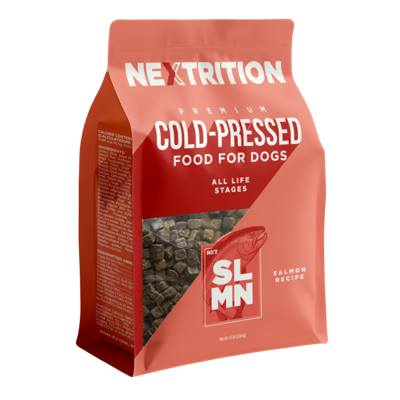
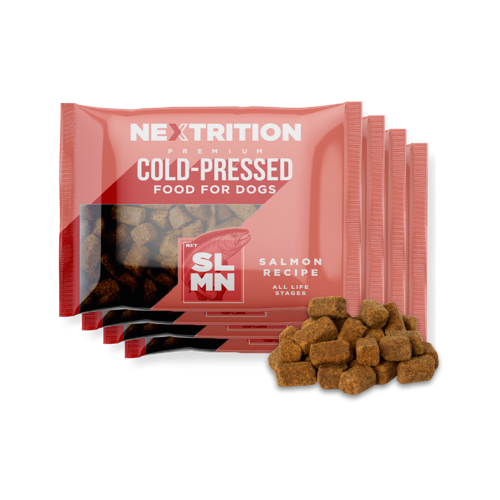
1. All-Natural Salmon Recipe

Pros
- Real salmon as primary protein
- Cold-pressed for dense nutrition
- Supports digestion and skin together
- Good chicken-free everyday option
- Whole-food fruits and veggies included
Cons
- Not a veterinary therapeutic diet
- Unsuitable for strict elimination trials
- May not fit severe flare-ups
When you want a straightforward, nutritionally dense option built around a single, skin-friendly protein, All-Natural Salmon Recipe is a strong first stop. This formula centers on real salmon and pairs it with gut-healthy nutrients from premium grains, fruits, and vegetables—an approach aimed at improving both skin and coat by supporting digestion and overall nutrient absorption.
Key points that set it apart:
- Real salmon is the primary protein, so it’s a sensible choice for dogs sensitive to common proteins like chicken or beef.
- The recipe emphasizes digestibility: more nutrient-dense than typical kibble thanks to a cold-pressed process that concentrates the equivalent of over 12 lbs. of whole fresh ingredients into a 4.5 lb bag.
- Added fibers and whole-food fruits/veggies support the gut-skin axis, which can reduce flare-ups driven by poor digestion or nutrient gaps.
- Suitable as an over-the-counter, everyday management option for dogs with mild-to-moderate skin allergies or as a starting point before pursuing veterinary prescriptions.
This isn’t a veterinary therapeutic diet, so it’s not the right first choice for severe, uncontrollable flare-ups or cases requiring hydrolyzed proteins. But for many dogs with recurring itch linked to diet or digestion, it’s a direct, well-formulated option to try before moving to prescription interventions.
2. Hill's Prescription Diet Derm Complete
Pros
- Targets food and environmental sensitivities
- Strong fit for chronic itching
- More therapeutic than OTC formulas
- Useful for stubborn recurring flare-ups
- Supports a structured vet-guided plan
Cons
- Requires veterinary authorization
- Less targeted for elimination trials
- Overkill for mild sensitivities
If your dog has been scratching for months and every “sensitive skin” bag has done basically nothing, this is the point where guessing usually stops being useful. Hill's Prescription Diet Derm Complete sits in the veterinary therapeutic lane, and that matters.
This isn't just positioned as dog food for itchy skin in the casual sense. It's built for dogs where both environmental triggers and food sensitivities may be in play, which is a very different problem from simple dryness or a dull coat.
A few things separate it from the rest of the field:
- It's explicitly skin-focused, not just a general wellness formula with a skin claim on the label.
- It's meant to help manage both environmental and food sensitivities.
- It makes more sense when flare-ups are recurring, stubborn, or hard to pin to one cause.
We've seen owners lose months rotating proteins when the real issue was broader than that. At some point, a more structured, vet-guided approach is the faster path.
Compared with the hydrolyzed prescription foods below, Derm Complete is broader in its therapeutic framing. Compared with over-the-counter salmon or limited-ingredient foods, it's more clinical and more appropriate when hot spots, redness, and constant scratching have moved beyond “let's try a gentler kibble.”
When symptoms are persistent, convenience stops being the main decision maker.
3. Purina Pro Plan Veterinary Diets HA Hydrolyzed
Pros
- Useful for elimination trial planning
- Hydrolyzed protein reduces trigger exposure
- Targeted for food-linked skin flare-ups
- More methodical than food rotation
- Prescription formula with clinical focus
Cons
- Requires veterinary prescription and oversight
- Less useful for environmental triggers
- Dogs may tolerate similar formulas differently
This one is less about general support and more about controlled testing. If you suspect the protein itself is part of the problem, Purina Pro Plan Veterinary Diets HA Hydrolyzed is one of the cleaner routes for an elimination trial.
That hydrolyzed-protein approach is the whole point. You're not buying a shinier coat or a softer marketing story. You're reducing the chance that intact proteins are driving the reaction and using food as a diagnostic tool as much as a daily meal.
Here's where it fits best:
- Your dog has skin flare-ups that seem food-linked.
- You've already bounced between standard sensitive skin dog food options.
- You want a methodical process instead of rotating random bags and hoping one sticks.
Compared with Hill's Derm Complete, this is narrower and more food-reaction specific. Compared with Royal Canin's hydrolyzed option, it's in almost the same category, so the real-world difference often comes down to your vet's recommendation and how your dog tolerates the formula over time.
That last part gets ignored. Two foods can look similar on paper and still land differently in the bowl and in the stool.
4. Royal Canin Veterinary Diet Adult Hydrolyzed Protein
Pros
- Targeted for food-reaction skin issues
- Hydrolyzed protein reduces trigger uncertainty
- Useful for elimination-trial feeding plans
- More controlled than OTC formulas
Cons
- Prescription-only and vet-guided
- Less useful for environmental triggers
- Not ideal for mild sensitivity
Royal Canin Veterinary Diet Adult Hydrolyzed Protein belongs in the same conversation as Purina HA because it's solving the same core problem: adverse food reactions showing up through the skin. If your dog needs a controlled formula, not a broad “skin and coat” promise, this is the type of food you evaluate.
For dogs with repeatable flare-ups tied to eating, hydrolyzed prescription diets earn their place. They reduce ingredient uncertainty more aggressively than standard non-prescription options, and that's often exactly what you need when the reaction pattern is serious enough to be obvious.
A practical way to think about it:
- Choose this category when you're dealing with suspected food reactions, not vague sensitivity.
- Choose it when your veterinarian wants a more controlled feeding setup.
- Choose it when milder dog food for skin allergies has already failed.
Relative to Hill's Derm Complete, Royal Canin is more directly centered on food reactions rather than combined environmental-plus-food management. Relative to salmon-based dry foods, it's much less about nourishment in the broad sense and much more about control.
That's the tradeoff. Less romance. More precision.
5. Purina Pro Plan Sensitive Skin & Stomach Salmon & Rice Formula

Pros
- Supports skin and stomach together
- Salmon-based everyday formula
- Widely available without prescription
- Good for mild sensitivities
- Easier to feed consistently
Cons
- Not for true elimination trials
- Less controlled than limited-ingredient diets
- May be too mild for severe cases
Not every itchy dog needs a prescription bag. Purina Pro Plan Sensitive Skin & Stomach Salmon & Rice Formula is a practical middle-ground option for dogs with mild to moderate skin sensitivity, especially when the stomach is part of the story too.
That skin-and-stomach pairing is why it stays relevant. A lot of owners focus on scratching and miss the loose stool, inconsistent stool, or post-meal digestive noise that shows up alongside it. Those things are often connected.
It works well for dogs who need:
- a non-prescription dog food for itchy skin
- digestive support without jumping straight to hydrolyzed food
- an easier formula to find and stick with consistently
Compared with Natural Balance L.I.D., this is less restrictive in ingredient philosophy. Compared with Blue Buffalo True Solutions Skin & Coat Care, it puts more weight on the gut-skin relationship. For some dogs, that's the smarter bet.
We've learned not to separate skin and digestion too quickly. If both are off, a formula built around both problems often beats a food that only talks about coat support.
6. Natural Balance L.I.D. Limited Ingredient Diets Salmon & Brown Rice Formula

Pros
- Simpler ingredient list reduces variables
- Salmon recipe suits some sensitivities
- Good middle ground before prescription
- Controlled routine is easier to maintain
Cons
- Not as controlled as hydrolyzed diets
- May be too broad for severe allergies
- Brown rice may not suit all dogs
Natural Balance L.I.D. is for owners who want to quiet the diet down. Fewer moving parts. Less ingredient noise. That alone can be useful when flare-ups seem to show up after food switches or long ingredient panels.
It's not a hydrolyzed prescription diet, so it doesn't offer the same level of clinical control. But as a limited-ingredient salmon and brown rice formula, it gives you a simpler starting point without immediately going into prescription territory.
This is often where it makes sense:
- You suspect ingredient-related flare-ups.
- Your dog may benefit from food for dogs with hot spots that doesn't pile on complexity.
- You want a more controlled routine you can actually maintain.
Compared with Purina Pro Plan Sensitive Skin & Stomach, this is a more deliberate ingredient strategy. Compared with Blue Buffalo True Solutions, it's less about broad skin marketing and more about simplification.
That distinction matters. Some dogs don't need a medical food. They need fewer variables.
7. Blue Buffalo True Solutions Skin & Coat Care
Pros
- Supports skin and coat health
- Salmon-based everyday formula
- Good for mild dryness
- Accessible non-prescription option
Cons
- Not for serious allergy workups
- Less useful for trigger isolation
- Dry-food format won't suit all
Blue Buffalo True Solutions Skin & Coat Care fits a milder use case. Think coat quality, low-level irritation, skin comfort, and daily maintenance rather than a serious food-allergy workup.
If you're searching for dog food for shiny coat and some added skin support, this is more aligned with that goal than the prescription foods or stricter limited-ingredient routes. Salmon as a key protein source keeps it in the skin-support conversation, but the overall posture is still non-prescription and relatively accessible.
It tends to make the most sense when:
- your dog's coat looks dull or dry
- skin comfort needs a boost, but symptoms aren't severe
- you want support before escalating into a more medicalized plan
Against Purina Pro Plan Sensitive Skin & Stomach, this feels more skin-and-coat centered and less digestion driven. Against Natural Balance L.I.D., it's not really a trigger-isolation food. Against JustFoodForDogs, it's still in the traditional dry-food lane.
That's not a criticism. It's just the right category call for the right dog.
8. Hill's Science Diet Sensitive Stomach & Skin
Pros
- Supports stomach and skin together
- Good fit for mild sensitivities
- Accessible non-prescription starting point
- Helpful for gut-skin overlap
- Recognizable everyday formula
Cons
- Not targeted for serious allergies
- Less useful for elimination trials
- Formula differences can feel modest
Hill's Science Diet Sensitive Stomach & Skin sits in the same everyday category as Purina Pro Plan Sensitive Skin & Stomach, and most owners choosing between them are trying to solve a similar problem: mild sensitivity without going full prescription.
This is a non-prescription option commonly considered for stomach and skin support together. For dogs whose symptoms are present but not severe, that pairing can be enough. Not dramatic. Just steadier.
One reason this category works is that some dogs aren't showing a clean food allergy pattern. They simply do better on food designed for sensitive systems.
A few decision notes help here:
- If the main issue is mild sensitivity with digestive overlap, this is a reasonable place to start.
- If flare-ups are serious, recurrent, or clearly food-linked, this is probably not targeted enough.
- If you're choosing between this and Purina Pro Plan, you're often deciding between brand preference and formula fit more than category differences.
Compared with Hill's Prescription Diet Derm Complete, this is the lighter-touch path. Compared with Blue Buffalo True Solutions Skin & Coat Care, it leans more into the gut-skin connection than coat support alone.
9. JustFoodForDogs Skin & Allergy Care

Pros
- Fresh-food alternative to kibble
- Targeted for skin support
- Premium, intentional feeding experience
- Appeals to ingredient-conscious owners
Cons
- Not ideal for elimination trials
- Less clinically targeted than prescriptions
- Fresh format may be less convenient
Format changes the experience more than people admit. JustFoodForDogs Skin & Allergy Care matters because it's one of the clearest alternatives to standard dry food in this roundup, and some owners care as much about that as they do the claim on the front of the package.
This is a fresh dog food recipe specifically marketed for skin and allergy concerns. So if you're dissatisfied with conventional kibble and want dog food for skin allergies in a fresher, more premium-feeling format, this is the lane.
It's not the same tool as a hydrolyzed prescription diet. It doesn't replace a formal elimination approach when food reactions need tighter control. But it does appeal to owners who want a more intentional feeding strategy and place real weight on ingredient quality and processing style.
That part is worth saying plainly. Many health-conscious owners don't leave standard kibble because they're chasing trends. They leave because chronic issues push them to look harder at what daily food is actually doing.
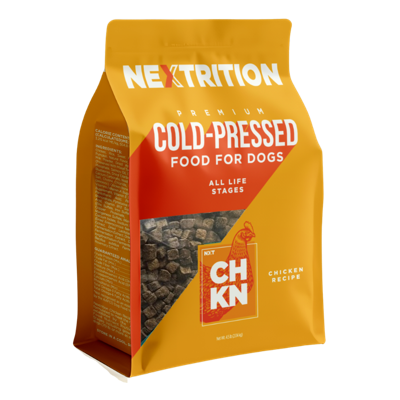
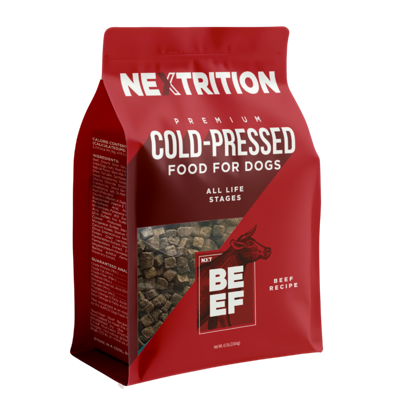
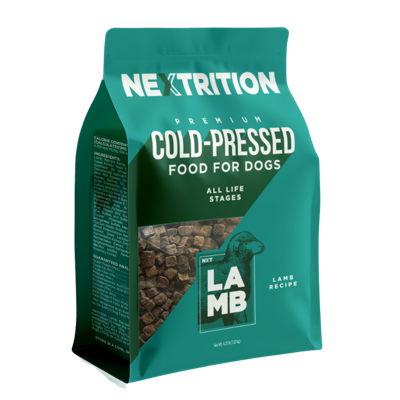
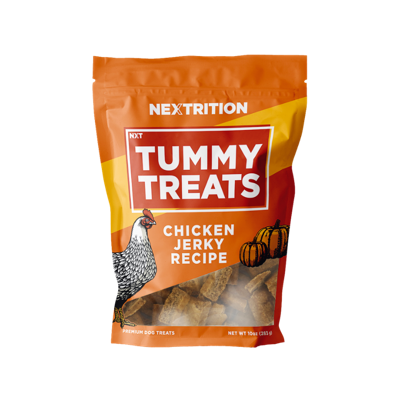
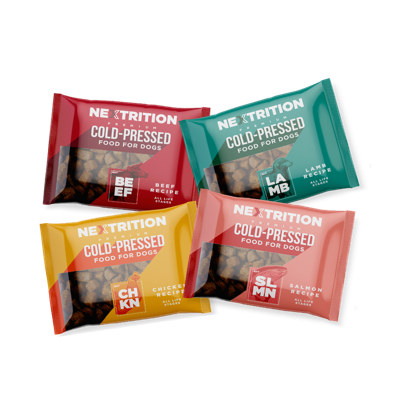
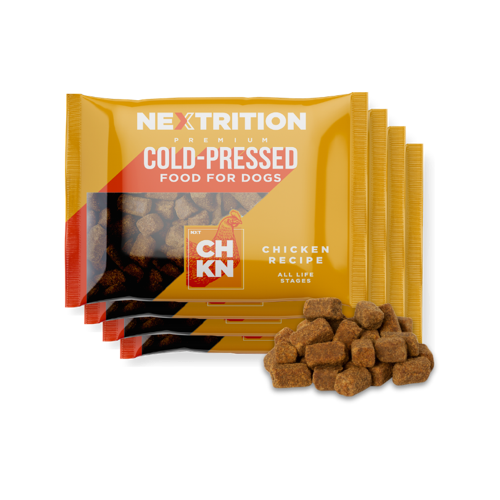
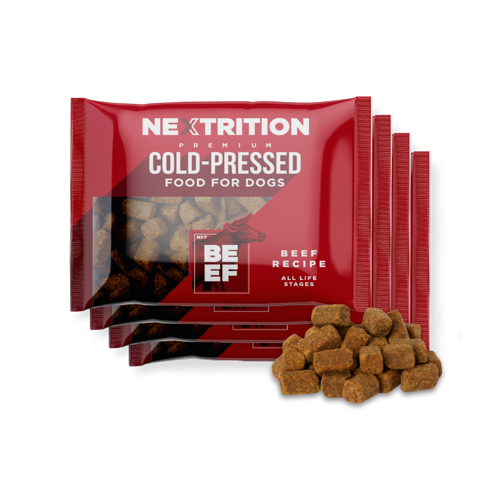
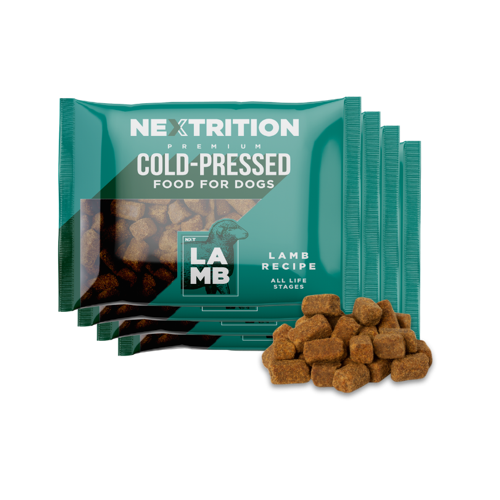
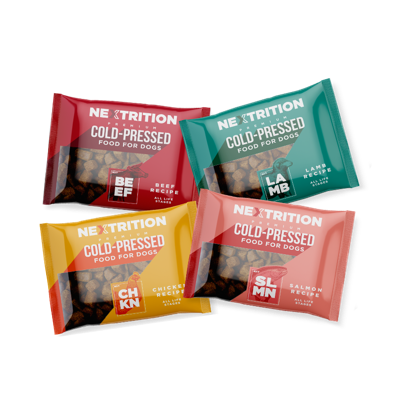
At Nextrition, we understand that shift well. Our cold-pressed recipes are made at three times lower temperatures to help preserve nutrients, with real meat, fruits, vegetables, and Rocky Mountain waters across lamb, chicken, salmon, and beef recipes. For owners who want a premium non-prescription route that still respects gut health, skin, and coat support, that more intentional approach is often the point.
How to Choose the Right Dog Food for Skin Allergies
The best choice starts with one question: are you dealing with a likely allergy case, or a more general sensitivity case? If you don't sort that out first, you end up comparing unrelated foods and getting nowhere.
Here's the practical split:
Match the formula type to the problem
- Prescription therapeutic diets fit dogs with persistent, complex skin issues where environmental and food sensitivities may overlap.
- Hydrolyzed prescription diets are for suspected food reactions and elimination trials.
- Non-prescription sensitive skin dog food works better for milder issues, especially when you also want digestive support.
- Limited-ingredient diets help when ingredient overload or a recent food change seems tied to flare-ups.
- Fresh skin-support formulas appeal to owners who care deeply about food quality, minimal processing, and feeding format.
Look at the pattern, not just the symptom
Certain symptom patterns point more clearly toward one path:
- Recurring hot spots and chronic itch despite diet changes usually push the decision toward prescription help.
- Itchy skin plus digestive upset often fits skin-and-stomach formulas first.
- Reactions that seem tied to one protein or a specific food switch make limited-ingredient or hydrolyzed options more relevant.
- Mild dryness and a dull coat without an allergy history may only need direct skin and coat support.
We see owners get stuck because they shop by label language instead of by pattern. “Skin and coat” can mean almost anything. The useful question is whether the food helps isolate triggers or simply supports skin health while you manage symptoms.

Prescription vs. Non-Prescription vs. Limited-Ingredient vs. Fresh
These categories aren't better or worse in the abstract. They solve different problems. If you shop them like they're interchangeable, you're going to waste time.
Prescription therapeutic
Best when symptoms are persistent, messy, or already part of a veterinary plan. This is the category for dogs who need more than broad support, especially when food and environmental issues may overlap.
Hydrolyzed prescription
This is the most controlled lane for suspected food reactions. If you need dog food for itchy skin because you believe the food itself is driving the issue, hydrolyzed formulas are often the cleanest next step.
Non-prescription sensitive skin formulas
These work best for mild to moderate issues and for owners who want an accessible first move. They're especially useful when skin and digestion are both slightly off, but nothing yet points clearly to a major allergy case.
Limited-ingredient diets
A good fit when formula complexity seems like part of the problem. For food for dogs with hot spots that may be tied to diet changes or ingredient clutter, this category gives you a simpler baseline.
Fresh skin-support formulas
This group appeals to owners who want better ingredient quality, a different feeding experience, and a less conventional option than mass-market kibble. If you're also looking for dog food for shiny coat, fresh formats often enter the conversation because owners want overall daily nutrition to feel more intentional, not just symptom-driven.
Common Mistakes When Switching to a Food for Dogs With Skin Issues
Most mistakes happen before the first scoop hits the bowl. Owners pick a food based on one front-label claim, switch too fast, then can't tell what changed or why.
The big ones are predictable:
- choosing solely on “skin and coat” wording
- bouncing between foods too quickly
- assuming all salmon-based foods do the same thing
- treating limited-ingredient and hydrolyzed diets as interchangeable
- ignoring digestive symptoms when the skin is also acting up
- expecting a coat-support formula to solve serious food-reaction cases
- picking a format the household won't realistically stick with
The last one matters more than people think. A theoretically perfect food that no one can feed consistently is not a real plan.
Use a simple checklist during the transition and watch the same signals every week:
- itch level
- recurrence of hot spots
- stool quality
- coat texture and shine
- symptom consistency over time
By the second or third week, patterns usually start to show. Not always full resolution, but direction. That's enough to make the next decision smarter.
Conclusion
The best dog food for skin allergies isn't the one with the loudest claim. It's the one that fits the actual problem.
If your dog has severe or multi-trigger skin issues, prescription therapeutic food makes more sense. If the signs point to food reactions, hydrolyzed formulas are the more disciplined route. If the issue is mild sensitive skin with digestive overlap, skin-and-stomach foods are often the right starting point. If you want to reduce ingredient noise, limited-ingredient formulas earn a real look. And if your priority is a fresher, more premium feeding format, that's a different category again, not just a different bag.
Start with the likely trigger pattern. Choose the right category first. Then compare within that category instead of bouncing between unrelated formulas.
That's how you stop shopping by hope and start feeding with a plan.


