




Small dogs get overfed fast. If you've been second-guessing the scoop, you're not alone; how much should small dogs eat sounds simple until stools get weird or a few extra bites start showing up on a tiny frame.
What matters in real life is calories, meal timing, and whether the food actually does enough in a small bowl. Tiny dogs have less room for guesswork, especially when digestion is touchy.
- Measure the full day, not each meal by feel
- Check calories per cup before trusting the feeding chart
- Watch stool, weight, and appetite so you land on the right amount fast
The Short Answer:
If you've been wondering how much should small dogs eat without falling into the usual guesswork, here's the practical version. Small dogs usually need more calories per pound than large dogs, but they also have far less room for error.
For many adult small breeds, the total daily amount often lands somewhere around 1/3 cup to 1 1/3 cups of dry food per day. That sounds useful until you compare two foods with very different calorie density. One scoop is not one answer.
A better starting point looks like this:
- use calories first, then convert to cups
- split most adult dogs' daily food into at least 2 meals
- feed puppies 3 to 4 smaller meals a day
- aim for consistent, nutrient-dense portions, not the smallest portion possible
Healthy digestion isn't about feeding less. It's about feeding enough of the right food, on a schedule your dog can actually handle.
That last part gets missed all the time. Small dogs don't need tiny portions for the sake of being tiny. They need food that does real work in a small bowl.
Why Small Dogs Need a Different Feeding Approach
Small dogs are built differently at mealtime. They burn through energy faster relative to body size, but they can't hold much food at once. That combination changes everything.
A 7 pound dog doesn't have much margin. Overfeed by a little, and weight creeps up fast. Underfeed by a little, and energy, appetite, and stool quality often shift within days. We've seen owners do everything "right" by the chart and still miss the mark because the food itself wasn't a good fit.
A few things matter more with small breeds:
- Higher calorie needs per pound than larger dogs
- Small stomach capacity, so bulky food can work against you
- Digestibility, because they need to use what they eat efficiently
- Piece size, since awkward, oversized bites can turn a normal meal into work
- Balanced fiber, which can support steadier stool quality and gut comfort
This isn't just about avoiding loose stool. Digestion shows up in coat condition, appetite, comfort after meals, and day-to-day energy. It also matters for immune support, since so much of that starts in the gut.
For wellness-focused owners, the gut isn't a side system. It's the foundation. Once you see it that way, portion size and food quality stop being separate decisions.
How to Calculate How Much Your Small Dog Should Eat
If you want a real answer to how much should a small dog eat, start with your dog's current body weight. Not the weight from last year's vet visit. Not the target weight unless your veterinarian has you on a specific weight-loss plan.
Use a calorie-first method, then convert that to cups.
Start with resting energy needs
A common starting formula is:
70 × body weight in kilograms^0.75
You don't need to do that math in your head every morning. What's useful is the rough baseline.
- 3 pounds: about 88 calories/day at rest
- 5 pounds: about 130 calories/day at rest
- 8 pounds: about 188 calories/day at rest
- 10 pounds: about 218 calories/day at rest
- 15 pounds: about 296 calories/day at rest
- 20 pounds: about 366 calories/day at rest
Then apply the right multiplier
That resting number is only the base. Real feeding depends on life stage and activity.
- Puppies under 4 months: about 3.0x resting energy
- Puppies 4 to 12 months: about 2.0x
- Typical adults: about 1.6x
- Very active adults: about 2.0x
- Seniors or low-activity spayed/neutered adults: about 1.4x
- Weight-loss plans: often closer to 1.0x
Here's a clean example.
A
10 pound adult dog has a
resting energy need of about
218 calories.
At a moderate adult multiplier of
1.6, that comes to about
349 calories per day.
Now check your food label. If the food provides 350 calories per cup, that's about 1 cup a day. If it provides 450 calories per cup, the portion is smaller. Same dog, different scoop.
That's why generic cup charts can mislead good owners. They ignore calorie density, and with small dogs that matters fast.

Daily Portion Guide by Weight and Life Stage
You still need a practical starting point. Cups are not useless. They're just secondary.
For adult small breeds eating a standard dry food, these total daily amounts are often a workable starting range:
- 3 to 6 pounds: around 1/3 to 1/2 cup per day
- 7 to 12 pounds: around 1/2 to 1 cup per day
- 13 to 20 pounds: around 1 to 1 1/3 cups per day
Those are daily totals, not meal sizes.
If you're feeding twice a day, that usually looks like this:
- Take the full daily amount
- Split it into 2 measured meals
- Keep the timing steady for at least a couple of weeks before making judgment calls
A 10 pound adult eating 3/4 cup daily would get roughly 3/8 cup in the morning and 3/8 cup at night. Simple beats clever here.
Puppies are different. They often eat more relative to body weight because growth is expensive. Seniors may need less if activity has dropped, even when they still act hungry. Appetite is useful information, but it isn't a calculator.
One thing we tell owners of toy-breed puppies: broad puppy charts can overshoot. A tiny puppy can be easy to overfeed while you're trying to be careful. That's a frustrating spot, especially if stool gets soft and you assume the answer is more food.

How Often Should Small Dogs Eat for Steadier Digestion
How often should small dogs eat? Mostly, it depends on age, body size, and how they handle meal size.
Most adult small dogs do best with 2 meals per day. That's the default we trust unless the dog gives you a reason to do something else.
Some dogs feel better on 3 smaller meals, especially if they get stomach upset when meals are too large or too far apart. That shows up as bile vomiting, frantic hunger, or a dog who seems off by late afternoon.
Puppies usually need 3 to 4 meals daily. Missing meals can be harder on toy and tiny puppies, including the risk of low blood sugar. Small puppies don't have much reserve. They can go from fine to flat faster than people expect.
Senior small dogs often settle into 1 to 2 smaller meals, depending on appetite, digestion, and medical needs.
If you're asking how often should I feed a small dog in a way that actually helps digestion, keep these rules tight:
- feed at consistent times
- keep meal size predictable
- avoid long gaps if your dog gets sick when too hungry
- don't bounce between free-feeding and structured meals
Meal timing matters because digestion likes rhythm. Smaller, regular meals are often easier on a sensitive stomach. Structured feeding also lets you spot changes faster. When the schedule is consistent, a stool change means something. When everything keeps shifting, you're just guessing.
What Premium Dog Food for Small Breeds Has to Do With Portion Size
Portion size only makes sense in the context of the food itself. A small dog can't make up for mediocre nutrition by eating a bigger pile of it. There's not enough room, and usually not enough digestive tolerance.
Premium dog food for small breeds should solve several problems at once:
- appropriately sized pieces
- strong calorie density
- highly digestible ingredients
- balanced fiber for gut support
- complete and balanced nutrition for the right life stage
Higher-fat formulas can help deliver calories in a smaller portion, which is often useful for little dogs. But they also make measuring more important. A small extra scoop is not a small mistake on a 6 pound dog.
Here's the label check we recommend:
- look for a complete and balanced statement for your dog's life stage
- compare calories per cup, not just ingredients
- make sure the food is physically easy for your dog to chew and tolerate
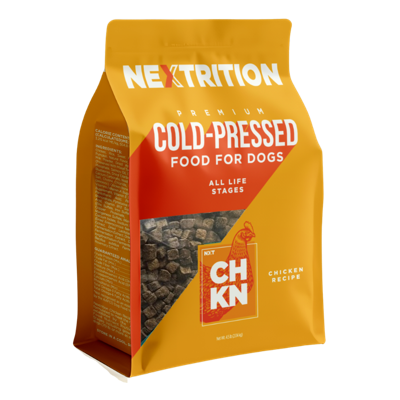
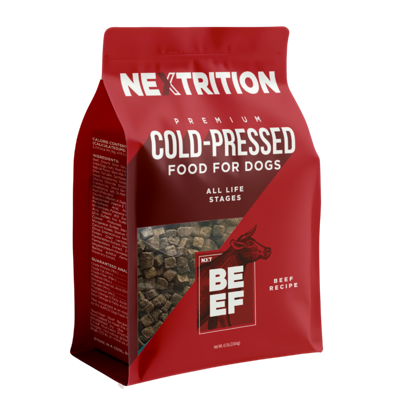
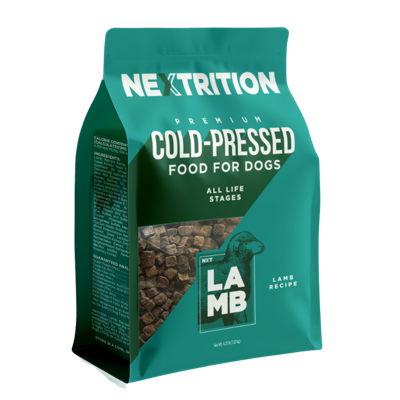
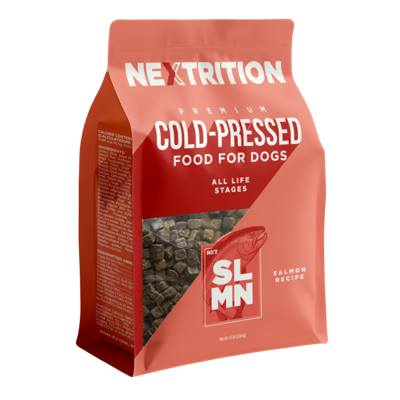
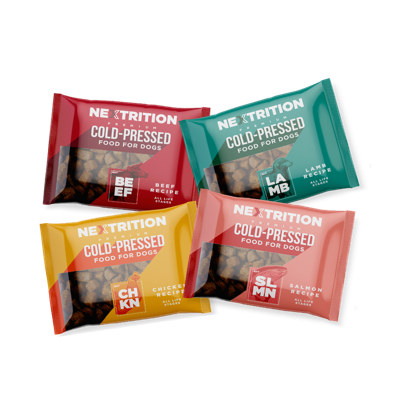
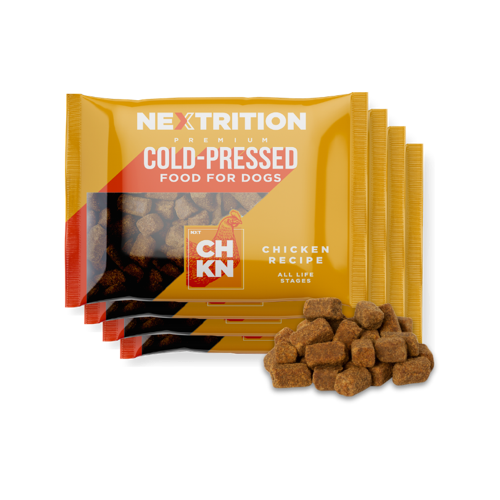
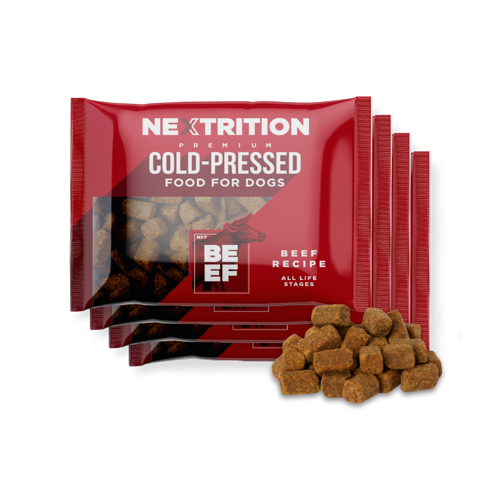
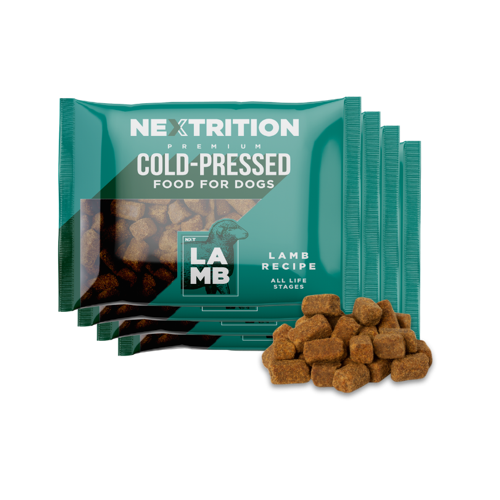
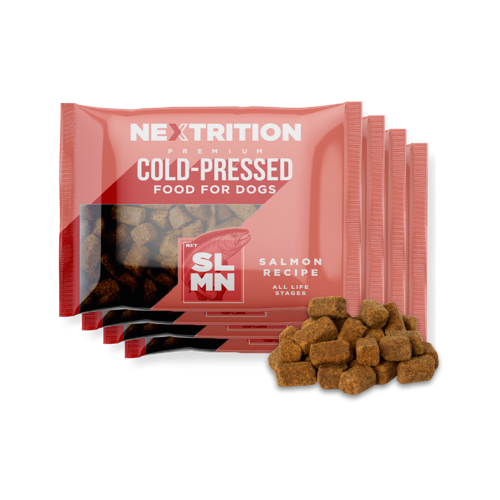
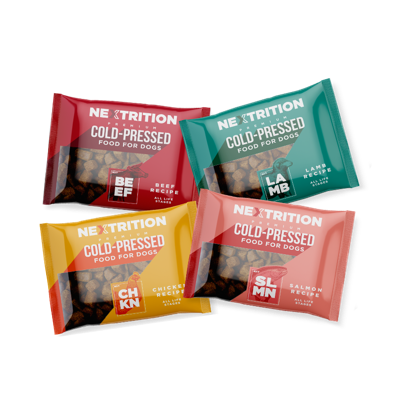
This is part of why we make Nextrition the way we do. Our cold-pressed recipes are made at 3 times lower temperatures to help preserve nutrients and support gut health, where so much immune function lives. We use real meat, fruits, and vegetables in lamb, chicken, salmon, and beef recipes, with natural ingredients and Rocky Mountain waters.
That matters when you're trying to feed smaller portions with real confidence. If the food is nutrient-dense and digestion-focused, you're not just making the bowl smaller. You're making the bowl count.

Signs You Are Feeding the Right Amount for Healthy Digestion
A chart gives you a start. Your dog gives you the answer.
When the portion is right, you usually see a steady pattern rather than one dramatic sign.
Signs the amount is working
- consistent stool quality
- steady energy through the day
- a comfortable appetite between meals
- healthy body condition without slow weight creep
- calmer mealtimes, with less drama caused by oversized meals or long gaps
Signs you may be feeding too much
- gradual weight gain from what looks like "barely extra"
- softer stool or on-and-off bowel changes
- sluggishness after meals
- constant treat-seeking built more on habit than need
Signs you may be feeding too little
- weight loss
- low energy
- persistent hunger
- poor tolerance for long gaps between meals
Small dogs magnify mistakes. That's the part people underestimate. A little overfeeding in a large dog may take a while to show up. In a tiny dog, you may notice it in the harness fit, the stool, or the afternoon energy dip by the second week.
And don't judge success by an empty bowl alone. Plenty of dogs will clean up a portion that isn't right for them.
Common Feeding Mistakes That Upset Small-Dog Digestion
Most feeding problems aren't dramatic. They're small, repeated errors that stack up.
The common ones look like this:
- relying on a generic chart without checking calories per cup
- eyeballing portions instead of measuring them
- forgetting that a small daily excess can mean real weight gain in a tiny dog
- adding too many treats, scraps, or unbalanced toppers
- assuming all puppies need the same amount
- feeding food that's too bulky, too low in calories, or hard to chew
- changing food, portion size, or schedule too abruptly
- treating digestion as separate from immunity and overall wellness
- buying on marketing language instead of digestibility, calorie density, and consistency
One of the least obvious mistakes is mixing a good feeding schedule with random extras all day. Owners think the main meals are the issue, but half the calorie drift is happening in "just a little bite" moments.
Consistency is underrated. Sensitive small dogs often do better with a boringly reliable routine than a well-meaning rotation of fixes.
How to Adjust Portions Without Triggering Digestive Problems
When you need to change the amount, do less than you think. Then wait long enough to read the result.
Tiny dogs respond to small changes. What looks like a minor scoop difference can become a meaningful calorie shift over time.
A practical approach:
- Change the portion in a small increment
- Keep the number of meals the same
- Track the result for 2 to 3 weeks
- Adjust again only if the pattern is clear
Watch these markers together:
- body weight
- stool quality
- energy
- appetite between meals
- coat and skin condition
If your dog is gaining weight, reduce gradually and monitor. If your dog seems too lean, overly hungry, or flat, increase gradually instead of stuffing in treats and hoping it balances out.
Math helps, but observation finishes the job. Generic equations can overestimate some small-breed puppies, which is why the dog in front of you matters more than a neat formula on paper.
The goal isn't anxious micromanaging. It's having a system you trust.

When a Personalized Meal Plan Makes Sense
Some dogs fit a chart well enough. Some don't. Very small dogs, puppies, seniors, highly active dogs, low-activity dogs, and dogs with sensitive digestion often need more structure than a broad guideline can give.
A personalized plan helps when:
- weight keeps drifting up or down
- stool quality isn't consistent
- you're switching foods often
- you keep changing portions because the current routine never feels quite right
- you want convenience without lowering your nutrition standards
This is exactly where a more tailored approach can calm things down. We offer a personalized meal plan so you can set portions around your dog's actual needs instead of broad feeding guesses. And if routine is half the battle, it helps that you can choose one-time orders or subscription delivery to keep the food consistent and at your door.
This isn't about making feeding complicated. It's about removing the low-grade uncertainty that keeps owners second guessing every scoop.
Conclusion
Small dogs don't need random scoop rules. They need the right amount of food for their size, age, activity, and digestive tolerance.
The most useful answer to how much should small dogs eat starts with calories, then gets refined by stool quality, body condition, and meal routine. Most adults do best with at least two measured meals a day. Puppies usually need more frequent feeding, and they often need closer attention than broad charts suggest.
Food quality matters because small dogs rely on nutrient density, digestibility, and consistency more than volume alone. A small bowl can do a lot, or not much at all. That's the difference.
Start by calculating a daily calorie target, measure the portion accurately for the next couple of weeks, and watch your dog's body, stool, and appetite instead of chasing perfect rules. If you'd rather make the process simpler and more reliable, a personalized meal plan can take a lot of the guesswork off your plate and out of your dog's bowl.


