




Cold pressed dog food vs Hill's Science Diet gets messy fast when you're trying to help a dog with a touchy stomach. Most people get hung up on brand comfort and miss what actually changes results: processing, ingredient quality, and how your dog does day to day.
We cut the noise early. We've narrowed this to five options that felt worth your time, not just familiar on the shelf.
These are the ones we'd actually keep in the running.
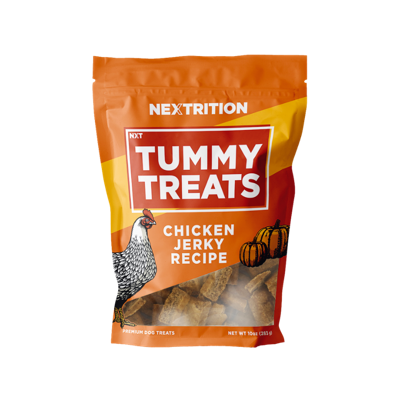
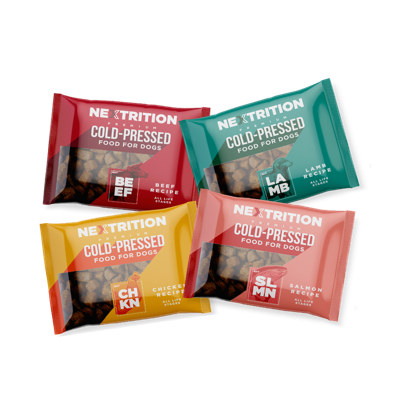
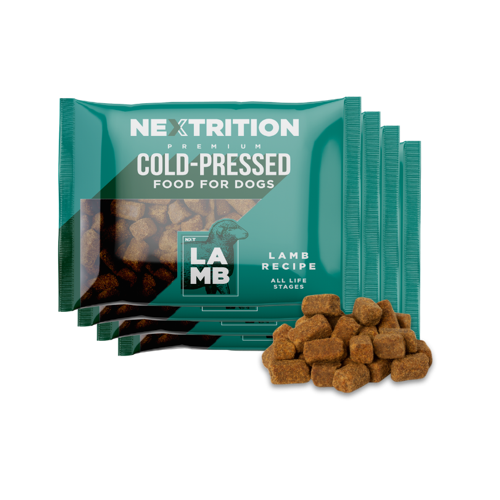
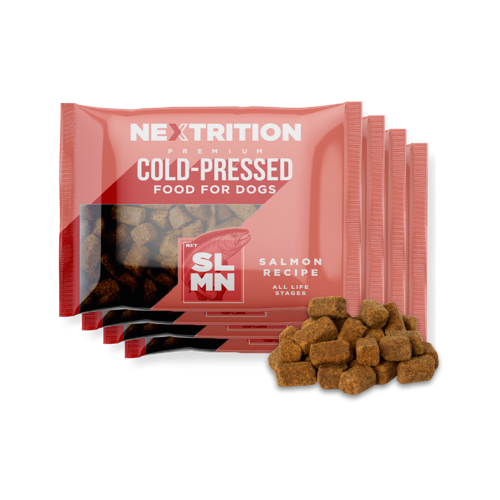
1. Nextrition Pet: American Cold Pressed Dog Food

Pros
- Cold-pressed for gentler processing
- Dry-food convenience, premium feel
- Supports gut-focused feeding goals
- Real meat, fruits, vegetables
- Personalized plans and subscriptions
Cons
- Less familiar than major brands
- Premium positioning may cost more
- Not ideal for every dog
If you're searching cold pressed dog food vs Hill's Science Diet, this is the side of the comparison that actually answers the question. Nextrition is for owners who want to stay in a dry-food routine, but don't want to keep feeding standard kibble just because it's familiar.
We built Nextrition around a simple belief: processing matters, especially for dogs with touchy digestion. Our food is cold-pressed at 3x lower temperatures than conventional kibble, which helps preserve more of the ingredients' natural value instead of cooking everything hard and fast. That difference is not just a marketing line. It changes who this food is really for.
A few things shape the experience:
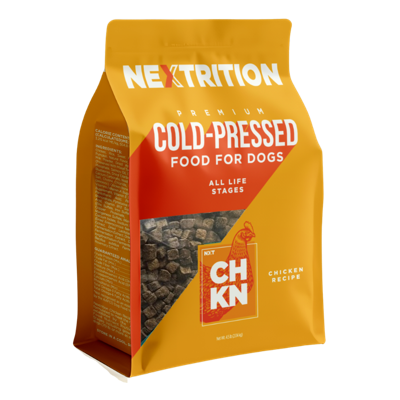
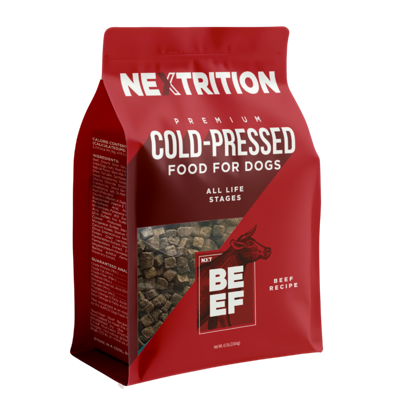
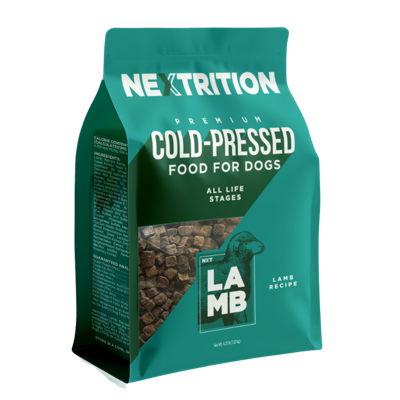
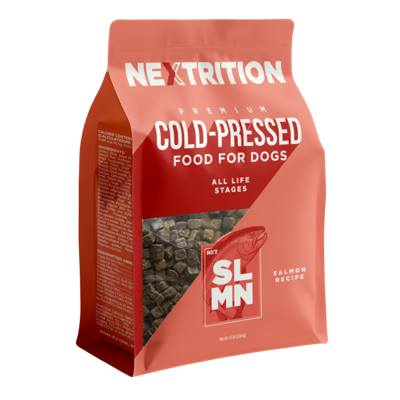
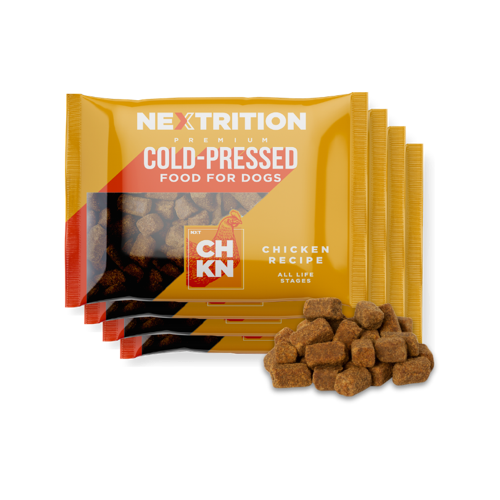
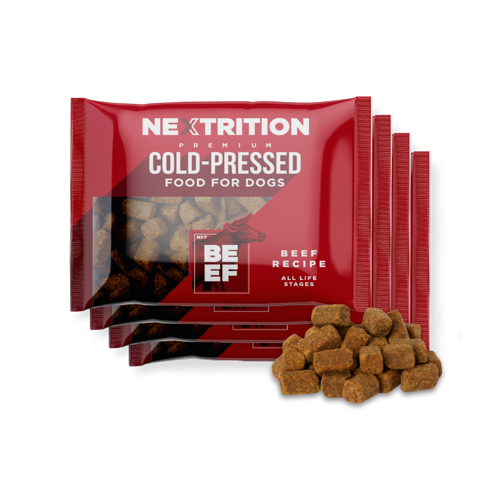
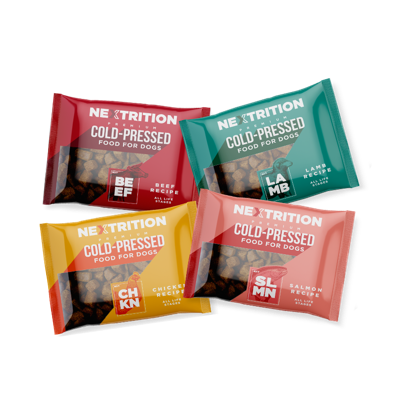
- four recipes: lamb, chicken, salmon, and beef
- real meat, fruits, and vegetables
- natural ingredient positioning without the typical "bag of brown pellets and a promise" feel
- Rocky Mountain waters as part of how we source and make the food
- personalized meal plans if you want guidance instead of guessing
- one-time orders or subscription delivery, depending on how you like to buy
The practical appeal is pretty straightforward. You get the convenience of scoop-and-serve feeding, but with a less processed philosophy than mainstream extruded food. That matters for owners who are trying to support gut health without moving all the way into freezer storage, thawing, portioning, or freeze-dried routines.
And gut health is the center of it. Around 70% of your dog's immune system resides in the gut. We don't think that's a minor detail. If your dog has inconsistent stools, post-meal discomfort, or skin and coat issues that seem connected to food, staying in the exact same processing category isn't always the most thoughtful next step.
Sometimes the smartest upgrade isn't "more expensive kibble." It's a different way of making dry food.
Compared with Hill's, Nextrition is less about brand familiarity and more about intentional feeding. Compared with fresh, raw, or freeze-dried options, it's easier to live with every day. That middle ground is valuable. A lot of owners want better nutrition, but they still need breakfast to take 30 seconds.
The honest tradeoff is that we're not the most familiar national name in the U.S., and for some buyers that matters. If your main comfort comes from seeing a brand in every pet store, you'll notice the difference. But if your dog hasn't done well on standard kibble and you're actively looking for a cleaner dry-food upgrade, Nextrition fits the search better than a conventional formula ever will.

2. Hill's Science Diet
Pros
- Widely available across the U.S.
- Simple, familiar dry-food routine
- Broad brand recognition and trust
- Sensitive-stomach options within lineup
Cons
- Still a conventional extruded kibble
- Less focused on minimal processing
- May not solve every digestive issue
Hill's Science Diet is the benchmark brand in this conversation because it's the one many owners already know. It's widely available, easy to find, and built around the conventional extruded dry-food format that most households have used for years.
That familiarity is real value for some people. If you're not ready to rethink feeding format, Hill's makes the decision feel simple. Buy the bag, feed the chart, move on. For busy owners with a dog doing reasonably well, that simplicity can be enough.
But in a cold pressed dog food vs Hill's Science Diet comparison, Hill's represents the mainstream side of the decision. It's the conventional dry-food path. Even when the brand offers options that speak to sensitive stomach concerns, you're still largely operating inside the same processing model.
A few points are worth keeping straight:
- Hill's is relevant here because of its sensitive-stomach association and broad U.S. presence.
- It's the easiest choice to understand if you want routine, retail access, and a familiar bag-on-the-shelf experience.
- It's not the same thing as choosing a less processed feeding philosophy.
There's also a trap here. Many owners assume a well-known brand will automatically fix loose stools, itching, gassiness, or dull coat issues. Sometimes it helps. Sometimes it doesn't. Brand recognition and digestive results are not the same thing.
We've seen this a lot: a dog can "do okay" on standard kibble while still showing small signs that the food isn't really working. Softer stool by the second afternoon. A little too much licking. Coat that never quite gets glossy. Nothing dramatic, just enough friction to keep you wondering.
Hill's is still the safer conventional choice for buyers who value familiarity over experimentation. That's fair. But if you're specifically questioning processing method, ingredient simplicity, or whether your dog might do better on a less intensive dry-food format, Hill's starts to feel more like the default than the upgrade.
3. Just Food for Dogs

Pros
- Fresh-food alternative to kibble
- Feels closer to whole foods
- Multiple feeding formats available
- Good fit for committed owners
Cons
- More storage and handling
- Travel and feeding are less simple
- Not a scoop-and-serve option
Just Food for Dogs sits in a different lane. It matters in this roundup because some owners aren't really deciding between one kibble and another. They're deciding whether dry food is still the right format at all.
This brand is a strong fit if you want a fresh-food alternative and are willing to change your routine to get it. In digestibility conversations, that matters. Fresh food is often the point where owners stop trying to optimize within kibble and start asking bigger questions about processing.
The appeal here is not subtle:
- it's a bigger move away from standard dry food
- it can feel more aligned with whole-food values
- it offers a middle ground between conventional kibble and a full raw-feeding commitment
- it gives U.S. buyers a fresh option without forcing a single feeding style
That's why it belongs in this comparison. If Hill's feels too conventional and cold-pressed still doesn't feel like enough of a reset, fresh food is usually the next serious step.
Still, this is not the same decision as Nextrition. Nextrition is a dry-food upgrade. Just Food for Dogs is a format shift. That changes the day-to-day reality more than many owners expect. Storage matters. Portioning matters. Travel gets less simple. If your dog sitter already struggles with basic feeding instructions, fresh food may test that relationship quickly.
One of the less obvious differences is emotional, not technical. Fresh food often feels more intentional to owners. That's part of why people stick with it. But intention only holds up if the routine does too. If weekday feeding starts to feel like a project, enthusiasm fades.
So this is best for the committed owner who wants fresher meals and doesn't mind extra handling. If you want less processed nutrition but still need a scoop-and-serve life, cold-pressed makes more sense.
4. Primal Pet Foods
Pros
- Offers frozen raw and raw-style options
- Strong fit for raw-minded owners
- Minimally processed feeding philosophy
- Useful beyond standard kibble comparisons
Cons
- More involved daily handling
- Higher cost than dry food
- Transition needs extra planning
Primal belongs in this conversation for readers who are no longer asking "which dry food?" and are now asking "should we leave kibble behind entirely?" That's a different question, and it deserves a different kind of answer.
Primal gives you access to raw-oriented feeding, including frozen raw and Kibble in the Raw style options. That makes it useful in a comparison like this because it shows how far the spectrum goes beyond extruded food. Once you understand that, Hill's and cold-pressed options stop looking like minor variations of the same thing.
Here's where Primal gets interesting. It doesn't just offer a product. It asks you to buy into a feeding philosophy. Processing is minimized more aggressively, and the routine starts to reflect that.
That has consequences:
- handling is more involved
- transition planning matters more
- cost expectations usually shift upward
- convenience takes a hit compared with standard dry feeding
This is where some owners make a mistake. They get frustrated with kibble, jump into raw-style feeding too fast, then blame the format when the real problem was poor transition or an unsustainable routine. We've seen dogs do fine with the food while the household couldn't keep up with the process.
Compared with Nextrition, Primal is a much bigger leap. Nextrition keeps dry-food convenience while changing the processing logic. Primal changes both. Compared with Hill's, it sits far outside the mainstream. That's exactly why some owners want it, and exactly why others shouldn't force it.
If you're willing to trade simplicity for a more raw-centered approach, Primal is a serious option. If you want a cleaner feeding philosophy without reorganizing your kitchen, it's probably further than you need to go.
5. Stella & Chewy's

Pros
- Distinct alternative to standard kibble
- Freeze-dried and frozen raw options
- Appeals to processing-conscious owners
- Useful for larger format change
Cons
- Less convenient than dry food
- Not a true cold-pressed option
- Handling routine can feel complex
Stella & Chewy's is another meaningful break from standard kibble, especially for owners interested in freeze-dried or frozen raw feeding. It earns its place here because not everyone searching for an alternative to Hill's is specifically committed to cold-pressed. Some just know they want out of the usual dry-food cycle.
This brand is especially relevant if processing method is the thing you're focused on. Frozen raw dinner patties and freeze-dried raw formats create a very different feeding experience from extruded food. That's the point.
The distinction from other options is easier to understand in real use than on a label:
Where Stella & Chewy's fits
- You want a more dramatic format change than cold-pressed dry food.
- You're comfortable with a routine that may be less simple than pouring from a bag.
- You care more about leaving traditional kibble behind than preserving dry-food convenience.
Compared with Hill's, this is a much stronger statement. Compared with Nextrition, it's a bigger operational change. Compared with Primal, it lands in similar territory but can appeal to owners who prefer a particular raw or freeze-dried feeding style rather than a broader raw-brand identity.
There's a practical limit, though. If you're specifically searching cold pressed dog food vs Hill's Science Diet, Stella & Chewy's is adjacent to your search, not the direct answer. It's valuable as a reference point because it helps clarify how far you actually want to move from kibble. Some owners need a full break. Others need a better dry food. Those are not the same buyer.
A lot of feeding mistakes come from solving the wrong problem.
How to Choose Between Cold-Pressed, Fresh, Raw, and Extruded Dog Food
The real decision is usually not "which brand is best?" It's "what kind of feeding life are we trying to build, and what is our dog actually struggling with?"
Start there. Is your dog dealing with loose stools, gas, itching, poor coat quality, or obvious post-meal discomfort? Or are things mostly okay and you're trying to feed in a way that feels cleaner and more intentional?
Use this framework:
Choose based on the real friction
- Cold-pressed if you want a better dry-food experience with less processing and no major disruption to routine.
- Extruded if familiarity, broad retail availability, and a standard feeding rhythm matter most.
- Fresh if you're comfortable with more handling and want meals that move further away from conventional kibble.
- Raw or freeze-dried if you're willing to trade convenience for a more dramatic shift in processing style.
Then pressure-test the decision against daily life.
Ask the boring questions
- Where will you store it?
- Who feeds the dog on busy mornings?
- Can you sustain this for six months, not six days?
- Do you want personalized feeding support, or do you prefer to self-manage?
Those questions matter because the best food on paper can still be the wrong food if your routine can't support it. We tend to see the best outcomes when the feeding format matches both the dog's needs and the owner's real habits.
There's also a mindset piece here. Some owners aren't looking for the cheapest acceptable option. They're trying to feed in a way that reflects whole-food values and better ingredient standards. That's reasonable. The mistake is pretending every format expresses that in the same way. It doesn't.

What the Research Actually Suggests About Processing and Digestibility
Processing matters. It would be strange to act like it doesn't. But it's not the only variable, and that's where this conversation gets more useful.
The supplied research points to meaningful differences across extruded, fresh, frozen raw, and freeze-dried formats. Lower-temperature or less intensive processing can affect digestibility differently from extrusion. Fecal output, fecal characteristics, and microbiota response often don't look identical across those categories.
That's important. It's also easy to overread.
Keep the nuance intact
- ingredient source still matters
- starch type matters
- nutrient composition matters
- the individual dog matters more than people want to admit
A format can be promising and still not be the right fit for your dog. That's why we don't think "one format is always best" is a serious conclusion. The better question is what signals you're seeing in real life.
Watch for:
- stool quality
- appetite consistency
- energy
- skin and coat response
- how the dog handles the transition over the first 10 to 14 days
Your dog's stool will often tell you the truth before marketing does.
That's the operator view. Research helps narrow the field, but daily feeding response closes the case. If you're comparing cold-pressed dog food vs Hill's Science Diet, the smarter move is to use processing as one lens, not the only lens.

Nextrition vs Hill's Sensitive Stomach: The Real Decision Criteria
When people compare Nextrition vs Hill's sensitive stomach, they're usually balancing two different instincts. One says, "stay with a familiar dry-food setup." The other says, "our dog may need a cleaner, less processed approach."
That's the real split.
If your dog does okay on kibble but you want a premium dry food with more intentional ingredient and processing choices, Nextrition is the more aligned option. Cold-pressed production, natural ingredients, real meat, and personalized meal planning all speak to owners who want to improve the feeding experience without jumping into raw or fresh.
If your priority is mainstream familiarity, broad recognition, and sticking with a conventional sensitive-stomach dry-food path, Hill's remains the safer traditional choice.
Here's the practical filter:
Nextrition makes more sense when
- you're focused on processing method
- you want dry-food convenience without standard kibble logic
- subscription delivery and meal-planning support matter
- your dog hasn't done especially well on conventional dry food
Hill's makes more sense when
- you want a widely recognized national brand
- retail availability matters more than feeding philosophy
- you're not looking to move away from the standard extruded format
- familiarity feels more important than making a deliberate upgrade
Neither choice is "for everyone." That's the point. The stronger your concern about processing and ingredient experience, the more the cold-pressed route tends to fit. The stronger your preference for conventional ease and brand familiarity, the more Hill's will feel comfortable.
Comfort and fit are not always the same thing.
Conclusion
The best choice here comes down to fit, not hype. If you're specifically looking for a cold-pressed answer in the cold pressed dog food vs Hill's Science Diet debate, Nextrition is the clearest match. It gives you a less processed dry-food option, premium natural ingredients, and everyday convenience without forcing a full lifestyle change.
Hill's Science Diet still makes sense as the benchmark mainstream path. It's familiar, accessible, and easy to understand.
Just Food for Dogs, Primal Pet Foods, and Stella & Chewy's become more relevant when you're ready to move beyond dry food or at least move much further from standard kibble than cold-pressed does.
Pick the format that matches both your dog's digestive needs and your actual routine. Then transition slowly and watch the right signals over the first 10 to 14 days: stool quality, appetite, skin, coat, and overall comfort. That's where the decision gets real.


