




The best dog food for itchy skin is one that addresses your dog’s specific trigger while providing complete and balanced nutrition. For dogs with food sensitivities, that may mean a limited-ingredient, novel-protein, or hydrolyzed formula. Foods rich in omega-3 fatty acids can also help support healthier skin and a stronger coat.
However, itching is not always caused by food; fleas, environmental allergies, and skin infections are also common culprits. The options below prioritize gentle proteins and skin-supporting nutrients to help you find the right fit for your dog.
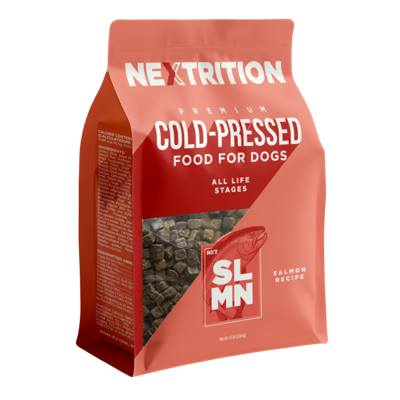
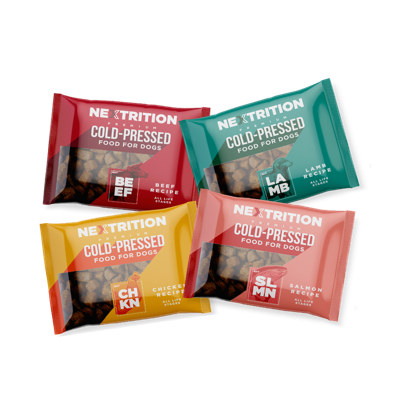
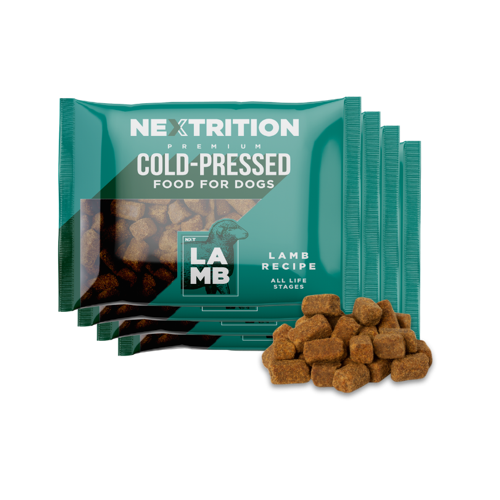
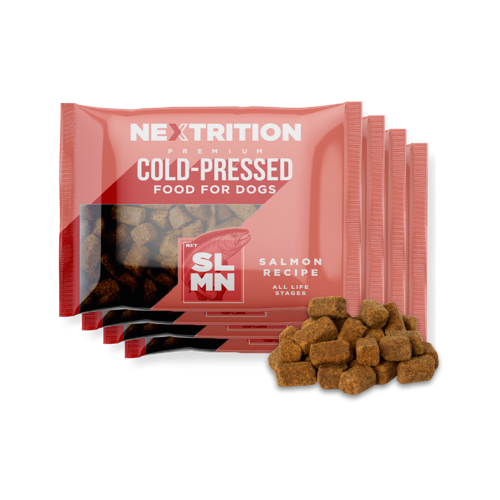
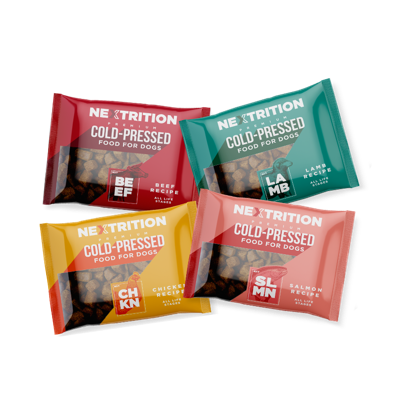
1. Nextrition - All-Natural Salmon Recipe

Pros
- Cold-pressed for gentler digestion
- Real salmon supports skin health
- Gut-friendly, nutrient-dense formula
- Supports coat shine and comfort
- Whole-food ingredient approach
Cons
- Not for allergy elimination trials
- Premium approach may cost more
- Less clinical than hydrolyzed diets
If you're looking for dog food for itchy skin but don't want to jump straight into a prescription bag, this is the kind of formula we’d start with for the right dog. Not every itchy dog needs a clinical elimination trial. Some need better ingredients, gentler digestion, and a protein source that tends to be easier on the skin.
Our All-Natural Salmon Recipe sits in that lane. It uses real salmon, premium grains, fruits, and vegetables, then cold-presses everything at roughly 3x lower temperatures than traditional kibble. That matters more than most labels let on. Processing changes food. Sometimes a lot.
A few details are worth paying attention to:
- More than 12 pounds of whole fresh ingredients are cold-pressed into a 4.5 pound bag
- The format is designed to be more digestible than standard kibble
- It’s built with gut-healthy nutrients, which matters because a large share of immune function lives in the gut
- It’s a strong fit for dogs who need support for skin comfort, digestion, and coat quality all at once
This is more ingredient-forward than the hydrolyzed veterinary diets below. That’s the point. It’s for owners who care what goes into the bowl and how it’s processed, not just whether the bag checks a medical category.
Better food won’t diagnose a true allergy, but it can absolutely calm down the dogs who are reacting to poor digestibility, mediocre ingredients, or a diet that just isn’t working.
Where we'd be careful is when a veterinarian is actively trying to confirm a real food allergy. In that case, a salmon dog food for skin allergies is not the same thing as a hydrolyzed diagnostic diet. Different job. Different standard.
But for everyday sensitive skin dog food? For owners who want dog food for shiny coat benefits without settling for heavily processed kibble? This is a very clean place to start.

2. Hill's Prescription Diet z/d Skin/Food Sensitivities
Pros
- Well-established hydrolyzed formula
- Strong elimination-trial use case
- Helps reduce protein-trigger exposure
- Common vet recommendation
- Useful for chronic year-round itch
Cons
- Prescription and vet guidance needed
- Less appealing ingredient philosophy
- Not for casual diet upgrades
Hill’s z/d is one of the best-known hydrolyzed diets for dogs with suspected food-related itching. If your dog has chronic, non-seasonal scratching, repeat ear issues, or skin flare-ups that don’t track with pollen season, this is one of the diets vets commonly use to get answers.
That’s the real role here. Answers.
This isn’t a premium lifestyle upgrade. It’s a clinical tool disguised as a food. The hydrolyzed protein approach is designed to reduce the chance that the immune system recognizes and reacts to the protein source. For a proper elimination trial, that structure matters more than whether the ingredient panel sounds appealing to a human.
Compared with a premium salmon or sensitive skin dog food, z/d is much more targeted. Compared with Royal Canin HP and Purina HA, it’s in the same core conversation.
A practical way to think about it:
- If the goal is diagnosis, z/d belongs on the shortlist.
- If the goal is cleaner everyday feeding, it probably doesn’t.
- If your dog’s itch is year-round and stubborn, this is worth discussing with your vet early.
We’ve seen owners lose months by trying three or four over-the-counter foods when the dog clearly needed a structured elimination plan. That’s a frustrating loop. z/d is often how you stop guessing.
3. Royal Canin Veterinary Diet Hydrolyzed Protein HP
Pros
- Strong elimination-trial use case
- Helps manage suspected food triggers
- Consistent for controlled diet testing
- Suitable for longer-term veterinary use
Cons
- Requires veterinary supervision
- Less appealing ingredient philosophy
- Strict compliance is essential
Royal Canin Hydrolyzed Protein HP is another serious option when the question is food allergy management, not general skin maintenance. It’s commonly used in elimination trials and in longer-term feeding plans for dogs with suspected ingredient triggers.
That distinction matters. A lot of dog food for skin allergies gets marketed as if all itchy skin is the same problem. It isn’t.
Royal Canin HP fits best when you and your veterinarian are trying to rule ingredients in or out under controlled conditions. In that setting, “whole-food ingredient storytelling” is mostly noise. You need consistency. You need compliance. You need the diet to do a specific job.
Compared with salmon-based options or fresh-style recipes, this is far more clinically focused. Compared with Hill’s z/d and Purina HA, it serves a very similar use case, and the choice often comes down to veterinary preference, your dog’s response, and what you can stick with consistently.
A good operator rule here: if you’re doing an elimination trial, don’t weaken it with side experiments. No random treats. No flavored chews. No “just a little” table food. The diet only works if the process is tight.
4. Purina Pro Plan Veterinary Diets HA Hydrolyzed
Pros
- Useful for food allergy workups
- Hydrolyzed approach reduces variables
- Familiar veterinary diet option
- Strong fit for chronic itching
Cons
- Less whole-food ingredient appeal
- Not ideal for seasonal itch
- Requires veterinary guidance
Purina Pro Plan Veterinary Diets HA Hydrolyzed belongs in the same hydrolyzed group for suspected food allergy cases. If your dog’s symptoms suggest a food-related pattern, this is a familiar veterinary path and a very reasonable one.
It’s easy to overcomplicate these decisions. You don’t need novelty here. You need a diet that supports a clean workup.
Purina HA is most relevant when itchy skin, irritation, or chronic scratching points toward food sensitivity rather than seasonal triggers alone. It’s less about giving your dog a more natural menu and more about reducing variables so you can see what’s actually driving the symptoms.
Here’s where it sits clearly:
- Closer to Hill’s z/d and Royal Canin HP than to any premium OTC skin-support formula
- More useful for food allergy workups than for owners who simply want salmon dog food for skin allergies
- More clinical than ingredient-philosophy-driven, which some owners will love and others won’t
That tradeoff is real. We wouldn’t pretend otherwise.
If your buying lens is ingredient quality in the whole-food sense, Purina HA won’t scratch that itch. If your buying lens is diagnostic discipline, it absolutely might.
5. Farmina Vet Life UltraHypo
Pros
- Research-linked itch relief support
- Targets allergic skin symptom cases
- Useful for vet-led food trials
- More evidence-informed than many peers
Cons
- Likely more diet than needed
- Best used with veterinary guidance
- Less suited for casual switching
Farmina Vet Life UltraHypo is a strong hypoallergenic option, especially for readers who want something tied to a more specific research mention around improvement in pruritus and skin lesions in allergic dogs. That’s a meaningful distinction in a category where many products sound similar from ten feet away.
Some diets are talked about in broad terms. This one gets brought up more specifically.
That doesn’t move it out of the clinical allergy-management bucket. It still belongs there. But for owners who want evidence-informed options, not just the biggest names in the vet aisle, UltraHypo earns attention.
It’s better suited to suspected allergy cases than to someone casually searching for a general sensitive skin dog food. We’d frame it as a more serious option for a more serious pattern of symptoms.
A simple filter helps here:
- If your dog has persistent allergic skin signs and your vet is working a food angle, this fits
- If your dog just has a dull coat and occasional paw licking, it’s probably more diet than you need
Too many owners buy at the level of their worry instead of the level of the problem. UltraHypo is for the second group, not the first.
6. Blue Buffalo Natural Veterinary Diet HF Hydrolyzed for Food Intolerance
Pros
- Hydrolyzed approach supports elimination trials
- Useful for persistent food-related itch
- More targeted than OTC options
- Comparable clinical role to rivals
Cons
- Requires veterinary guidance
- Overkill for mild seasonal itch
- Less ingredient-forward than natural foods
Blue Buffalo’s HF Hydrolyzed formula is another veterinary option for pruritic dogs where food intolerance is part of the picture. It plays a similar role to the hydrolyzed diets from Hill’s, Royal Canin, and Purina, which means the comparison is less about brand personality and more about whether hydrolyzed feeding is the right strategy in the first place.
That’s the decision before the decision.
The reason to keep this one in the roundup is simple: it gives readers another valid hydrolyzed pathway if a veterinary diet is already on the table. It’s more specialized than an over-the-counter limited-ingredient food and should be viewed that way.
This is not the food we’d reach for when a dog gets mildly itchy every spring. It is the food we’d consider when the itch is persistent, the pattern is suspicious, and casual diet swapping has gone nowhere.
One thing experienced owners learn the hard way: “food intolerance” on a bag doesn’t automatically mean “good for an elimination trial.” Hydrolyzed structure is what makes the category different.
7. Hill's Prescription Diet Derm Complete
Pros
- Supports atopic skin management
- May reduce itch severity
- Helpful for environmental-trigger cases
- Fits broader treatment plans
Cons
- Not for strict elimination trials
- Requires veterinary guidance
- Not a standalone fix
Derm Complete is a different conversation. It’s still therapeutic, but it’s less about proving a food allergy and more about supporting dogs with atopic dermatitis or broader inflammatory skin patterns.
That makes it especially relevant for dogs whose itch may be environmental, mixed, or just messy enough that a single-cause story doesn’t fit.
Clinical support cited from Hill’s points to reduced pruritus and dermatitis scores in atopic dogs on an enriched skin-focused diet. So if your dog’s scratching is part of a larger atopic picture, this can make more sense than forcing every case into a hydrolyzed-elimination frame.
Where it fits better than a hydrolyzed diet
- Dogs with a broader skin management plan already in place
- Cases where environmental triggers are likely involved
- Owners looking for therapeutic skin support, not just food-allergy diagnosis
Where it doesn’t replace one
- A strict elimination trial when true food allergy is the question
- Situations where your vet needs cleaner diagnostic clarity
This is the kind of diet that works best as part of a plan. Not a magic answer. Few itchy dogs have those.
8. JustFoodForDogs Skin & Allergy Care

Pros
- Fresh-style OTC alternative
- More accessible than prescription diets
- Good after vet guidance
- Thoughtful non-prescription next step
Cons
- Not a diagnostic elimination diet
- May waste time in severe cases
- Needs vet input first
JustFoodForDogs Skin & Allergy Care makes sense for owners who want an over-the-counter, fresh-style option after getting veterinary guidance. The order matters. Vet guidance first. Food second.
That’s because OTC support and formal diagnosis are not the same thing, even when the symptoms overlap.
For some dogs, this can be a practical next step when serious allergy workup has already been considered and a prescription route isn’t clearly necessary. It’s more accessible than hydrolyzed veterinary diets, and for owners who prefer fresh-style feeding, that accessibility matters.
Still, we’d keep the expectations straight. If you’re searching dog food for skin allergies because your dog has year-round ear infections, hot spots, and relentless licking, an OTC formula should not be mistaken for a diagnostic tool.
A good way to use a food like this is after you've ruled out the obvious bigger problems and you want a thoughtful, non-prescription path. Used that way, it can be smart. Used as a substitute for diagnosis, it can waste time.
9. JustFoodForDogs Fish & Sweet Potato
Pros
- Fish-first limited-ingredient approach
- Good OTC option after vet guidance
- More targeted than generic skin formulas
- May suit dogs avoiding common proteins
Cons
- Not a hydrolyzed diagnostic diet
- Less ideal for severe chronic itch
- May not confirm true allergies
For owners who specifically want a fish-based, limited-ingredient route, Fish & Sweet Potato is one of the more relevant OTC options in this roundup. It’s directly aligned with what many people are actually searching for when they type in salmon dog food for skin allergies or fish-first food for sensitive dogs.
Fish can be a useful direction when common proteins seem to be part of the problem, and the simpler ingredient structure may help some dogs. But again, this is still an OTC approach, not a hydrolyzed elimination diet.
That’s the line not to blur.
What makes this one appealing is that it feels more targeted than a general skin-support formula. If you already suspect fish may be a better fit than chicken or beef, this is a cleaner thought process than just grabbing any bag with “skin” on the front.
It’s a thoughtful route for the dog who doesn’t clearly need prescription support but still needs a more deliberate food choice than standard kibble.
How to Choose the Right Dog Food for Itchy Skin
The first step is separating the type of itch you’re dealing with. If you skip that, every bag looks promising and none of them solve the right problem.
Look closely at the pattern:
- Chronic, non-seasonal itching often raises the food-allergy question
- Recurring ear issues can point in the same direction
- Hot spots, skin irritation, and chewing can happen with food or environmental triggers
- Coat dullness and general itch without a severe pattern may lean more toward sensitive skin and overall diet quality
Itchy skin does not automatically mean food allergy. That’s one of the biggest mistakes in this category.
A veterinarian is more likely to suggest a hydrolyzed elimination diet when the goal is diagnostic clarity. A limited-ingredient or fish-based trial may come up when the case is less severe or more practical to start with. A skin-focused therapeutic food fits better when atopic dermatitis is already part of the conversation.
For health-conscious owners, there’s another layer. You’re not just asking, “Will this reduce scratching?” You’re asking:
- Is the ingredient quality where we want it?
- Is it digestible?
- Is this food designed to diagnose a problem or support long-term premium feeding?
- Are we aiming for symptom control, cleaner ingredients, better coat quality, or all three?
Those are different priorities, and they lead to different bags.

When Hydrolyzed, Salmon-Based, and Skin-Focused Diets Make the Most Sense
Not all solutions belong in the same bucket. If you group them correctly, choosing gets easier fast.
Hydrolyzed diets in this roundup include Hill’s z/d, Royal Canin HP, Purina HA, Farmina UltraHypo, and Blue Buffalo HF. These make the most sense when diagnostic precision matters most. If your dog may have a true food allergy, this category leads.
Salmon-based or fish-forward options include our All-Natural Salmon Recipe and JustFoodForDogs Fish & Sweet Potato. These are better suited to owners who want a more natural ingredient profile and don’t clearly need a prescription elimination plan.
Skin-focused therapeutic support includes Hill’s Derm Complete and JustFoodForDogs Skin & Allergy Care. These fit when the itch is part of a broader atopic or inflammatory pattern, not just a simple ingredient issue.
The core tradeoff is simple: clinical precision versus ingredient-forward feeding philosophy.
Neither side is wrong. They just solve different problems.

What Health-Conscious Owners Should Prioritize in Sensitive Skin Dog Food
Start with the real issue, not the surface symptom. Scratching is just the alarm bell.
The buying criteria we’d prioritize are straightforward:
- Protein strategy: hydrolyzed, limited-ingredient, or whole-food salmon-based
- Digestibility and gut support
- Processing and formulation philosophy
- Whether it’s realistic for long-term feeding
- Whether it supports skin comfort and dog food for shiny coat goals together
A few mistakes show up again and again:
- Switching foods too often without a plan
- Treating every itch like a food allergy
- Assuming OTC foods are equivalent to a veterinary elimination diet
- Buying off marketing language instead of use case
If you want premium everyday nutrition, ingredient quality and digestibility may come first. That’s where a well-made sensitive skin dog food with a strong protein choice and better processing can shine.
If you want diagnostic clarity, structure beats romance. A hydrolyzed diet may be less exciting on paper, but it’s often the more disciplined move.
Good decisions get boring sometimes. That’s usually a sign you’re getting closer to the truth.
Conclusion
The best dog food for itchy skin depends on what problem you’re actually trying to solve. Some dogs need clinical food allergy evaluation. Some need broader skin support. Some simply need a better everyday diet that’s easier on the gut and more supportive of skin and coat health.
Hydrolyzed diets lead when diagnosis and allergy management are the priority. Salmon-based and fish-forward options tend to make more sense for owners focused on natural ingredients, digestibility, and coat quality. Skin-focused therapeutic diets fit best when itch is part of a larger atopic pattern.
The practical next step is simple: decide whether your dog needs a vet-supervised elimination diet or a better everyday sensitive skin dog food, then narrow the shortlist by use case instead of brand familiarity.
That’s usually where the right answer starts.


