




Most people asking how often should you feed a dog are dealing with a real problem: hunger pukes, skipped meals, or a dog who acts starving by 4 p.m.
The right schedule depends less on rules and more on what your dog shows you day to day. Age, stool quality, energy, and the food in the bowl matter fast.
A few things are worth watching:
- Most adult dogs do well on two meals, about 8 to 12 hours apart.
- Puppies usually need more frequent meals because small stomachs empty quickly.
- Free feeding can hide appetite changes and make portion control messy.
The Short Answer Most Dog Owners Need First
If you're wondering how often should you feed a dog, the practical starting point is simple: most healthy adult dogs do best on two meals a day, usually spaced about 8 to 12 hours apart.
That isn't a rule for every dog. It's the default that works well most often.
Here's the quick version:
- Adult dogs: usually 2 meals a day
- Puppies: usually 3 to 4 meals a day, depending on age
- Some adults: may do fine on 1 meal a day, but that doesn't mean it's ideal for all dogs
- Free feeding: can work in narrow cases, but often makes weight control and appetite tracking harder
The real answer to how often should my dog eat depends on four things working together:
- life stage
- body condition
- medical needs
- digestive response
The best feeding routine is the one your dog actually handles well, not the one that sounds smartest online.
Why Feeding Frequency Matters More Than Most People Realize
A feeding schedule does more than fill the bowl. It shapes digestion, routine, potty timing, training rhythm, and your ability to notice when something changes.
Dogs tend to do well with predictability. Regular meals often create steadier bathroom habits, which matters a lot with puppies, rescues, and dogs with sensitive digestion. You see patterns faster. You also spot problems faster.
A dog who normally eats breakfast and dinner gives you useful feedback. If they skip breakfast, eat half their dinner, or suddenly start acting ravenous by midafternoon, you notice. With grazing, that signal gets blurry.
There’s also a stress piece here that people underrate. Some dogs get edgy when food timing feels random. Not dramatic. Just a little off. More scavenging, more counter-checking, more fixation around the kitchen.
For health-conscious owners, feeding frequency is one lever. Not the whole machine.
You still have to look at:
- stool quality
- energy
- body weight
- appetite stability
- how digestible the food actually is
A neat schedule won't rescue a poor diet. But a good schedule makes it easier to see what the diet is doing.
How Many Times a Day Should a Dog Eat at Each Life Stage?
The cleanest way to answer how many times a day should a dog eat is to start with age, then adjust from there.
A general life-stage guide looks like this:
- 6 to 12 weeks: often 4 meals a day
- 3 to 6 months: often 3 meals a day
- 6 to 12 months: often 2 meals a day
- 12 months and older: many dogs do well on 2 meals a day
Puppies need frequent meals because they're growing fast, burning energy quickly, and working with small stomachs. Wait too long between meals and some pups don't just get hungry, they get sloppy. Low energy, cranky, unsettled, sometimes a little shaky in toy breeds.
Small-breed puppies need especially steady timing. That's one of those things that sounds minor until you live with one.
Senior dogs are different. Many still do well on two meals a day, but some need smaller meals because of dental discomfort, digestive sensitivity, reduced appetite, or medication timing. An older dog who leaves half a large breakfast might eat a smaller portion just fine. That's not stubbornness. That's useful information.
A grounded way to think about life stage
Life stage gives you the first draft. Your dog writes the edits.
If you're asking how many meals should a dog eat a day, don't start with trends. Start with age, then watch the dog in front of you.

Once, Twice, or Free Feeding: What the Real Tradeoffs Look Like
Most adult dogs land best on twice-daily feeding because it balances routine, portion control, appetite, and digestive comfort without getting fussy.
Once-daily feeding gets attention because a large observational dataset found links with lower odds of some health issues and better cognitive scores. Interesting, yes. Proven cause, no. That's the part that gets flattened online.
Observation is not instruction.
A dog doing well on two meals a day should not be abruptly pushed to one because of a headline. You still have to consider calorie needs, age, body condition, exercise, and whether your dog handles long gaps between meals well.
Free feeding has its place, but it's narrower than people think. It tends to create trouble in food-motivated dogs because "available all day" often turns into "eating all day." It also hides appetite changes. If your dog isn't a bowl-finisher on a schedule, you'll notice. If food is always sitting there, maybe not.
Here’s the practical tradeoff:
- Twice daily: best default for structure and monitoring
- Once daily: possible for some adults, but not a blanket recommendation
- Free feeding: convenient, but weaker for portion control and health tracking
If you're choosing between them, ask a boring question, not a trendy one: which routine helps your dog stay lean, digest well, and feel steady day to day?
How Often Should My Dog Eat Based on Size, Activity, and Metabolism?
Age matters, but it doesn't tell the whole story. Size, activity, and metabolism often explain why two dogs of the same age do better on different schedules.
Small dogs usually burn through energy faster. They often benefit from measured meals and reliable timing. Not because they need constant food, but because the margin for sloppy feeding is smaller.
Large and giant breeds often do fine on two meals a day, but meal timing around exercise deserves more attention. Big meals right before or right after hard activity aren't a great idea, especially in larger dogs.
Highly active dogs and working dogs can need a more deliberate rhythm. More calories, yes, but not random extras tossed in whenever they look tired. That's how dogs drift out of condition while owners think they're "fueling performance." Activity feeding should still be structured.
Less active or weight-prone dogs usually do better with meals, not grazing. Routine makes calorie control possible. Guessing doesn't.
A better question than breed alone
Readers asking how many times should I feed my dog are often really asking how to match meals to metabolism.
Breed can hint at patterns. It doesn't make the decision for you. Two spaniels can live in the same house and need very different schedules if one is calm, soft-bodied, and snack-driven while the other is lean, busy, and always moving.
The Health Conditions That Can Change Feeding Frequency
Medical needs change the conversation fast. Feeding frequency becomes less flexible when a dog has diabetes, digestive disease, recovery needs, or medication that must be given with food.
Dogs with sensitive stomachs often do poorly with long gaps, oversized meals, or abrupt schedule changes. Dogs recovering from illness or surgery may need smaller, more frequent meals for a while because their appetite and digestion are not back to normal yet.
Senior dogs can slide into this category too. Reduced appetite, dental discomfort, and medication timing can all change what a workable feeding schedule looks like.
A useful rule here: flexible doesn't mean casual.
If your dog has a medical issue, build meals around what their body can actually tolerate and what treatment requires. Household convenience comes second.
Signs Your Dog’s Current Feeding Schedule Is Not Working
A common schedule can still be the wrong schedule. We see owners blame themselves when really the dog is just giving feedback.
Watch for patterns like these:
- hunger vomiting, especially first thing in the morning
- begging that feels intense, not just opportunistic
- loose or inconsistent stools
- excess gas after meals
- visible discomfort after eating
- weight gain or chronic overeating
- regular food refusal after previously eating well
- racing through meals, then seeming unsettled
- bathroom timing that's all over the place
One bad day doesn't mean much. A repeat pattern does.
Your dog's schedule is working only if their body agrees with it.
Sometimes the issue isn't frequency at all. Sometimes it's portion size. Sometimes it's food quality. Sometimes it's both. The point is not to defend the routine because it sounds normal. The point is to read what's happening.
Portion Size Matters as Much as Meal Frequency
A lot of owners focus so hard on how often should you feed a dog that they miss the other half of the equation: how much.
You can feed the "right" number of meals and still get poor results if total intake is off. Too much food can mean soft stools, extra gas, weight gain, and a dog who seems uncomfortable after meals. Too little can show up as energy dips, frantic hunger, or poor body condition.
Daily calories need to be divided intentionally. Not eyeballed. Not guessed from memory.
Treats matter here more than most people want to admit, especially in small dogs. A few soft rewards, some table scraps, and a generous scoop can quietly wreck a feeding plan without ever looking excessive.
A feeding chart is a starting point. Body condition is the reality check.
Reassess portions if you notice:
- weight trending up or down
- stool changes
- lower energy
- appetite shifts
- visible rib coverage changing over time
Frequency and portion control work together. Separate them, and the whole plan gets noisy.
Best Practices for Timing Meals Throughout the Day
Meal timing doesn't need to be perfect. It does need to be consistent enough that your dog's body can settle into it.
For most households, morning and evening meals are easy to maintain. That's part of why twice-daily feeding works so well in real life. A good schedule you can keep beats a perfect schedule you can't.
A few timing rules are worth keeping simple:
- feed at roughly the same times each day
- avoid large meals right before strenuous exercise
- don't rush a huge meal right after hard activity either
- connect meals and potty breaks for puppies
- build meals into the larger flow of walks, training, rest, and sleep
Consistency usually matters more than the exact clock time.
One practical note. If your evenings are chaotic and dinner drifts by two hours depending on the day, your dog feels that. Not emotionally in some grand sense. Digestively.
What the Bowl Contains Still Shapes the Outcome
Feeding frequency matters. Food quality still has a vote.
A dog eating heavily processed food may seem hungry sooner, have inconsistent stools, or never feel fully settled even on a reasonable schedule. Sometimes owners keep adjusting mealtimes when the bigger issue is that the food is hard on the gut.
For dogs whose health owners care about deeply, this is where minimally processed nutrition stops being marketing language and becomes a practical variable. Easier digestion changes the whole feeding experience.
Our cold-pressed recipes are made at lower temperatures than standard high-heat kibble, which helps preserve more natural nutrients. That matters because gut resilience affects stool quality, nutrient absorption, appetite steadiness, and immune support. Around 70% of the immune system resides in the gut. If the gut is always under pressure, the feeding plan feels harder than it should.
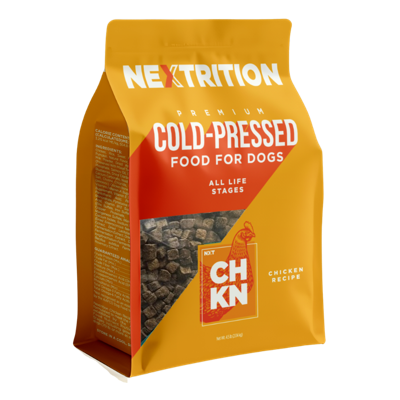
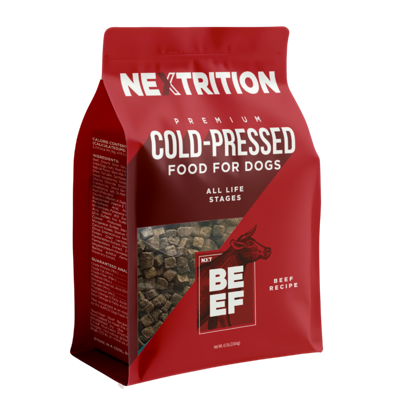
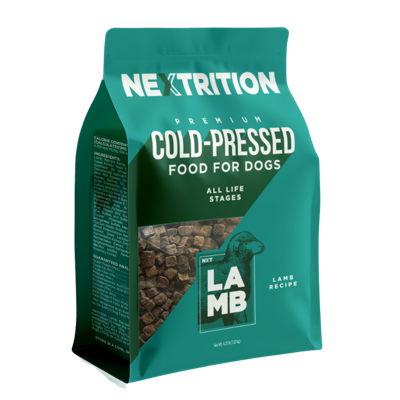
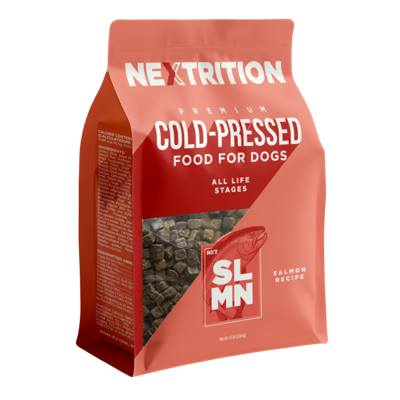
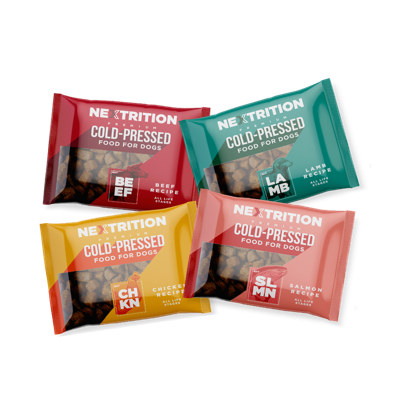
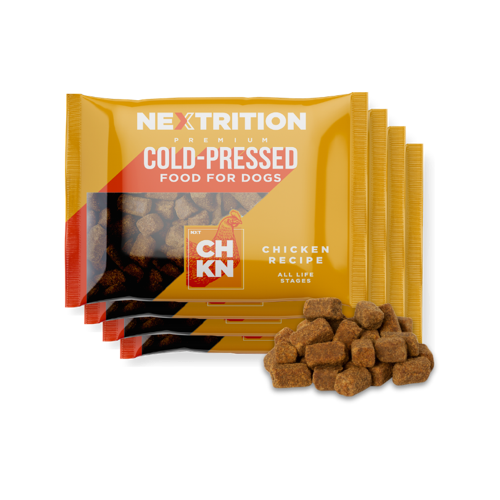
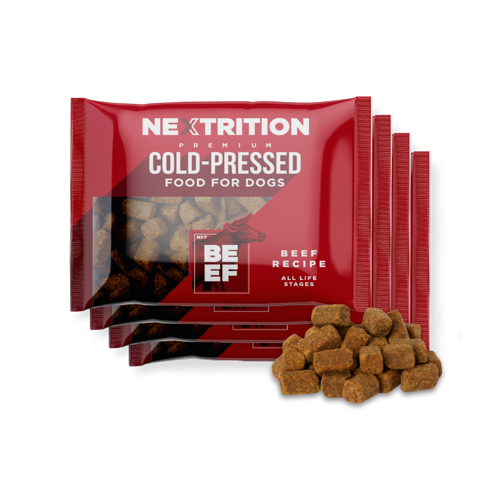
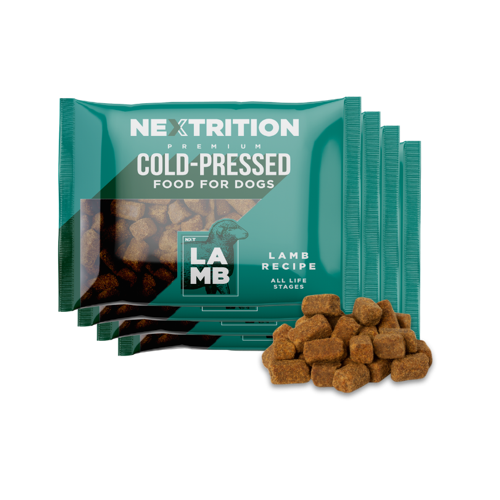
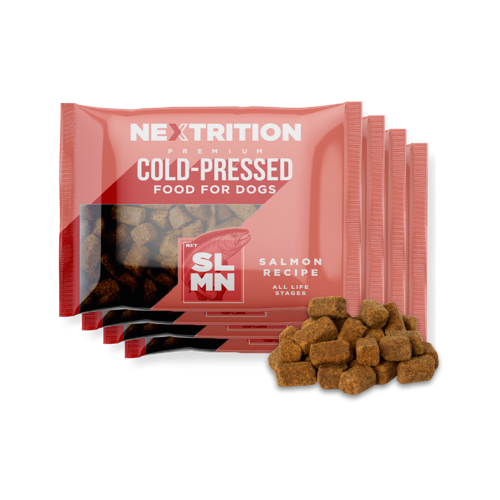
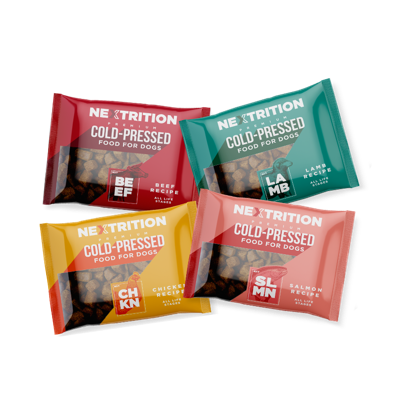
We built Nextrition’s Cold-Pressed Dog Food around real meat, fruits, and vegetables in chicken, lamb, salmon, and beef recipes because a schedule is easier to trust when the food itself isn't fighting digestion every day.

How to Choose the Right Feeding Routine if Your Dog Has a Sensitive Stomach
With a sensitive stomach, start with consistency before complexity. Same times. Measured portions. No constant switching.
Then watch the right signals:
- stool quality
- gas
- appetite
- post-meal comfort
- whether your dog seems settled between meals
Some dogs do better on smaller or more structured meals. But frequency alone won't fix a food that keeps irritating the gut. Ingredient simplicity and digestibility matter just as much.
This is where limited-ingredient, single-protein approaches can help reduce guesswork. If you're trying to narrow down what sits well, simpler is often better. Our Dog Food for Gut Health and Sensitive Stomach Dog Food and Treats collections were built for exactly that kind of dog.
If you're not sure which protein your dog handles best, the Trial Variety Pack is a practical first move. Low commitment. Clear feedback. You don't need to buy a large bag just to learn that salmon works and chicken doesn't, or vice versa.

How to Change Your Dog’s Feeding Schedule Without Causing Digestive Chaos
Don't swing from one extreme to another. That’s where owners create problems and then blame the new plan.
If you're moving from free feeding to scheduled meals, or from three meals to two, do it gradually. Keep total daily food steady while shifting timing little by little. Let appetite, digestion, and bathroom habits catch up.
If you're changing both food and schedule, go even slower. That's not being cautious for the sake of it. It's just cleaner. When too many variables change at once, you can't tell what helped and what didn't.
Treat the transition like an experiment:
- change one part calmly
- hold it long enough to observe
- monitor stool, energy, appetite, and behavior
- adjust based on what you see
A new routine isn't better because it's new. It's better when your dog is clearly doing better on it.
When a Personalized Feeding Plan Makes More Sense Than Generic Advice
Generic advice is useful up to a point. After that, it starts to get blunt.
Some dogs need more structure because they’re small, aging, highly active, picky, or digestively sensitive. In those cases, broad advice like "feed twice a day" may be directionally right but not specific enough to be easy.
A personalized plan can account for age, weight, activity level, stool quality, appetite, and the rhythm of your actual household. That's where the stress drops. You stop improvising.
For owners who want consistency without overthinking every reorder, our Monthly Dog Food Delivery helps by pairing regular delivery with a custom feeding guide and adjustable frequency. That matters more than it sounds. Last-minute food changes are one of the easiest ways to create digestive noise in a dog who was doing fine.
Simple is powerful when it's specific.

Common Questions Dog Owners Ask About Feeding Frequency
A few questions come up again and again, and they usually point to the same issue: owners want a routine they can trust.
How often should I feed my dog if they always act hungry?
Not always more often. First check portions, treats, food quality, and body condition. Some dogs are talented beggars.
How many meals should a dog eat a day if they are overweight?
Usually structured meals, not free feeding. Two measured meals often work well because they're easier to control consistently.
How often should my dog eat if they have a sensitive stomach?
Often two steady meals, sometimes smaller or more frequent meals depending on the dog. Consistency and digestibility matter a lot here.
How many times a day should a dog eat if they are very active?
Usually still structured meals, with calorie adjustments based on workload. More activity doesn't mean random extra feeding.
Is once-daily feeding safe for every adult dog?
No. Some adults may do well on it, but it isn't automatically best or safest for every dog.
Should I feed before or after walks?
Light routine walks are usually fine around meals. Avoid feeding a large meal immediately before or after strenuous exercise, especially in large breeds.
Is free feeding ever a good idea?
Sometimes, but it makes portion control and appetite tracking harder. For many dogs, it creates more problems than it solves.
What matters more, meal frequency or food quality?
You need both, but poor food quality can undermine even a good schedule fast.
Conclusion
The best answer to how often should you feed a dog is rarely a universal rule. It's a routine built around life stage, body condition, activity level, and digestive response.
Most adult dogs do well on two meals a day. Puppies usually need more frequent meals. Once-daily feeding is a nuanced option, not a blanket recommendation.
The bigger picture matters. Consistent timing, appropriate portions, and digestible nutrition usually do more for long-term health than chasing feeding trends. Watch stool quality, appetite, energy, and weight. Those signals are better than guesswork.
If you want a smart next step, review your dog’s current schedule and the food in the bowl at the same time. Then change one thing calmly. That's how good feeding plans get built.


