




Dog food for loose stools gets messy fast because too many bags make the same promises. You grab something for sensitive digestion, then the stool stays soft.
What matters is fit. Some dogs need easier digestion. Some need more fiber. Some need a true hydrolyzed formula (and yes, treats can wreck the read).
We cut this shortlist down to the vet diets worth your attention.
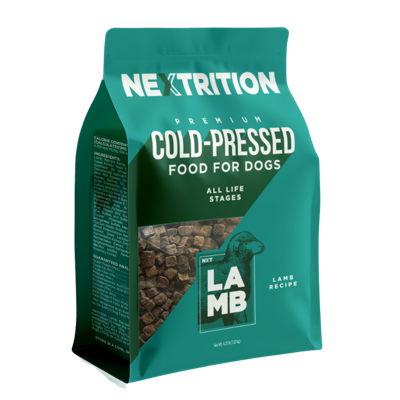
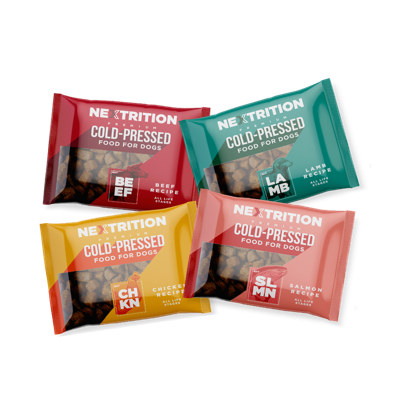
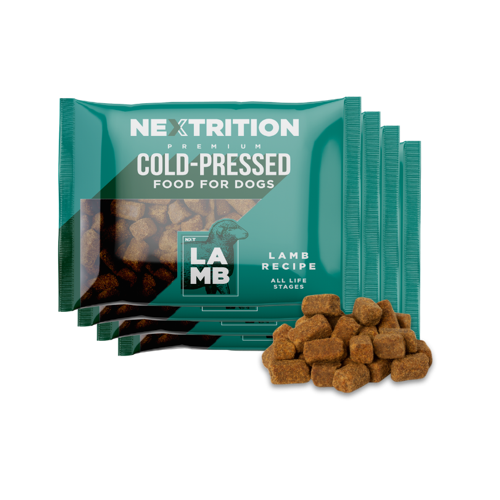
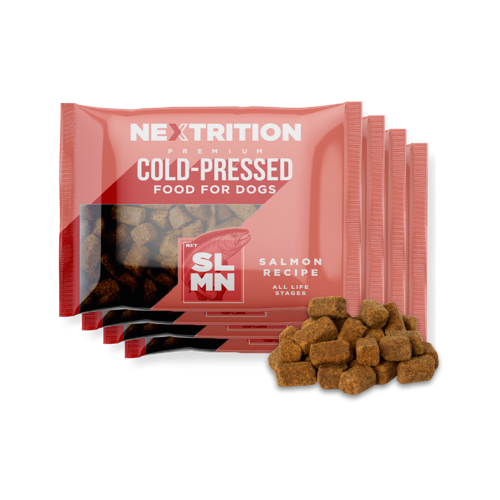
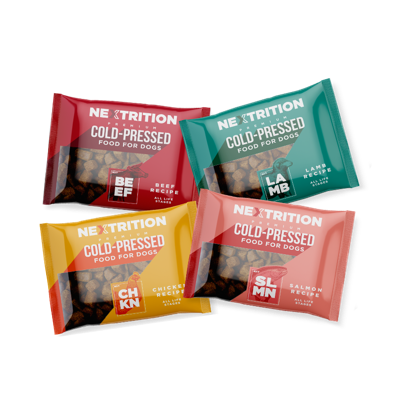
1. Nextrition Cold Pressed Dog Food: All-Natural Lamb Recipe

Pros
- Cold-pressed for easier digestion
- Real lamb with whole foods
- Nutrient-dense, less bulky servings
- Natural alternative before prescription
- Recognizable ingredients owners may prefer
Cons
- Not a prescription GI diet
- Not hydrolyzed for food trials
- Less suitable for severe cases
All-Natural Lamb Recipe is the best first stop here if your dog has loose stools but does not clearly need a prescription GI diet. It keeps the focus on recognizable ingredients, real lamb, grains, fruits, and vegetables, while using a cold-pressed format that is built around easier everyday digestion.
That makes it different from the veterinary diets below. Those can be the right call when your vet is managing a specific condition, but many dogs simply need a gentler, more nutrient-dense food before the situation gets that clinical.
The main tradeoff is that this is not a hydrolyzed or prescription formula. If your dog has ongoing diarrhea, blood in the stool, weight loss, or a diagnosed GI disease, you should work with your vet. But for a natural, real-food option that fits the loose-stool conversation, this Nextrition lamb recipe deserves the first look.
2. Hill's Prescription Diet Gastrointestinal Biome
Pros
- Targets stool firmness directly
- High-fiber therapeutic GI approach
- Useful for recurring soft stools
- Strong fit for large bowel issues
- Often helps after GI diet plateau
Cons
- Not ideal for food sensitivities
- Requires veterinary supervision
- Less universal for acute diarrhea
If your dog’s main issue is stool quality, not just digestion in a broad sense, this is one of the first diets we’d look at. It sits in a more specific lane than many prescription GI foods. The job here is firmer, more predictable stools, especially when the pattern looks like recurring large bowel diarrhea.
That distinction matters. A lot of dog food for loose stools is built around “easy to digest.” Helpful, yes. But not always enough.
Hill's Gastrointestinal Biome is the more targeted pick when your dog cycles through soft stools, has ongoing inconsistency, or seems fine otherwise but never quite settles into normal poop. In real use, this is often the diet owners land on after a standard sensitive-stomach formula only gets them halfway there.
Compared with Hill’s i/d, Purina EN, and Royal Canin Gastrointestinal, this formula is more explicitly stool-focused through a fiber-forward strategy. Compared with Royal Canin Gastrointestinal High Fiber, it competes in the same category, but this is the one in this roundup most directly framed around improving stool quality itself.
A practical way to think about it:
- Choose this when stool firmness is the actual goal
- Move up to hydrolyzed options if food sensitivity is becoming the bigger suspicion
- Don’t treat it like a universal answer for every kind of diarrhea
Not all loose stools come from a gut that needs “gentle food.” Some need a different fiber strategy.
For dogs with chronic softness, on-and-off flareups, or stools that matter as much as appetite and comfort, this is one of the clearest prescription options for firming things up.

3. Hill's Prescription Diet i/d Digestive Care
Pros
- Highly digestible for GI recovery
- Strong first-line vet GI option
- Good for recent loose stools
- Helpful for stress-related flareups
Cons
- Less targeted for chronic soft stools
- Not for food intolerance trials
- May not solve unexplained diarrhea
This is one of the most established answers when a dog needs a dog food for upset stomach after a digestive wobble. It’s less specialized than Biome and more about reducing the workload on the gut while things settle down.
That’s why it shows up so often in veterinary GI plans.
If your dog had a recent bout of loose stools, got into something they shouldn’t have, or tends to have stress-related digestive flareups, i/d makes sense. It’s built for highly digestible support, not for proving or disproving a food intolerance, and not specifically for large bowel stool normalization through added fiber.
That tradeoff is easy to miss. Owners often stay on a highly digestible diet because it helped at first, even when the long-term pattern says something else is going on.
Here’s where it fits best:
- Acute digestive upset
- Recovery after loose stools
- Dogs with generally sensitive stomachs
- Households that need a straightforward, vet-familiar digestive support dog food
Compared with high-fiber formulas like Biome or Royal Canin High Fiber, it’s less targeted for recurring soft stool patterns. Compared with hydrolyzed diets like z/d, it’s not an elimination-style strategy.
We’d call this a strong first-line prescription GI diet when the situation is recent, mild to moderate, and not yet pointing hard toward fiber problems or food-trigger issues. For short-term digestive support, it earns its place. For chronic unexplained diarrhea, it may not be the end of the story.
4. Purina Pro Plan Veterinary Diets EN Gastroenteric

Pros
- Highly digestible for sensitive stomachs
- Solid middle-ground GI prescription option
- Useful for acute diarrhea support
- Less restrictive than hydrolyzed diets
Cons
- Not targeted for stool firming
- Less helpful for suspected food sensitivities
- May feel underpowered in chronic cases
Purina EN lives in the same broad category as i/d and Royal Canin Gastrointestinal. It’s a general prescription GI formula for dogs that need easier digestion, not a more specialized stool-management or hydrolyzed approach.
That simplicity is part of the appeal.
For readers searching for the best dog food for dogs with loose stools, EN is often relevant when the goal is clear but not narrow: help the gut calm down, improve digestibility, and avoid jumping too quickly into more restrictive therapeutic categories.
In practice, this works best when the problem looks like sensitive digestion or diarrhea that benefits from a standard veterinary gastroenteric formula. It’s less compelling when the stool pattern screams large bowel inconsistency or when previous GI diets only partly helped and food sensitivity is moving up the list.
A useful comparison:
- Similar lane to Hill’s i/d and Royal Canin Gastrointestinal
- Less stool-specific than Biome or Royal Canin High Fiber
- Less specialized than hydrolyzed diets like z/d or HA
That middle-ground role matters. Sometimes owners overcorrect too early. They move from one soft stool episode straight to “must be allergies.” Sometimes it is. Often it isn’t.
If the core need is digestibility, EN is a sensible option. If the real problem is fiber response or protein-trigger suspicion, it can feel underpowered through no fault of its own. Wrong strategy, wrong result.
5. Royal Canin Veterinary Diet Gastrointestinal
Pros
- Broad GI support approach
- Good for ongoing sensitivity
- Useful before narrower diet trials
- Mainstream vet-supervised option
- May help settle loose stools
Cons
- Less targeted than high-fiber formulas
- Not ideal for food sensitivities
- Can become a holding pattern
This is another broad prescription GI option, and it makes the most sense when you need structured digestive support without committing to a more specialized theory too soon. It’s the generalist in the lineup, which is not a weakness if the case is still being sorted out.
For some dogs, that’s exactly the right call.
Royal Canin Gastrointestinal belongs beside Hill’s i/d and Purina EN as a mainstream digestive support dog food under veterinary supervision. It’s for ongoing sensitivity, loose stools, and dogs that benefit from a dedicated GI diet even if the root cause hasn’t been fully narrowed down yet.
Where it tends to fit
Some cases aren’t dramatic. The dog is eating, bright, and mostly okay, but stools are never quite reliable. In that situation, a broad GI formula can be a reasonable step before moving to high-fiber or hydrolyzed diets.
Compared with Royal Canin Gastrointestinal High Fiber, this is the less targeted version. Compared with hydrolyzed diets, it’s also less appropriate when the main working theory is food sensitivity.
A sentence we’ve learned to trust: if you don’t yet know whether the dog needs more fiber or a stricter protein strategy, the broad GI category often buys you clarity.
That said, don’t confuse broad support with perfect fit. If your dog’s stool history points strongly in one direction, a general formula can become a holding pattern.
6. Royal Canin Veterinary Diet Gastrointestinal High Fiber
Pros
- Targets firmer stool consistency
- Useful after partial GI-diet response
- High-fiber approach for large bowel patterns
- Strong fit for recurring soft stools
Cons
- Less suitable for food sensitivities
- Prescription diet needs veterinary guidance
- Not ideal for every diarrhea type
This is the Royal Canin option for owners who are no longer just looking for digestive support. They want firmer stools. Specifically firmer stools.
That shift changes the category.
Royal Canin Gastrointestinal High Fiber is the more targeted version of the brand’s GI line when recurring softness or large bowel diarrhea patterns are the issue. If a general GI food helped somewhat but never fully solved the consistency problem, this is the kind of escalation that makes sense.
Compared with standard Royal Canin Gastrointestinal, this is the more pointed choice. Compared with Hill’s Gastrointestinal Biome, it’s the closest like-for-like comparison in this roundup because both sit in the stool-focused, high-fiber therapeutic space.
A few grounded takeaways:
- It’s more relevant when stool consistency is the primary problem
- It’s less relevant if food intolerance is the main concern
- It often makes more sense after a general GI diet produced only partial improvement
A dog can digest food “well enough” and still need a different stool-management strategy.
For owners trying to find the best dog food for firm stools in prescription form, this belongs near the top of the shortlist. Not because high fiber is always better, but because some stool patterns respond far better to the right type of fiber than to another round of generic GI support.
7. Hill's Prescription Diet z/d
Pros
- Supports elimination-style diet trials
- Useful for suspected food sensitivity
- More targeted than general GI diets
- Can clarify chronic stool triggers
Cons
- Requires strict feeding discipline
- Less relevant for acute upset
- Needs veterinary oversight and patience
z/d belongs in a different decision tree. When we get into hydrolyzed diets, we’re no longer just trying to make digestion easier. We’re testing whether the food itself is part of the problem.
That’s a big shift.
Hill’s z/d is a strong option when chronic loose stools may be tied to adverse food reaction, food sensitivity, or chronic enteropathy. It becomes especially relevant when a dog has had repeated soft stool episodes, partial response to standard GI diets, or a history that doesn’t line up neatly with simple digestive upset.
Compared with i/d, EN, and Royal Canin Gastrointestinal, z/d is more specialized. Compared with HA Hydrolyzed and Specific CDD-HY, it sits in the same hydrolyzed strategy category.
The main thing owners need to hear is not glamorous:
Hydrolyzed diets only work if you run the trial cleanly
- No treats unless your veterinarian approves them
- No toppers
- No flavored meds if avoidable
- No table scraps
- No “just one chew”
One small extra can muddy the read. That’s where a lot of diet trials quietly fail.
z/d is a good fit when the conversation has moved from symptom management to root-cause testing through diet. If the dog needs a true elimination-style approach, this is far more relevant than another general GI food.

8. Purina Pro Plan Veterinary Diets HA Hydrolyzed
Pros
- Supports strict food trial strategy
- Better fit for suspected intolerance
- Useful for chronic loose stools
- More targeted than general GI diets
Cons
- Requires strict exclusive feeding
- Not ideal for isolated upset
- Results can take weeks
HA Hydrolyzed fills the same strategic role as z/d, but the point isn’t the brand name. The point is the category. If your veterinarian suspects food intolerance, this is the kind of formula that belongs on the table.
It’s for dogs with chronic instability, not just a rough weekend.
Compared with Purina EN, HA is much more specialized and much less about general digestibility alone. Compared with high-fiber formulas, it’s the better fit when stool issues look tied to ingredient sensitivity rather than large bowel patterning.
What makes hydrolyzed diets hard is not usually the bag. It’s the discipline.
A fair expectation with HA is patience. If you’re running a meaningful diet trial, you often need strict exclusive feeding over time, not a few better-looking stools in week one. That’s why this option is more relevant for owners trying to solve recurring problems than for those simply looking for dog food for upset stomach after an isolated episode.
Used correctly, it can be clarifying. Used casually, it can be expensive confusion.
9. Specific CDD-HY Food Allergen Management

Pros
- Hydrolyzed for food-trigger trials
- Useful for chronic enteropathy cases
- Good for failed prior diets
- More specialized than general GI
Cons
- Harder to find in markets
- Less ideal for simple cases
- Requires strict exclusive feeding
This is the more niche hydrolyzed option in the roundup, but it matters for the right case. Especially when the conversation has moved toward chronic enteropathy, food allergen management, or long-running diarrhea that hasn’t responded cleanly to simpler strategies.
That’s a narrower audience, but a very real one.
Specific CDD-HY belongs alongside z/d and Purina HA in the hydrolyzed therapeutic category. What makes it stand out is how directly it aligns with food allergen management and chronic enteropathy discussions rather than broad GI support.
For more complex cases, that framing can be useful.
There is a practical limitation here: access can vary. In some markets, this may be harder to find or less familiar in day-to-day veterinary practice. That doesn’t make it weaker, but it does affect whether it’s a realistic option for your household.
Consider it when:
- Loose stools have been going on for a long time
- Prior diet trials have failed
- Your veterinarian wants a stricter clinical nutrition strategy
- The case has moved well beyond simple sensitive-stomach management
This isn’t where we’d start for uncomplicated diarrhea. It’s where you go when the case has history.
How to Choose the Best Dog Food for Firm Stools
The best dog food for firm stools depends less on the label and more on the pattern behind the diarrhea. That’s the part owners often skip because symptoms feel more urgent than strategy.
But pattern is the strategy.
Here’s the cleanest way to sort your options:
Three practical tracks
- Highly digestible GI diets for acute upset, recent loose stools, or generally sensitive digestion
- High-fiber GI diets for large bowel diarrhea and chronic soft stool patterns
- Hydrolyzed diets for suspected food sensitivity or chronic enteropathy
Before choosing, ask a few blunt questions:
- Is this sudden, or has it been happening for months?
- Are stools always loose, or do they flare after certain foods, treats, or chews?
- Has your dog already tried a general GI food with only partial improvement?
- Is your dog bright and eating, or are there broader health changes?
A lot of owners jump straight to food allergy. We understand why. Recurring diarrhea feels personal and mysterious. But food allergy is only one possible cause, and not even the most common explanation in every case.
The useful criteria are simpler than marketing makes them sound: stool pattern, duration, likely trigger, and how far the veterinary workup has gone. Prescription diets are not interchangeable just because they all sit under “GI” or “sensitive stomach.”
High-Fiber, Highly Digestible, or Hydrolyzed: Which Digestive Support Dog Food Fits Your Dog?
These formulas are built differently because they are trying to solve different problems. Once you see that, the shortlist gets much easier.
Highly digestible
Hill’s i/d, Purina EN, and Royal Canin Gastrointestinal all belong here. This category is about easing the workload on the gut during or after upset. If your dog needs gentle digestion support, this is usually the first place to look.
High-fiber
Hill’s Gastrointestinal Biome and Royal Canin Gastrointestinal High Fiber are more stool-focused. These are often stronger choices when the issue looks like large bowel inconsistency rather than generalized digestive sensitivity.
Hydrolyzed
Hill’s z/d, Purina HA Hydrolyzed, and Specific CDD-HY are for stricter diet trials. Their role is to help rule food-related triggers in or out under veterinary guidance.
The wrong category can make good food look ineffective. That’s one of the biggest mistakes we see. An owner tries a highly digestible formula for a dog that really needs a hydrolyzed trial, or uses a hydrolyzed diet when the main issue is actually stool response to fiber. Then it turns into “nothing works.”
Sometimes the food isn’t failing. The strategy is.
Transition discipline matters
If you’re changing food, do it gradually when clinically appropriate. Abrupt switches can worsen diarrhea, which makes it harder to know whether the new diet is helping or the transition itself caused more disruption.
That detail gets overlooked a lot. Then the review of the food is really a review of the transition.

When Dog Food for Upset Stomach Is Not Enough
Some loose stool cases improve with the right food alone. Some don’t. Knowing the difference early saves time and usually saves your dog from spinning through the wrong solutions.
Move from product research to prompt veterinary care if you’re seeing:
- diarrhea lasting weeks
- weight loss
- repeated vomiting
- lethargy
- dehydration concerns
- blood in the stool
- a puppy, senior, or medically fragile dog with ongoing GI signs
Chronic diarrhea can come from parasites, inflammatory bowel disease, infections, metabolic disease, fat intolerance, or food sensitivity. That’s why history matters. Duration matters too.
If you’re running an elimination trial, it usually needs 8 to 12 weeks of exclusive feeding to mean much. Not “mostly exclusive.” Exclusive.
And a useful reminder for health-conscious owners: not every uncomplicated case needs antibiotics. In many acute scenarios, nutrition-first management is a reasonable starting point under veterinary guidance.
One more thing, because it derails a lot of good plans. Treats, chews, scavenging, and flavored extras can sabotage any attempt to judge whether a diet is working. If you want a clean answer, you need a clean input.
Conclusion
The smartest way to choose dog food for loose stools is to match the formula type to the likely cause, not just the symptom. That’s the whole game.
If you need stool-firming through fiber, Hill’s Prescription Diet Gastrointestinal Biome and Royal Canin Veterinary Diet Gastrointestinal High Fiber are the most targeted options here. If the job is general digestive support after upset, Hill’s i/d, Purina EN, and Royal Canin Gastrointestinal are the clearest fits. If chronic loose stools point toward food sensitivity or chronic enteropathy, z/d, Purina HA Hydrolyzed, and Specific CDD-HY are the more relevant paths.
Start with one question: does your dog likely need easier digestion, more fiber, or a true hydrolyzed diet trial?
Then get practical. Review stool history. Remove treat variables. Work with your veterinarian to choose the category first, then the brand inside it. That’s how you stop guessing and start getting cleaner results.


