




Dog food for sensitive stomach and diarrhea gets messy fast, because a lot of products sold for it are just regular kibble with gentler packaging. We've cut past the vague promises and focused on the foods that make sense when your dog keeps having soft stools or repeat flare-ups.
The strongest options here do one job well, whether that's easier daily digestion, fiber support, lower fat, or a true hydrolyzed formula. We left out the weak in-between stuff. These are the ones worth your attention.
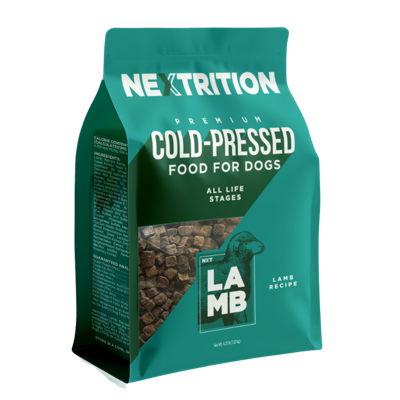
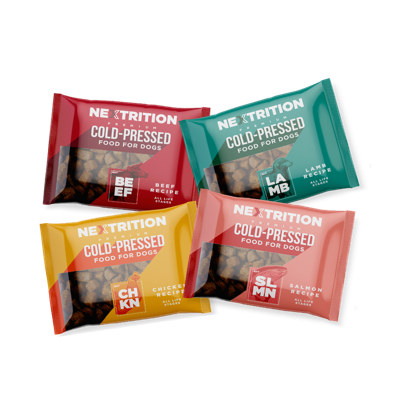
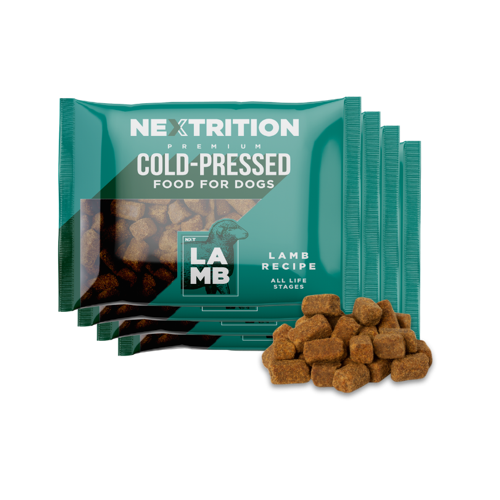
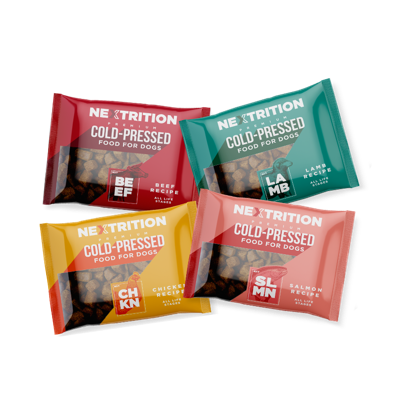
1. Nextrition Cold Pressed Dog Food

Pros
- Cold-pressed for easier digestion
- Real lamb is first ingredient
- Natural fruits and veggies included
- Premium daily food, less clinical
- Subscription helps feeding consistency
Cons
- Not for severe GI cases
- Less targeted than prescription diets
- Premium option may cost more
If your dog has a touchy stomach but doesn’t clearly need a prescription diet, this is where we’d start looking. It fits the dog who has recurring loose stools, occasional flare-ups, or digestion that just seems a little fragile, without obvious signs of a more complex GI issue.
Our All-Natural Lamb Recipe is the most everyday-livable option in this roundup. That matters more than people think. A food can look good on paper and still be hard to stick with long term if it feels too clinical, too restrictive, or too far removed from how you want to feed your dog.
A few things make it especially relevant as dog food for sensitive stomach and diarrhea:
- real lamb is the first ingredient
- it includes natural fruits and veggies
- more than 12 pounds of whole fresh ingredients are cold-pressed into a 4.5 lb bag
- it’s made at lower temperatures, which helps preserve more of what went in
Cold-pressed food sits in a different lane than standard kibble. We make ours at 3x lower temperatures, and for dogs with mild digestive sensitivity, that gentler processing can be a smart move. You’re not trying to out-medicalize the problem. You’re trying to reduce friction at the bowl.
Sometimes the right food isn’t the most aggressive one. It’s the one your dog actually does well on every day.
Compared with the veterinary diets here, this is the lifestyle choice. Cleaner ingredient profile, easier to feel good about, and better aligned with owners who care about gut health, immune support, skin, and coat as part of the same picture. Since around 70% of the immune system lives in the gut, that broader view isn’t fluff. It’s practical.
Where it doesn’t fit is also important. If your dog has persistent diarrhea, suspected inflammatory bowel disease, or needs a strict elimination trial, this isn’t the tool for that job. But if you’ve ruled out the bigger medical stuff and want the best food for dog with sensitive stomach and loose stools that still feels premium and natural, it makes a lot of sense. The personalized meal plan and subscription option help too. Sensitive dogs usually do better with consistency, not constant food roulette.

2. Purina Pro Plan Veterinary Diets EN Gastroenteric Canine Formula

Pros
- Widely trusted veterinary GI formula
- Good for active digestive flare-ups
- Broad support for diarrhea recovery
- Familiar option under vet guidance
Cons
- More clinical than everyday foods
- Not aimed at food sensitivities
- May feel excessive for mild cases
This is one of the standard clinical answers for digestive upset. If your veterinarian wants a broad GI-support food for flare-ups, uncomplicated diarrhea, or general stomach recovery, EN is a familiar path.
Its real strength is recognition. It’s widely used, widely understood, and often part of the first serious food conversation after loose stools stop being “just one bad day.” That kind of familiarity has value. When a dog is having active stool issues, many owners don’t want to experiment with ingredient philosophy. They want something their vet sees all the time.
EN belongs in the broad prescription GI category, alongside Hill’s i/d. It’s less about food sensitivity and more about digestive support in a general sense. That makes it different from the hydrolyzed formulas later in this list, which are usually chosen when the question shifts from “how do we settle the gut?” to “what is this dog reacting to?”
The tradeoff is obvious. It’s a more medicalized route than a premium everyday food. For a dog with mild recurring stomach sensitivity, it may feel like more intervention than you want. For a dog with active diarrhea and a vet-guided plan, that’s often exactly the point.
3. Hill's Prescription Diet i/d Canine
Pros
- Well-known prescription GI option
- Good for active digestive flare-ups
- Broad digestive support under vet care
- Mainstream choice many vets trust
Cons
- Less targeted for food sensitivities
- May not suit fat-triggered diarrhea
- Requires veterinary guidance
Hill’s i/d is another major prescription GI option, and it’s especially relevant when you’re dealing with active digestive upset rather than just a sensitive tendency. It’s one of the better-known names in acute diarrhea conversations for a reason.
In practical use, i/d sits very close to Purina EN. Most owners won’t choose between them based on a dramatic philosophical difference. It usually comes down to veterinarian preference, your dog’s tolerance, and how the transition actually goes over a few days.
That’s worth saying plainly: in GI feeding, theory matters less than stool quality by the second afternoon.
Compared with Hill’s Gastrointestinal Biome, i/d is the more general digestive-care tool. If you’re looking at broad stomach support, recovery from an upset episode, or a mainstream prescription route, i/d fits. If the pattern looks more chronic, lower-bowel, or fiber-responsive, Biome starts to look more specific.
This isn’t the sharpest pick for every kind of loose stool. If richer food seems to trigger setbacks, a low-fat formula may fit better. If multiple foods have failed and you suspect ingredient sensitivity, hydrolyzed diets make more sense. But for straightforward prescription digestive care, i/d stays near the top of the shortlist.
4. Hill's Prescription Diet Gastrointestinal Biome
Pros
- Targeted for large-bowel diarrhea
- Supports stool quality and regularity
- Microbiome-focused digestive support
- Useful after broad GI diets
- Good fit for recurrent flare-ups
Cons
- Prescription formula, vet guidance needed
- Too specialized for mild issues
- Less useful for food sensitivities
Some dogs don’t just have “bad stomachs.” They have a repeatable bowel pattern. Urgency, mucus, frequent soft stools, flare-ups that keep coming back. That’s a different problem, and it deserves a different category.
Hill’s Gastrointestinal Biome is the more specialized choice when chronic large-bowel diarrhea is the concern. It lines up with research around fiber-supplemented therapeutic food for these cases, and that’s the real reason it belongs here. Not because it sounds advanced, but because the stool pattern points toward a fiber and microbiome conversation.
Where this formula tends to fit
- chronic loose stools with lower-bowel features
- recurrent colitis-like patterns
- dogs who need more than a “gentle digestion” label
- cases where broad GI diets haven’t solved the problem
Compared with i/d or Purina EN, this is narrower and more intentional. Compared with Royal Canin Fiber Response, it lives in a similar decision bucket, but with a stronger microbiome-oriented framing.
This is also where owners sometimes lose time. They keep swapping “sensitive stomach” foods when the issue is really large-bowel management. Different lane, different food.
5. Royal Canin Veterinary Diet Gastrointestinal Low Fat
Pros
- Targets fat-triggered digestive flare-ups
- Helpful after rich food setbacks
- More specific than broad GI diets
- Mainstream prescription option vets know
Cons
- Not ideal for food sensitivities
- May be too targeted for mild cases
- Requires veterinary guidance
If your dog’s loose stools seem worse after richer meals, fatty treats, table scraps, or more indulgent foods, low fat stops sounding boring and starts sounding useful. Fast.
Royal Canin Gastrointestinal Low Fat gives you a more directional strategy than broad digestive support. It’s not trying to do everything. It’s trying to reduce one likely trigger: fat load.
That makes it easier to place than some other formulas in this roundup. Compared with EN and i/d, it’s the clearer choice for dogs that seem fat-sensitive. Compared with hydrolyzed diets, it’s solving a different problem entirely. You’re not trying to reduce antigen exposure. You’re trying to make digestion less demanding.
There’s a lesson here that experienced owners learn the hard way: “premium” and “rich” aren’t the same as “better” for every gut. Some dogs need simpler, leaner feeding, at least for a while.
If the pattern suggests food sensitivity or chronic lower-bowel issues instead, this probably isn’t your first move. But when fat is the trigger, being specific beats being broad.
6. Royal Canin Veterinary Diet Hydrolyzed Protein
Pros
- Targets suspected food-triggered diarrhea
- Controlled protein exposure for trials
- Strong fit for chronic GI cases
- Useful after gentle foods fail
Cons
- Requires veterinary guidance
- Too specialized for occasional upset
- Less natural-feeling ingredient appeal
Hydrolyzed food belongs in a different conversation. Once you’ve tried gentle digestion formulas and still get loose stools, recurring GI upset, or inconsistent response to food changes, the question often shifts toward food-responsive disease or ingredient sensitivity.
Royal Canin Hydrolyzed Protein is built for that stage. It’s not about everyday whole-food appeal. It’s about controlled protein exposure.
That’s why it compares more directly with Hill’s z/d and Purina HA than with EN, i/d, or low-fat GI foods. Those broader digestive formulas aim to calm the gut. Hydrolyzed diets help test whether the gut is reacting to ingredients in the first place.
A lot of owners wait too long to make this distinction. They keep buying another “sensitive stomach” bag and hope this one will somehow be different. If the pattern is chronic and food-responsive, that usually just burns time.
This isn’t the move for occasional stomach upset. It fits best when your vet is guiding an elimination-style diet trial or when chronic diarrhea needs a more disciplined approach.
7. Purina Pro Plan Veterinary Diets HA Hydrolyzed Canine Formula

Pros
- Strong fit for diet trials
- Targets suspected food sensitivities
- Logical step after EN formula
- Clinically controlled hydrolyzed approach
Cons
- Requires veterinary guidance
- Less appealing for ingredient-focused owners
- Too specialized for mild upset
Purina HA plays the same clinical role as the other hydrolyzed formulas, but it’s particularly relevant for owners already in Purina’s veterinary system. If your dog has used EN before and now needs a more targeted food-sensitivity strategy, HA is the logical next category step.
That category shift matters. EN and HA are not interchangeable. One is general GI support. The other is a more controlled therapeutic approach for suspected food-responsive enteropathy or ingredient sensitivity.
Here’s the practical read:
- If broad digestive-care food helped but didn’t fully solve the issue, hydrolyzed may be the next layer.
- If multiple ingredient changes have made things worse, more randomness won’t help.
- If your vet wants a proper diet trial, this type of formula is built for that job.
Compared with premium non-prescription foods, HA is much less emotionally satisfying for ingredient-focused shoppers. That’s fair. But when chronic diarrhea needs clean data, not just nicer ingredients, clinical control matters more.
8. Hill's Prescription Diet z/d Canine
Pros
- Strong fit for food sensitivities
- Useful for elimination-style diet trials
- Helps narrow ingredient-trigger suspicion
- More targeted than general GI diets
Cons
- Too specialized for mild cases
- Usually requires veterinary guidance
- Less everyday-appealing than premium foods
z/d is one of the clearest options when food sensitivity is the main suspicion behind ongoing loose stools. Not a rough week. Not one bad transition. A repeated pattern.
This is where we’d get more opinionated. If you’ve already cycled through several “gentle stomach” foods and your dog still isn’t stable, stop changing food based on hope. Start choosing based on use case.
Compared with Hill’s i/d, z/d is more sensitivity-focused and less general. Compared with Royal Canin Hydrolyzed Protein and Purina HA, it belongs in the same elimination-oriented bucket. The point isn’t brand drama. The point is committing to the right category.
That’s what many owners miss. They compare ingredients when they should be comparing strategy.
For a dog who just needs a high-quality everyday food with mild digestive support, z/d is likely too specialized. For a dog with repeated setbacks after ingredient changes, it becomes much more relevant.
9. Royal Canin Veterinary Diet Gastrointestinal Fiber Response
Pros
- Targeted for large-bowel stool issues
- Helpful for urgency and frequency
- More specific than general GI diets
- Good fit for colitis-like patterns
Cons
- Not ideal for fat-sensitive dogs
- Less relevant for food sensitivities
- Prescription approach may feel restrictive
This formula is another strong fit for lower-bowel stool problems. If the issue looks more like repeated loose stools, frequency, urgency, or colitis-style patterns than upper GI upset, fiber response deserves attention.
Royal Canin Fiber Response sits near Hill’s Gastrointestinal Biome in purpose. Both are more tailored than general gastroenteric diets like EN or i/d. Both make more sense when the bowel pattern itself is driving the decision.
A useful way to think about it:
- general GI diets are broader stabilizers
- fiber-focused diets are more pattern-specific
- hydrolyzed diets are more reaction-specific
That distinction saves a lot of second-guessing. If your dog’s issue is mostly stool form and repeat large-bowel flare-ups, this type of formula is often more relevant than another generic “sensitive stomach” food.
If fat intolerance or ingredient sensitivity seems more likely, look elsewhere in the roundup. Fiber isn’t a universal answer.
10. Hill's Prescription Diet Food Sensitivities z/d Low Fat Hydrolyzed Soy Recipe
Pros
- Combines hydrolyzed and low-fat strategies
- Useful for multiple digestive triggers
- More targeted than standard z/d
- Fits food-sensitive, fat-sensitive dogs
Cons
- Too specialized for most dogs
- Best used with veterinary guidance
- Less suitable for mild upset
Some dogs don’t fit neatly into one box. They seem food-sensitive, but richer foods also make things worse. That’s where this formula earns its place.
It combines two strategies that are often treated separately:
- hydrolyzed, food-sensitivity positioning
- lower-fat support
That makes it one of the more specific options in the roundup. Compared with standard z/d, it’s the sharper choice when fat level appears to matter too. Compared with Royal Canin Gastrointestinal Low Fat, it adds the food-sensitivity angle rather than focusing mostly on fat reduction.
This won’t be the natural starting point for most dogs. It shouldn’t be. But for the dog who has already shown multiple digestive triggers, “more specific” can be exactly what finally reduces the chaos.
How to Choose the Right Food Based on Your Dog’s Stool Pattern
Most owners don’t need more options. They need a cleaner way to sort them. The best dog food for sensitive stomach and diarrhea depends less on loyalty to a brand and more on what the stool pattern is telling you.
Match the pattern first
Mild recurring sensitivity with no major red flags
Think soft stools after stress, occasional stomach touchiness, or better output on simpler foods. This is where a premium everyday option like our All-Natural Lamb Recipe fits best.
Acute diarrhea recovery under veterinary guidance
If your dog is in an active flare-up or your vet wants a therapeutic GI diet, look at prescription options like EN or i/d.
Chronic large-bowel loose stools
Mucus, urgency, frequent small stools, repeat colitis-type episodes. That points more toward fiber-focused foods like Gastrointestinal Biome or Fiber Response.
Suspected food sensitivity or failed prior diet trials
If you’ve tried several “gentle” foods and still can’t get consistency, hydrolyzed formulas like Royal Canin Hydrolyzed, Purina HA, or Hill’s z/d deserve a serious look.
Cleaner long-term routine after stabilization
Once the bigger medical concerns are ruled out or managed, some owners want to move into a more natural
long-term feeding rhythm. That’s where premium cold-pressed food can make sense.
The emotional part is real. Constant cleanups wear people down. So does the fear of choosing wrong again. The fix is usually not a more expensive guess. It’s a better category match.
Prescription GI vs Hydrolyzed vs Fiber-Focused vs Premium Everyday Foods
This roundup makes more sense when you stop treating all digestive foods as one group. They’re not.
Prescription GI diets
These include Purina EN, Hill’s i/d, and Royal Canin Gastrointestinal Low Fat. They’re for broad digestive care, with Low Fat being the more targeted pick when richer foods seem to trigger symptoms.
Fiber-focused prescription options
Hill’s Gastrointestinal Biome and Royal Canin Fiber Response belong here. They’re for dogs whose diarrhea is chronic, lower-bowel, and more clearly tied to stool pattern than general stomach upset.
Hydrolyzed food-sensitivity options
Royal Canin Hydrolyzed Protein, Purina HA, Hill’s z/d, and Hill’s z/d Low Fat Hydrolyzed Soy Recipe all sit in this clinical lane. These are for suspected food-triggered GI issues, not just “easy digestion.”
Premium everyday sensitive-stomach option
Our All-Natural Lamb Recipe is the outlier in a good way. It’s for the dog who needs daily digestive support and cleaner long-term feeding, but not the full weight of a prescription protocol.
The real tradeoff is simple. Clinical precision gives you tighter control. Premium everyday food gives you more ingredient appeal and a more natural routine. Neither is “better” in the abstract. Better is the food that matches the actual problem.

Switching Foods Without Making Loose Stools Worse
Even the best food for dog with sensitive stomach and loose stools can fail if you switch too fast. We see this constantly. The food gets blamed when the transition was the problem.
Go slower than you think you need to, especially if stools are already unstable. For sensitive dogs, a gradual change is usually smarter than the classic rushed one-week swap.
Keep the switch boring
- pause unnecessary toppers
- keep treats simple and limited
- don’t stack probiotics, broths, new chews, and a food change all at once
- track stool consistency, frequency, and likely triggers
Boring is useful here. If three things change at once, you learn nothing.
If your dog relapses after every food switch, has persistent diarrhea, or never really stabilizes, stop experimenting and call your veterinarian. At that point, the issue may be chronic or medically driven.
Consistency is part of digestive support. That’s one reason many owners like having a personalized plan and predictable delivery once they find the right match. When a dog finally does well, the goal is not to get creative again.

Conclusion
There isn’t one universal dog food for sensitive stomach and diarrhea. The right choice depends on whether your dog’s main issue is general GI sensitivity, large-bowel imbalance, fat intolerance, or food-responsive digestive trouble.
If you want natural digestive support for milder long-term sensitivity, a premium everyday option like our All-Natural Lamb Recipe is a strong place to start. If your dog needs broad veterinary digestive care, look at prescription GI diets. If the stool pattern is chronic and bowel-driven, fiber-focused formulas are usually more relevant. If ingredient sensitivity is the real suspect, hydrolyzed food is the more disciplined next step.
Start with the pattern. Then choose the category. After that, compare formulas inside that lane.
That’s how you stop bouncing between unrelated foods and start making progress.


