




If your dog has weird stools, itchy skin, or flat energy, low temperature dog food is worth a real look. Most people stare at the ingredient panel and miss the other half of the problem: how the food gets made.
What matters is pretty simple. Can your dog handle it, stay settled after meals, and look good on it? Start with these:
- Gentle processing means less if the recipe leans on cheap starch
- Stool volume, gas, and coat texture usually tell you more than marketing
- Dense food changes portion size fast, so you don't overfeed
What Low Temperature Dog Food Is and What It Is Not
Low temperature dog food is exactly what it sounds like. It’s food made with gentler processing than standard high-heat kibble. That matters more than most labels let on.
Low heat dog food is a broad category, not one specific format. It can include cold-pressed, air-dried, freeze-dried, gently cooked, and some fresh foods. They’re grouped together because the process is generally less aggressive, not because they all behave the same in the bowl or in your dog’s body.
That distinction matters.
A lot of owners hear “low temperature” and assume it means raw. It doesn’t. Raw food is its own category. Some people want the minimal handling that comes with raw feeding, but low temperature dog food is usually about reducing heat exposure while still creating a safer, more practical finished food.
And lower heat alone doesn’t automatically make a food good. If the ingredient list is weak, the sourcing is vague, or the formula isn’t complete and balanced, the process won’t save it. Gentle handling helps preserve what’s good. It doesn’t create quality from nothing.
Here’s the better way to think about it:
- Ingredients tell you what went in
- Processing tells you what happened to those ingredients
- Your dog tells you how that combination performs
That last part gets missed all the time. We’ve seen owners spend months comparing ingredient panels while barely asking how the manufacturing method may change digestibility, texture, nutrient retention, and meal tolerance.
The bowl is shaped by process just as much as by ingredients.
The goal of minimally processed dog food isn’t to sound premium. It’s to preserve more of the food’s original nutritional value and physical integrity so your dog gets something closer to the ingredients you intended to feed in the first place.
Why Processing Matters More Than Most Labels Admit
Most kibble is made through extrusion. The ingredients are ground, mixed into a dough, exposed to heat and pressure, pushed through machinery, then dried. It’s an efficient system. It’s also a rough one.
In practical terms, extrusion commonly involves cooking around 120°C or higher. Drying stages often run around 90 to 150°C. Across the broader process, temperatures can reach roughly 90 to 200°C depending on the step. That’s a lot of heat. More than many owners realize.
After that, fats, flavorings, vitamins, and minerals are often sprayed back onto the kibble. That doesn’t make every kibble bad. But it tells you something important about the process. When a food needs nutrients and palatants added back after manufacturing, the process itself is part of the nutritional story.
For health-conscious dog owners, this isn’t abstract. High heat can affect nutrient retention, digestibility, and how food performs in the body over time. It can also promote the formation of advanced glycation end products, or AGEs, which form more readily when heat is high and moisture is low.
We should be honest here. The science gives us reason to care about high-heat processing and AGE exposure, but it doesn’t justify miracle claims. Food is rarely that simple. Still, if your dog eats the same diet twice a day for months or years, processing differences stop being theoretical. They become a repeated exposure.
That’s the quiet part.
A food doesn’t have to cause a dramatic reaction to be a poor fit. Sometimes the signs are smaller. Bigger stools. Less enthusiasm around meals. A coat that never quite looks right. The kind of things people normalize because they happen slowly.
Why Gentler Preparation Appeals to Health-Conscious Dog Owners
The appeal of low temperature dog food isn’t novelty. Most of the owners we talk to are not chasing a trend. They’re trying to reduce compromise.
They want food that keeps more of its original value intact and asks less of the ingredients during manufacturing. That matters most when a dog is already giving subtle feedback.
Digestive health usually gets your attention first. Loose stools, excess gas, heavy-looking digestion after meals, bigger fecal volume than expected. Then you start noticing other things that don’t feel dramatic enough to call an emergency, but don’t feel normal either. Dull coat. Recurring itchiness. Lower enthusiasm at mealtime. Flat energy by the second afternoon.
The gut sits in the middle of a lot of this. It affects stool quality, comfort after meals, nutrient absorption, and broader immune support. Many owners are drawn to lower-heat foods for that reason alone, especially since a large share of immune function is associated with the gut.
Not because it sounds advanced. Because it makes practical sense.
What most people want is pretty straightforward:
- cleaner ingredient lists
- gentler handling
- a food their dog can manage well every day
- less second-guessing at feeding time
That’s a reasonable standard. Better feeding shouldn’t feel like a full-time research project.
What the Research Suggests About Digestion, Stool Quality, and Gut Health
If you strip away the marketing, this is where the topic gets useful. How does food format actually show up in the dog?
In one study of healthy adult dogs, diet format influenced protein and fat digestibility, fecal output, fecal moisture, stool firmness, bile acids, and microbiota patterns. That’s not a small list. It suggests the structure of the food matters, not just its calories or crude nutrient percentages.
One practical finding stands out right away. The extruded diet produced more fecal output than the other tested formats. Owners often notice that before anything else. More waste usually means something about the food isn’t being used as efficiently.
Stool quality also shifted across formats. In that study, stool scores were looser with the extruded and fresh diets than with some of the raw and freeze-dried options tested. Some of the less processed formats also showed higher protein and fat digestibility than the extruded food in that comparison.
Diet format even changed the gut microbial profile. That matters because food can shape more than fullness and calorie intake. It can influence the internal environment your dog works with every day.
There’s an important limitation, and it’s worth saying clearly. The study compared different commercial foods, so the results reflect both processing and formulation, not processing alone. That’s real life, honestly. Foods aren’t fed as isolated variables.
Still, the takeaway is useful. If owners report changes first in stool firmness, reduced fecal volume, and better meal tolerance after switching away from extruded food, that isn’t random. Those are exactly the kinds of outcomes you’d expect to notice first.
Cold Pressed vs Kibble: Where the Real Difference Starts
When people search cold pressed vs kibble, they often get buried in brand language. The real difference starts with process.
Kibble is built around extrusion. Cold-pressed food is made using a gentler pressing process with substantially lower heat exposure. That shorter, less aggressive path can help preserve sensitive nutrients and keep the finished food closer to the original ingredients.
That’s the reason to care. Not the shape. Not the buzzwords.
Kibble remains popular for obvious reasons. It’s affordable, shelf-stable, convenient, and highly consistent. If your main priority is cost and simplicity, that’s why it dominates the market.
But those strengths don’t automatically make it the best fit for dogs whose owners are prioritizing digestibility, ingredient integrity, and everyday vitality. Convenience is useful. It just shouldn’t be the only criterion.
Cold-pressed food tends to sit in a practical middle ground. It gives you a dry-format option without the storage and handling concerns that come with raw feeding. For many owners looking for the best non kibble dog food, that balance is the whole point.
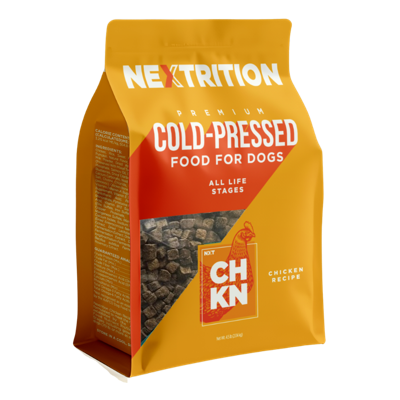
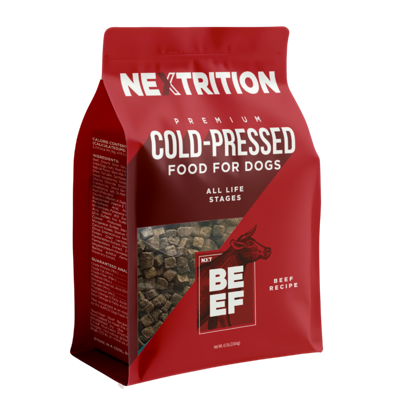
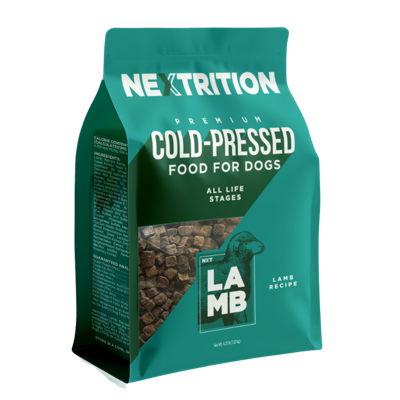
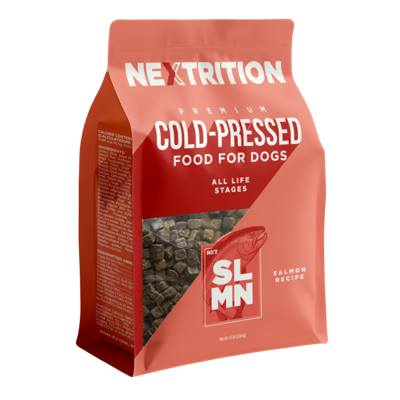
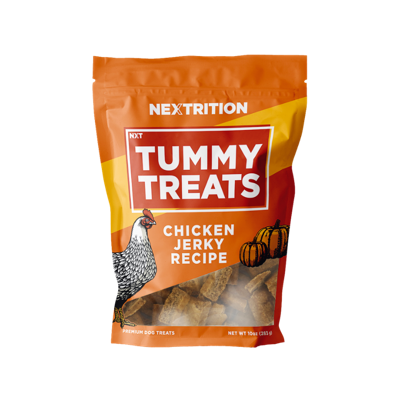
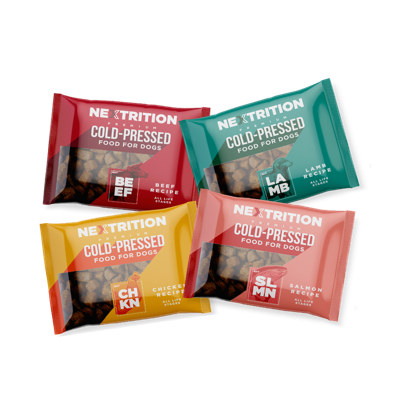
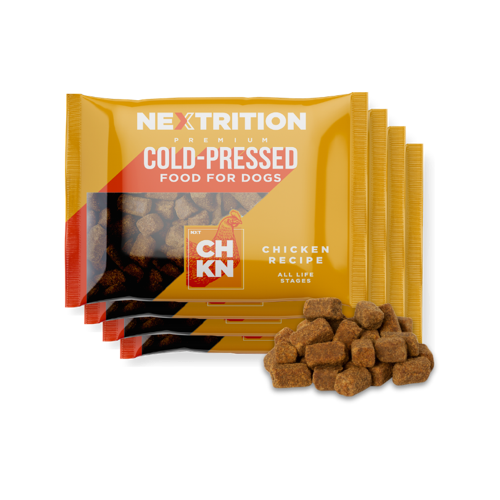
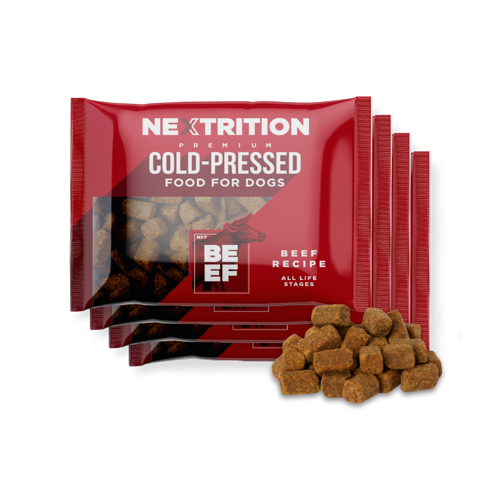
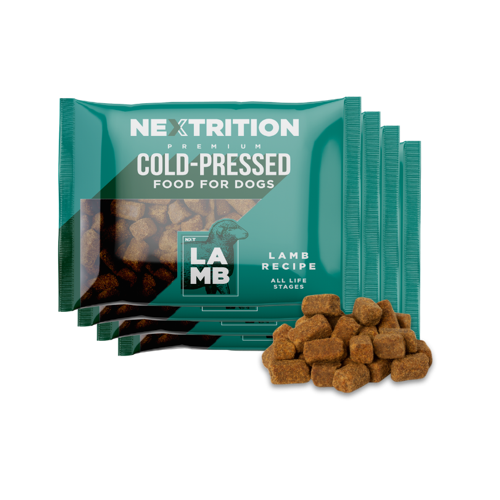
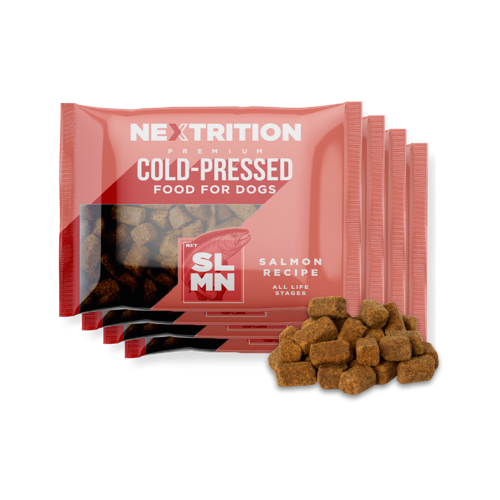
At Nextrition, our cold-pressed recipes are made at roughly 3x lower temperatures and built around real meat, fruits, vegetables, and digestive support rather than standard extrusion. We didn’t choose that route to sound different. We chose it because process changes outcomes.
When you compare cold pressed vs kibble, compare the things you’ll actually live with:
- nutrient retention
- stool quality
- ingredient simplicity
- convenience
- confidence in the feeding routine
That’s the real scorecard.
Not All Minimally Processed Dog Food Is Equal
It’s easy to lump every alternative to kibble into one bucket. That usually leads to bad decisions.
Minimally processed dog food includes several formats, and each comes with real tradeoffs.
Cold-pressed
Cold-pressed food gives you dry-format convenience with gentler processing. It’s often a strong fit for owners who want simplicity, storage ease, and less heat exposure without moving into refrigerated or raw feeding.
Air-dried
Air-dried food removes moisture with low heat and airflow. It can preserve texture and nutrients better than extrusion, though it’s often richer and may require more careful portioning.
Freeze-dried
Freeze-dried food removes moisture without traditional cooking, which helps preserve many original properties. It can be excellent, but it usually comes at a premium price and may not be practical as a full-time diet for every household.
Fresh or gently cooked
These formats appeal to owners who want a more whole-food appearance and lighter preparation. The tradeoff is refrigerator or freezer space, shorter storage windows, and less convenience when life gets busy.
Raw
Raw diets appeal to people who want minimal processing above all else. But the tradeoffs are not minor. Raw feeding comes with documented microbiological and handling concerns, including contamination risks and potential household exposure. Poorly formulated raw or homemade diets can also leave nutrition gaps.
The best non kibble dog food is not one universal format. It’s the option that balances quality, safety, practicality, and your dog’s response. A food that looks ideal on paper but creates stress in your kitchen usually doesn’t last.
Signs Your Dog May Be Ready for a Low Heat Dog Food
Most dogs don’t send a formal notice. They give you patterns.
Maybe the stools are inconsistent for no obvious reason. Maybe there’s frequent gas, visible discomfort after meals, a dull coat, recurring itchiness, or less enthusiasm when the bowl goes down. Sometimes a dog just looks weighed down after eating. Owners know that look.
None of these signs prove the current food is the problem. But they do justify looking more closely at both ingredients and processing.
Dogs with sensitive digestion often give early feedback through:
- stool volume
- stool consistency
- post-meal comfort
- appetite changes
- skin and coat shifts
If you’re trying to sort signal from noise, track your dog for a couple of weeks. Keep it simple. Note appetite, stool quality, coat condition, scratching, and daily energy. You don’t need a spreadsheet unless you like spreadsheets. You need a pattern.
This should be informed experimentation, not fear-based feeding.
One caution here. Puppies, seniors, and dogs with kidney disease, diabetes, pancreatitis, gastrointestinal disease, or prescription-diet needs should have diet changes reviewed with a veterinarian first. A gentler food can still be the wrong food if it doesn’t match the medical picture.
How to Choose the Best Non Kibble Dog Food With Confidence
Start with the first filter. Look for a complete and balanced food. Not a trendy formula that sounds clean but skips nutritional grounding.
Then look at the full picture. Ingredient list, processing method, and how transparent the brand is about both. If a company talks endlessly about ingredients but gets vague about manufacturing, that should slow you down a little.
We’d focus on a few decision points:
- Named animal proteins first
- Recognizable supporting ingredients like fruits and vegetables
- A process that uses less heat
- A formula that isn’t unnecessarily complicated
- A protein choice that suits your dog
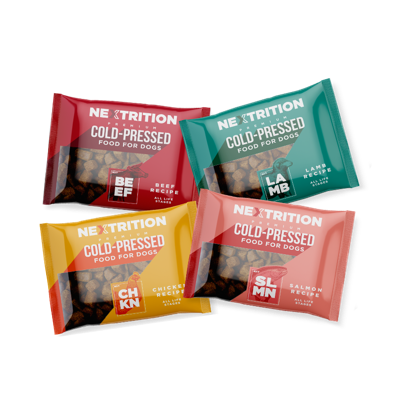
Protein strategy matters more than people think. Some dogs simply do better on one protein than another. Having recipe variety helps. Lamb, chicken, salmon, and beef options give you room to choose based on tolerance, preference, and rotation goals rather than forcing one answer onto every dog.
Also pay attention to practical fit. Compare foods on digestion, stool quality, sourcing trust, simplicity, delivery convenience, and whether the food fits your budget long term. Premium nutrition only works if you can stay consistent with it.
One small but useful point: some cold-pressed foods are nutrient-dense, so feeding amounts may not match traditional kibble cup for cup. Owners sometimes overfeed at first because the bowl looks smaller than they expect.
Ask direct questions before you buy:
- How much heat does the process use?
- What ingredients are added after processing?
- How is freshness protected?
- Is there support for a gradual switch if my dog needs it?
Clear answers usually tell you a lot about the brand.
How to Transition to a New Food Without Creating New Problems
Even a better food can go badly if you switch too fast. We’ve seen that mistake more times than we can count.
A gradual transition gives your dog time to adjust. It also gives you a cleaner read on what’s happening. That’s the real goal. Not just tolerance, but observation.
During the switch, watch:
- stool consistency
- fecal volume
- appetite
- scratching or skin flare-ups
- comfort after meals
Keep treats and extras consistent while you do this. If you change the main food, add new treats, and start handing out table scraps, you won’t know what your dog is responding to.
Hydration and routine matter too, especially when moving from a heavily processed food to a more nutrient-dense option. Feed on a steady schedule. Give the process a little room.
If symptoms intensify instead of settling, slow the transition. If you’re dealing with persistent vomiting, severe diarrhea, lethargy, or a dog with existing medical issues, involve your veterinarian. There’s no prize for pushing through a bad response.
Making Better Feeding Feel Manageable
A lot of owners hesitate here for one reason. They worry that feeding better will become expensive, confusing, and hard to maintain.
That concern is fair.
The right routine should get simpler over time, not more complicated. A personalized meal plan helps by taking some of the guesswork out of portioning, recipe choice, and consistency. You stop improvising every week.
Flexible purchase options matter too. Some people want to start with a one-time order and see how their dog responds. Others would rather set it up once and have it arrive regularly so they’re not running low and making rushed decisions.
That’s why service matters almost as much as formulation. A model like Nextrition’s, with tailored meal planning and regular doorstep delivery, helps health-conscious owners stay consistent without turning feeding into a constant project.
Practical details count. If the food is excellent but the system around it is annoying, most households won’t keep doing it. Better nutrition has to work on a Tuesday morning too.
Conclusion
Low temperature dog food is not just a nicer label. It’s a different approach to how food is made, and gentler processing may do a better job of preserving nutritional value and supporting digestive comfort.
For most owners, the meaningful differences show up in ordinary ways. Better stool quality. More stable energy. A healthier-looking coat. More confidence in what goes into the bowl every day.
Not all dry foods are equivalent. Not all minimally processed dog food is equivalent either. Compare process, ingredient quality, and fit for your individual dog. That’s how you stop guessing.
If you’re ready for a useful next step, review your current food through the lens of processing, not just ingredients. Then explore a personalized low temperature option if you want feeding to feel more intentional and a lot less uncertain.


