


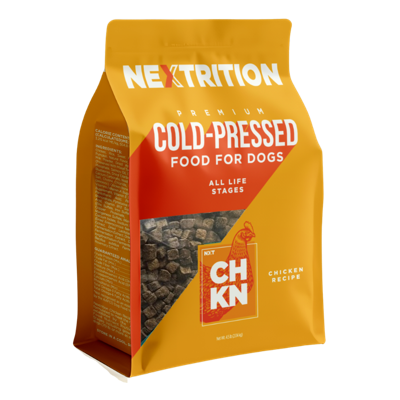
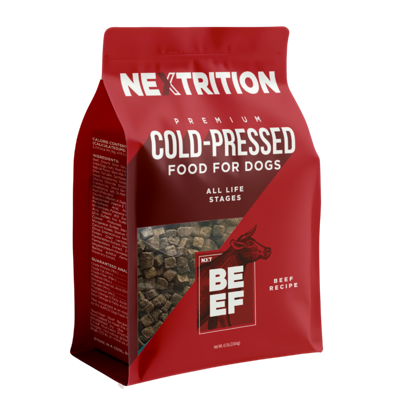
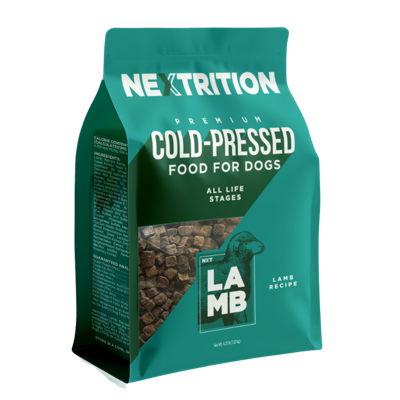
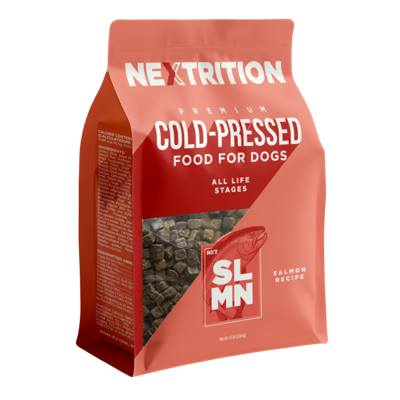


Most people use a cold pressed dog food topper like a flavor fix, then wonder why the stool still swings from firm to sloppy. If your dog gets gassy, picky, or flat after meals, the bowl usually needs more than excitement.
What matters is how the food is made, how much you add, and whether your dog settles with it over a steady week. We don't need a dramatic overhaul, just a smarter first step.
A few things are worth watching:
- Start small. A big scoop on day one can backfire.
- Watch the next 3 to 7 poops, not just dinner.
- Pick one protein and stick with it long enough to get a real answer.
What a Cold Pressed Dog Food Topper Actually Is
A cold pressed dog food topper is exactly what it sounds like when you strip away the marketing. It’s a nutrient-dense dry food you use in smaller amounts over your dog’s regular meal to improve ingredient quality, support digestion, and make the bowl more appealing without forcing a full diet change on day one.
That distinction matters. A topper should lower friction, not create more of it.
Cold pressed food also sits in a different category than both raw food and standard kibble. It isn’t raw. It’s shelf-stable dry food. But it’s also not made the way conventional extruded kibble is made, where ingredients are exposed to intense heat, steam, and pressure.
At Nextrition, we make our food at temperatures roughly 3x lower than conventional kibble. That lower-heat pressing process changes the end product in a meaningful way.
Here’s the practical version:
- You use less of it than a full meal
- You add it on top of the base food
- You get a simpler entry point into better nutrition
- You don’t have to overhaul everything at once
A lot of owners need that middle step. They know their dog’s digestion isn’t where it should be, but they’re not ready to toss the whole feeding routine overnight. Fair enough. A topper can be a smart first move if it’s doing real nutritional work and not just acting like expensive seasoning.
A good topper should improve the bowl, not just distract from it.
Why Digestion Is the Real Reason This Topic Matters
If your dog’s digestion is off, you usually see it first in the stool. But that’s only the obvious part. Digestion shows up in appetite, comfort after meals, energy, skin, coat, and how steady your dog feels day to day.
That’s why this topic matters more than “what can I sprinkle on dinner.”
Around 70% of a dog’s immune system resides in the gut. So when we talk about digestive support, we’re not talking about a narrow stomach issue. We’re talking about a system that influences the whole dog.
Most health-conscious owners already know when something feels off. The stool gets inconsistent. The dog gets gassy after dinner. Some days they eat eagerly, some days they stare at the bowl like they’re negotiating. It wears on you because it never feels serious enough for panic, but it also never feels fully right.
And then the feeding trial-and-error starts.
New bag. New topper. New “sensitive stomach” formula. Maybe a few better days, then back to guessing.
We don’t think better digestion comes from constantly changing products. Usually it comes from giving the gut something steadier and gentler to work with every day. Cleaner ingredients help. Less aggressive processing can help too. That’s the part too many people miss.
You’re not looking for a cheap mealtime upgrade. You’re trying to make the bowl easier on your dog’s body. That’s a different standard.

Why Cold Pressed Food Behaves Differently From Standard Kibble
Ingredients matter. Processing matters just as much.
Traditional kibble is typically made with high heat, steam, and pressure. That method is efficient, but it can alter delicate nutrients, flatten natural flavors, and reduce some of the beneficial qualities that whole ingredients bring to the bowl in the first place. You can start with decent ingredients and still end up with a food that behaves hard in the stomach.
Cold pressed food is handled differently. Ingredients are blended and gently pressed together at much lower temperatures. That lower-heat approach doesn’t just sound nicer on a label. It changes how the food acts in real life.
One of the more useful differences is this: cold pressed food does not swell in the stomach the way traditional kibble can. Instead, it tends to break down more naturally and gradually from the outside in.
For dogs prone to bloating, gas, or that uneasy post-meal look, that matters.
What that difference can look like in practice
- Less heaviness after meals
- A calmer eating experience
- Better tolerance in dogs that don’t do well with puffed, airy kibble
- More predictable digestion over time
Cold pressed dog food is also denser than conventional kibble. That changes texture, bite, and even satiety. Some dogs do better with that denser structure, especially when mealtime has become inconsistent or a little touchy.
This is one of those areas where the food’s behavior matters as much as the ingredient list. The topper benefit isn’t only about what you add to the bowl. It’s also about how that food was prepared before it ever got there.

How a Cold Pressed Dog Food Topper Can Support Better Digestion
Using cold pressed as dog food topper can help because it introduces a gentler food structure and better-preserved nutrition into a meal that may otherwise be heavily processed. That doesn’t mean it fixes every digestive issue. It does mean you’re changing a variable that often deserves more attention than it gets.
Lower-temperature preparation can help preserve heat-sensitive nutrients and other beneficial components that may be diminished in higher-heat foods. For some dogs, that shows up as easier digestion. For others, it starts with less gas or less discomfort after eating.
The point isn’t to oversell it. The point is to be honest about where it helps.
A cold pressed dog food topper may support:
- Easier breakdown in the stomach
- Reduced bloating or gassiness in some dogs
- More comfortable mealtimes
- Firmer, more regular stools
- Better use of nutrients from the meal overall
If your dog is eating conventional dry food and you want to improve digestion without replacing the entire routine, a topper is often the cleanest way to test a better approach. Not dramatic. Just useful.
And that’s often enough. When the gut is irritated, more complexity is rarely the answer.
The Ingredients That Make a Topper Worth Adding
A topper should be judged by ingredient quality first, flavor second. Dogs may love a topper that does nothing useful for digestion. That’s not the standard we’d use.
Real meat should be the anchor. Then you want purposeful support around it, especially from fruits and vegetables that add whole-food variety and fiber. Digestive support often lives in those details.
Prebiotic-rich ingredients matter here. Pumpkin and chicory root are good examples because they help feed beneficial gut bacteria. That’s different from just adding bulk. A healthy digestive system is an ecosystem, and the support usually works best when you think in those terms.
What to look for on the bag
- Real meat first, not vague animal by-products
- Fruits and vegetables with a nutritional job to do
- Prebiotic support from ingredients like pumpkin or chicory root
- Clear ingredient language, not filler-heavy formulas
- No unnecessary extras that don’t serve a digestive purpose
There’s also a broader gut-health conversation worth knowing. Prebiotics, probiotics, and postbiotics can work together to nourish, balance, and protect digestive health. Not every product handles all three equally, but the best formulations at least respect that the gut is more than a simple input-output system.
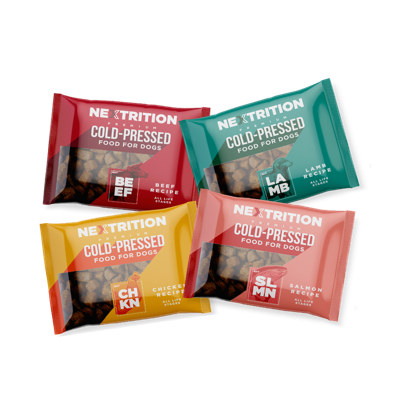
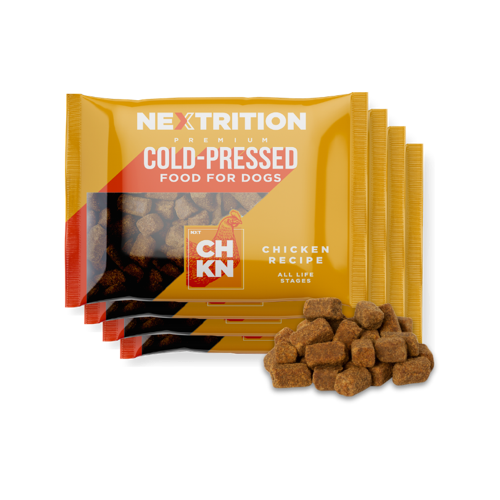
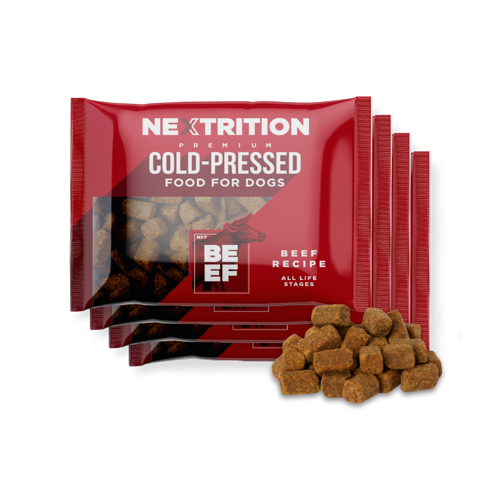
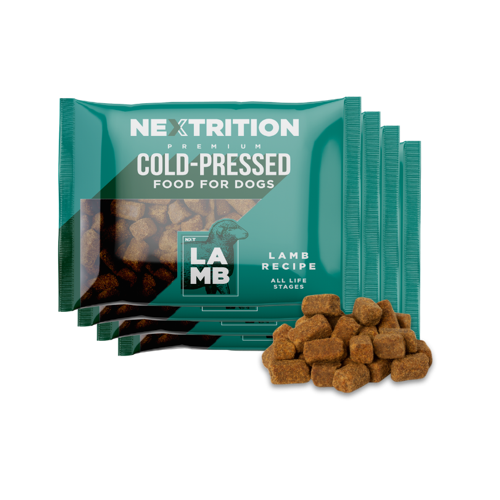
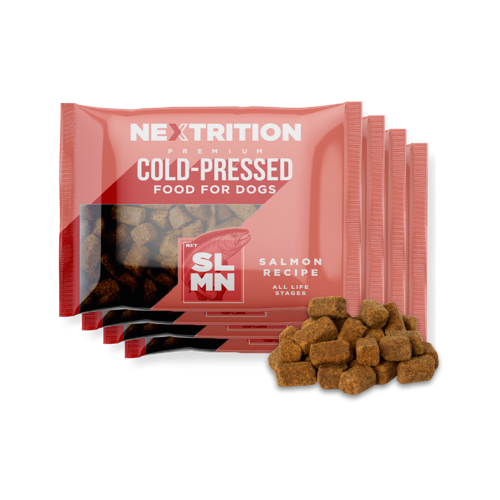
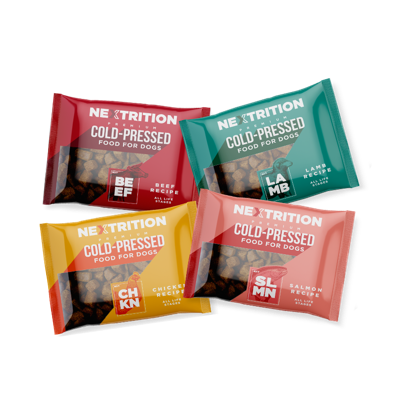
Our approach at Nextrition is built around real meat, fruits and veggies, natural ingredients, and Rocky Mountain waters. We keep recipe choice practical too. Lamb, chicken, salmon, and beef give you room to choose based on your dog’s preferences and how they tend to respond to different proteins.
Sometimes the best recipe isn’t the fanciest one. It’s the one your dog digests quietly.
When Using Cold Pressed as Dog Food Topper Makes the Most Sense
This approach isn’t for every situation, but there are clear cases where it makes sense. Usually it’s when you want to improve the bowl without forcing a full transition before you know how your dog responds.
It’s especially useful for dogs with:
- Sensitive stomachs
- Inconsistent stools
- Mild gas
- Low enthusiasm at mealtime
- Selective appetites
- A history of doing only “okay” on standard kibble
It also makes sense when your current food is convenient but not ideal. That’s a common spot. You want something better than heavily processed kibble, but you don’t want feeding to become a second job.
A cold pressed topper can be the middle ground.
We’ve also seen it work well in smaller, very normal moments. The dog seems uncomfortable after meals. The bowl gets ignored for twenty minutes. You’re curious whether cold pressed nutrition would help, but you don’t want to commit to a full switch without a read on digestion first.
That said, a topper is not the right first move if symptoms are severe or persistent. Ongoing vomiting, serious diarrhea, unexplained lethargy, or major appetite changes deserve veterinary evaluation. Nutrition can support health. It should not replace basic clinical judgment.
How to Start Using a Cold Pressed Dog Food Topper Without Upsetting the Stomach
Go slower than you think you need to. That one decision prevents a lot of false negatives.
The most common mistake is dropping a heavy scoop on top of the current meal and then blaming the topper when the stomach pushes back. For sensitive dogs, transitions are usually best over about 7 to 14 days.
A practical way to start
- Add a small amount to the existing meal.
- Mix it in well.
- Hold that level for a few days.
- Watch stool quality, appetite, and comfort.
- Increase gradually only if your dog is doing well.
If your dog does better with a softer texture, you can lightly moisten the topper. Some prefer it dry and crunchy. Either can work. Digestive comfort is the priority, not the feeding aesthetic.
Try to change one thing at a time. If you add a topper, new treats, and a supplement all in the same week, you’ve made it harder to learn anything. Consistency gives you cleaner feedback.
For owners who want a little guidance instead of guessing, our personalized meal plan can help you choose the right recipe and amount based on your dog’s needs. Sometimes the best support is simply removing unnecessary guesswork.

What Signs to Watch for After Adding a Cold Pressed Topper
You need clear markers, otherwise every small fluctuation starts to feel important. Some changes come quickly. Others need a couple of steady weeks before they mean anything.
Early signs are often pretty straightforward:
- More regular stools
- Better stool firmness
- Less gas
- Calmer behavior after eating
- Better appetite
- More interest when the bowl comes down
Later on, you may notice steadier energy, better nutrient use, and visible improvement in skin and coat. Those shifts usually take longer, and they only matter if the digestive foundation improves first.
A useful rule here: one good day doesn’t prove much, and one off stool doesn’t ruin the experiment.
Normal adjustment can happen. But if symptoms worsen, or your dog shows persistent vomiting, severe diarrhea, or unusual lethargy, stop and reassess. If it feels off beyond a mild transition response, talk with your veterinarian.
Common Mistakes That Undercut Results
Most topper failures aren’t really product failures. They’re execution problems.
Here are the ones we see most often:
- Adding too much too quickly. Then normal transition upset gets mistaken for proof it “didn’t work.”
- Using a topper only as a flavor trick. If the ingredient quality is weak, better enthusiasm at the bowl doesn’t mean better digestion.
- Expecting the topper to cancel out the whole base diet. It can help, but it can’t fully undo everything underneath it.
- Rotating multiple products at once. That usually creates noise, not clarity.
- Choosing filler-heavy formulas. If the ingredient panel is vague, the results usually are too.
- Ignoring protein fit. Lamb, chicken, salmon, and beef don’t land the same way for every dog.
- Looking for overnight transformation. Digestive improvement is usually clearer over consistent weeks, not 24 hours.
One experienced rule we’d stand by: if you can’t tell what changed, you changed too much.
How Cold Pressed Toppers Compare With Other Common Topper Options
Not all toppers are built for the same job. Some are mostly there to improve taste. Some add moisture. Some look impressive in the bowl but are hard to use consistently.
Cold pressed toppers are different because they can improve palatability and change the nutritional and digestive character of the meal at the same time.
A quick comparison from a digestion-first perspective
-
Gravy-style toppers
Good for flavor and moisture. Less useful if your goal is changing food structure or improving ingredient integrity. -
Freeze-dried add-ins
Can be nutrient-dense and appealing. They may work well, but not every dog tolerates richer additions the same way, and daily use can get less practical. -
Fresh food additions
Often nutritious, sometimes excellent. But consistency, balance, storage, and portioning can become a real issue if you’re trying to support digestion every day. -
Generic meal boosters
Usually built around taste more than digestive support. Fine if all you want is excitement. Not enough if the real issue is gut comfort.
Cold pressed sits in a useful middle position. You keep dry-food convenience, but you move toward gentler processing and more purposeful nutrition. For many owners, that’s the right tradeoff.
Still, the best choice depends on your dog’s sensitivity, current diet, and how realistic your feeding routine needs to be.
How to Choose the Right Cold Pressed Dog Food Topper for Your Dog
Keep your standards simple and high. Look at the processing method, the ingredient quality, the digestive-support ingredients, and whether the recipe actually fits your dog.
Protein choice is where a lot of owners get sloppy. Don’t. If your dog has done best historically on one protein, start there. If you’re testing tolerance, test one recipe at a time so you can read the response clearly.
A few things are worth screening for up front:
- Lower-temperature cold pressed preparation
- Real meat and transparent ingredients
- Purposeful digestive support
- A recipe your dog is likely to tolerate and eat well
- A feeding option that fits daily life, not just a trial week
It also helps to choose a brand that supports a broader plan, not just a one-off bag. Once you find a recipe that works, stability matters. We offer both one-time purchases and subscriptions so you can either test a fit or keep a good routine going with steady doorstep delivery.
The right choice should feel sustainable. Clean. Easy to keep doing.
If it calms the gut, improves the bowl, and reduces your daily uncertainty, you’re probably closer than you think.
Conclusion
Better digestion usually starts with gentler nutrition, not more feeding complexity. That’s the real case for a cold pressed dog food topper.
If your dog has a sensitive stomach, inconsistent stools, mild gas, or low enthusiasm at mealtime, a topper can be a practical first step. You improve the bowl without forcing an abrupt full-food change, and you get a cleaner read on how your dog responds to lower-temperature, thoughtfully prepared nutrition.
Start small. Watch closely. Choose real ingredients over flashy claims.
If you want a little more structure, a personalized plan or a simple recipe trial can help you find the right fit without turning feeding into guesswork. That’s usually where better digestion begins. Quietly, and then consistently.


