




Mix cold pressed with raw dog food too fast and you often get loose stools, bad portions, and a dog that suddenly seems fussy. The usual problem is not the idea. It is changing too much at once.
What matters is keeping it boring first. Use one protein your dog already knows, measure properly, and don't treat raw and cold pressed like random scoops. Start here:
- Match the protein before you change the ratio.
- Pick same bowl or separate meals early.
- Watch stools for a few days. Then build a routine that suits your dog.
Why More Dog Owners Are Mixing Raw and Cold Pressed
A lot of owners get stuck in the same spot. They want raw because it feels closer to how dogs are meant to eat, but they also want a plan they can actually live with on a Tuesday morning when nothing is thawed and the day is already moving.
That’s where this pairing starts to make sense.
Raw gives you freshness and minimal processing. Cold pressed gives you structure, portability, and a scoop-and-serve option that still feels like real food, not a compromise back to standard kibble. For health-conscious owners, that matters. The goal usually isn’t convenience at any cost. It’s convenience without walking away from nutrition.
We see the appeal most clearly in real life situations:
- travel and holidays
- boarding or daycare days
- busy workweeks
- missed defrosting
- reducing how much freezer space dog food takes over
- stretching a premium feeding budget without dropping quality
The all-or-nothing mindset causes more stress than the food itself. Gut health usually does better with a feeding routine your dog tolerates well and you can repeat consistently. If you’re trying to figure out how to mix cold pressed with raw dog food without turning every meal into a debate, that’s the right question.
A feeding plan only works if your dog’s gut can handle it and your life can sustain it.
Is It Safe to Mix Cold Pressed With Raw Dog Food?
For many dogs, yes. Feeding cold pressed and raw together can work very well when both foods are chosen carefully and the change is made slowly.
The big thing people miss is that cold pressed is not the same as conventional extruded kibble. It’s made with a gentler, lower-temperature process, so owners often use it when they want a dry format that feels more digestible and less heavily processed.
Some dogs do perfectly well with both foods in the same bowl. Others do better with raw at one meal and cold pressed at another. Neither approach is automatically right. The dog decides.
Where things usually go wrong is more predictable:
- changing too fast
- feeding too much
- switching proteins and formats at the same time
- relying on a raw component that isn’t actually complete and balanced
There’s also a responsible point that shouldn’t be skipped. Raw feeding has real hygiene considerations. Raw pet food can contain bacteria, so storage, thawing, cleaning, and hand washing matter for both your dog and your household.
Mixing isn’t reckless. Guessing is.
What Cold Pressed Is, and How It Differs From Raw and Kibble
Before you start mixing anything, it helps to get the formats straight. A lot of bad advice comes from people treating all dry food as the same.
Raw dog food
Raw dog food is uncooked, meat-based food. It may include muscle meat, organs, bone, and sometimes vegetables. It’s usually sold frozen and fed after thawing.
Raw can be excellent. It also asks more of you. Freezer space, handling discipline, and meal prep become part of the feeding plan.
Cold-pressed dog food
Cold-pressed food is dry food made by blending ingredients and pressing them at lower temperatures than traditional kibble. It’s shelf stable, easy to portion, and much simpler to store and travel with.
That lower-temperature process matters. It preserves more of the value of the ingredients than high-heat extrusion, which is one reason it fits naturally into a real-food, gut-supportive approach.
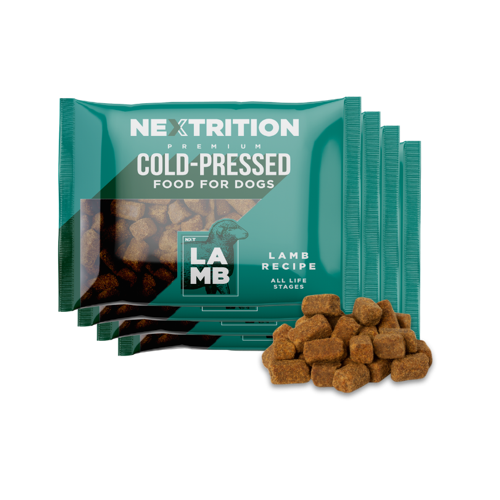
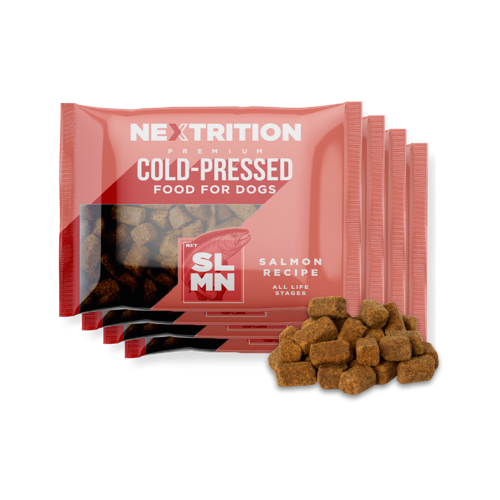
At Nextrition, our cold-pressed food is made at 3x lower temperatures with real meat, fruits, and vegetables, using Rocky Mountain waters and a process designed with digestibility and gut health in mind. It isn’t raw, and we don’t pretend it is. It’s a more practical bridge between raw principles and daily life.
Traditional kibble
Standard kibble is commonly made through extrusion using high heat and steam. It’s convenient, but it’s not the closest comparison if you’re deliberately trying to feed less processed food.
That distinction matters because “dry food” is too broad to be useful here.
Why This Pairing Can Be Easier on the Gut Than You Might Expect
A lot of owners are told that mixed formats automatically create digestive chaos. That idea gets repeated so often it starts sounding like a rule. It isn’t.
Cold pressed is often chosen precisely because it behaves differently from conventional kibble. Many owners find it breaks down more gently and fits more naturally alongside raw than standard dry food. Some cold-pressed foods are even described as softening into a paste rather than swelling in the stomach, which helps explain why they’re often seen as a more comfortable partner to raw.
That doesn’t mean every dog will react the same way. Sensitive dogs still need a careful transition. Rich raw formulas can still be too much. But the format itself is not the automatic problem people make it out to be.
If your priority is gut health, zoom out a bit. Around 70% of a dog’s immune system resides in the gut. Calm digestion matters beyond poop quality. It often shows up in steadier appetite, cleaner skin, better energy, and less meal-time drama.
Quality, consistency, and portion control beat ideology every time.
When Feeding Cold Pressed and Raw Together Makes the Most Sense
This approach tends to work best when you want flexibility without losing the standards you care about.
It’s especially useful when:
- your dog eats raw, but you need an easier travel or holiday option
- you forgot to thaw a meal
- you want less dependence on freezer storage
- you’re balancing budget without going back to conventional kibble
- your dog does well with some variety but not constant diet changes
It can also work well if you simply want different formats at different meals. Cold pressed for breakfast because it’s fast. Raw for dinner because you have time. That’s a very workable routine.
For a lot of owners, mixed feeding reduces anxiety. You stop feeling like one missed thaw means the whole system failed.
Still, some dogs deserve more caution. Slow down and get your veterinarian involved if your dog has:
- chronic digestive disease
- a history of pancreatitis
- severe food sensitivities
- current vomiting, diarrhea, or unexplained GI signs
And if someone in your home is immunocompromised, elderly, or very young, raw handling deserves extra scrutiny. Raw can still be part of the picture, but the safety piece has to be taken seriously.
Before You Start, Set Up the Mix the Right Way
Don’t start by pouring two foods together and hoping for the best. A little setup makes the whole process easier to read.
Use this short checklist first:
- make sure your dog is already stable on at least one of the two foods
- start with a simple recipe and a familiar protein if possible
- match proteins when you can, like chicken with chicken or lamb with lamb
- confirm whether the raw food is complete and balanced or just a component
- measure meals based on ideal weight, activity, and body condition
- have a clean thawing and storage plan for raw
- decide on a consistent feeding schedule
- track stool quality, appetite, and energy for the first couple of weeks
That matching-protein point is more important than it sounds. If you change format and protein at the same time, you won’t know what your dog is reacting to.
And measure the food. Eyeballing mixed meals is one of the fastest ways to overfeed.

How to Mix Cold Pressed With Raw Dog Food Step by Step
This is the part that should feel boring. That’s good. Slow, boring, and consistent usually beats ambitious, fast, and constantly changing.
-
Start with the food your dog already handles well.
Use that as the base meal. -
Add a small amount of the second format.
Not half the bowl. Just a small inclusion. -
Keep everything else simple.
Don’t add a new topper, supplement, chew, and protein all in the same week. -
Choose your feeding structure.
You can mix both in one bowl or feed them at separate meals. If your dog has a sensitive history, separate meals are often easier to troubleshoot. -
Hold the ratio steady for several meals.
Give the gut time to respond before making another change. -
Increase gradually only if stools, appetite, and energy stay stable.
Stability is your green light. -
Settle into a repeatable routine once it’s working.
Don’t keep changing ratios just because variety sounds nice on paper.
A practical operator’s rule: if you can’t explain the plan in one sentence, it’s probably too complicated.

Practical Mixing Ratios to Try First
There isn’t one perfect ratio. The right mix depends on what you’re trying to do.
If the goal is backup feeding or introducing the second format, start conservatively. Let most of the daily intake remain the food your dog already knows, and add a small amount of the new one.
Ratios like these are common targets, not starting lines:
- 25:75 for a gentle intro or light mixed-feeding structure
- 50:50 once your dog is clearly doing well on both formats
- a smaller “just in case” amount if cold pressed is mainly your travel or missed-thaw backup
Calculate the ratio from your dog’s total daily intake, then split it across however many meals you feed. That sounds obvious, but plenty of people accidentally double portions by building each meal separately.
Dogs with sensitive stomachs, rich raw formulas, or a history of loose stools usually need a slower path. Robust adult dogs with steady digestion often move faster.
There’s no prize for hitting 50:50. The best ratio is the one your dog handles well and you can maintain without second guessing every bowl.
Same Bowl or Separate Meals?
This question comes up constantly, and the answer is practical rather than ideological.
Same-bowl feeding works well when:
- you want one simple measured meal
- your dog is already adapted to both foods
- you value speed and convenience
Separate meals make more sense when:
- your dog is sensitive
- you’re still in the transition period
- you want to identify the cause of any reaction quickly
- your dog does better with one texture at a time
A middle ground is alternating meals. Cold pressed at breakfast, raw at dinner. That often gives owners the flexibility they want without literally mixing the foods together.
If your dog is stable, same-bowl feeding may be perfectly convenient. If your dog is reactive or you’re still learning, separate meals usually make troubleshooting easier. Simple rule. Useful rule.
A Gentle Transition Approach for Sensitive Dogs
If your dog has a history of gas, loose stools, or messy food changes, don’t use a rigid calendar. Use phases.
Phase 1: tiny inclusion
Add a very small amount of the second food. Small enough that you’re not forcing the gut to make a hard adjustment.
Phase 2: increase only after several stable meals
Not one good stool. Several stable meals. That’s the difference between progress and wishful thinking.
Phase 3: hold steady
Once you reach a workable ratio, sit there for a while before changing proteins or adding extras.
A few small things help here:
- keep treats plain and minimal
- don’t rotate proteins during the transition
- soften cold pressed with a little warm water if your dog prefers gentler texture
- be especially patient with seniors and dogs with dental discomfort
You do not need to panic your way into a “cleaner” diet. Slower is often smarter.
How to Tell if the Mix Is Supporting Gut Health
Success is not just a dog that empties the bowl. Plenty of dogs will eat something that doesn’t suit them.
Better signs look like this:
- well-formed stools
- less gas or bloating
- consistent appetite
- steady energy
- brighter skin and coat over time
- calm enthusiasm around meals without digestive fallout after
Some stool change during transition can happen. The direction should be toward consistency, not a week of ongoing softness that you keep explaining away.
Watch for signs the mix isn’t working:
- persistent diarrhea
- vomiting
- ongoing trapped wind or abdominal discomfort
- refusal to eat
- itching or ear flare-ups after a new protein is introduced
When digestion settles, owners often notice broader changes. That’s not surprising. Gut comfort and whole-dog wellness are closely linked.
Common Mistakes That Cause Problems
Most issues come from execution, not the idea of mixed feeding itself.
The usual mistakes are predictable:
- moving too fast because cold pressed seems close enough to raw
- starting with a rich raw formula or a novel protein
- feeding loose portions from both foods and accidentally overdoing calories
- treating cold pressed like standard kibble
- using an unbalanced raw component as a major part of the diet
- changing treats, chews, supplements, and main meals all at once
- getting careless with raw hygiene and thawing
- alternating feeding styles randomly with no consistent plan
If the meals are inconsistent, the results will be too. Dogs feel that quickly.
How to Choose a Cold-Pressed Food That Pairs Well With Raw
If you’re going to mix formats, the cold-pressed side needs to hold up on its own. This audience usually cares about the same things we do:
- named animal proteins
- natural ingredients
- fruits and vegetables that fit a whole-food approach
- lower-temperature production
- a complete and balanced formula
Start with a protein your dog already knows. That makes the transition cleaner. Ingredient simplicity helps too. When a formula is crowded with trendy extras, troubleshooting gets harder than it needs to be.
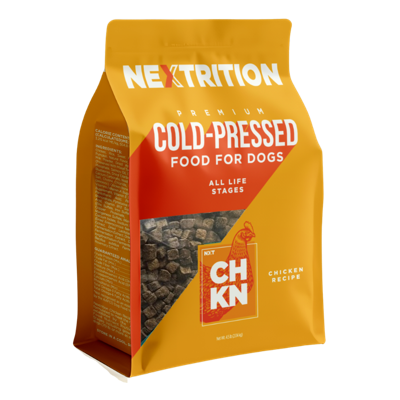
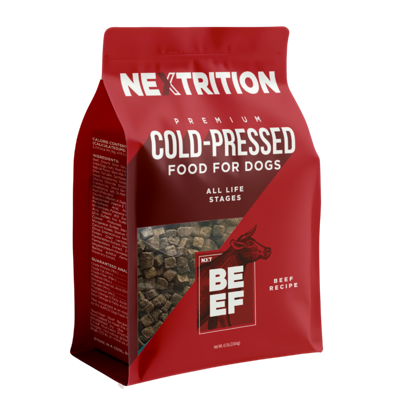
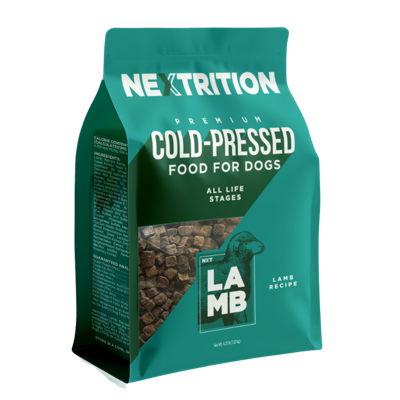
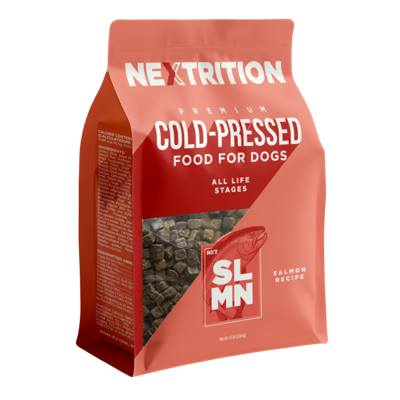
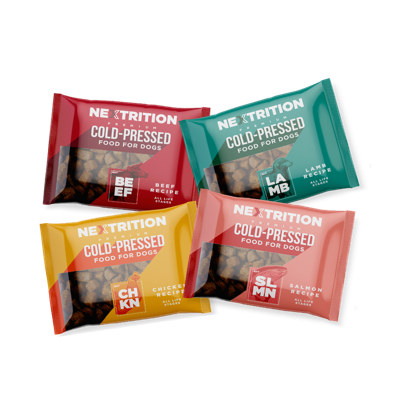
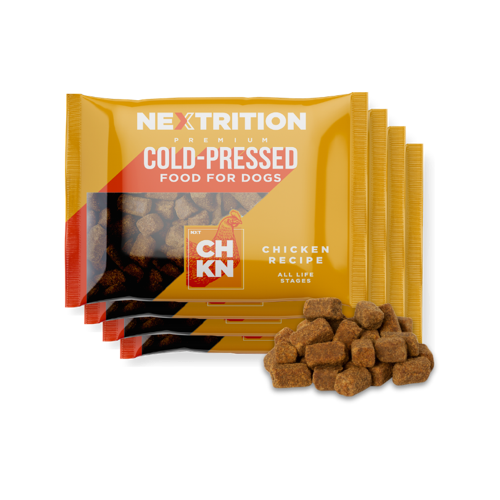
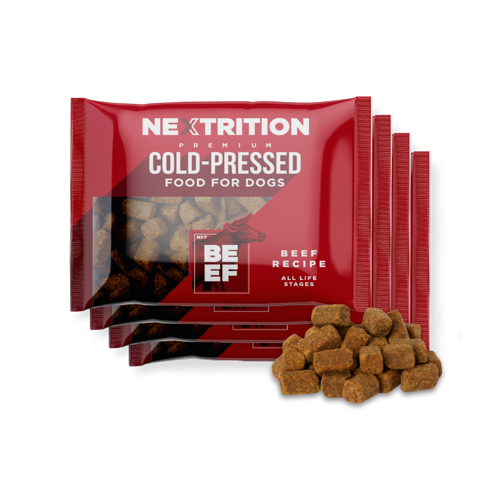
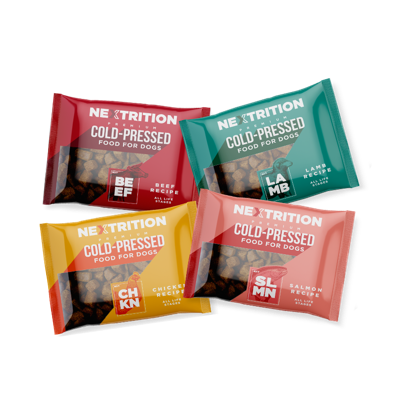
Nextrition offers four cold-pressed recipes in lamb, chicken, salmon, and beef, which gives you a practical starting point based on your dog’s tolerances and preferences. Our personalized meal plan can also help if you want more confidence around portions while feeding cold pressed and raw together. And depending on how you use it, one-time ordering or a regular subscription both make sense. Daily staple, travel option, backup meal. Different owners need different structures.
Raw Feeding Hygiene Still Matters Even in a Mixed Plan
Mixed feeding does not cancel out raw safety. If raw is in the plan at all, hygiene stays on the job.
Handle it the same way you would raw meat in your own kitchen:
- keep it properly frozen or refrigerated
- thaw safely
- clean bowls and surfaces thoroughly
- wash your hands after handling
- don’t leave raw food sitting out longer than necessary
One reason many owners like this pairing is that cold pressed reduces some of the logistical pressure of raw feeding. You still get a real-food mindset, just with fewer points of failure on rushed days.
That’s not cutting corners. That’s responsible stewardship.
Questions Dog Owners Usually Ask About Mixing Raw and Cold Pressed
A few questions come up again and again.
Can I feed them in the same bowl?
Yes, many owners do. If your dog is sensitive or still adjusting, separate meals are often easier.
Is cold pressed raw?
No. It’s gently processed at lower temperatures, which is very different from being uncooked.
Do I need supplements if I am feeding both?
Not automatically. If the cold-pressed food is complete and the raw portion is balanced, many healthy dogs won’t need extras. Random layering creates confusion fast.
Can cold pressed work as a backup if I forget to thaw raw?
Yes. Honestly, that’s one of the most useful reasons to keep it in the house.
Can I use cold pressed as training treats for a raw-fed dog?
Yes. It’s a practical portable option that still fits a real-food leaning approach.
What if my dog is older or struggles with texture?
Softening cold pressed with warm water can help. Then adjust the overall plan around chewing comfort, appetite, and digestion.
Conclusion
You don’t have to choose between raw feeding principles and practical, gut-conscious convenience. For many dogs, mixing the two is the middle path that actually holds up in real life.
Start simple. Transition slowly. Measure carefully. Watch your dog, not internet arguments. Ingredient quality matters, but digestive response matters more.
If you want to mix cold pressed with raw dog food, begin with one familiar protein and a small inclusion of the second format. Build from there. The best feeding plan is the one that supports your dog’s gut, immune health, and everyday life without turning mealtime into a stress test.


