




Small dogs get overfed fast. If you've been second-guessing the scoop, you're not alone; how much should small dogs eat sounds simple until stools get weird or a few extra bites start showing up on a tiny frame.
What matters in real life is calories, meal timing, and whether the food actually does enough in a small bowl. Tiny dogs have less room for guesswork, especially when digestion is touchy.
- Measure the full day, not each meal by feel
- Check calories per cup before trusting the feeding chart
- Watch stool, weight, and appetite so you land on the right amount fast
The Short Answer:
If you've been wondering how much should small dogs eat without falling into the usual guesswork, here's the practical version. Small dogs usually need more calories per pound than large dogs, but they also have far less room for error.
For many adult small breeds, the total daily amount often lands somewhere around 1/3 cup to 1 1/3 cups of dry food per day. That sounds useful until you compare two foods with very different calorie density. One scoop is not one answer.
A better starting point looks like this:
- use calories first, then convert to cups
- split most adult dogs' daily food into at least 2 meals
- feed puppies 3 to 4 smaller meals a day
- aim for consistent, nutrient-dense portions, not the smallest portion possible
Healthy digestion isn't about feeding less. It's about feeding enough of the right food, on a schedule your dog can actually handle.
That last part gets missed all the time. Small dogs don't need tiny portions for the sake of being tiny. They need food that does real work in a small bowl.
Why Small Dogs Need a Different Feeding Approach
Small dogs are built differently at mealtime. They burn through energy faster relative to body size, but they can't hold much food at once. That combination changes everything.
A 7 pound dog doesn't have much margin. Overfeed by a little, and weight creeps up fast. Underfeed by a little, and energy, appetite, and stool quality often shift within days. We've seen owners do everything "right" by the chart and still miss the mark because the food itself wasn't a good fit.
A few things matter more with small breeds:
- Higher calorie needs per pound than larger dogs
- Small stomach capacity, so bulky food can work against you
- Digestibility, because they need to use what they eat efficiently
- Piece size, since awkward, oversized bites can turn a normal meal into work
- Balanced fiber, which can support steadier stool quality and gut comfort
This isn't just about avoiding loose stool. Digestion shows up in coat condition, appetite, comfort after meals, and day-to-day energy. It also matters for immune support, since so much of that starts in the gut.
For wellness-focused owners, the gut isn't a side system. It's the foundation. Once you see it that way, portion size and food quality stop being separate decisions.
How to Calculate How Much Your Small Dog Should Eat
If you want a real answer to how much should a small dog eat, start with your dog's current body weight. Not the weight from last year's vet visit. Not the target weight unless your veterinarian has you on a specific weight-loss plan.
Use a calorie-first method, then convert that to cups.
Start with resting energy needs
A common starting formula is:
70 × body weight in kilograms^0.75
You don't need to do that math in your head every morning. What's useful is the rough baseline.
- 3 pounds: about 88 calories/day at rest
- 5 pounds: about 130 calories/day at rest
- 8 pounds: about 188 calories/day at rest
- 10 pounds: about 218 calories/day at rest
- 15 pounds: about 296 calories/day at rest
- 20 pounds: about 366 calories/day at rest
Then apply the right multiplier
That resting number is only the base. Real feeding depends on life stage and activity.
- Puppies under 4 months: about 3.0x resting energy
- Puppies 4 to 12 months: about 2.0x
- Typical adults: about 1.6x
- Very active adults: about 2.0x
- Seniors or low-activity spayed/neutered adults: about 1.4x
- Weight-loss plans: often closer to 1.0x
Here's a clean example.
A
10 pound adult dog has a
resting energy need of about
218 calories.
At a moderate adult multiplier of
1.6, that comes to about
349 calories per day.
Now check your food label. If the food provides 350 calories per cup, that's about 1 cup a day. If it provides 450 calories per cup, the portion is smaller. Same dog, different scoop.
That's why generic cup charts can mislead good owners. They ignore calorie density, and with small dogs that matters fast.

Daily Portion Guide by Weight and Life Stage
You still need a practical starting point. Cups are not useless. They're just secondary.
For adult small breeds eating a standard dry food, these total daily amounts are often a workable starting range:
- 3 to 6 pounds: around 1/3 to 1/2 cup per day
- 7 to 12 pounds: around 1/2 to 1 cup per day
- 13 to 20 pounds: around 1 to 1 1/3 cups per day
Those are daily totals, not meal sizes.
If you're feeding twice a day, that usually looks like this:
- Take the full daily amount
- Split it into 2 measured meals
- Keep the timing steady for at least a couple of weeks before making judgment calls
A 10 pound adult eating 3/4 cup daily would get roughly 3/8 cup in the morning and 3/8 cup at night. Simple beats clever here.
Puppies are different. They often eat more relative to body weight because growth is expensive. Seniors may need less if activity has dropped, even when they still act hungry. Appetite is useful information, but it isn't a calculator.
One thing we tell owners of toy-breed puppies: broad puppy charts can overshoot. A tiny puppy can be easy to overfeed while you're trying to be careful. That's a frustrating spot, especially if stool gets soft and you assume the answer is more food.

How Often Should Small Dogs Eat for Steadier Digestion
How often should small dogs eat? Mostly, it depends on age, body size, and how they handle meal size.
Most adult small dogs do best with 2 meals per day. That's the default we trust unless the dog gives you a reason to do something else.
Some dogs feel better on 3 smaller meals, especially if they get stomach upset when meals are too large or too far apart. That shows up as bile vomiting, frantic hunger, or a dog who seems off by late afternoon.
Puppies usually need 3 to 4 meals daily. Missing meals can be harder on toy and tiny puppies, including the risk of low blood sugar. Small puppies don't have much reserve. They can go from fine to flat faster than people expect.
Senior small dogs often settle into 1 to 2 smaller meals, depending on appetite, digestion, and medical needs.
If you're asking how often should I feed a small dog in a way that actually helps digestion, keep these rules tight:
- feed at consistent times
- keep meal size predictable
- avoid long gaps if your dog gets sick when too hungry
- don't bounce between free-feeding and structured meals
Meal timing matters because digestion likes rhythm. Smaller, regular meals are often easier on a sensitive stomach. Structured feeding also lets you spot changes faster. When the schedule is consistent, a stool change means something. When everything keeps shifting, you're just guessing.
What Premium Dog Food for Small Breeds Has to Do With Portion Size
Portion size only makes sense in the context of the food itself. A small dog can't make up for mediocre nutrition by eating a bigger pile of it. There's not enough room, and usually not enough digestive tolerance.
Premium dog food for small breeds should solve several problems at once:
- appropriately sized pieces
- strong calorie density
- highly digestible ingredients
- balanced fiber for gut support
- complete and balanced nutrition for the right life stage
Higher-fat formulas can help deliver calories in a smaller portion, which is often useful for little dogs. But they also make measuring more important. A small extra scoop is not a small mistake on a 6 pound dog.
Here's the label check we recommend:
- look for a complete and balanced statement for your dog's life stage
- compare calories per cup, not just ingredients
- make sure the food is physically easy for your dog to chew and tolerate
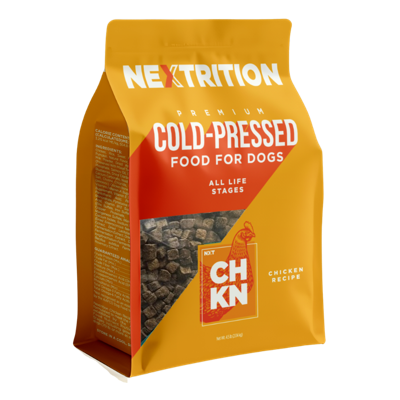
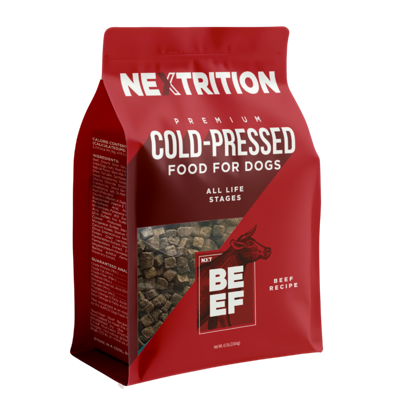
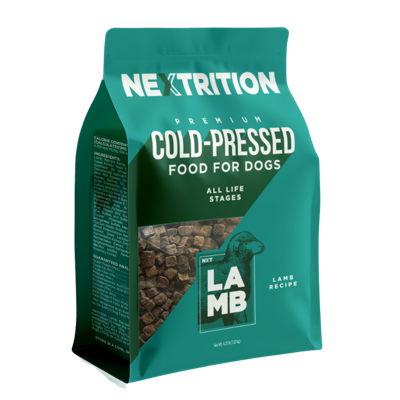
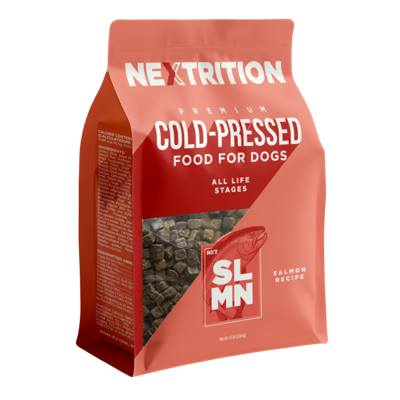
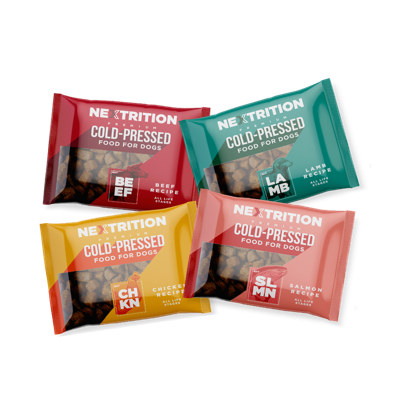
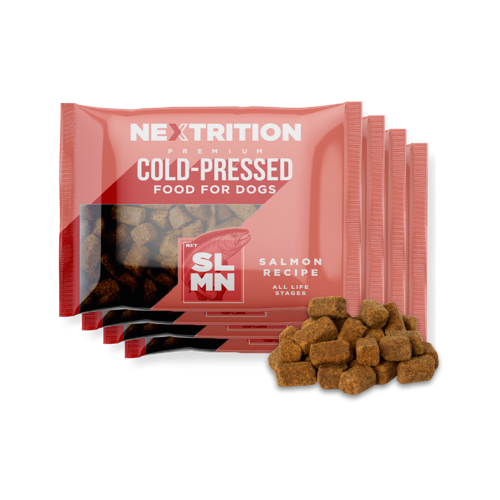
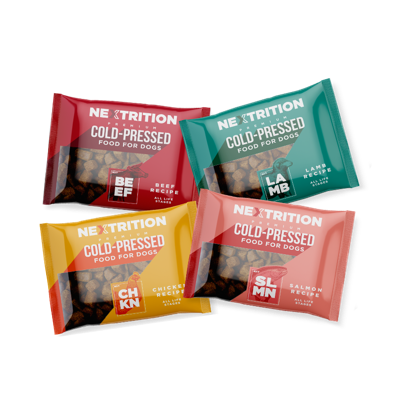
This is part of why we make Nextrition the way we do. Our cold-pressed recipes are made at 3 times lower temperatures to help preserve nutrients and support gut health, where so much immune function lives. We use real meat, fruits, and vegetables in lamb, chicken, salmon, and beef recipes, with natural ingredients and Rocky Mountain waters.
That matters when you're trying to feed smaller portions with real confidence. If the food is nutrient-dense and digestion-focused, you're not just making the bowl smaller. You're making the bowl count.

Signs You Are Feeding the Right Amount for Healthy Digestion
A chart gives you a start. Your dog gives you the answer.
When the portion is right, you usually see a steady pattern rather than one dramatic sign.
Signs the amount is working
- consistent stool quality
- steady energy through the day
- a comfortable appetite between meals
- healthy body condition without slow weight creep
- calmer mealtimes, with less drama caused by oversized meals or long gaps
Signs you may be feeding too much
- gradual weight gain from what looks like "barely extra"
- softer stool or on-and-off bowel changes
- sluggishness after meals
- constant treat-seeking built more on habit than need
Signs you may be feeding too little
- weight loss
- low energy
- persistent hunger
- poor tolerance for long gaps between meals
Small dogs magnify mistakes. That's the part people underestimate. A little overfeeding in a large dog may take a while to show up. In a tiny dog, you may notice it in the harness fit, the stool, or the afternoon energy dip by the second week.
And don't judge success by an empty bowl alone. Plenty of dogs will clean up a portion that isn't right for them.
Common Feeding Mistakes That Upset Small-Dog Digestion
Most feeding problems aren't dramatic. They're small, repeated errors that stack up.
The common ones look like this:
- relying on a generic chart without checking calories per cup
- eyeballing portions instead of measuring them
- forgetting that a small daily excess can mean real weight gain in a tiny dog
- adding too many treats, scraps, or unbalanced toppers
- assuming all puppies need the same amount
- feeding food that's too bulky, too low in calories, or hard to chew
- changing food, portion size, or schedule too abruptly
- treating digestion as separate from immunity and overall wellness
- buying on marketing language instead of digestibility, calorie density, and consistency
One of the least obvious mistakes is mixing a good feeding schedule with random extras all day. Owners think the main meals are the issue, but half the calorie drift is happening in "just a little bite" moments.
Consistency is underrated. Sensitive small dogs often do better with a boringly reliable routine than a well-meaning rotation of fixes.
How to Adjust Portions Without Triggering Digestive Problems
When you need to change the amount, do less than you think. Then wait long enough to read the result.
Tiny dogs respond to small changes. What looks like a minor scoop difference can become a meaningful calorie shift over time.
A practical approach:
- Change the portion in a small increment
- Keep the number of meals the same
- Track the result for 2 to 3 weeks
- Adjust again only if the pattern is clear
Watch these markers together:
- body weight
- stool quality
- energy
- appetite between meals
- coat and skin condition
If your dog is gaining weight, reduce gradually and monitor. If your dog seems too lean, overly hungry, or flat, increase gradually instead of stuffing in treats and hoping it balances out.
Math helps, but observation finishes the job. Generic equations can overestimate some small-breed puppies, which is why the dog in front of you matters more than a neat formula on paper.
The goal isn't anxious micromanaging. It's having a system you trust.

When a Personalized Meal Plan Makes Sense
Some dogs fit a chart well enough. Some don't. Very small dogs, puppies, seniors, highly active dogs, low-activity dogs, and dogs with sensitive digestion often need more structure than a broad guideline can give.
A personalized plan helps when:
- weight keeps drifting up or down
- stool quality isn't consistent
- you're switching foods often
- you keep changing portions because the current routine never feels quite right
- you want convenience without lowering your nutrition standards
This is exactly where a more tailored approach can calm things down. We offer a personalized meal plan so you can set portions around your dog's actual needs instead of broad feeding guesses. And if routine is half the battle, it helps that you can choose one-time orders or subscription delivery to keep the food consistent and at your door.
This isn't about making feeding complicated. It's about removing the low-grade uncertainty that keeps owners second guessing every scoop.
Conclusion
Small dogs don't need random scoop rules. They need the right amount of food for their size, age, activity, and digestive tolerance.
The most useful answer to how much should small dogs eat starts with calories, then gets refined by stool quality, body condition, and meal routine. Most adults do best with at least two measured meals a day. Puppies usually need more frequent feeding, and they often need closer attention than broad charts suggest.
Food quality matters because small dogs rely on nutrient density, digestibility, and consistency more than volume alone. A small bowl can do a lot, or not much at all. That's the difference.
Start by calculating a daily calorie target, measure the portion accurately for the next couple of weeks, and watch your dog's body, stool, and appetite instead of chasing perfect rules. If you'd rather make the process simpler and more reliable, a personalized meal plan can take a lot of the guesswork off your plate and out of your dog's bowl.


If you're trying to find the best protein for sensitive dogs, you already know how fast feeding turns into guesswork. Soft stools, paw licking, and dinner refusals pile up fast, and too many owners change three things at once.
What matters is not the fanciest meat. It's the protein your dog can digest in a simple, gently made recipe, plus enough consistency to see what's actually helping.
Start here:
- Watch stools, ears, and paws before you judge a food
- Change one protein at a time; don't swap treats and toppers too
- Read labels for named meat and fewer extras, then choose with confidence
Why Protein Is the First Place to Look
If your dog has recurring loose stools, itching, gas, or that familiar on-and-off appetite issue, protein is usually where we start. Not because every problem is a protein problem, but because protein is one of the most common places tolerance breaks down.
For a lot of sensitive dogs, the issue isn't "food" in a broad sense. It's a specific protein, the way that protein was processed, or a recipe with too many moving parts. That's a big difference. It means you don't need a miracle food. You need a cleaner match.
Protein asks a lot of the body. Your dog has to digest it well, absorb it well, and tolerate it immunologically. If any of those steps gets messy, you'll often see it in the stool, skin, ears, or paws before anywhere else.
Most sensitive dog owners know the feeling. One bag says gentle. Another says limited ingredient. Then you're staring at a label with five animal sources, added extras, and a feeding plan that somehow feels more confusing than helpful. We've seen that loop enough times to say this plainly:
The best protein for sensitive dogs is not the trendiest one. It's the one your dog can handle day after day in a simple formula.
That's also why easy to digest dog food isn't just about picking salmon over chicken or lamb over beef. Digestibility comes from the whole setup. The protein matters, but so do ingredient quality, recipe simplicity, and how the food is made.
Sensitive Stomach, Food Intolerance, or Something More
Before you change foods, get clear on the type of problem you're dealing with. Sensitive dogs get lumped into one category too often, and that leads to sloppy decisions.
A simple sensitive stomach usually looks like this:
- loose stools or stool inconsistency
- gas
- occasional tummy upset
- reluctance to eat
- a dog that seems "fine-ish" until food changes
A food intolerance or adverse food reaction can include digestive signs, but it often spills into the skin too:
- itching
- ear issues
- paw licking
- chronic skin irritation
Then there's the more serious bucket. Chronic enteropathy or other ongoing GI disease is different. If symptoms are persistent, recurrent, or escalating, this is not the moment to casually test five new bags of sensitive stomach dog food.
A practical clue many owners miss is timing. Food-related flares don't always happen right after a meal. Some reactions show up over several days. In dogs with skin-related food reactions, paw itching and ear inflammation are common clues. It's easy to miss that when you're only watching the bowl and the poop.
Get your vet involved first if you see any of these:
- chronic diarrhea
- weight loss
- repeated vomiting
- blood in stool
- severe itch that isn't improving
- multiple failed food trials
We've learned to respect red flags early. A dog with mild digestive sensitivity may do well on a cleaner, easier-to-digest food. A dog with a real food reaction often needs a more structured elimination approach. A dog with chronic GI disease may need a therapeutic plan, not another hopeful guess.
What Actually Makes a Protein Easier to Digest
"Easy to digest" gets thrown around a lot, but it should mean something specific. A protein is easier to digest when your dog can break it down efficiently and tolerate it without setting off digestive or skin issues.
That comes down to a few things working together:
- the protein source itself
- the quality of that protein
- how simple the overall recipe is
- how intensely the food is processed
- your dog's history with that ingredient
This is where blanket rankings fall apart. One dog does beautifully on chicken. Another starts paw licking by the second afternoon. One thrives on salmon. Another gets loose stools every time fish enters the bowl. We don't get far by pretending there's a universal hierarchy.
Protein quality matters, but not just in the "high protein" sense. Dogs need enough protein at every life stage, yes, but the more useful question is whether that protein is digestible and usable for your specific dog. The bag can look impressive and still be a poor fit.
Here's the lens we use when evaluating food:
Keep the variables tight
- Choose a clearly named animal protein
- Prefer shorter, more transparent ingredient lists
- Avoid testing a new protein and a new topper and a new supplement all at once
That last point sounds obvious until you're living it. Most food trials fail because too many things changed together.
Salmon, lamb, chicken, and beef can all work. None should be treated as automatically hypoallergenic. That's where decision-making gets sharper.

Comparing Salmon, Lamb, Chicken, and Beef for Sensitive Dogs
Here's the direct answer: the best protein for sensitive dogs is usually the one they haven't reacted to before and can keep digesting comfortably over time.
So let's treat this like a matching exercise, not a popularity contest.
Salmon
Salmon is often where owners go when they want a non-poultry option. That makes sense. It's a practical starting point if you're moving away from chicken and want a real-meat alternative that still feels complete. In diet-trial research, hydrolyzed salmon performed well as a restrictive option and was tolerated similarly to another established hydrolyzed diet.
For dogs needing dog food for chicken intolerance, salmon is often one of the cleaner first alternatives.
Lamb
Lamb is a common next step for owners who want a different land-animal protein. It can be a sensible option for dogs that haven't done well on poultry. But here's the nuance that gets skipped: lamb has also been reported among common food allergens in some dog populations. So no, lamb doesn't get a free pass just because it's not chicken.
Chicken
Chicken gets blamed a lot, sometimes correctly, sometimes lazily. Many dogs do very well on it. Chicken isn't "bad" for sensitive dogs unless that dog is reactive to it. Research on hydrolyzed chicken in healthy adult dogs found it to be a comparable protein source to chicken meal, with some promising gut-related fecal changes depending on the hydrolysate used.
Still, chicken is also one of the more frequently reported offending proteins in food-reactive dogs. That's the tradeoff. Common doesn't mean harmful. It does mean worth paying attention to.
Beef
Beef can work well for dogs that don't tolerate poultry or fish. It's a solid real-meat option. But like chicken and lamb, beef has also shown up often among food allergens. Prior exposure matters here more than reputation.
If your dog has eaten beef-heavy foods for years and now has recurring issues, beef isn't automatically innocent because the label looks premium.
Salmon vs Lamb Dog Food: How to Choose Between Two Popular Alternatives
This is one of the most common forks in the road. Many owners suspect chicken, then land on salmon vs lamb dog food and assume one must be gentler. Sometimes. Not automatically.
Choose salmon if your dog needs distance from poultry and tends to do well on fish-based formulas. It's often a clean way to test a non-chicken protein without moving into a more complex recipe.
Choose lamb if you want a land-animal protein but not chicken, or if your dog has already done poorly on fish-based foods. Some dogs simply handle lamb better in practice, even when salmon looks better on paper.
A simple way to think about it:
- Salmon fits dogs needing a non-poultry starting point
- Lamb fits dogs wanting an alternative to chicken without going to fish again
- Neither is universally safe if your dog has reacted to multiple foods before
That's the part worth underlining. If reactions have stacked up across several foods, guessing between salmon and lamb becomes less useful than a proper elimination plan.
This is one reason we like having both cold-pressed salmon and lamb recipes available in the same line. It gives you a practical way to compare two common alternatives without changing everything else in the bowl at once. That kind of control matters more than people think.

What to Feed if You Suspect Chicken Intolerance
If you're looking for dog food for chicken intolerance, start by simplifying, not by rotating through three exciting new proteins in one month.
Chicken becomes the first suspect for a reason. It's everywhere in commercial dog food, and it's been identified as a frequent offending protein in several canine food-reaction studies and case series. But the balancing point matters just as much: many dogs digest chicken perfectly well.
The problem is never "chicken as a category." It's whether your dog reacts to it.
If chicken is the concern, the next move is usually one clearly named alternative protein:
- salmon
- lamb
- beef
Pick one. Not all three.
Also check for hidden chicken ingredients if you're trying to run a clean trial. Poultry blends, chicken fat, and mixed animal terms can muddy the results fast.
During the switch, track:
- stool quality
- itch level
- ear flare-ups
- paw licking
- appetite
- energy
And give it enough time. Food-triggered reactions often don't show up after one meal. In challenge studies, many dogs flared between days 2 and 6 after exposure, with an average around 4 days. Quick judgments are how owners end up blaming the wrong food.
For dogs moving off chicken, our cold-pressed salmon, lamb, and beef recipes offer three practical non-chicken options, and a personalized meal plan helps narrow the choice without random switching.
Why Processing Matters as Much as Protein Choice
A sensitive dog may react to the protein itself. They may also struggle with how the food was made. That's the piece many owners don't hear enough about.
Heavily processed food can still meet nutrient requirements, but that doesn't mean it's the gentlest path for every dog. For health-conscious owners trying to improve digestion naturally, ingredient integrity matters.
Cold pressing is relevant here for a simple reason. Lower-temperature processing can help preserve more of what the original ingredients offer compared with harsher methods. We make our food at 3x lower temperatures, using real meat, fruits, vegetables, and Rocky Mountain water. That isn't about hype. It's about feeding a sensitive dog in a way that feels less compromised.
A large share of immune activity is tied to the gut. So when digestive comfort improves, you're often supporting more than stool quality alone. Not with magic. With better inputs.
Better digestion usually starts with fewer insults, not more add-ons.
A lot of owners looking for sensitive stomach dog food aren't just asking for bland food that causes less trouble. They want real ingredients and a gentler way of making food. That's a fair standard.
When Hydrolyzed Diets Make Sense and Where They Fall Short
Hydrolyzed diets have a real place. They also get treated like the only serious option, which isn't always true.
In simple terms, hydrolyzed protein diets break proteins into smaller pieces so the immune system is less likely to recognize them as triggers. That can be extremely useful in elimination trials and in managing some food-related skin or GI conditions.
Research supports that. In dogs with suspected skin-related food reactions, hydrolyzed salmon and hydrolyzed poultry feather diets both reduced itch and skin severity in many dogs. In dogs with chronic enteropathy that had already failed previous diet trials, an extensively hydrolyzed diet led to meaningful improvement over 10 weeks for most dogs who completed the study.
Still, there are limits.
Where they help most
- medically complex dogs
- severe itching
- chronic GI disease
- repeated failed food trials
- formal diagnostic elimination work
Where owners get unrealistic
Improvement may not be fast. More than half of dogs in one elimination-diet study needed over 4 weeks to show clear itch improvement. Some hydrolyzed diets may also contain peptides large enough to stimulate immune cells in a subset of dogs, especially poultry-reactive dogs.
So hydrolyzed diets are valuable tools. They're not automatically the forever answer for every dog with mild loose stools or a touchy stomach.
If symptoms are moderate and you haven't burned through multiple failed foods, a simpler intact-protein food may be a reasonable first step. If the case is severe or persistent, get more structured and bring your vet in early.
How to Run a Smarter Food Trial Without Creating More Confusion
Food trials fail when the setup is messy. Not because your dog is impossible.
Use a tighter process:
-
Choose one protein and one formula.
Don't rotate between several "sensitive" foods. Remove or standardize treats, chews, toppers, and scraps.
-
Transition gradually.
Sensitive dogs often do better when the swap is careful, not abrupt.
-
Track the right markers.
Watch stool consistency, bowel movement frequency, gas, itch, ears, paws, appetite, and coat over time.
-
Give the food enough time.
Digestive response can show up sooner. Skin-related food reactions often take longer. In some studies, meaningful improvement took more than 4 weeks.
-
Challenge carefully if needed.
If you're trying to confirm a trigger, know that reactions often show within several days of re-exposure, not instantly.
The common mistakes are boring, but they matter:
- switching too fast
- judging after a day or two
- leaving treats and chews in the picture
- trying a new protein while adding supplements
We've seen owners sabotage a good trial with one daily chew. That's how touchy these cases can be.
If you want an easy starting point, a personalized meal plan helps reduce the guesswork and keeps the process structured.

How to Choose an Easy to Digest Dog Food That Is Actually Worth Buying
At some point, this has to turn into a buying decision. Here's the framework we use.
Start with the label:
- clearly named animal protein
- straightforward ingredient list
- real food ingredients
- no vague mixed animal terms if you're trialing sensitivities
- a formula that matches your dog's actual history
Then look beyond the label. Processing method matters. Ingredient transparency matters. Having multiple protein options within the same feeding system matters, because sensitive dogs do poorly with chaos.
Ask yourself a few blunt questions:
- Has my dog eaten this protein before without problems?
- Am I picking this because it fits my dog's history, or because it's trendy?
- Am I changing one variable at a time?
- Does this brand support a tailored approach, or am I expected to force my dog into one formula?
For owners who want consistency without giving up flexibility, a premium cold-pressed line with lamb, chicken, salmon, and beef gives you room to adjust based on response. One-time purchase or subscription also matters more than it sounds. Dogs that finally stabilize usually do best when the bowl stays consistent.
Consistency is underrated. Sensitive dogs notice every shortcut.
Conclusion
The best protein for sensitive dogs isn't a universal winner. It's the protein your dog can digest, tolerate, and live well on consistently.
Start with the symptoms. Match the protein to your dog's history. Keep the recipe simple. Respect the role of processing. Then give the trial enough time to tell you something real.
If your dog is stuck in the cycle of soft stools, itching, or picky eating, don't guess your way through another bag. Choose one thoughtful protein, track the response, and use a tailored feeding plan that keeps the process clean. That's usually where better digestion starts.


Is kibble hard to digest? It can be, and a lot of people miss the clues because they look ordinary, like gas, huge stools, or random itching.
What matters is how the food is made and how your dog acts after eating, not just the label. We don't want you guessing. Start with these three checks.
- Big stools usually mean more waste, not better use of the food.
- Belly noise, grass eating, and a flat post meal slump all count.
- Named proteins and gentler processing tell you more than pretty bag claims.
The Short Answer: Kibble Can Be Harder to Digest for Some Dogs
If you've been asking is kibble hard to digest, the honest answer is yes, sometimes. Not every dry food causes problems, and not every dog struggles with it, but some kibble is clearly harder on digestion than others.
Digestibility isn't just about whether your dog can keep food down. It's about how well that food gets broken down, absorbed, and actually used without creating extra stress in the gut. A dog can eat the same bowl every day and still show you, in small ways, that it isn't going that smoothly.
That matters well beyond poop. Gut health affects comfort, energy, skin, coat, and immune function. Around 70% of the immune system lives in the gut, so when digestion is off, it rarely stays in one lane.
A lot of owners normalize the signs because they're common. Burping after meals. Big stools. Random grass eating. Paw licking. A dog who looks a little flat after eating. Common doesn't mean ideal.
If the bowl goes down easily but the body works hard to deal with it, that's not a great food fit.
So the better question isn't only whether kibble is hard to digest. It's what makes one dry food more gut-friendly than another, and whether your dog is actually thriving on the one in front of them.
Why Processing Matters as Much as the Ingredient List
Two dog foods can start with similar ingredients and behave very differently in the body. That's the part most labels don't help you see.
Traditional kibble is usually made through extrusion. In plain terms, ingredients are mixed, heated, steamed, pressurized, pushed through machinery, then dried. Heat is part of it. Pressure is part of it. Mechanical force is part of it too. All of that changes the final food.
That process can alter starches, proteins, and fats in ways that affect digestibility. Research has shown that changing extrusion conditions alone can change how much starch is cooked and how much remains available, or resistant, to enzymatic digestion. Same basic recipe. Different digestive outcome.
One especially useful detail from that research: lower mechanical energy during extrusion retained more resistant starch and reduced starch gelatinization. That's not trivia. It tells you the process intensity directly changes what your dog's digestive system has to handle.
Protein follows a similar pattern. Mild thermal processing can improve digestibility. Push heat too far and protein quality can start to slide. We see this mistake all the time in pet food conversations. People stare at the ingredient list and ignore the manufacturing method, when the method may be doing half the damage.
What to take from that
When you're choosing food for digestive health, look at both:
- What is in the food
- How the food was made
A clean ingredient panel doesn't automatically cancel out aggressive processing. That's where a lot of the friction starts.

Not All Kibble Works the Same Way in the Gut
It's worth saying clearly: not all kibble performs the same, and we don't think lumping every dry food into one category helps anyone make a better decision.
Protein source matters. Fiber type matters. Starch source matters. Processing method matters. Those variables affect stool quality, nutrient use, and even metabolic response after meals.
Research on extruded diets shows this pretty well. Different carbohydrate systems behaved differently during manufacturing, even when overall nutrient digestibility looked similar on paper. But fiber utilization and fecal quality still changed. That's a good reminder that lab similarities don't always translate into the same day-to-day experience in your dog.
Another point that tends to surprise people: even among premium extruded foods, digestibility can vary meaningfully by formula. In vitro work found some fish-based options outperformed lamb- and poultry-based options on average. So if you've already spent more and still have a dog with gas or inconsistent stools, you're not imagining it. Price is a weak shortcut.
Some expensive foods are still hard work for the gut.
A more useful lens
Instead of asking whether kibble is good or bad, ask:
- Does this formula leave your dog with stable stools?
- Is stool volume reasonable, or are you seeing a lot of waste?
- Does your dog seem comfortable after meals?
- Are skin, coat, appetite, and energy steady?
That's how we look at it operationally. The goal is to spot when a highly processed dry food is no longer serving your dog well, even if the bag sounds impressive.
What Can Make Dry Food Tougher on Digestion
There are a few repeat offenders. Once you know them, you start seeing why some dogs do fine on one bag and struggle on another.
Higher-heat, higher-shear processing can change nutrient structure and starch behavior. That can affect how food moves through the gut, how satisfying it feels, and what comes out the other end. Heavily refined starch systems can add to that problem. Texture and starch cook aren't just manufacturing details. They influence digestion and stool output in very practical ways.
Ingredient transparency matters too. We'd rather see named animal proteins and recognizable whole-food ingredients than vague animal ingredients or heavily processed blends. If the label feels like it's hiding the food, that's usually not a great sign.
Research backs some of this up. A dry formula built around fresh chicken performed better than meal-heavy alternatives on protein quality, lipid quality, and in vitro digestibility. That's not a reason to obsess over one ingredient. It's a reason to pay attention to ingredient form and formula construction.
Then there's fiber balance. Some dogs need more support here than owners realize. A formula can look technically complete and still leave a dog with looser stools, bigger stools, or more bathroom trips than you'd expect.
Here's the real-world version:
- Food that causes frequent gas is creating friction
- Food that leads to large, soft stools often isn't being used efficiently
- Food with vague sourcing gives you less confidence before you even open the bag
Convenience on paper can still feel rough inside your dog's body. That's the disconnect many owners are trying to solve.
The Signs Your Dog’s Current Food May Not Be Working
Dogs usually don't make this complicated. They show you patterns.
Some signs are clearly digestive:
- Frequent gas
- Inconsistent stool shape
- Loose stools
- Large stool volume
- Stomach noises
- Repeated grass eating
Others look unrelated until you step back:
- Itching
- Excessive paw licking
- Dull coat
- Uneven appetite
- Lower energy than usual
Minimally processed diets have been associated with improved fecal consistency compared with extruded kibble. That's why stool quality is such a useful marker. It's not glamorous, but it's honest. Lower defecation frequency and lower fecal calorie loss seen with fresher diets also suggest some dogs are simply using the food better.
Watch the pattern, not the one-off
One odd stool doesn't prove anything. A stressful day, a random treat, eating too fast, all of that happens.
But if by the second afternoon after most meals your dog is gassy, if the stool swings from firm to loose every few days, if licking and scratching seem to flare without another clear reason, that's not noise anymore. That's feedback.
Healthy digestion should feel quiet.
A lot of owners only notice how much low-grade discomfort was there after it starts to improve.

Cold Pressed vs Kibble: What Changes for Digestion
If you're comparing cold pressed vs kibble, the key difference is processing intensity.
Traditional kibble is typically extruded. Cold-pressed dog food is made with less aggressive processing, and in our case at Nextrition, at 3x lower temperatures. We use real meat, fruits, and vegetables in lamb, chicken, salmon, and beef recipes, with natural ingredients and Rocky Mountain waters. The point isn't to make the food sound fancy. The point is to reduce unnecessary stress in how the food is made.
Lower-temperature production is intended to preserve more of what the ingredients naturally offer and avoid some of the burden that comes with excessive heat treatment. We don't pretend cold-pressed and lightly cooked foods are identical, because they're not. But they belong in the same broader conversation: can less aggressive processing support easier digestion? In many dogs, that's a very reasonable next question.
Research comparing less processed diets with extruded kibble has found differences in stool quality, post-meal glycemic response, gut microbiome patterns, and hormone responses tied to digestion and satiety. That's not a promise that one format fixes every dog. It's a strong signal that format matters.
For a dog who doesn't seem to thrive on standard kibble, switching among similar extruded bags often turns into expensive guesswork. A lower-processed format is usually the more logical move.
What Easy to Digest Dog Food Usually Looks Like
You don't need a lab coat to judge easy to digest dog food well. You need a short checklist and a little discipline.
Start with named animal proteins. Add recognizable supporting ingredients. Keep an eye out for simpler recipe structure instead of a long list trying to impress you. In practice, easier digestion usually comes from food that's nutrient-dense, thoughtfully processed, and built from ingredients you can actually understand.
The traits we look for
- Named proteins, not vague animal terms
- Real meat, fruits, and vegetables, not a recipe built around filler logic
- Thoughtful processing, especially if your dog has a sensitive stomach
- Visible comfort, meaning better stools, less gas, steadier appetite
- Reasonable waste, because digestibility shows up in what gets left behind
That's the shape of digestive friendly dog food. It should feel supportive, not heavy. For dogs with sensitive systems, truly gentle food for dogs tends to be simpler, cleaner, and less aggressively processed.
One thing sophisticated buyers get right: they stop relying on words like premium or natural by themselves. Those words don't digest. Ingredients, processing, and your dog's response do.
How to Choose a Digestive Friendly Dog Food for Your Dog
The best decision framework is simple, but not casual.
Start with your dog's actual symptoms and goals. Better stools? Less gas? Calmer skin? More stable energy? Better appetite? A shinier coat? You need a target before you can judge whether a food is helping.
Then evaluate in this order:
- Processing method
- Ingredient quality
- Formula fit for your dog's age, activity, and sensitivities
That order matters. If the food is harshly processed, a nice-looking ingredient list may not save it. After that, compare transparency. Are protein sources clearly named? Are the ingredients recognizable? Is the food positioned around gut support, or mostly flavor and convenience?
Don't assume grain-free, high-protein, or expensive means easier to digest. Research doesn't support that shortcut. Digestibility varies widely, even within premium dry foods.
At Nextrition, we try to make this less of a guessing game. Our personalized meal plan helps you choose among cold-pressed lamb, chicken, salmon, and beef recipes based on your dog's needs. Not every dog needs the same formula, and acting like they do is lazy feeding. You can order once or set up a subscription, which helps with consistency. That matters more than people think, because constantly changing foods makes digestion harder to read.
How to Switch Foods Without Making the Gut More Stressed
Even a better food can cause temporary disruption if you rush the handoff. We've seen owners blame the new food when the real problem was the speed of the switch.
Go gradually. Increase the new food as tolerated while watching stool quality, appetite, and comfort. There's no prize for doing it fast.
Keep the transition clean
- Change one variable at a time
- Don't add new treats at the same time
- Keep table scraps and chews steady, or pause them if possible
- Track daily notes for 1 to 2 weeks
A simple digestion log helps more than people expect. Write down stool consistency, frequency, gas, itching, energy, and enthusiasm at mealtime. Patterns become obvious fast when they're on paper.
Research suggests dogs can physiologically adapt to a new dry food fairly quickly. That's useful. But owner-observed comfort still benefits from a thoughtful transition. The gut may adapt before the household feels stable again.

When Digestive Issues Need More Than a Food Change
Food is foundational, but it doesn't solve everything. We think it's important to say that plainly.
If your dog has persistent vomiting, weight loss, chronic diarrhea, blood in the stool, marked lethargy, or severe itching, get veterinary support. Those are not problems to manage with a bag change and optimism.
You may need to rule out:
- Parasites
- Infections
- Food allergies
- Pancreatitis
- Chronic gastrointestinal conditions
A gentler food can absolutely support recovery and long-term comfort. But it isn't a substitute for medical care when red flags are present. The right diet works best when it's matched to the dog's actual health picture, not just the owner's best guess.
Sometimes the smartest feeding decision starts at the vet's office.
Conclusion
If you've been wondering is kibble hard to digest, the better question is whether your dog is truly thriving on the food you're serving now.
Processing changes digestibility. Stool quality and daily comfort are meaningful feedback. Gut health reaches into immunity, energy, skin, coat, and overall resilience. This isn't a side issue.
Don't normalize chronic gas, inconsistent stools, or that low-grade post-meal discomfort just because dry food is convenient. Dogs adapt to a lot. They shouldn't have to adapt to every meal.
Take a fresh look at your current food through three lenses: processing, ingredient integrity, and day-to-day digestion. If the signs point to friction, it may be time to explore a more personalized cold-pressed approach that feels easier on your dog's gut and more aligned with how you want to feed in the first place.


The signs of sensitive stomach in dogs are easy to brush off when your dog seems fine five minutes later. You tell yourself it was one bad treat, one weird poop, one 5 a.m. bile puddle.
But when the same stomach trouble keeps looping, it matters. We look for the patterns people miss: loose stools, gurgling, grass eating, skipped meals, and that on-and-off nausea that never feels random for long.
Catch the pattern sooner, and you can help your dog feel better faster.
What a Sensitive Stomach in Dogs Really Means
A sensitive stomach in dogs is not one single diagnosis. In real life, it usually looks more like a pattern. Your dog does mostly fine, then certain foods, fast changes, rich treats, scavenging, stress, or a general gut imbalance seem to set things off again.
That pattern matters more than one bad afternoon.
Many dogs show subtle symptoms of sensitive stomach in dogs before anything dramatic happens. A little gurgling. Softer stool after treats. Lip licking before breakfast. Appetite that comes and goes. These are easy to brush off until they keep repeating.
It also helps to think beyond the stomach alone. Digestive sensitivity can involve the intestines just as much as vomiting. And because the gut is tied closely to immune function, energy, skin, and coat, small digestive issues can turn into bigger whole-body signals over time.
Use this list the right way. One isolated episode may mean very little. Repeated patterns, clusters of symptoms, or signs that are getting worse deserve a closer look.
1. Loose Stools or Inconsistent Poop
If you want the clearest day-to-day read on digestive health, start with the stool. It tells the truth faster than most owners expect.
Loose stools are one of the most common signs of sensitive stomach in dogs, especially when poop becomes soft, poorly formed, mucousy, or swings between normal and loose without an obvious reason.
A one-time soft stool after a stressful day or something questionable in the yard is not the same as a pattern. The pattern is when stool changes after small diet shifts, a few table scraps, a richer chew, or even a routine disruption. Some dogs also get urgency with it and simply can't make it outside in time.
Watch for a few specifics:
- consistency from one bowel movement to the next
- frequency and whether your dog is going more often
- urgency or straining
- unusual smell
- whether it follows certain foods, treats, or stress
Repeated loose stools aren't just messy. They can affect comfort, hydration, and nutrient absorption over time. If the gut stays irritated, the rest of the body tends to feel it too.
A practical rule: if you keep noticing stool surprises after "minor" food changes, they aren't minor for your dog.
Red flags should not be watched casually. Blood, black stool, grey stool, or diarrhea that keeps going beyond a short period means it's time to call your vet.
2. Occasional Vomiting That Keeps Coming Back
Lots of dogs vomit once in a while. That alone doesn't prove a sensitive stomach. Repeated vomiting does change the conversation.
One of the more common symptoms of sensitive stomach in dogs is vomiting that seems occasional but keeps returning. Maybe it happens after meals, after rich treats, during a food switch, or when your dog eats too fast. Owners often normalize it because each episode seems isolated. Then they look back and realize it has happened five times in a month.
Some dogs show nausea before they vomit. You'll see lip licking, drooling, repeated swallowing, or restlessness first. That lead-up is useful information.
Track the context, not just the event:
- When did it happen?
- What did your dog eat beforehand?
- Was it food, foam, or bile?
- Did anything else show up with it, like loose stool, lethargy, or a drop in appetite?
Vomiting can be tied to food intolerance, fatty extras, scavenging, parasites, infections, or something more serious. That's why context matters. The same symptom can mean very different things depending on the pattern around it.
"Once" is an event. "Keeps happening" is a signal.
Call your vet promptly for repeated vomiting in a short period, dry heaving, a painful or bloated belly, dehydration, lethargy, or vomiting in puppies and seniors. Those are not wait-and-see moments.
3. Excessive Gas or a Bloated Belly
A little gas happens. Frequent, foul gas is different. If your dog clears a room on a regular basis, the food may not be landing well.
Gas often shows up when food is poorly tolerated, when gut bacteria are out of balance, or when a dog eats so fast that they swallow too much air. The detail many owners miss is the timing. If the gas predictably gets worse after certain treats, chews, or recipe changes, that's useful.
Look at the full picture instead of one symptom:
- Is the gas unusually pungent?
- Is it happening often, not just once in a while?
- Is it paired with soft stool or belly discomfort?
- Did it start after richer snacks or a fiber shift?
Chronic gas tends to travel with other digestive clues. Soft stool, audible gurgling, or a dog that looks uncomfortable after meals often shows up nearby.
Visible abdominal bloating, tightness, or a hard belly is not the same thing as ordinary gas. That can point to something more serious, especially if your dog seems painful or can't settle.
If you see distention, unproductive retching, collapse, or obvious pain, treat it as an emergency. Don't try to out-wait that.

4. Loud Stomach Gurgling or Digestive Noises
Some stomach noise is normal. A dog that hasn't eaten yet may have harmless hunger sounds. The issue is when the noises become frequent, pronounced, and start showing up with other digestive changes.
Gurgling can happen when there's increased intestinal movement, excess gas, or mild irritation. Some sensitive dogs look completely fine from the outside while their abdomen sounds like a machine under load. We've seen that often enough not to ignore it.
Pay attention to the pattern:
- after meals
- overnight
- during food transitions
- after certain treats or ingredients
Harmless hunger noises usually pass without much else going on. Recurring gurgling paired with nausea, loose stools, reduced appetite, or restlessness is more meaningful.
This is one of those subtle signs owners catch late because it seems too small to matter. Usually, it isn't the noise alone. It's the company it keeps.
5. Picky Eating or a Sudden Drop in Appetite
Not every "picky" dog is actually picky. Some are cautious because eating hasn't felt good lately.
Dogs with sensitive stomachs can become hesitant around meals when they start connecting food with discomfort. You may see them sniff the bowl and walk away, eat grass instead of breakfast, pick through only part of the meal, or act interested but not commit. That's not normal fussiness in every case. Sometimes it's mild nausea wearing a disguise.
A few practical triggers are worth reviewing:
- a new food introduced too fast
- richer chews or too many treats
- abrupt routine changes
- inconsistent feeding times
- table scraps that seemed harmless
Appetite loss can also point to more serious illness, especially when it sticks around or comes with vomiting, lethargy, or weight loss. That's where owners get into trouble by calling everything "pickiness." Real pickiness is one thing. Not wanting to eat because your stomach feels off is another.
Dogs with sensitive systems often do better with simpler, more digestible meals built around real meat and straightforward ingredients. Less noise in the bowl usually means less noise in the gut.
6. Lip Licking, Drooling, or Frequent Swallowing
This is one of the easiest signs to miss because it can look quirky instead of medical. It often isn't.
Repeated lip licking, air licking, drooling, and frequent swallowing can be subtle signs of nausea in dogs. Sometimes they show up before vomiting. Sometimes vomiting never follows, and owners never connect the behavior to digestion at all.
Brief licking around food is normal. Persistent licking that seems sudden, repetitive, or out of place is different. Same with drooling that shows up when your dog isn't just waiting for dinner.
A simple checklist helps:
- when did it start
- is it happening around meals
- is your dog swallowing more than usual
- is drooling heavier than normal
- do vomiting or stool changes follow later
The full picture matters because dental trouble, dehydration, mouth irritation, toxin exposure, and other medical issues can look similar. Still, as early warning signs go, this one is valuable. It often gives you a head start before the digestive system gets louder.
7. Restlessness, Grass Eating, or Looking Uncomfortable Around Meals
Dogs don't always announce stomach discomfort with obvious vomiting or diarrhea first. A lot of them communicate behaviorally before the gut fully reacts.
You might see pacing, frequent stretching, hovering around the bowl without eating, repeated swallowing, burping, or an inability to settle shortly before or after meals. Grass eating can fit here too, especially when it happens repeatedly alongside other GI signs.
The key is context. Excitement and anxiety can also create restless behavior. Digestive restlessness tends to arrive in a cluster. Gurgling, licking, mild nausea, then a dog that won't quite lie down. That combination is hard to ignore once you've seen it a few times.
Dogs often show discomfort with behavior first and digestion second.
If the uneasiness is intense, persistent, or paired with bloating or pain, don't dismiss it as fussiness. Sensitive dogs can be subtle until they aren't.
8. Accidents in the House or Sudden Bathroom Urgency
If your dog is normally reliable and suddenly has poop accidents indoors, don't jump straight to behavior. Start with the gut.
Digestive sensitivity can create urgency, loose stools, and discomfort during elimination. Some dogs ask to go out more often. Others circle, pace, strain, or simply can't hold bowel movements the way they usually can. That's not a training failure. It's information.
This sign matters more when it comes with others, such as:
- stool changes
- increased gas
- appetite shifts
- vomiting
- obvious discomfort before going out
A previously house-trained dog who starts having accidents deserves a calm read, not punishment. We've found owners make better decisions once they stop treating accidents like disobedience.
Sudden house soiling can also point to illness beyond food sensitivity, so patterns matter here too. But in a dog with other digestive clues, urgency is often part of the same story.
9. Low Energy, Weight Loss, or a Duller Coat Over Time
Chronic digestive upset doesn't always stay in the gut. Given enough time, it starts to show elsewhere.
When digestion is off repeatedly, dogs may absorb nutrients less effectively, or they simply eat less because they don't feel well. The result can be less enthusiasm for walks, lower overall vitality, unexplained weight loss, or a coat that looks duller than it used to.
These are usually later or broader symptoms of sensitive stomach in dogs, not the first signs. That makes them easy to underestimate. Owners often focus on poop and vomiting, then miss the fact that the dog's whole presentation has changed over the last month or two.
A tired dog with GI symptoms is telling a bigger story. Same for a dog losing weight without a clear reason.
This is where gut health stops being a narrow digestion topic. It touches energy, body condition, and how well your dog holds up day to day. The gut doesn't work in isolation, and neither does the dog.
When It Is Time to Call Your Vet and What to Track First
Some symptoms cross the line from monitoring to action quickly. Blood in stool, black stool, repeated vomiting, dehydration, severe bloating, abdominal pain, lethargy, collapse, fever, persistent symptoms, or ongoing weight loss all deserve prompt veterinary attention.
Puppies, senior dogs, and dogs with other medical conditions usually need faster evaluation. They have less room for "let's see how tomorrow goes."
Your vet may recommend a stool sample, parasite screening, a physical exam, an elimination approach, or more advanced testing if the problem is chronic or severe. That isn't overkill. It's how you stop guessing.
Before the visit, track what you can:
- exact symptoms
- when they happen
- stool quality
- appetite
- energy
- suspected food triggers
- treats and chews
- scavenging incidents
- how long the pattern has been going on
One more practical point. Don't keep switching foods every few days without a plan. Constant changes muddy the picture and can make a sensitive gut more reactive. The goal is clarity, not motion.

How to Support a Sensitive Stomach Through Nutrition and Feeding Habits
For many dogs, the best support is not complicated. Gentler nutrition usually wins. That means digestibility, consistency, and simpler ingredients.
We'd look for food built around real meat, plus fruits and vegetables, instead of heavily processed formulas with long ingredient lists that are hard to make sense of. Sensitive dogs often respond better when the bowl is straightforward and the feeding routine stays steady.
Processing matters too. Lower temperature preparation can help preserve more of what the body can actually use. That's one reason we make our cold-pressed food at roughly 3x lower temperatures. It's a gentler approach for dogs whose systems don't do well with harsh processing. We offer lamb, chicken, salmon, and beef recipes, which gives owners room to find a better fit without turning feeding into guesswork.
The habits around the food matter just as much:
- transition gradually over about a week
- limit rich extras and random table food
- feed on a consistent schedule
- introduce one change at a time
That last part is underrated. If you change the food, add new treats, and shift meal timing all at once, you won't know what actually helped or hurt.
A personalized meal plan can make this much simpler. It helps match recipe and portioning to your dog's needs so you're not just trying things blindly. And if consistency has been the hard part, one-time orders or regular delivery can remove the friction. Sensitive dogs usually do better when their routine stops changing.

Conclusion
Once you know what to watch for, the signs of sensitive stomach in dogs become easier to spot. Loose stools, recurring vomiting, gas, gurgling, lip licking, appetite changes, and quiet behavioral cues all count. Some are obvious. Some are easy to miss until they repeat.
The goal isn't to panic over every off day. It's to notice recurring symptoms of sensitive stomach in dogs, rule out red flags, and respond with steadier, more supportive nutrition.
Start tracking the patterns you see. Talk with your vet if symptoms persist or worsen. And if your dog's system seems to do better with simpler food and gentler preparation, trust that signal. A sensitive gut usually doesn't need more noise. It needs more respect.


The best dog food for sensitive stomachs is not the one with the nicest bag or the loudest promises. Most people get stuck on soft marketing when the real test is simple. Does your dog eat it, digest it, and stop having weird stool by day 3?
What made the cut here was clear. Cleaner ingredient lists. Better protein choices. Food that is easier on digestion instead of just acting premium.
We already screened the noise. These are the options worth your attention.
1. Nextrition Cold Pressed Dog Food

Pros
- Cold-pressed for easier digestion
- Real lamb is first ingredient
- Shelf-stable, simpler than fresh
- Whole fresh ingredients in every bag
- Good alternative to chicken formulas
Cons
- Premium price versus standard kibble
- Not a veterinary therapeutic diet
- Less convenient than basic kibble
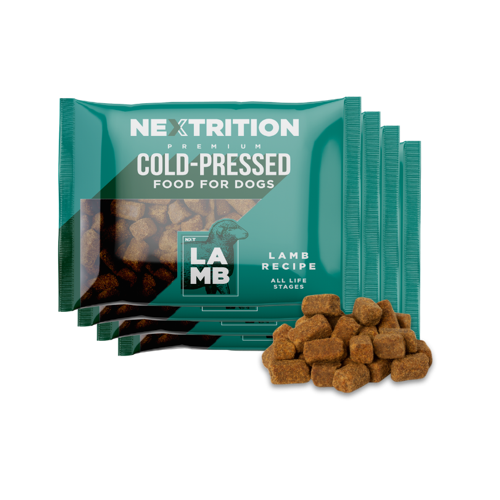
If you're looking for the best dog food for sensitive stomachs and you care about ingredient quality as much as digestive ease, this is where we'd start. Our All-Natural Lamb Recipe is built for dogs who need a gentler feeding approach without pushing you into frozen storage or a prescription-only lane.
The big difference is the format. We cold-press at temperatures up to 3x lower than standard kibble processing, which helps preserve more of the natural nutrients in the real meat, fruits, and veggies going into the food. That matters more than people think. A lot of sensitive dogs aren't just reacting to one ingredient. Sometimes they're struggling with how hard the whole meal is to break down.
Over 12 pounds of whole fresh ingredients are pressed into a 4.5 lb bag. That's not a small detail. It changes the density of the food and the feeding experience.
A few reasons this formula stands out for sensitive stomach dogs:
- real lamb is the number one ingredient
- the cold-pressed pieces break down differently than traditional kibble
- it's shelf-stable, so daily feeding is simple
- you can build a personalized meal plan and keep it consistent through subscription if that helps your dog's routine
Lamb can be a smart choice when chicken doesn't seem to agree with your dog, or when you're trying to simplify the protein side of the bowl without going all the way into a clinical elimination diet. We also see a practical advantage here for households that want premium, natural feeding but don't want the freezer management that comes with fresh frozen food.
This is more ingredient-forward than conventional dry food. It's also more lifestyle-flexible than a prescription GI diet. That's the lane it owns.
Premium doesn't help if it doesn't fit your actual routine.
If your dog has medically complex GI issues or your vet has specifically recommended a therapeutic low-fat formula, this isn't the right tool for that job. But for owners who want a sensitive stomach dog food that feels less processed, more thoughtful, and easier to feed long term, it's a strong option.
2. Hill's Science Diet Sensitive Stomach & Skin
Pros
- Widely available across the U.S.
- Supports stomach and skin together
- Good for everyday digestive support
- Familiar vet-discussed mainstream brand
Cons
- Not for severe GI cases
- Less differentiated ingredient philosophy
- Still a conventional dry kibble
Hill's sits in a different part of the market. It's mainstream, widely available, and familiar to a lot of owners who want digestive support without making a dramatic feeding change.
This formula makes the most sense when stomach sensitivity and skin issues show up together. That's a common pattern. Loose stools and a dull coat often travel together, and owners usually notice the coat second.
You'll usually find chicken and salmon options in the broader conversation around this line, and that flexibility helps if your dog does better on one protein than another. It also has one practical advantage over more niche premium foods: you can find it almost anywhere in the U.S. When consistency matters, access matters too.
Where it fits best:
- adult dogs with mild but ongoing digestive sensitivity
- households that want a familiar over-the-counter dry food
- owners who prefer a brand commonly discussed in vet-led feeding conversations
Hill's is more general-use than prescription diets like i/d. That's important. It's not built as a clinical intervention. It's built as a steady everyday food for dogs who need some digestive consideration but not full therapeutic management.
Compared with cold-pressed or fresh options, it's less differentiated on ingredient philosophy. That's the tradeoff. You're choosing familiarity, availability, and a broad support profile over a less processed feeding approach. For many dogs, that's enough. For others, it isn't.
3. Purina Pro Plan Sensitive Skin & Stomach Salmon & Rice

Pros
- Salmon may suit sensitive dogs
- Supports skin and stomach together
- Easy to find and repurchase
- Convenient everyday dry-food format
Cons
- Still a conventional processed kibble
- Not for serious GI cases
- Less targeted than prescription diets
Purina Pro Plan's salmon and rice formula is one of the more common answers owners hear when they ask about sensitive stomach dog food. There's a reason for that. It's accessible, straightforward, and built around a protein source that can work well for dogs who don't thrive on more common land proteins.
Salmon-based formulas often appeal to owners who are already seeing skin irritation alongside digestive issues. In real use, that combination drives a lot of food changes. Not because salmon is magic, but because some dogs simply settle better on it.
This option lands in the middle of the market in a useful way:
- It's more protein-specific in its positioning than some chicken-first sensitive formulas.
- It's easy to buy and easy to stay on.
- It doesn't require the storage and prep shift that fresh feeding does.
It competes most directly with Hill's Science Diet for owners choosing between mainstream, non-prescription dry foods. If you're deciding between the two, the protein angle is often the tiebreaker. Dogs who seem better on fish than chicken may push this one ahead.
The limitation is processing style. It's still a conventional kibble solution. For health-conscious owners who want minimally processed feeding, that's usually where the hesitation starts. And for dogs with more serious GI problems or fat-intolerance issues, this still isn't the same category as a therapeutic veterinary diet.
4. Just Food For Dogs Sensitive Stomach

Pros
- Purpose-built for sensitive digestion
- Fresh whole-food feeding approach
- Less processed than standard kibble
- Strong fit for premium feeders
Cons
- Requires freezer space and thawing
- Less convenient for travel
- Higher-effort daily feeding routine
Some dogs do better when you move away from dry food entirely. Not always, but often enough that fresh feeding deserves a serious look in any roundup of the best dog food for sensitive stomachs.
Just Food For Dogs Sensitive Stomach is purpose-built for this use case, and that's its main strength. You're not trying to repurpose a general wellness recipe and hoping it behaves like a digestive formula. It's already framed around sensitive digestion.
The appeal here is pretty clear:
- fresh frozen format
- explicit sensitive stomach positioning
- stronger whole-food alignment than standard kibble
Fresh food tends to attract owners who are already dissatisfied with highly processed options. That's fair. But fresh feeding changes your routine in ways people sometimes underestimate. Freezer space, thawing, portioning, travel, and handoff to other family members all get a little harder. None of that is fatal. It just needs to be real.
This is philosophically closer to whole-food feeding than mainstream dry formulas, and more specialized for sensitive digestion than a lot of broader premium lines. Where it loses ground is convenience. Shelf-stable food wins on simplicity every time.
If your dog seems to struggle with heavily processed meals and you're comfortable building fresh-food habits into the week, this is a serious candidate.

5. Royal Canin Veterinary Diet Gastrointestinal Low Fat

Pros
- Targeted low-fat GI support
- Useful for recurring flare-ups
- Vet-guided therapeutic precision
- More specific than retail foods
Cons
- Requires veterinary involvement
- Not a lifestyle premium choice
- Less suited for mild cases
This is where the decision framework changes. Royal Canin Gastrointestinal Low Fat isn't a premium lifestyle upgrade. It's a veterinary tool.
That distinction matters because a lot of owners lose time trying increasingly expensive retail foods when the real issue is fat tolerance or a more persistent GI pattern that needs clinical management. Richer food is not always better food.
This option is best considered when:
- your dog has recurring digestive flare-ups
- your vet has specifically raised low-fat feeding
- richer diets keep failing, even when the ingredients look cleaner
Compared with over-the-counter sensitive stomach foods, it's more targeted and more clinical. Compared with premium cold-pressed or fresh diets, it's less aligned with natural-ingredient preferences. That's not a flaw. It's just solving a different problem.
Therapeutic diets aren't more premium. They're more specific.
If your dog needs GI support because of medical history, this kind of precision can matter more than ingredient philosophy. If your dog just has occasional soft stool after a rich treat weekend, this is probably too far up the ladder.
6. Hill's Prescription Diet i/d
Pros
- Vet-directed digestive support
- Strong clinical reputation
- Useful for persistent GI symptoms
- Broader GI focus than low-fat diets
Cons
- Prescription diet, not casual trial
- Overkill for mild sensitivity
- Less lifestyle-premium ingredient appeal
Hill's i/d lives at the therapeutic end of this roundup. It's for dogs who need clinical digestive care, not simply a better everyday food.
Owners usually arrive here after trial and error stops being useful. Persistent vomiting, ongoing diarrhea, repeated stomach upset, or a vet saying it's time to stop guessing. That's the context.
Its role is a little broader in digestive-care framing than Royal Canin's low-fat GI formula. That's the main comparison worth making. Royal Canin is more explicitly low-fat in positioning. Hill's i/d is often part of a wider digestive-support conversation under veterinary guidance.
A practical way to think about it:
- choose this category when the symptoms are persistent, not occasional
- expect vet involvement
- don't treat it like just another food experiment
There's value in that structure. When a dog is having repeated GI issues, fewer variables is usually better. A clinical food plan can provide that discipline.
For a mildly sensitive dog, this is not the first stop. For a dog whose stomach issues have become a medical management problem, it may be the right one.
7. JustFoodForDogs Fish & Sweet Potato

Pros
- Fish-based alternative to land proteins
- Simpler ingredient profile for trials
- Fresh format may suit sensitive dogs
- Useful for suspected protein reactions
Cons
- Less targeted than Sensitive Stomach recipe
- Frozen storage and prep required
- Narrower fit than general options
This is a narrower recommendation, but a useful one. JustFoodForDogs Fish & Sweet Potato makes sense when you're trying to simplify ingredients and use a fish-based profile within a fresh-food format.
It isn't as directly matched to the topic as the brand's dedicated Sensitive Stomach recipe. Still, it can be a smart selective choice for the right dog. Especially when you're dealing with suspected protein sensitivity and want to avoid a more crowded ingredient panel.
Why owners consider it:
- limited-ingredient feel
- fish-based recipe
- fresh-food alignment without defaulting to chicken or turkey
This one tends to appeal to more deliberate shoppers. Not people casually browsing for a premium upgrade, but owners actively trying to reduce variables while staying in the fresh category. That difference matters.
Fresh fish-based feeding can be a helpful contrast when land proteins seem to keep causing friction. But this isn't a universal answer. It's more of a targeted move. If your dog's issue is general digestive fragility rather than suspected ingredient reaction, the purpose-built Sensitive Stomach recipe likely makes more sense.
8. Royal Canin Sensitivity Control
Pros
- Supports controlled elimination feeding
- Helpful for suspected ingredient reactions
- Vet-guided diagnostic use case
- More targeted than general formulas
Cons
- Requires veterinary involvement
- Less flexible for everyday feeding
- Not meant for broad GI issues
Royal Canin Sensitivity Control belongs in a veterinary conversation, not a casual shopping one. It's relevant when ingredient sensitivity is the main suspicion and your goal is controlled feeding, not just a calmer stomach.
That puts it in a different class from everyday sensitive stomach dog food. The point here is not broad digestive support. The point is narrowing the problem.
This diet is especially relevant for:
- dogs suspected of reacting to specific ingredients
- elimination-style feeding workups
- owners working with a vet to identify triggers instead of just managing symptoms
It's more ingredient-control oriented than general digestive formulas, and more diagnostic in spirit than premium OTC options. That makes it useful, but also less flexible. You don't choose this because the bag sounds nice. You choose it because you're trying to answer a question with some discipline.
The confusion we see most often is owners mixing this up with low-fat GI diets. Different issue. Different use case. If the problem is ingredient reaction, this lane makes sense. If the problem is broader GI upset or fat intolerance, other veterinary diets fit better.
9. Acana Singles

Pros
- Single-animal-protein recipes simplify choices
- Premium dry format stays convenient
- Good fit for protein-sensitive dogs
- No prescription or freezer needed
Cons
- Less targeted than GI formulas
- Fit depends on trigger pattern
- Not for complex digestive cases
Acana Singles is a practical bridge option. It gives owners a single-animal-protein dry food line with a food-sensitivity angle, without requiring a prescription or a freezer.
For dogs who react poorly to complex formulas, simplifying the protein side can help. Not always. But often enough that this category deserves attention.
Acana Singles fits best when you want:
- ingredient simplicity in a premium dry format
- one primary animal protein
- a retail option that feels closer to elimination-minded shopping than standard kibble
This is more ingredient-focused than mainstream sensitive formulas like Hill's or Purina. It's also still dry food, which keeps feeding easier than fresh frozen options. That's the balancing act.
What it doesn't do is replace therapeutic GI care. And because it's not as explicitly sensitive-stomach-named as some other formulas, the fit depends heavily on your dog's trigger pattern. If the issue seems protein-driven, this gets more interesting. If the issue is broader digestive instability, a more purpose-built digestive formula may be cleaner.
10. Nulo Freestyle

Pros
- Probiotic support for gut health
- Premium kibble without freezer hassle
- Broad recipe variety within line
- Easy upgrade from basic kibble
Cons
- Not purpose-built for sensitive stomachs
- Recipe fit varies by protein
- Less targeted than vet diets
Nulo Freestyle earns a spot here, but as a secondary-tier option. The connection to sensitive stomachs comes more through digestive-support features like probiotics than through a direct, purpose-built sensitive stomach identity.
That doesn't make it weak. It just makes it less obvious.
For some dogs, especially those needing a premium kibble upgrade from standard grocery-store food, gut-support signals are enough to justify a trial. Particularly if you're not ready for fresh feeding and don't need a veterinary diet.
The case for it is usually based on three things:
- premium dry food positioning
- probiotic support
- a better fit for owners who want to improve the bowl without overhauling their whole routine
We'd look at recipe specifics carefully within the line. That's the operator move here. Don't assume the line name tells you enough. Protein source, richness, and ingredient profile still matter.
If you're comparing it against foods that are explicitly built for digestive sensitivity, it usually loses on specificity. If you're comparing it against generic premium kibble, it becomes more compelling.
How to Choose the Right Sensitive Stomach Dog Food
The label matters less than the symptom pattern. That's the cleanest way to avoid wasting time.
Start by asking what actually happens after meals:
- occasional soft stool after rich food
- chronic gas or loud stomach gurgling
- recurring vomiting
- a likely reaction to one protein
- digestive issues that show up alongside itchy skin or a rough coat
Then match the food type to the likely need.
Match the food to the problem
- Premium cold-pressed: useful when you want a less processed, ingredient-forward option with a digestibility-first philosophy
- Mainstream sensitive formulas: a practical fit for mild, ongoing stomach sensitivity
- Fresh frozen options: better for owners committed to whole-food style feeding and the storage routine that comes with it
- Veterinary diets: the right move when symptoms are persistent, medically significant, or low-fat dependent
The real decision points
Protein source is usually the first one. If your dog does poorly on chicken, that narrows the field fast.
Processing style comes next. Some owners are fine with kibble if the formula is steady and accessible. Others want less processing and are willing to pay for it.
Then ask whether you're buying everyday support or clinical management. That's where a lot of confusion starts. Premium foods can support digestion. They don't replace therapeutic diets when the case is medical.

What Matters Most for Different Sensitive Stomach Scenarios
Brand names can blur together fast. It's easier to sort by scenario.
For mild digestive sensitivity, we'd compare our All-Natural Lamb Recipe with Hill's Science Diet Sensitive Stomach & Skin and Purina Pro Plan Sensitive Skin & Stomach Salmon & Rice. That group covers the range from premium cold-pressed to mainstream dry support.
For suspected protein sensitivity, look harder at All-Natural Lamb Recipe, Acana Singles, and JustFoodForDogs Fish & Sweet Potato. Here, simpler or alternative proteins matter more than broad digestive marketing.
If you're dealing with gut health plus skin and coat concerns, Hill's and Purina both fit naturally, with Nulo Freestyle as a premium dry option for owners who want digestive-support signals but aren't ready to move formats.
For owners wanting a premium upgrade from standard kibble, the most useful comparison is All-Natural Lamb Recipe, Just Food For Dogs Sensitive Stomach, and Acana Singles. Same general intent, very different feeding experience.
For vet-managed digestive issues, stay in the therapeutic lane: Royal Canin Gastrointestinal Low Fat, Hill's i/d, and Royal Canin Sensitivity Control. At that point, lifestyle preference should stop leading the decision.
Don't sort by hype. Sort by symptom pattern.

Common Mistakes When Switching to a Food for Sensitive Stomachs
Most feeding mistakes aren't dramatic. They're just messy enough to hide the answer.
The first is choosing based on popularity alone. A commonly recommended food can still be wrong for your dog's actual pattern. Fish-based support, low-fat GI management, and ingredient-control feeding are not interchangeable.
The second mistake is changing too many variables at once. New food, new treats, new topper, new supplements. Then the stool changes and nobody knows why. Keep the test clean.
A few others show up all the time:
- treating every digestive issue like a mild food sensitivity when some dogs need veterinary care
- moving from one rich premium food to another without checking fat tolerance
- assuming premium and therapeutic mean the same thing
- underestimating the routine demands of frozen fresh feeding
Prescription diets shouldn't be handled like casual experiments. Fresh food shouldn't be chosen if nobody in the house will actually manage the thawing and portioning. And premium retail food shouldn't be expected to solve a clinical GI condition by force of branding.
Conclusion
The best dog food for sensitive stomachs depends on what kind of sensitivity you're actually dealing with. Mild digestive fragility, ingredient intolerance, and medically significant GI disease don't belong in the same bucket, even though they often get shopped that way.
Premium cold-pressed and fresh options tend to make the most sense for owners who prioritize natural ingredients, less processing, and a more intentional feeding approach. Mainstream sensitive stomach dog food still has a real place, especially when you need steady everyday support and easy access. Prescription diets belong in their own category, for dogs who need veterinary guidance and a more clinical plan.
If you're narrowing the list, start with your dog's symptom pattern, then look at protein source, format, and how much support is really needed. Transition slowly. Keep the variables tight. And if symptoms are persistent or severe, bring your vet in early. A calmer stomach usually starts with a clearer decision.


Dog food sensitive stomach vomiting searches usually start after one too many 3 a.m. cleanups. And the mistake is buying whatever says "sensitive" on the bag. A lot of those formulas are still heavy, messy, or just not worth the switch.
The better options are easier on digestion, use cleaner protein choices, and don't feel like a compromise on ingredient quality. We've cut past the filler and left in the foods that actually make sense for dogs with touchy stomachs.
These are the ones worth your attention.
1. All-Natural Lamb Recipe
Pros
- Cold-pressed for easier digestion
- Real lamb is first ingredient
- Natural whole-food ingredient profile
- Shelf-stable alternative to fresh
- Strong fit for mild sensitivity
Cons
- Not a veterinary therapeutic diet
- May not suit fat-sensitive dogs
- Premium pricing versus standard kibble
If you're looking for a premium everyday answer to dog food sensitive stomach vomiting concerns, this is where we'd start. Not because every vomiting case is the same, but because a lot of dogs don't need a clinical diet first. They need a cleaner, more digestible daily food and one consistent trial.
Our All-Natural Lamb Recipe sits in that lane. It's cold-pressed, not traditional kibble, and that matters more than most labels let on. We make it at temperatures up to 3x lower than standard kibble processing, which helps preserve more of the nutrients already in the ingredients instead of cooking the life out of them and trying to add everything back later.
A few things make it especially relevant for sensitive digestion:
- real lamb is the first ingredient
- over 12 pounds of whole fresh ingredients are pressed into a 4.5 lb bag
- it uses natural ingredients, including real meat, fruits, veggies, and Rocky Mountain water
- it feels like a pantry-friendly food, not a freezer project
That last point matters. A lot of owners want something more thoughtful than mainstream dry food, but they also want a feeding routine they can actually maintain on a Tuesday morning.
This is not a prescription GI diet, and we don't pretend it is. If your dog has pancreatitis, severe vomiting, or a fat-triggered history, this isn't the first call. But for mild recurring vomiting, touchy digestion, or dogs that just don't do well on conventional kibble, it's a smart place to begin before moving into therapeutic territory.
Start with the least complicated solution that matches the symptoms.
We've seen that ingredient quality and processing style often get lumped together as marketing. They shouldn't be. Some dogs simply handle a cold-pressed food better than a harder, more heavily processed kibble. Not every case, but enough that it's worth paying attention.

2. Hill's Science Diet Sensitive Stomach & Skin

Pros
- Easy to find and repurchase
- Supports digestion plus skin health
- Good everyday maintenance formula
- Practical for mild sensitivity
Cons
- Not ideal for frequent vomiting
- Less targeted than prescription GI diets
- Conventional kibble format only
This is a practical middle-ground option. It's built for dogs with mild digestive sensitivity, and it adds a skin-and-coat angle that can matter more than people think.
A dog with an unsettled stomach and dull coat or itchiness isn't always dealing with two separate problems. Sometimes it's one system showing stress in two places. That's where a formula with both stomach and skin positioning earns its keep.
Hill's Science Diet fits owners who want:
- something familiar and easy to find
- a daily maintenance food rather than a short-term intervention
- a formula that addresses digestion without ignoring coat and skin
Compared with a premium cold-pressed food, this is more conventional. Compared with a prescription GI diet, it's far less targeted. That's not a knock. It's just the truth. A lot of dogs live in that middle zone where they need better tolerance, not medical management.
The limit is pretty clear too. If vomiting is frequent, if richer foods seem to trigger it, or if your dog has already failed a couple of retail food changes, this usually isn't the best dog food to stop vomiting sensitive stomach cases. At that point, you'd want either a more deliberate ingredient strategy or a vet-led GI diet.
Sometimes mainstream works fine. Sometimes it just delays the next switch.
3. Purina Pro Plan Sensitive Skin & Stomach Salmon & Rice
Pros
- Salmon-based everyday digestive support
- Widely available and easy to repurchase
- Good fit for mild sensitivity
- Appeals to fish-protein preference
Cons
- Still a standard dry kibble
- Less suitable for frequent vomiting
- Not a therapeutic GI diet
Some owners know exactly what they want from the start. They want salmon. They want rice. They want a formula that feels straightforward and widely available. This option speaks directly to that buyer.
The salmon-and-rice pairing gives it a cleaner, simpler everyday identity than broader sensitive-stomach products that don't really tell you what feeding problem they're trying to solve. For dogs whose digestion seems calmer on fish-based food, that can be enough reason to test it seriously.
Where it fits well:
- mild stomach sensitivity
- owners looking for a mainstream salmon-forward formula
- households that want easy repurchasing without changing feeding style
In real use, this fills a similar role to Hill's Science Diet. The difference is less about quality hierarchy and more about protein preference and tolerance. If you're specifically trying to move away from chicken-leaning options, this one makes more sense.
Still, it's standard dry food. That's the tradeoff. For some dogs, that won't matter. For others, it will. If your dog vomits often, seems worse after richer meals, or has a diagnosed GI issue, don't let "sensitive stomach" on a retail bag do more work than it should.
A label can point you in the right direction. It can't do the diagnosis for you.
4. Royal Canin Veterinary Diet Gastrointestinal Low Fat
Pros
- Targets fat-sensitive vomiting cases
- Useful for pancreatitis history
- Stronger GI support than retail
- Vet-guided therapeutic positioning
Cons
- Requires veterinary authorization
- Too specialized for mild cases
- Less flexible than everyday diets
This is where the conversation changes. We're no longer talking about a generally fussy stomach. We're talking about dogs whose vomiting may be tied to fat sensitivity, pancreatitis history, or a documented digestive condition.
That low-fat focus is the reason it's on this list.
Plenty of foods claim digestive support. Far fewer are built around the specific reality that some dogs simply don't tolerate fat well. If your dog's vomiting tends to flare after richer meals, table scraps, or anything outside a narrow routine, a low-fat veterinary diet deserves real attention.
Royal Canin Gastrointestinal Low Fat is a better fit when:
- your vet has raised concern about pancreatitis or fat intolerance
- vomiting isn't occasional anymore
- standard sensitive-stomach foods haven't held things together
This is narrower than the everyday options above, and that's a strength, not a weakness. It isn't trying to be for everyone. It is trying to be useful in a very specific kind of case.
The mistake we see is owners reaching for therapeutic diets as a lifestyle upgrade. That's usually backward. Prescription foods make the most sense when the dog's history has already told you a normal retail path probably won't cut it.
5. Just Food For Dogs Sensitive Stomach
Pros
- Fresh, less processed feeding style
- Digestive-focused everyday formula
- Whole-food appeal for picky owners
- Feels more intentional than kibble
Cons
- Requires refrigeration and planning
- Costs more than dry food
- Less medically targeted than prescription diets
Fresh food has real appeal, especially for owners who are ingredient-conscious and done with conventional kibble. This option lands there, but with a digestive focus rather than just a premium halo.
For dog food sensitive stomach vomiting situations, a fresh sensitive-stomach formula can make sense when your priority is digestibility and whole-food style feeding, not clinical GI management. It's a different philosophy from both mainstream dry food and prescription diets.
The appeal is fairly obvious:
- less processed feeding style
- specific positioning for digestive upset
- a more premium daily feeding experience
But fresh feeding asks more from you. Storage, handling, timing, cost, all of it. That doesn't make it worse. It just makes it a commitment.
Compared with cold-pressed food, this is less shelf-stable and usually less convenient. Compared with standard kibble, it feels more intentional and less industrial. Compared with prescription GI diets, it's less medically specific.
That's the real comparison set. Not "good" versus "bad," but which tradeoff actually fits your life and your dog's symptoms.
If you want to move beyond ordinary dry food and you're comfortable with the logistics, this is a serious option. If you need pantry simplicity, it may not be.
6. Hill's Prescription Diet i/d
Pros
- Targeted GI support for vomiting
- Strong vet-guided escalation option
- Useful after retail diet failures
- Fits broader digestive upset cases
Cons
- Requires veterinary authorization
- Not ideal for mild cases
- Less relevant for fat-triggered vomiting
When dogs have moved past mild sensitivity and into actual recurring digestive upset, Hill's Prescription Diet i/d becomes relevant fast. This is one of the more common escalation points when over-the-counter changes haven't solved the problem.
It earns its place because it's built for GI support first. Not skin. Not general wellness. GI.
That matters when you're dealing with vomiting that keeps returning, especially if it's paired with loose stool, appetite changes, or a pattern that has already outlasted a few well-intentioned food switches. At that stage, another premium retail trial can become expensive guesswork.
A useful way to think about i/d versus Royal Canin Low Fat:
When i/d makes more sense
- the issue is broader digestive upset
- the trigger isn't clearly fat-related
- your vet wants GI support without narrowing only on fat tolerance
When it may not be the first move
- the vomiting was a one-off after getting into something
- symptoms are mild and recent
- you haven't yet tried a consistent daily food change
We've said this to plenty of owners: random switching creates noise. A structured trial creates information. Prescription GI diets are often valuable because they remove some of that noise and let you see whether the dog's system settles when the plan is actually controlled.
7. Just Food For Dogs Fish & Sweet Potato
Pros
- Fresh fish-based protein alternative
- Simpler limited-ingredient style profile
- Useful for common protein concerns
- Premium fresh-food feeding approach
Cons
- Less convenient than pantry foods
- Not a formal elimination diet
- Higher cost than standard kibble
This is one of the more interesting options on the list because it isn't just "sensitive stomach" in a broad sense. It has a clearer food-sensitivity angle.
Fish and sweet potato gives it a limited-ingredient feel that can be useful when you suspect a specific protein issue or want to get away from the usual land-animal rotation. That's a different use case from a general digestive-support formula.
It may be a strong fit if:
- your dog seems worse on common proteins
- you want a fresh recipe with a simpler profile
- you're trying a more deliberate protein change without jumping straight to prescription
Compared with Just Food For Dogs Sensitive Stomach, this is more troubleshooting-oriented. Compared with salmon-and-rice kibble, it feels more premium and more intentionally stripped back. Compared with our lamb recipe, it offers a different protein path for owners who don't want lamb as the trial choice.
There is a limit here too. If your vet recommends a stricter hydrolyzed or formal elimination diet, this is not a substitute. Fresh and simple isn't the same thing as medically controlled.
Sometimes a narrower ingredient profile helps quickly. Sometimes the case is already beyond that.
How to Choose the Best Dog Food to Stop Vomiting for a Sensitive Stomach
Choosing the best dog food to stop vomiting sensitive stomach problems starts with the pattern, not the brand. Vomiting after gobbling a meal, waking up with bile vomit, and vomiting that keeps showing up for weeks are not the same problem.
Start by sorting the case:
- Occasional vomiting after meals: look at portion size, eating speed, and whether a digestibility-focused daily food is enough
- Chronic vomiting over weeks: move faster toward veterinary guidance and a structured diet trial
- Bile vomiting: meal timing may matter as much as food choice
- Vomiting with loose stool: think broader GI support, not just a nicer ingredient list
Then match the food type to the likely trigger.
A lamb or fish recipe can be useful if you're exploring a protein change. A low-fat veterinary diet makes more sense if richer meals seem to cause trouble. Fresh or cold-pressed options are often appealing when digestibility and ingredient quality are the main priorities. Prescription GI diets come into play when previous retail foods have already failed.
One hard rule here: commit to one clear trial. Don't rotate three formulas in ten days and call it data. That just muddies the picture.
Consistency is part of the treatment plan.
Your feeding style matters too. Some people want fresh food. Some want a shelf-stable premium option. Some need a clinically guided plan and don't care about format nearly as much as results. All reasonable. The right answer is the one your dog tolerates and you can actually stick with.

What Matters Most When Comparing These Options
Once you've narrowed the field, the comparison gets easier. You're really weighing four things, not twenty.
Protein strategy
Lamb, salmon, fish, and general sensitive-stomach formulas don't solve the same problem. If you're testing whether a different protein helps, choose intentionally. Don't buy a "sensitive" formula that still keeps your dog on the same protein profile that may have been part of the issue.
Fat tolerance
This one gets missed all the time. If vomiting is worse after richer foods, general sensitive-stomach picks are often too broad. Low-fat veterinary diets deserve more attention in that situation.
Processing style
Cold-pressed, conventional dry, fresh, and prescription therapeutic diets each reflect a different approach.
- cold-pressed can appeal when you want digestibility with shelf stability
- conventional dry keeps things simple and accessible
- fresh suits owners willing to trade convenience for format preference
- prescription diets are there for cases that need stronger GI structure
History of diet failure
A dog that hasn't tolerated multiple food changes is telling you something. Usually that the next step should be more structured, not just more premium.
Skin and coat overlap belongs in the comparison too. If stomach issues tend to show up alongside itching or coat changes, a dual-purpose formula can make more sense than a GI-only retail pick.

When Vomiting Signals a Bigger Issue Than Food Alone
Not every vomiting case is a food problem. Some are. Some aren't. Sorting that out early saves time and usually saves your dog a lot of discomfort.
First, know the difference between vomiting and regurgitation. Passive return of undigested food points in a different direction than active retching with stomach contents. Owners mix these up constantly, and it changes the conversation.
Red flags should move you out of shopping mode and into vet mode:
- repeated vomiting
- weight loss
- lethargy
- blood
- obvious pain
- refusal to eat
- symptoms lasting more than a few weeks
Diet trials are useful, especially early in chronic enteropathy workups, but they need to be done properly. One food. Enough time. No side detours with treats and leftovers every other day. That's where good intentions usually break down.
If your dog has prior diet failures, chronic GI signs, or suspected fat-sensitive disease, a prescription option like Hill's Prescription Diet i/d or Royal Canin Veterinary Diet Gastrointestinal Low Fat may be more appropriate than another standard retail experiment.
There's also a gut-brain piece here. Some dogs with chronic digestive discomfort have stress-related or functional GI patterns layered on top. In those dogs, repeated random food changes can miss the real issue entirely.
Food matters. It just isn't always the whole story.
Conclusion
The best choice for dog food sensitive stomach vomiting concerns depends less on hype and more on the kind of problem you're trying to solve. Our All-Natural Lamb Recipe is a strong fit for premium natural daily feeding and mild recurring sensitivity. Hill's Science Diet and Purina Pro Plan make sense for mainstream mild cases. The Just Food For Dogs options suit owners who want a fresh-food route. Hill's Prescription Diet i/d and Royal Canin Gastrointestinal Low Fat are the clear heavy hitters when a vet-guided GI plan is warranted.
Your next step is pretty simple. Decide whether your dog needs an everyday upgrade, a protein change, a fresh-food approach, or a therapeutic GI diet. Then run one consistent transition and give it a fair trial. If vomiting is frequent, persistent, or tied to other symptoms, bring your veterinarian into the plan early.
The right food can do a lot. The right process does even more.


Cold pressed vs wet dog food gets framed as soft versus dry, and that is where people go wrong. You can buy better food and still end up with loose stools, itchy skin, or a dog who walks away from the bowl.
What matters is processing, ingredient quality, and how your dog feels after eating. We don't care much about labels if the poop is off.
Start with these:
- Watch stool consistency after the switch.
- Compare nutrition on a dry matter basis, not straight off the label.
- Choose the food that keeps digestion steady, then feed it with confidence.
Why This Comparison Feels So Confusing
If you're stuck on cold pressed vs wet dog food, you're probably not casually browsing. Most owners who ask this are already trying. They've upgraded the bowl, read ingredient lists, paid more, and still aren't getting the steady digestion they expected.
The confusion usually starts with a simple shortcut. Wet food looks softer, so it feels gentler. Dry food feels more processed, so it seems harsher by default. That logic makes sense at first glance, but it falls apart once you look at what actually affects gut health.
A dog with loose stools, itchy skin, patchy appetite, or uneven energy doesn't need a prettier format. They need food their body can handle well, use well, and stay consistent on.
So when we compare cold pressed vs wet dog food for better gut health, texture is only one small piece. The better question is this:
How was the food made, what ingredients made it in, and how does your dog actually do on it day after day?
That shifts the whole conversation. Now you're looking at processing method, ingredient quality, nutrient survival, moisture, digestibility, and individual response. That's where the useful answers are.
What Cold-Pressed Dog Food Actually Is
Cold-pressed dog food is a dry food made by pressing ingredients together at lower temperatures, usually around 40 to 80°C. It's still processed. It's still cooked to some degree. "Cold-pressed" does not mean raw.
The pellets are usually compact and dense rather than puffed like typical kibble. Moisture tends to land around 8 to 12%, so it's still firmly in the dry-food category.
The real promise of cold pressing is lower heat exposure. Less aggressive processing may help preserve more heat-sensitive nutrients and more of the original character of the ingredients. That's the appeal for owners who care about what survives the manufacturing step, not just what gets listed on the bag.
There is an important limit here. Research on whether cold-pressed food is consistently more digestible than other formats is mixed. Ingredient choice, starch source, and formulation still matter a lot. A weak formula doesn't become great because the process sounds better.
We've always looked at cold pressing as a practical middle ground. You get the convenience of dry feeding, but with less heat than conventional extrusion. Our recipes follow that same logic. We make them at 3x lower temperatures using real meat, fruits, vegetables, natural ingredients, and Rocky Mountain waters because a lot of dog owners want daily digestive comfort without giving up ingredient integrity.

What Wet Dog Food Actually Is
Wet dog food comes in cans, pouches, or trays and carries much higher moisture, usually around 60 to 84%. That's the most obvious difference, and for many dogs it's a meaningful one.
It also goes through real processing. Wet food is cooked and sealed so it stays shelf stable. Because it looks closer to "real food" in the bowl, some owners assume it must be less processed. That's not a safe assumption.
Wet food is popular for good reasons:
- it has strong aroma, which helps picky eaters
- it offers soft texture, which can help dogs with chewing trouble
- it adds fluid through the meal itself
- it often feels more satisfying to serve
Some dogs clearly do better with that setup, especially if hydration is an issue or eating has become a struggle.
Still, not every wet product is meant to be a full everyday diet. Some are complete and balanced. Some are toppers or complementary foods. That distinction gets missed all the time, especially when a product looks premium.
Soft isn't the same as digestive support. We'll come back to that.

Gut Health Is About More Than Texture
When owners focus on gut health, they're usually watching stools. Fair enough. Stool quality is visible. But the gut shows up in more places than that.
A lot of your dog's immune function is connected to the gut. That's why food decisions often echo outward into skin, coat, appetite, energy, and general resilience. You see the surface signals first. Underneath, the body is doing more work than the bowl suggests.
Here are the factors that shape gut response more than texture alone:
- ingredient quality
- nutrient composition
- processing intensity
- moisture level
- fiber profile
- fat level
- how well starches and proteins are digested
- whether the food agrees with your dog consistently
That's the piece many people miss. A food can sound clean on paper and still not settle well in the dog in front of you. Or it can look less impressive and feed beautifully for months.
Gut health is rarely fixed by one feature. It's built by the whole feeding system.
Cold Pressed vs Wet Dog Food at a Glance
A quick comparison helps, as long as you don't stop there.
| Factor | Cold-pressed | Wet food |
|---|---|---|
| Moisture | Around 8 to 12% | Around 60 to 84% |
| Processing | Lower-temperature pressing | Cooked and sealed for preservation |
| Texture | Firm, dense pellets | Soft, aromatic, easy to chew |
| Storage | Easy to portion and store | Refrigerate after opening |
| Calorie density | More concentrated | Less calorie-dense per gram |
| Typical appeal | Lower-heat preparation | Hydration and palatability |
| Common gut-health use case | Dogs doing well on nutrient-dense dry food | Dogs needing moisture or appetite support |
That table is helpful, but the decision usually gets clearer in real life.
If you need something clean to portion, easy to store, and steady from meal to meal, cold-pressed has real advantages. If your dog is under-hydrated, turning away from meals, or struggling with chewing, wet food may solve a problem faster.
Different tools. Different reasons.

Is Cold Pressed Better Than Wet Dog Food for Gut Health?
The honest answer to is cold pressed better than wet dog food is: it depends on what your dog needs most.
Cold-pressed often comes out ahead when:
- you want lower-temperature preparation
- you want a dry format without the usual high-heat kibble profile
- your dog does well on measured, concentrated meals
- you're trying to support digestion through ingredient integrity, not just added moisture
Wet food often comes out ahead when:
- your dog needs more fluid intake
- appetite is unreliable
- chewing is uncomfortable
- you're managing illness, recovery, or age-related softness needs
If we step back and look at everyday feeding for health-conscious owners, cold-pressed is often the stronger long-term choice. Not because wet food is bad, but because many people want better nourishment with less aggressive processing in a format they can feed consistently.
A lot of gut improvement comes from boring consistency. That's not a glamorous answer, but it's usually the right one.
How Processing Changes What Your Dog Actually Gets
Processing deserves more attention than most marketing gives it. The food isn't just ingredients. It's ingredients after heat, pressure, moisture changes, and preservation.
Lower heat may preserve more heat-sensitive nutrients and more native ingredient qualities. That's a real reason some owners prefer cold-pressed food.
At the same time, higher heat can improve starch digestibility and reduce certain anti-nutritional factors. So the usual online argument of "less processed equals automatically better" doesn't hold up cleanly either.
Some vitamins and amino acids can be reduced by stronger heat. Manufacturers often compensate by adding nutrients back later. That's legal, common, and sometimes necessary. But plenty of ingredient-conscious owners still prefer to start with less loss upfront.
Here's the practical lens we use:
Don't ask whether the food sounds natural. Ask what the process likely did to the proteins, fats, vitamins, and the final meal your dog actually eats.
That's where the real difference lives.
What the Research Suggests About Digestibility
This part needs honesty. Research comparing pressed and extruded dry foods has shown mixed results, depending on ingredients and how digestibility was measured.
One line of research found higher apparent protein digestibility in pressed diets under certain starch conditions. Other work found the opposite when different grain forms were used. That's not neat. But it's useful.
It means there isn't a universal rule that one format is always easier to digest.
For owners, the takeaway is pretty simple:
- don't rely on category claims alone
- watch your dog's real outcomes
- give the food enough time to show you something consistent
"Digestible" in a study isn't the same as "best for my dog at home." Stool quality, gas, post-meal comfort, coat, and energy still matter. Sometimes the bowl tells you faster than the label does.
Nutrient Retention vs Added-Back Nutrition
All complete foods are expected to meet nutrient requirements in the final product. On paper, wet food, cold-pressed food, and conventional kibble can all be nutritionally adequate.
But adequacy isn't the only question thoughtful owners ask.
Some nutrients survive processing from the original ingredients. Others are restored or supplemented later. Both count toward the final nutritional profile. Still, many owners care about how much nourishment remains intact from real ingredients before the fixing starts.
That's a values-based distinction, but it's also practical. If you want real meat, fruits, vegetables, and natural ingredients doing more of the work, lower-temperature preparation makes more sense.
Minimums keep a food compliant. They don't tell you how the food got there.
Hydration Matters, but It Is Not the Whole Story
Wet food has the clearest advantage in one area: moisture. That matters for dogs who don't drink well, need extra hydration support, or simply eat better when meals are soft.
Hydration can improve feeding comfort. It can help some dogs feel better quickly. But moisture alone doesn't guarantee better digestion, better stools, or better ingredient quality.
This is where owners get tripped up. They see improvement from higher moisture and assume the format itself is superior for gut health. Sometimes the dog just needed more fluid and a more appealing meal. Those aren't small things, but they aren't the whole nutrition picture either.
A balanced way to look at it:
- wet food may help because of moisture and palatability
- cold-pressed may help because of formulation, ingredient quality, and lower-temperature preparation
Separate hydration from nourishment quality. They overlap sometimes, not always.
The Real Tradeoffs for Stool Quality, Appetite, Skin, and Energy
This is where the decision stops being theoretical.
Stool quality
Stool consistency is often the first sign that a food agrees with your dog. You're looking for stools that are easy to pass, consistent, and not overly soft, bulky, or erratic from one day to the next. By the second or third day of a poor fit, you usually know something is off.
Appetite and meal enthusiasm
Wet food often wins on smell alone. That's real. But good ingredient quality in cold-pressed food can still drive strong meal interest, especially once a dog settles into the routine.
Skin and coat
Skin and coat are slower signals. They reflect whether the dog is receiving and handling nourishment well over time, not just whether they liked breakfast.
Energy and post-meal comfort
Watch how your dog feels after eating. Not just whether the bowl is empty. A dog with steady energy and calm post-meal behavior is telling you more than a marketing claim ever will.
The best food is the one that creates visible stability.
When Cold-Pressed Is the Better Fit
Cold-pressed makes the most sense for a specific kind of owner and a specific kind of dog. Usually the owner wants more control and less guesswork.
It tends to fit well when:
- you care about lower-temperature processing
- your dog does fine on dry food but seems underwhelming on heavily processed options
- you want easier storage and cleaner feeding
- repeatable portions matter to your routine
- you want to stop making food choices based on guilt or soft-texture assumptions
This is also why our format works for a lot of health-conscious households. We offer four real-meat recipes, lamb, chicken, salmon, and beef, so you can match the dog rather than forcing the dog into one formula. And a personalized meal plan helps narrow that down without turning feeding into a full-time project.
When Wet Food Makes More Sense
Wet food deserves a fair read because in the right situation, it's exactly the right tool.
It makes more sense for:
- dogs that need more moisture in the diet
- picky eaters who rely on aroma and softness
- senior dogs or dogs with dental discomfort
- short-term recovery periods or appetite dips
- owners who don't mind refrigeration and higher feeding volume
Choosing wet food for one of those reasons is sensible. Choosing it because soft must equal better digestion is where people drift off course.
Sometimes wet food is the better answer. Just be clear about the problem you're solving.
How to Choose Between Cold Pressed and Wet Dog Food for Your Dog
Start with your dog, not the format. That's the cleanest way through the noise.
Look at:
- hydration habits
- stool consistency
- appetite
- chewing comfort
- skin and coat
- activity level
- known sensitivities
Then check whether the food is complete and balanced for your dog's life stage. After that, read the ingredient list and the processing story together. They belong together.
A simple trial works better than endless comparison:
- choose one food that fits your priorities
- transition properly
- feed it consistently for 10 to 14 days unless your vet says otherwise
- track stools, gas, appetite, comfort after meals, and coat changes
Make the call from outcomes, not online noise. That's how experienced owners get clearer, faster.

Mistakes Dog Owners Make When Comparing These Formats
Most bad feeding decisions aren't reckless. They're just slightly off in the same predictable ways.
Common mistakes include:
- assuming soft food is automatically gentler
- comparing wet and dry labels without accounting for moisture differences
- treating all dry food as the same, when cold-pressed and extruded foods differ meaningfully
- believing the word "natural" explains digestibility
- switching too fast and blaming the format
- forgetting to check whether the product is complete or only complementary
- chasing single claims like grain-free or high-protein without watching the dog's response
The pattern is familiar. Owners chase the loudest feature and miss the daily result.
A Smarter Everyday Feeding Routine for Gut Health
Gut health usually improves through steadiness, not constant food-hopping. That's less exciting than a dramatic switch, but it works better.
Pick a format you can feed reliably. Portion it well. Observe honestly. Give it enough time.
If you choose cold-pressed, keep it simple. Use a personalized meal plan to match the formula to your dog's needs, then stay consistent. One-time orders work fine. Subscriptions help some households avoid the last-minute scramble that turns feeding into improvisation.
If you choose wet food, handle storage carefully and watch total calories. High moisture changes how much food is needed, and the bowl can look generous while the nutrition lands differently than you think.
Routine is underrated. In gut health, routine is often the intervention.
Conclusion
The real decision in cold pressed vs wet dog food isn't dry versus soft. It's hydration, processing method, ingredient integrity, and how well the food supports your dog's digestion, stools, appetite, skin, and daily resilience.
So, is cold pressed better than wet dog food? Often yes for owners who prioritize lower-temperature preparation and want more of the original nourishment preserved in a convenient everyday format. But not always. If hydration, softness, or appetite support is the more urgent need, wet food may be the better fit.
Choose the format that matches your dog's actual symptoms and your real routine. Then feed it consistently enough to judge results with confidence. That's when the guesswork starts to drop away.


If your dog has loose stools, itchy paws, or random ear flare-ups, the dog sensitive stomach vs food allergy question gets messy fast. Most people switch foods too soon and miss the pattern.
What matters is where the signs show up, how often they come back, and what else your dog is eating besides meals (treats count). Start here:
- Gut-only trouble usually points in a different direction than itch, paws, and ears
- One rich snack can upset digestion; allergies usually show up after repeat exposure
- Tracking symptoms beats another expensive food switch, and gets you closer to the right bowl
Dog Sensitive Stomach vs Food Allergy at a Glance
When people search dog sensitive stomach vs food allergy, they’re usually already tired. Loose stool, paw licking, ear gunk, food switching, second guessing treats. We’ve seen that spiral. The first thing to fix is the mental model.
A sensitive stomach usually points to digestive sensitivity or food intolerance. That means the body is struggling with the food, but not necessarily mounting an immune response. Most of the signs stay in the gut.
A food allergy is different. It’s an immune reaction, usually to a protein the dog has eaten before, and it often shows up through the skin and ears more than the stomach.
Here’s the cleanest way to think about the difference between food allergy and sensitive stomach in dogs:
- Sensitive stomach or intolerance: mostly digestive signs like loose stools, vomiting, gas, bloating, discomfort after meals
- Food allergy: often non-seasonal itching, ear issues, foot chewing, skin irritation, sometimes digestive signs too
- Response needed: sensitivity often improves with a gentler, more consistent feeding approach, while true allergy usually calls for a strict elimination diet and full avoidance of the trigger
Not every soft stool is an allergy, and not every itchy dog has a food problem.
That matters because panic leads to bad decisions. Pattern recognition leads to better ones.
What a Sensitive Stomach Usually Means
“Sensitive stomach” is a useful everyday label, but it’s not a precise diagnosis. Most of the time, it means a dog tends to react with digestive upset more easily than others.
In practice, this often looks more like food intolerance than food allergy. The body has trouble handling something in the diet, but the immune system isn’t the main driver. That distinction changes everything.
Dogs with intolerance may react on first exposure, or after a while. They may also tolerate a small amount of the problem food better than a truly allergic dog would. That’s one of those details that helps when you’re sorting through the mess.
Common signs usually stay centered in the digestive tract:
- diarrhea or soft stools
- vomiting
- gas
- bloating
- abdominal discomfort
- lower energy after meals
- weight loss if the cycle keeps repeating
Sometimes the problem isn’t even the food itself. It’s the amount. Or the spoiled scrap under the picnic table. Or dairy in a dog that doesn’t handle lactose well. We’d rather owners hear that plainly than chase exotic causes too early.
A sensitive stomach is real. It can make daily life miserable. But it is not automatically the same thing as an immune-based food reaction.
What a Food Allergy Actually Is
A food allergy is an immune-mediated reaction to something in the diet, usually a protein. The immune system misidentifies that protein as a threat and reacts to it. That’s why this is more than simple stomach drama.
Most true food allergies develop after repeated exposure. A dog can eat the same ingredient for months or years, then start reacting. That’s one reason owners get thrown off. They assume the long-fed food can’t be the issue because it used to be fine.
The ingredients most often associated with food allergy in dogs are the ones dogs commonly eat over and over:
- beef
- dairy
- chicken
- wheat
- lamb
That doesn’t mean those ingredients are “bad.” It means common exposure creates more chances for reactivity over time. Frequency matters.
Food allergies are also less common than the internet makes them sound. Food reactions get talked about constantly, but true allergy in the overall dog population is still considered uncommon.
The pattern often includes:
- chronic itching
- red or inflamed skin
- recurrent ear infections
- paw licking or chewing
- hair loss
- skin infections
- sometimes vomiting or diarrhea alongside skin signs
Rarely, dogs can have hives or facial swelling after eating. That’s different. Treat it as urgent.
The Symptom Patterns That Help You Tell Them Apart
This is where the dog sensitive stomach vs food allergy question starts getting easier. You stop staring at one symptom and start looking for the pattern across the whole dog.
A sensitive stomach usually stays local. The gut gets loud. The rest of the body often doesn’t.
A food allergy often looks broader. Not always dramatic, but broader.
When it leans more toward sensitive stomach
You’re more likely looking at digestive sensitivity if you’re seeing things like:
- loose stools after rich foods
- vomiting after overeating
- gas and bloating
- stomach upset tied to scavenging or table scraps
- recurring GI discomfort without chronic itch or ear trouble
When it leans more toward food allergy
The suspicion goes up when digestive signs come with:
- non-seasonal itching
- red skin
- repeated ear infections
- foot licking or chewing
- hair loss
- recurrent skin flare-ups
One non-obvious point here: food challenge reactions are not always immediate. In dogs with confirmed adverse food reactions, flare-ups have often been observed between days 2 and 6 after exposure. So when someone says, “He ate it once and seemed fine,” that doesn’t always clear the ingredient.
Isolated stomach upset is one story. Gut signs plus itch, paws, and ears is a different story.

Why So Many Dog Parents Mix These Two Up
The confusion is understandable. The body has a limited number of ways to complain.
A dog throws up after a new chew and it feels logical to blame allergy. But maybe he ate too much, too fast. Maybe it was dairy. Maybe it had been sitting out too long. One reaction does not always equal one diagnosis.
Then the opposite happens. A dog eats chicken for a year, starts licking his feet and getting ear infections, and the owner says, “It can’t be the food, he’s always eaten it.” Actually, that timeline can fit allergy much better than first-day upset.
Marketing doesn’t help. “Sensitive,” “allergy,” “intolerance,” and “digestive support” get used interchangeably. They shouldn’t be.
The other trap is focusing only on the latest bag of food. We’d look wider than that. Stool. Skin. Ears. Paws. Appetite. Energy. Coat. The stronger clue is often the pattern across months, not the last meal.
What Tends to Trigger a Sensitive Stomach vs a Food Allergy
Triggers matter because they point to different feeding strategies. If you misread the trigger category, you usually waste time.
Sensitive stomach triggers are often pretty ordinary:
- overeating
- spoiled food
- scavenging
- abrupt diet changes
- dairy in lactose-intolerant dogs
Lactose intolerance is a clean example of a non-immune food intolerance. A dog eats milk-based food and gets diarrhea, bloating, or abdominal discomfort. That’s unpleasant, but it’s not the same as an allergic immune response.
Some food reactions aren’t allergy or intolerance at all. They’re direct irritant or toxic effects from whatever the dog got into. We’ve seen owners blame the regular diet when the real culprit was what happened in the yard two hours earlier.
On the allergy side, the trigger is more often a protein the dog has been exposed to repeatedly over time. Beef, dairy, chicken, wheat, and lamb come up often because they’re common. Any dog can react differently, but repeated exposure is a real part of the story.
One thing we wouldn’t do is automatically blame additives. Evidence that common food additives are a major driver of canine food reactions is limited. It’s an easy theory, not always a useful one.
How Vets Actually Tell the Difference
The right diagnosis usually starts with a boring tool: a careful history. That’s not glamorous, but it works.
Your vet will want to know:
- what your dog eats every day
- what treats, chews, toppers, and flavored medications are in the mix
- whether signs are mostly digestive, mostly skin-related, or both
- whether symptoms follow small amounts or only larger exposures
- how long the pattern has been happening
For food allergy, the gold standard is a strict elimination diet trial, usually 8 to 12 weeks under veterinary guidance. That trial often uses either a hydrolyzed diet or a carefully selected novel protein diet.
Improvement alone doesn’t fully prove the trigger. Confirmation usually requires a food challenge afterward. And since reactions can take days to show up, casual at-home guessing sends a lot of people in circles.
This is where discipline matters more than enthusiasm. One treat. One flavored chew. One table scrap. That can muddy the whole trial.
Blood, saliva, and hair tests are not reliable replacements for a proper elimination diet when diagnosing food allergy. We know they’re tempting. They promise shortcuts. This isn’t a category where shortcuts tend to save time.
Also worth saying plainly: many itchy dogs have environmental allergies, not food allergies. A veterinarian isn’t the last resort here. Often they’re the fastest path to clarity.

What to Do if It Looks More Like a Sensitive Stomach
If the signs look digestive and not strongly allergic, simplify before you start chasing every ingredient theory online.
Pick a consistent, thoughtfully made diet. Cut the extras. Then observe like a grown-up, not like a gambler checking for instant results.
Watch for changes in:
- stool quality
- gas
- appetite
- energy
- comfort after meals
For sensitive dogs, gentler everyday nutrition often helps more than constant food swapping. We’re opinionated about that because we’ve watched over-rotation make dogs harder to read, not easier.
This is where our cold-pressed approach can make sense. Nextrition is made at 3x lower temperatures, which helps preserve nutrients, and that matters to owners who care about digestive support and gut health. We use real meat, fruits, and vegetables in four recipes: lamb, chicken, salmon, and beef, with natural ingredients and Rocky Mountain waters.
That’s not a medical diagnosis. It’s a feeding philosophy.
If your dog seems sensitive rather than truly allergic, a personalized meal plan can also reduce the usual guessing. Better to start from a clear plan than bounce from bag to bag every ten days.
What to Do if Food Allergy Is a Real Possibility
If allergy is on the table, don’t get cute with the diet.
Premium, grain-free, and limited-ingredient do not automatically mean allergy-safe. And rotating three proteins at once because you’re “covering your bases” usually does the opposite. It buries the signal.
The smarter move is straightforward:
- work with your vet on a proper elimination diet
- stay strict with treats, chews, toppers, flavored meds, and scraps
- don’t assume improvement after a few days means you’ve solved it
- confirm the trigger properly before building a long-term plan
True food allergy can react to very small amounts. Casual exceptions can undo weeks of progress. That part frustrates people, but it’s also where the real answers come from.
Once a trigger is confirmed, long-term management is mostly about consistent avoidance. After that, if your dog is not allergic to a certain protein, whole-food options can become relevant again. Some owners do well settling into one everyday recipe, like lamb or salmon, instead of constantly rotating.
Supportive nutrition matters. Accurate identification comes first.
The Gut Health Perspective That Changes How You Feed
Even though digestive sensitivity and food allergy are different, they both point to the same deeper truth: the gut is central.
Around 70% of a dog’s immune system resides in the gut. So stool quality isn’t just about cleanup. It connects to immune resilience, skin comfort, appetite, and how your dog feels day to day.
That’s the shift we want owners to make. Stop treating stool, itch, ears, and coat as unrelated incidents. Start reading them as one system giving feedback.
A better way to evaluate food
Instead of asking only, “Did this ingredient cause a reaction?” ask:
- how are the stools after a full week?
- is gas settling down?
- is appetite steady?
- are ears calmer or still cycling?
- is coat quality holding up?
- is your dog more comfortable overall?
A gentle food philosophy fits here. Real meat. Natural fruits and vegetables. Lower-temperature cold pressing that preserves more of what you put in. Not hype. Just a more thoughtful match for owners who care about digestion and whole-body wellbeing.
Common Mistakes That Keep Dogs Stuck in the Cycle
Most mistakes here come from trying too hard to help. We don’t say that critically. We say it because nearly every dog parent in this situation has done some version of it.
A few patterns keep showing up:
- switching foods too quickly to see a real pattern
- labeling every upset stomach as an allergy
- blaming food for every itchy flare when environmental triggers may be driving it
- forgetting that treats, chews, supplements, and flavored medications count
- assuming a premium food is automatically safe
- using broad internet allergy tests instead of a real elimination trial
- ignoring the difference between a dog who reacts after repeated exposure and one who got sick after one rich snack
The hard part is that these mistakes feel proactive in the moment. They feel like action. But more action is not always more clarity.
When everything changes at once, nothing can be interpreted.
When Your Dog Needs Veterinary Help Sooner Rather Than Later
Some patterns are worth watching at home. Others need help sooner.
Call your veterinarian if you’re seeing any of the following:
- persistent vomiting or diarrhea
- ongoing gas, weight loss, or lethargy
- chronic non-seasonal itching
- repeated foot chewing
- recurrent ear infections
- repeated skin flare-ups
- facial swelling or hives after eating
- symptoms that keep cycling even after you simplify the diet
The key point here is simple: a vet isn’t the last stop after months of guessing. If the pattern is becoming chronic, they’re usually the fastest route to an answer.
Conclusion
The core distinction in dog sensitive stomach vs food allergy is this: a sensitive stomach usually points to digestive intolerance, irritation, or simple gut sensitivity, while a food allergy involves the immune system and often shows up through the skin, ears, or both.
That difference changes what you should do next. Not every symptom belongs to the same category. And not every reaction should send you into a full food overhaul.
The better move is calmer pattern recognition. Track the stool. Track the itch. Track the ears, paws, appetite, energy, and timing. If allergy looks possible, work with your veterinarian and do the trial properly. If sensitivity seems more likely, commit to a consistent, gut-supportive feeding approach long enough to actually learn something.
Once the pattern is clearer, staying consistent gets easier. And if you want a cleaner starting point, our personalized Nextrition meal plan can help take some of the guesswork out, whether you prefer a one-time order or regular subscription delivery. For a lot of dog parents, the biggest relief isn’t finding a miracle ingredient. It’s finally having a plan that makes sense.


Cold pressed vs air dried dog food sounds simple, but a lot of people get stuck on the label and miss what actually changes in the bowl. If your dog has touchy digestion, patchy stools, or starts strong then loses interest, that matters fast.
What counts in real life is how the food is made, what goes into it, and how your dog handles it day after day. We don't need hype here. You need something your dog can eat happily and do well on. Start with these:
- Whether the food is gently made or just sold that way
- How real meat, fruits, and vegetables show up on the label
- What your dog's stool, appetite, and coat tell you after a few weeks
The Short Answer: Which One Is Healthier?
If you're comparing cold pressed vs air dried dog food, the honest answer is this: neither one wins just because the label sounds premium. The healthier choice depends on the full recipe, how gently it's processed, and how your dog actually does on it.
Both formats are generally gentler than traditional extruded kibble, which is usually made with much higher heat and steam. That matters. Once you start cooking ingredients hard, you change more than texture.
Here's the practical read:
- Cold pressed often stands out for owners who care most about lower-temperature processing, nutrient preservation, and digestive support.
- Air dried can also be a strong option, especially when the ingredients are excellent and the method is truly gentle.
- The best food is the one your dog thrives on consistently, not the one with the most polished packaging.
Premium processing helps, but it can't rescue a weak formula.
If your priorities are gut health, immune support, skin, coat, and steady everyday feeding, cold pressed usually deserves a very close look.
Why This Comparison Matters to Health-Conscious Dog Owners
A lot of dog food marketing is built to blur real differences. Cold pressed and air dried can sit on the same shelf, use the same premium language, and still behave very differently in the bowl and in your dog's body.
Most of the owners we talk to aren't just trying to upgrade from cheap kibble because it feels nice. They're trying to fix something real. Loose stools. Gassiness by the second afternoon. A dog that eats one meal eagerly and sniffs at the next. Dry skin. Dull coat. Energy that's just a little off.
Lower-temperature processing matters because heat affects delicate nutrients, flavor compounds, and the natural character of ingredients. That doesn't mean every low-temp food is great. It means the method deserves attention.
This comparison becomes especially useful if your dog has:
- a sensitive stomach
- inconsistent stool quality
- a fussy appetite
- skin or coat issues that may be tied to diet
- a need for a cleaner, more whole-food routine than conventional kibble offers
The better question isn't which label sounds more advanced. It's which food supports your dog on ordinary days, meal after meal.
What Cold-Pressed Dog Food Actually Is
Cold-pressed dog food is made by blending ingredients and pressing them into bite-sized pieces using lower temperatures and pressure, instead of the high-heat steam-heavy extrusion used for standard kibble.
Cold pressed doesn't mean raw. It also doesn't mean no heat. That's a common misunderstanding. It means the food is made more gently.
In broader research and category references, cold pressing is often described in a range of roughly 40 to 80 degrees Celsius, which is about three times lower than conventional kibble production. That preservers a lot more nutrients in the food.
You can usually spot cold-pressed food pretty quickly. The pieces tend to be compact and dense rather than puffed up like extruded kibble. Less airy. More substance.
Why owners seek it out is pretty straightforward:
- lower-temperature production
- less industrial feel than standard kibble
- the belief that more of the original ingredient value and taste is preserved
- a format that's still dry, convenient, and easy to feed daily
We've found that once owners understand the process, the appeal becomes less about trend and more about control. They want food that's dry and practical without being cooked into something unrecognizable.
What Air-Dried Dog Food Actually Is
Air-dried dog food is made by removing moisture slowly with circulating warm air until the food becomes shelf stable. It starts with blended ingredients, often meat, fruits, and vegetables, then relies on dehydration rather than pressing.
That process sounds simple, but the details matter. Air drying generally uses low to moderate heat over a longer stretch of time. Some sources place it around 35 to 70 degrees Celsius, while some brand processes can run much hotter in drying chambers. That's where broad category claims can get slippery.
The finished food is usually different from cold pressed in a noticeable way. Air-dried pieces may be softer, chewier, or more jerky-like depending on the recipe and method.
That texture is a big part of the appeal. For many buyers, air-dried sits in the middle ground between raw and kibble:
- shelf stable
- no freezer or fridge required
- often meat-forward in feel and aroma
- less processed-looking than conventional kibble
It's a legitimate premium format. But air dried isn't one single method with one predictable outcome. Some products are genuinely gentle. Others use the language more loosely than you'd expect.

Cold Pressed vs Air Dried Dog Food: How the Processing Methods Differ
This is where the comparison gets practical. Both are gentler than extrusion, but they are not the same thing.
Cold pressed
With cold pressed food, ingredients are ground, blended, and mechanically pressed into shape. The goal is to form a complete piece of food while avoiding the high heat and steam used in standard kibble manufacturing.
You typically get:
- compact pellets
- low-temperature production
- a dry food that stays easy to portion and store
Air dried
With air-dried food, the ingredients are blended and then dried over time with warm circulating air. The main job here is moisture removal. That drying step is what creates shelf stability.
You often get:
- softer or chewier pieces
- a denser, sometimes meatier feel
- a process that depends more on time and airflow than pressing
Here's the clean distinction: cold pressing shapes the food under lower heat, while air drying removes moisture over time.
They may both sound gentle, and compared with kibble they usually are. But from a nutrition and feeding standpoint, they shouldn't be treated as interchangeable.

What Lower Temperatures Can Mean for Nutrient Retention
This is the core appeal behind both formats. Gentler heat may help preserve more of the natural nutritional value and flavor of ingredients than aggressive high-heat kibble processing.
That matters because high heat can affect certain vitamins, amino acids, and flavor compounds. Once you push ingredients too hard, some of the original value has to be rebuilt later through added nutrients. That's common in pet food. It's also one reason many owners start looking beyond standard kibble.
Still, air dried vs cold pressed nutrition isn't as simple as saying lower temperature always means better nutrition. Final nutrient levels also depend on:
- ingredient quality
- how the recipe is formulated
- what happens before processing
- whether nutrients are added back after processing
Cold pressing is often chosen specifically because the temperatures are especially low. Air drying can also preserve nutrients better than extrusion, but methods vary a lot by brand. That's the part many comparison articles skip.
A good rule: don't just ask which method sounds gentler. Ask what ingredients are being protected, and how transparent is the brand about the process?
Digestibility, Gut Health, and Why This Is the Deciding Factor for Many Dogs
Most owners don't notice nutrient theory first. They notice the poop. Then the appetite. Then whether their dog seems comfortable after meals.
That's why digestibility is such a big part of the cold pressed vs air dried dog food conversation. If a food looks beautiful on paper but leaves your dog bloated, gassy, or inconsistent, the paper doesn't matter much.
Gut health carries extra weight because a large share of the immune system is associated with the gut. So when digestion is off, the effects don't always stay in the digestive tract. You may see it in skin, coat, energy, or resilience.
Research around digestibility is mixed, and it should be treated carefully. Some cold-pressed manufacturers position their food as easier to break down than traditional kibble. In broader studies, digestibility can depend heavily on the ingredients used, especially starch sources and whether anything was pre-cooked. Processing method matters, but it doesn't make guarantees.
What we tell owners is simple:
- Watch stool quality for a few weeks, not two meals.
- Notice appetite consistency, not just day-one excitement.
- Pay attention to whether meals seem to sit lightly or heavily.
- Look for steadiness. Good food usually shows up as less drama.
Our view is that cold-pressed formulas built around real meat, fruits, vegetables, and a whole-food approach tend to align well with owners prioritizing digestive ease and immune support. Not because the label says so. Because the dog often tells you fairly quickly.
Ingredient Quality Matters as Much as the Processing Method
A premium-looking food doesn't become healthy just because it's cold pressed or air dried. If the formula is weak, the process won't save it.
This is where smart buyers separate themselves from hopeful buyers. Look at the recipe itself.
A useful checklist includes:
- Named animal proteins, not vague meat terms
- Whole-food ingredients like fruits and vegetables
- Natural ingredient profile
- Complete and balanced daily nutrition
- Clear sourcing or manufacturing transparency
If you're feeding for skin, coat, digestion, and stable energy, ingredient quality matters every bit as much as process.
For example, if you're reviewing a cold-pressed recipe, we'd want to see exactly the kind of things we build around ourselves: real meat, natural ingredients, fruits and veggies, and clear protein options such as lamb, chicken, salmon, and beef. That's not a sales point. That's the checklist.
The label should answer questions. If it mostly creates mood, keep moving.
Texture, Palatability, and Everyday Feeding Experience
This part gets underestimated all the time. Food can be nutritionally sound and still be a poor daily fit if your dog doesn't enjoy the texture or you hate feeding it.
Cold-pressed foods are usually crunchy and compact. Air-dried foods are often softer or chewier. That difference changes the experience more than people expect.
A few real-world examples:
- Picky eaters may respond better to a stronger natural aroma or softer texture.
- Small dogs may do better with pieces that are easy to bite cleanly.
- Seniors sometimes prefer less resistance.
- Some dogs just like crunch. Others don't.
Lower-temperature methods can help preserve more natural smell and taste than heavily processed kibble, which is one reason both formats often feel more appealing in the bowl.
Ask yourself practical questions:
- Does your dog eat it consistently?
- Is portioning simple?
- Does the texture match your dog's chewing habits?
- Can you use it easily for travel, training, or mixed feeding?
A feeding routine has to work on Tuesday morning too, not just on comparison charts.
Which Option Makes More Sense for Different Types of Dogs
There isn't one answer for every dog. But some patterns are pretty reliable.
Cold pressed may make more sense for:
- dogs transitioning away from traditional kibble
- owners who specifically want lower-temperature processing
- dogs with sensitive digestion where simplicity matters
- households that want a dry, shelf-stable food with a whole-food feel
Air dried may make more sense for:
- dogs that love softer, meatier textures
- owners who want something closer in feel to dehydrated whole food
- dogs that do well on richer, highly palatable formats
Some dogs will do beautifully on either. That's true. But if you're trying to reduce digestive friction and keep an easy daily routine, cold pressed often feels more practical long term.
The best fit still comes down to your dog's response, taste preferences, and the quality of the specific recipe.
Cost, Value, and What You Are Really Paying For
Premium dog food costs more for real reasons. Real meat costs more. Whole-food ingredients cost more. Smaller-batch premium production costs more. Gentler processing isn't free either.
Air-dried foods are often priced at the very top of the market because drying can be time-intensive and the formulas can be ingredient-dense. For some owners, that's worth it. For others, it becomes hard to sustain every month.
Cold pressed often lands in a useful middle ground. More premium and gentler than standard kibble, but often more realistic for daily feeding than some ultra-premium formats.
Value isn't just bag price. Look at:
- ingredient quality
- digestive results
- whether your dog actually wants to eat it
- how sustainable the routine is over time
This is also where support matters. A personalized meal plan and flexible one-time or subscription delivery can make a premium cold-pressed routine much easier to stick with, especially when you're dialing in portions for your dog's size and needs.
How to Compare Labels Without Getting Misled by Marketing
If you're shopping carefully, you need a tighter filter than "sounds natural."
Use this checklist:
- How is the food processed?
- Does the brand share temperature details clearly?
- What are the first several ingredients?
- Are there real meat, fruits, and vegetables?
- Is the formula complete and balanced?
- Does the brand explain how the method supports digestion or nutrient preservation?
- Is there feeding guidance or transition support?
A few assumptions to drop right now:
- Air dried is not automatically raw-like.
- Cold pressed is not automatically better if the recipe is weak.
- Natural-sounding words are not proof of nutritional quality.
The better questions are boring, which is exactly why they work. What ingredients are used? How much heat is involved? Is this a full daily food or more of a topper-style product? How do they help you transition your dog well?
Good brands make the answers easy to find. If you have to dig through vague language to understand the food, that's information too.
When Cold-Pressed Food May Be the Better Fit for a Health-First Household
For a health-first household, cold pressed can be the better fit when you want a dry food made at significantly lower temperatures than traditional kibble, with a whole-food ingredient profile and a routine built around digestive support.
That usually means you care about:
- real meat and produce, not just nutrient numbers
- gut health as part of immune support
- everyday convenience without falling back to heavily processed kibble
- a food you can feed consistently and confidently
This is where our own approach fits naturally for the right dog. We make cold-pressed recipes in lamb, chicken, salmon, and beef, using natural ingredients and Rocky Mountain waters. We also help owners build a personalized meal plan, with one-time orders or subscription delivery depending on how they like to feed.
Still, cold pressed isn't the only healthy answer. It may simply be the clearest fit if your priorities are gentle processing, whole-food nutrition, and digestive steadiness.
The healthiest food is the one your dog digests well, enjoys consistently, and can stay on successfully.
Common Questions Readers Still Have Before They Switch
A few questions come up every time.
Is cold-pressed dog food raw?
No. Cold pressed uses lower temperatures than kibble, but it is not raw.
Is air-dried dog food always healthier than kibble?
Not automatically. It can be gentler than kibble, but quality still depends on the actual recipe and formulation.
Does lower temperature automatically mean better digestion?
No. Lower temperature may help preserve ingredients, but digestion depends on the full food and on your individual dog.
Which is better for sensitive stomachs?
There isn't a universal answer. Start with the ingredient list, then evaluate your dog's response during a gradual transition.
Can you switch directly from kibble to cold pressed or air dried?
It's better to transition slowly. Watch stools, appetite, and comfort over the first couple of weeks.
Is one better for skin and coat?
Usually that comes back to overall ingredient quality, fat profile, and steady digestion, not processing alone.
Conclusion
The real takeaway on cold pressed vs air dried dog food is simple: this isn't a contest of labels. It's a question of how gently the food is made, what ingredients it starts with, and how your dog responds once it becomes part of daily life.
Both can be meaningful upgrades from traditional kibble. Cold pressing offers especially low-temperature processing and often makes the strongest case for owners focused on nutrient preservation, gut support, and whole-food simplicity. Air-dried foods can also be excellent, but the methods and value can vary more than the label suggests.
So compare the process. Read the ingredient list. Think about texture, digestibility, and whether the routine actually fits your household.
If cold pressed lines up with what you want, the next practical step is to explore a personalized plan built around your dog's size, needs, and preferred protein. That's usually where the decision gets easier. Once the bowl starts giving you answers, the marketing gets a lot quieter.


Dog food for skin allergies gets messy fast. Too many bags promise "skin and coat" help, and a lot of them are just regular kibble with nicer wording. If your dog is dealing with itching, hot spots, or a rough coat, that matters.
The good options are usually pretty clear once you stop falling for label fluff. Better protein, fewer problem ingredients, and formulas that actually make sense for repeat flare-ups. That's it.
We cut this down to 8 picks after leaving a lot out. These are the ones worth your attention.

1. All-Natural Salmon Recipe
Pros
- Real salmon as primary protein
- Cold-pressed for dense nutrition
- Supports digestion and skin together
- Good chicken-free everyday option
- Whole-food fruits and veggies included
Cons
- Not a veterinary therapeutic diet
- Unsuitable for strict elimination trials
- May not fit severe flare-ups
When you want a straightforward, nutritionally dense option built around a single, skin-friendly protein, All-Natural Salmon Recipe is a strong first stop. This formula centers on real salmon and pairs it with gut-healthy nutrients from premium grains, fruits, and vegetables—an approach aimed at improving both skin and coat by supporting digestion and overall nutrient absorption.
Key points that set it apart:
- Real salmon is the primary protein, so it’s a sensible choice for dogs sensitive to common proteins like chicken or beef.
- The recipe emphasizes digestibility: more nutrient-dense than typical kibble thanks to a cold-pressed process that concentrates the equivalent of over 12 lbs. of whole fresh ingredients into a 4.5 lb bag.
- Added fibers and whole-food fruits/veggies support the gut-skin axis, which can reduce flare-ups driven by poor digestion or nutrient gaps.
- Suitable as an over-the-counter, everyday management option for dogs with mild-to-moderate skin allergies or as a starting point before pursuing veterinary prescriptions.
This isn’t a veterinary therapeutic diet, so it’s not the right first choice for severe, uncontrollable flare-ups or cases requiring hydrolyzed proteins. But for many dogs with recurring itch linked to diet or digestion, it’s a direct, well-formulated option to try before moving to prescription interventions.
2. Hill's Prescription Diet Derm Complete
Pros
- Targets food and environmental sensitivities
- Strong fit for chronic itching
- More therapeutic than OTC formulas
- Useful for stubborn recurring flare-ups
- Supports a structured vet-guided plan
Cons
- Requires veterinary authorization
- Less targeted for elimination trials
- Overkill for mild sensitivities
If your dog has been scratching for months and every “sensitive skin” bag has done basically nothing, this is the point where guessing usually stops being useful. Hill's Prescription Diet Derm Complete sits in the veterinary therapeutic lane, and that matters.
This isn't just positioned as dog food for itchy skin in the casual sense. It's built for dogs where both environmental triggers and food sensitivities may be in play, which is a very different problem from simple dryness or a dull coat.
A few things separate it from the rest of the field:
- It's explicitly skin-focused, not just a general wellness formula with a skin claim on the label.
- It's meant to help manage both environmental and food sensitivities.
- It makes more sense when flare-ups are recurring, stubborn, or hard to pin to one cause.
We've seen owners lose months rotating proteins when the real issue was broader than that. At some point, a more structured, vet-guided approach is the faster path.
Compared with the hydrolyzed prescription foods below, Derm Complete is broader in its therapeutic framing. Compared with over-the-counter salmon or limited-ingredient foods, it's more clinical and more appropriate when hot spots, redness, and constant scratching have moved beyond “let's try a gentler kibble.”
When symptoms are persistent, convenience stops being the main decision maker.
3. Purina Pro Plan Veterinary Diets HA Hydrolyzed
Pros
- Useful for elimination trial planning
- Hydrolyzed protein reduces trigger exposure
- Targeted for food-linked skin flare-ups
- More methodical than food rotation
- Prescription formula with clinical focus
Cons
- Requires veterinary prescription and oversight
- Less useful for environmental triggers
- Dogs may tolerate similar formulas differently
This one is less about general support and more about controlled testing. If you suspect the protein itself is part of the problem, Purina Pro Plan Veterinary Diets HA Hydrolyzed is one of the cleaner routes for an elimination trial.
That hydrolyzed-protein approach is the whole point. You're not buying a shinier coat or a softer marketing story. You're reducing the chance that intact proteins are driving the reaction and using food as a diagnostic tool as much as a daily meal.
Here's where it fits best:
- Your dog has skin flare-ups that seem food-linked.
- You've already bounced between standard sensitive skin dog food options.
- You want a methodical process instead of rotating random bags and hoping one sticks.
Compared with Hill's Derm Complete, this is narrower and more food-reaction specific. Compared with Royal Canin's hydrolyzed option, it's in almost the same category, so the real-world difference often comes down to your vet's recommendation and how your dog tolerates the formula over time.
That last part gets ignored. Two foods can look similar on paper and still land differently in the bowl and in the stool.
4. Royal Canin Veterinary Diet Adult Hydrolyzed Protein
Pros
- Targeted for food-reaction skin issues
- Hydrolyzed protein reduces trigger uncertainty
- Useful for elimination-trial feeding plans
- More controlled than OTC formulas
Cons
- Prescription-only and vet-guided
- Less useful for environmental triggers
- Not ideal for mild sensitivity
Royal Canin Veterinary Diet Adult Hydrolyzed Protein belongs in the same conversation as Purina HA because it's solving the same core problem: adverse food reactions showing up through the skin. If your dog needs a controlled formula, not a broad “skin and coat” promise, this is the type of food you evaluate.
For dogs with repeatable flare-ups tied to eating, hydrolyzed prescription diets earn their place. They reduce ingredient uncertainty more aggressively than standard non-prescription options, and that's often exactly what you need when the reaction pattern is serious enough to be obvious.
A practical way to think about it:
- Choose this category when you're dealing with suspected food reactions, not vague sensitivity.
- Choose it when your veterinarian wants a more controlled feeding setup.
- Choose it when milder dog food for skin allergies has already failed.
Relative to Hill's Derm Complete, Royal Canin is more directly centered on food reactions rather than combined environmental-plus-food management. Relative to salmon-based dry foods, it's much less about nourishment in the broad sense and much more about control.
That's the tradeoff. Less romance. More precision.
5. Purina Pro Plan Sensitive Skin & Stomach Salmon & Rice Formula

Pros
- Supports skin and stomach together
- Salmon-based everyday formula
- Widely available without prescription
- Good for mild sensitivities
- Easier to feed consistently
Cons
- Not for true elimination trials
- Less controlled than limited-ingredient diets
- May be too mild for severe cases
Not every itchy dog needs a prescription bag. Purina Pro Plan Sensitive Skin & Stomach Salmon & Rice Formula is a practical middle-ground option for dogs with mild to moderate skin sensitivity, especially when the stomach is part of the story too.
That skin-and-stomach pairing is why it stays relevant. A lot of owners focus on scratching and miss the loose stool, inconsistent stool, or post-meal digestive noise that shows up alongside it. Those things are often connected.
It works well for dogs who need:
- a non-prescription dog food for itchy skin
- digestive support without jumping straight to hydrolyzed food
- an easier formula to find and stick with consistently
Compared with Natural Balance L.I.D., this is less restrictive in ingredient philosophy. Compared with Blue Buffalo True Solutions Skin & Coat Care, it puts more weight on the gut-skin relationship. For some dogs, that's the smarter bet.
We've learned not to separate skin and digestion too quickly. If both are off, a formula built around both problems often beats a food that only talks about coat support.
6. Natural Balance L.I.D. Limited Ingredient Diets Salmon & Brown Rice Formula

Pros
- Simpler ingredient list reduces variables
- Salmon recipe suits some sensitivities
- Good middle ground before prescription
- Controlled routine is easier to maintain
Cons
- Not as controlled as hydrolyzed diets
- May be too broad for severe allergies
- Brown rice may not suit all dogs
Natural Balance L.I.D. is for owners who want to quiet the diet down. Fewer moving parts. Less ingredient noise. That alone can be useful when flare-ups seem to show up after food switches or long ingredient panels.
It's not a hydrolyzed prescription diet, so it doesn't offer the same level of clinical control. But as a limited-ingredient salmon and brown rice formula, it gives you a simpler starting point without immediately going into prescription territory.
This is often where it makes sense:
- You suspect ingredient-related flare-ups.
- Your dog may benefit from food for dogs with hot spots that doesn't pile on complexity.
- You want a more controlled routine you can actually maintain.
Compared with Purina Pro Plan Sensitive Skin & Stomach, this is a more deliberate ingredient strategy. Compared with Blue Buffalo True Solutions, it's less about broad skin marketing and more about simplification.
That distinction matters. Some dogs don't need a medical food. They need fewer variables.
7. Blue Buffalo True Solutions Skin & Coat Care
Pros
- Supports skin and coat health
- Salmon-based everyday formula
- Good for mild dryness
- Accessible non-prescription option
Cons
- Not for serious allergy workups
- Less useful for trigger isolation
- Dry-food format won't suit all
Blue Buffalo True Solutions Skin & Coat Care fits a milder use case. Think coat quality, low-level irritation, skin comfort, and daily maintenance rather than a serious food-allergy workup.
If you're searching for dog food for shiny coat and some added skin support, this is more aligned with that goal than the prescription foods or stricter limited-ingredient routes. Salmon as a key protein source keeps it in the skin-support conversation, but the overall posture is still non-prescription and relatively accessible.
It tends to make the most sense when:
- your dog's coat looks dull or dry
- skin comfort needs a boost, but symptoms aren't severe
- you want support before escalating into a more medicalized plan
Against Purina Pro Plan Sensitive Skin & Stomach, this feels more skin-and-coat centered and less digestion driven. Against Natural Balance L.I.D., it's not really a trigger-isolation food. Against JustFoodForDogs, it's still in the traditional dry-food lane.
That's not a criticism. It's just the right category call for the right dog.
8. Hill's Science Diet Sensitive Stomach & Skin
Pros
- Supports stomach and skin together
- Good fit for mild sensitivities
- Accessible non-prescription starting point
- Helpful for gut-skin overlap
- Recognizable everyday formula
Cons
- Not targeted for serious allergies
- Less useful for elimination trials
- Formula differences can feel modest
Hill's Science Diet Sensitive Stomach & Skin sits in the same everyday category as Purina Pro Plan Sensitive Skin & Stomach, and most owners choosing between them are trying to solve a similar problem: mild sensitivity without going full prescription.
This is a non-prescription option commonly considered for stomach and skin support together. For dogs whose symptoms are present but not severe, that pairing can be enough. Not dramatic. Just steadier.
One reason this category works is that some dogs aren't showing a clean food allergy pattern. They simply do better on food designed for sensitive systems.
A few decision notes help here:
- If the main issue is mild sensitivity with digestive overlap, this is a reasonable place to start.
- If flare-ups are serious, recurrent, or clearly food-linked, this is probably not targeted enough.
- If you're choosing between this and Purina Pro Plan, you're often deciding between brand preference and formula fit more than category differences.
Compared with Hill's Prescription Diet Derm Complete, this is the lighter-touch path. Compared with Blue Buffalo True Solutions Skin & Coat Care, it leans more into the gut-skin connection than coat support alone.
9. JustFoodForDogs Skin & Allergy Care

Pros
- Fresh-food alternative to kibble
- Targeted for skin support
- Premium, intentional feeding experience
- Appeals to ingredient-conscious owners
Cons
- Not ideal for elimination trials
- Less clinically targeted than prescriptions
- Fresh format may be less convenient
Format changes the experience more than people admit. JustFoodForDogs Skin & Allergy Care matters because it's one of the clearest alternatives to standard dry food in this roundup, and some owners care as much about that as they do the claim on the front of the package.
This is a fresh dog food recipe specifically marketed for skin and allergy concerns. So if you're dissatisfied with conventional kibble and want dog food for skin allergies in a fresher, more premium-feeling format, this is the lane.
It's not the same tool as a hydrolyzed prescription diet. It doesn't replace a formal elimination approach when food reactions need tighter control. But it does appeal to owners who want a more intentional feeding strategy and place real weight on ingredient quality and processing style.
That part is worth saying plainly. Many health-conscious owners don't leave standard kibble because they're chasing trends. They leave because chronic issues push them to look harder at what daily food is actually doing.
At Nextrition, we understand that shift well. Our cold-pressed recipes are made at three times lower temperatures to help preserve nutrients, with real meat, fruits, vegetables, and Rocky Mountain waters across lamb, chicken, salmon, and beef recipes. For owners who want a premium non-prescription route that still respects gut health, skin, and coat support, that more intentional approach is often the point.
How to Choose the Right Dog Food for Skin Allergies
The best choice starts with one question: are you dealing with a likely allergy case, or a more general sensitivity case? If you don't sort that out first, you end up comparing unrelated foods and getting nowhere.
Here's the practical split:
Match the formula type to the problem
- Prescription therapeutic diets fit dogs with persistent, complex skin issues where environmental and food sensitivities may overlap.
- Hydrolyzed prescription diets are for suspected food reactions and elimination trials.
- Non-prescription sensitive skin dog food works better for milder issues, especially when you also want digestive support.
- Limited-ingredient diets help when ingredient overload or a recent food change seems tied to flare-ups.
- Fresh skin-support formulas appeal to owners who care deeply about food quality, minimal processing, and feeding format.
Look at the pattern, not just the symptom
Certain symptom patterns point more clearly toward one path:
- Recurring hot spots and chronic itch despite diet changes usually push the decision toward prescription help.
- Itchy skin plus digestive upset often fits skin-and-stomach formulas first.
- Reactions that seem tied to one protein or a specific food switch make limited-ingredient or hydrolyzed options more relevant.
- Mild dryness and a dull coat without an allergy history may only need direct skin and coat support.
We see owners get stuck because they shop by label language instead of by pattern. “Skin and coat” can mean almost anything. The useful question is whether the food helps isolate triggers or simply supports skin health while you manage symptoms.

Prescription vs. Non-Prescription vs. Limited-Ingredient vs. Fresh
These categories aren't better or worse in the abstract. They solve different problems. If you shop them like they're interchangeable, you're going to waste time.
Prescription therapeutic
Best when symptoms are persistent, messy, or already part of a veterinary plan. This is the category for dogs who need more than broad support, especially when food and environmental issues may overlap.
Hydrolyzed prescription
This is the most controlled lane for suspected food reactions. If you need dog food for itchy skin because you believe the food itself is driving the issue, hydrolyzed formulas are often the cleanest next step.
Non-prescription sensitive skin formulas
These work best for mild to moderate issues and for owners who want an accessible first move. They're especially useful when skin and digestion are both slightly off, but nothing yet points clearly to a major allergy case.
Limited-ingredient diets
A good fit when formula complexity seems like part of the problem. For food for dogs with hot spots that may be tied to diet changes or ingredient clutter, this category gives you a simpler baseline.
Fresh skin-support formulas
This group appeals to owners who want better ingredient quality, a different feeding experience, and a less conventional option than mass-market kibble. If you're also looking for dog food for shiny coat, fresh formats often enter the conversation because owners want overall daily nutrition to feel more intentional, not just symptom-driven.
Common Mistakes When Switching to a Food for Dogs With Skin Issues
Most mistakes happen before the first scoop hits the bowl. Owners pick a food based on one front-label claim, switch too fast, then can't tell what changed or why.
The big ones are predictable:
- choosing solely on “skin and coat” wording
- bouncing between foods too quickly
- assuming all salmon-based foods do the same thing
- treating limited-ingredient and hydrolyzed diets as interchangeable
- ignoring digestive symptoms when the skin is also acting up
- expecting a coat-support formula to solve serious food-reaction cases
- picking a format the household won't realistically stick with
The last one matters more than people think. A theoretically perfect food that no one can feed consistently is not a real plan.
Use a simple checklist during the transition and watch the same signals every week:
- itch level
- recurrence of hot spots
- stool quality
- coat texture and shine
- symptom consistency over time
By the second or third week, patterns usually start to show. Not always full resolution, but direction. That's enough to make the next decision smarter.
Conclusion
The best dog food for skin allergies isn't the one with the loudest claim. It's the one that fits the actual problem.
If your dog has severe or multi-trigger skin issues, prescription therapeutic food makes more sense. If the signs point to food reactions, hydrolyzed formulas are the more disciplined route. If the issue is mild sensitive skin with digestive overlap, skin-and-stomach foods are often the right starting point. If you want to reduce ingredient noise, limited-ingredient formulas earn a real look. And if your priority is a fresher, more premium feeding format, that's a different category again, not just a different bag.
Start with the likely trigger pattern. Choose the right category first. Then compare within that category instead of bouncing between unrelated formulas.
That's how you stop shopping by hope and start feeding with a plan.


Dog food for immune system support gets messy fast because half the bags say the same thing and most of them are just regular kibble with nicer packaging. You can waste a lot of money that way.
What separates the good picks is simpler than people think: solid ingredients, gut support, and a formula that fits your dog's age and routine (yes, really).

1. Nextrition All-Natural Chicken Recipe
Pros
- Cold-pressed for easier digestion
- Whole chicken as primary protein
- Nutrient-dense fresh ingredient blend
- Supports gut and immune health
- Less processed than typical kibble
Cons
- Less mainstream than big brands
- May cost more than kibble
- Not a targeted therapeutic formula
If you want a nutrient-forward, easily digested daily food that prioritizes real ingredients, this is the one to try first. Our All-Natural Chicken Recipe combines whole chicken with gut-healthy nutrients from premium grains, fruits, and vegetables—formulated to support digestion and, by extension, immune resilience.
This recipe stands out because it’s cold-pressed: over 12 lbs of whole fresh ingredients are concentrated into a 4.5 lb bag, producing a nutrient-dense format that’s often more digestible than traditional kibble. That improved digestibility reduces gut stress and helps maintain the consistent nutrient absorption the immune system relies on.
Where it fits best:
- adult maintenance but suitable for many life stages with steady feeding
- real chicken as the primary protein source
- focused on gut health through whole-food inputs rather than isolated additives
- a daily foundation for dogs that need nutrient density and gentle digestion
Compared with conventional dry foods, this option leans more into whole-food nutrition and digestibility. Compared with narrowly targeted therapeutic formulas, it’s balanced for long-term feeding while still giving immune-supportive benefits through better nutrient delivery.
2. Purina Pro Plan Adult Chicken & Rice Formula Dry Dog Food
Pros
- Strong everyday adult foundation
- Easy transition from standard kibble
- Research-adjacent brand credibility
- Digestible chicken-and-rice formula
- Consistent mainstream availability
Cons
- Not digestive-health targeted
- Not suited for seniors
- Less premium ingredient story
Purina Pro Plan Adult Chicken & Rice works because it doesn't pretend every dog needs a specialized protocol. A food can support the immune system by being digestible, consistent, and easy to keep feeding without drama.
If you're transitioning from a standard dry food and don't want to swing into a more niche format right away, this is a smooth move.
A few things define where it fits:
- adult life stage, not puppy and not senior
- classic chicken-and-rice positioning
- broad tolerance for dogs that do well on conventional dry food
- better as an everyday foundation than a gut-specific play
Compared with the digestive-health formulas on this list, this one is less pointed. That's not a weakness unless your dog is already showing signs that digestion is the real issue. Compared with senior foods, it's clearly the right lane for dogs still in their prime adult years.
We've seen owners overcomplicate this category. Sometimes the best dog food for immune system support is the one your dog eats well, digests well, and stays steady on for months, not the one with the loudest promise on the bag.
3. Hill's Science Diet Adult Dry Dog Food
Pros
- Senior-specific 7+ life stage
- Supports age-appropriate daily nutrition
- Familiar chicken and rice-style recipe
- Easy switch from standard kibble
Cons
- Not digestive-health targeted
- Still a processed dry food
- Less appealing for ingredient purists
Hill's Science Diet Adult 7+ is for the dog who isn't quite "old old" in your head yet, but is starting to show it in small ways. Recovery is a little slower. Energy is a little flatter. Digestion may still be okay, but resilience isn't exactly the same. That's where a senior-specific formula starts to make more sense than staying on standard adult food out of habit.
The recipe identity here is structured and familiar: chicken meal, barley, and brown rice. This isn't trying to be a minimally processed, whole-food statement. It's a senior dry food from a brand many veterinarians know well, and that practicality is part of the appeal.
Keep your eye on the real decision points:
- Is your dog 7+ and clearly moving out of adult maintenance?
- Are you trying to support aging rather than solve a stool issue?
- Do you want a recognized senior formula without changing your entire feeding routine?
If yes, this is a cleaner fit than Hill's Adult 1-6. And that's a distinction worth making. Owners sometimes keep buying the adult bag because their dog still "acts young." Food doesn't care about denial.
Compared with digestive-health-focused foods like Wellness CORE Digestive Health or Purina ONE +Plus Digestive Health, this one is more about age-appropriate support than microbiome-first positioning. Different job. Different dog.
When age is the main variable, life stage should win.
4. Purina ONE +Plus Adult Digestive Health Formula Dry Dog Food
Pros
- Targeted digestive-health positioning
- Helpful for sensitive adult stomachs
- Mainstream price and availability
- Practical daily-use dry formula
Cons
- Less premium ingredient-story appeal
- Not senior-specific nutrition
- Dry-food processing may deter some
This is where the gut-immune connection becomes more than a talking point. If your dog has inconsistent stools, touchy transitions, or that low-level digestive instability that never fully settles, this formula is more on target than a general adult food.
Purina ONE +Plus Adult Digestive Health is for practical owners. It doesn't have the aspirational feel some premium shoppers want, but it lines up well with the most useful immune-support question: does your dog digest food in a stable way, day after day?
That's why this one often makes more sense than a broad adult formula like Pro Plan Adult Chicken & Rice when digestion is already waving a red flag. It's still mainstream-accessible, but the positioning is more intentional. Prebiotic and postbiotic themes matter here because the conversation is centered on digestive function, not just complete-and-balanced maintenance.
Where it tends to fit best:
- adult dogs with soft stool patterns or sensitive digestion
- homes that want targeted support without moving to fresh food
- owners who care more about function than brand image
There's a tradeoff. This can feel more clinical than elevated. For some people, that's actually the good part. You don't always need a prettier ingredient story. You may just need fewer bad cleanups by the second afternoon of a food transition.
For the right dog, that's not small.
5. Wellness CORE Digestive Health Dry Dog Food

Pros
- Digestive support is front and center
- Premium wellness-oriented brand feel
- Appeals to microbiome-minded owners
- Good fit for steady dry feeding
Cons
- Still a processed dry food
- Less targeted than senior formulas
- Premium pricing versus mainstream picks
Some owners want digestive-health support, but they don't want to buy like they're standing in the mass-market aisle settling for the familiar bag. That's the lane Wellness CORE Digestive Health fills.
This formula speaks to buyers who already think in terms of the microbiome, daily wellness, and ingredient quality. It still lives in the dry-food world, but the philosophy feels more premium and more wellness-oriented than the biggest mainstream names.
That difference matters if you're the kind of owner who reads labels, notices coat changes, and pays attention to whether your dog seems comfortably steady after meals. Not every dog needs this style of food. But for dogs doing okay on dry food and likely to benefit from more deliberate digestive support, it makes sense.
A few reasons it stands out in this category:
- digestive-health positioning is front and center
- the CORE line already attracts wellness-minded shoppers
- it feels more aligned with functional daily nutrition than plain maintenance feeding
Compared with Purina ONE +Plus Digestive Health, this is the more premium-identity option. Compared with Merrick Healthy Grains Digestive Health, it's in a similar lane, but often appeals more to owners who already shop by wellness framework rather than recipe familiarity.
We'd still keep one limitation in view. It's dry food. Good dry food, yes. But still processed dry food. If your real priority is lower processing or whole-food feeding, you may end up looking past this category entirely.
6. Hill's Science Diet Adult 1-6 Chicken & Brown Rice Recipe Dry Dog Food
Pros
- Dependable daily adult nutrition
- Good fit for healthy adults
- Easy switch from standard kibble
- Vet-familiar science-led brand
Cons
- No digestive-health focus
- Not suited for senior dogs
- Less premium ingredient appeal
This is the straightforward Hill's adult option. No digestive-health angle. No senior framing. Just a dependable adult formula for dogs in their prime years.
That sounds less exciting than some of the others here, but it's often exactly the right answer. If your dog is doing well overall and your goal is to support immune function through consistent, complete daily nutrition, a general adult formula can be the smart call. Not every dog needs a specialist.
Hill's Adult 1-6 works best when you're not trying to solve a visible problem. You're trying to avoid creating one. There's a difference.
Compared with Hill's Adult 7+, this is the obvious fit for younger adult dogs. Compared with digestive-health foods, it's broader and less targeted. That makes it easier to live with if your dog has a stable stomach and a predictable routine.
For owners sorting through this list, here's the simple filter:
- choose this if your dog is a healthy adult and you value Hill's reputation
- skip it if your dog is aging into senior needs
- skip it if digestion is already the weak point
This is a classic science-led dry food choice. For some premium-minded owners, that won't scratch the ingredient-story itch. Fair enough. But food doesn't need to feel boutique to do its job.
7. Merrick Healthy Grains Digestive Health Real Chicken + Brown Rice Recipe

Pros
- Digestive-health focused daily formula
- Premium dry food feel
- Readable chicken and rice recipe
- Supports gut-first feeding approach
Cons
- Less targeted for senior dogs
- Still a processed dry food
- Premium positioning may cost more
Merrick Healthy Grains Digestive Health sits in a useful middle ground. It gives you digestive-health positioning in a recipe that feels more ingredient-conscious than standard adult kibble, without leaving the convenience of a dry-food routine.
For owners who read labels closely, "real chicken + brown rice" and the Healthy Grains identity will resonate in a way some mainstream functional formulas don't. That doesn't automatically make it better for every dog. It does make it easier for a certain kind of buyer to trust what they're feeding.
This is one of those foods where fit comes down to philosophy as much as function.
Where it makes the most sense
If your dog benefits from gut-health-forward feeding, but you're not interested in a pantry-fresh or refrigerated routine, Merrick is a credible option. It belongs in the same general decision lane as Wellness CORE Digestive Health, though the brand feel is a little different.
It may be the better choice if you want:
- digestive-health intent
- a premium dry format
- a recipe identity that feels familiar and readable
Compared with Purina ONE +Plus Digestive Health, it tends to align better with elevated ingredient expectations. Compared with senior-specific foods like Hill's Adult 7+ or Royal Canin Mini Adult 8+, it is less targeted if age is the main issue.
That's the catch with immune-support shopping. Good products can still be wrong products.
8. Royal Canin Size Health Nutrition Mini Adult 8+ Dry Dog Food
Pros
- Tailored for small senior dogs
- Age-and-size-specific feeding approach
- Good fit for dry-food routines
- Precise alternative to broad seniors
Cons
- Less appealing ingredient story
- Not aimed at digestive issues
- Dry food only format
Small senior dogs are their own category, and they should be treated like one. This formula earns its place because body size changes the feeding decision in real life, not just on paper.
Royal Canin Mini Adult 8+ is for older small-breed dogs whose owners want more precision than a broad senior formula offers. A nine-year-old mini dog isn't just a shrunk-down version of a larger senior dog. Feeding as if they are the same is lazy.
This one is especially relevant if age and size are doing more of the decision-making than stool quality or food philosophy. If you've got a mini or small older dog and want a retail dry-food option built around that exact use case, this is a better fit than trying to make a generic senior formula cover everything.
The comparison that matters most is with Hill's Science Diet Adult 7+:
- Royal Canin is more size-specific
- Hill's is the broader senior choice
That distinction is enough to narrow the decision fast for the right household. If your dog is small, older, and still doing fine on dry food, precision beats generalization.
For ingredient-story shoppers, this won't feel like a minimally processed or whole-food concept. That's not what it's trying to be. It's a targeted commercial formula built around size and life stage logic. Sometimes that's the more disciplined decision.
9. JustFoodForDogs Pantry Fresh Balanced Remedy
Pros
- Whole-food-style alternative to kibble
- Shelf-stable for easier storage
- Less conventional feeding philosophy
- Good fit for ingredient-conscious owners
Cons
- More routine changes required
- Can be less travel-friendly
- Budget may be higher
This is the clear outlier in the list, and that's why it's interesting. Pantry Fresh Balanced Remedy is not just another kibble with a different claim panel. It represents a different feeding philosophy.
If you're drawn to whole-food feeding and you think processing level matters when you're considering immune and inflammatory support, this option deserves a serious look. Research interest around whole-food feeding has pushed more owners to question whether standard dry food should always be the default. That's a fair question.
What makes Pantry Fresh practical, compared with some fresh-feeding models, is the shelf-stable format. It gives you a middle ground between conventional kibble and more demanding refrigerated plans.
Here's where the decision gets real:
- do you want a whole-food-style option, not just a better kibble?
- can your routine support a format shift?
- are you comfortable with this being a more deliberate lifestyle choice?
Because it is one. Feeding fresh-style food isn't hard, but it is different. Budget, storage habits, travel routines, and consistency all matter more here than with the dry foods above.
At Nextrition, we think this is also where cold-pressed food enters the conversation in a smart way. Our food is made at 3x lower temperatures to help preserve nutrients, and we focus heavily on gut health because around 70% of the immune system resides there. For owners who want something less conventional than standard kibble, but still practical for daily use, cold-pressed can be a strong alternative lane alongside pantry-fresh feeding.
Not every dog owner wants that shift. The right ones usually know.

How to Choose the Right Dog Food for Immune System Support
Most people start with "immune support" and then get lost. Start with the variable that actually drives your dog's feeding decision.
Immune support is rarely about one magic ingredient. It's usually about choosing a food your dog digests well, eats consistently, and stays stable on long enough for that stability to mean something.
The cleanest way to sort this list is by lane:
-
Everyday adult foundation foods
Purina Pro Plan Adult Chicken & Rice and Hill's Adult 1-6 fit here. -
Digestive-health-forward foods
Purina ONE +Plus, Wellness CORE, and Merrick Healthy Grains belong here. -
Senior and size-specific senior foods
Hill's Adult 7+ and Royal Canin Mini Adult 8+ are the age-driven picks. -
Whole-food-style alternatives
JustFoodForDogs Pantry Fresh Balanced Remedy stands alone in this lane.
If your dog has stool inconsistency, rough transitions, or a history of digestive sensitivity, prioritize digestive-health positioning first. If your dog is aging, life stage should override almost everything else. And if your biggest concern is food philosophy and processing level, then format starts to matter just as much as the ingredient panel.
A simple buying filter helps:
- adult versus senior
- general nutrition versus digestive-health focus
- dry-food routine versus pantry-fresh style
- science-led brand credibility versus ingredient-story appeal
- small-dog specificity versus all-size flexibility
That sequence saves a lot of wasted time.

What Matters Most in a Dog Food for Immune System Support
This shortlist reflects the real themes that come up again and again: gut health, prebiotic and postbiotic interest, whole-food feeding, and age-related immune changes. Those are useful categories because they map to actual decisions, not vague wellness language.
For most health-conscious dog owners, the real question isn't "which food says immune support?" It's whether the food fits your standards for ingredient quality, digestibility, and daily confidence.
Here's how the list breaks down in practice:
- Broad adult maintenance: Purina Pro Plan and Hill's Adult 1-6
- Digestive-health-minded buyers: Purina ONE +Plus, Wellness CORE, Merrick Healthy Grains
- Senior needs: Hill's Adult 7+ and Royal Canin Mini Adult 8+
- Whole-food-oriented shoppers: JustFoodForDogs Pantry Fresh Balanced Remedy
The emotional side matters too. A lot of good owners want to feel proactive, especially when a dog starts aging or has a few off weeks digestively. The mistake is overcorrecting into a food that doesn't actually match the dog's needs.
A better approach is calmer than that. Match the food to the dog in front of you. Then stay consistent long enough to judge the result honestly.
Common Roundup Mistakes Dog Owners Make When Shopping for Immune Support
This is where smart people still get tripped up. Not because they don't care, but because the category encourages overreaction.
The most common mistakes are pretty consistent:
- choosing a senior food for a younger adult dog because "immune support" sounds stronger
- assuming every digestive-health recipe is automatically better, even when the dog is already stable
- leaning on brand familiarity without checking life stage or size fit
- jumping to whole-food-style feeding without thinking through storage, routine, or long-term budget
- treating all premium bags like they do the same job
One mistake sits underneath all of them: failing to decide what problem you're actually trying to solve.
If your dog needs stability, choose for stability. If your dog needs targeted digestive help, choose for digestion. If your dog is aging, stop pretending adult food is close enough.
The best dog food for immune system support is usually the one that matches the real use case, not the most impressive label.
Conclusion
The strongest option depends on what's driving your search. Purina Pro Plan Adult Chicken & Rice and Hill's Adult 1-6 are the broad adult foundation picks. The digestive-health formulas make more sense for microbiome-focused shoppers. Hill's Adult 7+ and Royal Canin Mini Adult 8+ are better choices for aging dogs. JustFoodForDogs Pantry Fresh Balanced Remedy stands out for owners who want a whole-food-style alternative to kibble.
The next step is simple. Narrow the list by life stage first, then digestive-health needs, then the format you can feed confidently every day. That's usually where the right answer shows up.


Dog food with real meat and vegetables sounds easy to shop for, but you can waste a lot of money on bags that talk big and deliver very little. Most people get distracted by pretty packaging and vague ingredient claims.
What matters is simple. Named meat up front. Vegetables you can recognize. Gentler processing, because your dog has to live with the results (not the marketing).
We've already cut this down to the few options that earned a spot. These are the ones worth your attention.
1. All-Natural Beef Recipe
Pros
- Real beef with fruits and veggies
- Cold-pressed for easier digestion
- Nutrient-dense, compact bag size
- Shelf-stable with fresh-like appeal
- Includes gut-healthy nutrient support
Cons
- Pricier than basic dry food
- Texture may not suit all dogs
- Less convenient than standard kibble
If your priority is dog food with real meat and vegetables that’s formulated for better digestibility and concentrated nutrition, Nextrition All-Natural Beef Recipe is a perfect fit. It’s aimed at owners who want named, whole-food ingredients but prefer a shelf-stable, nutrient-dense option that still feels closer to fresh than conventional kibble.
This option is a good match when:
- You want real beef as the primary protein and visible, meaningful inclusions of fruits, vegetables, and premium grains to support overall health.
- Digestibility and gut support matter — the recipe includes gut-healthy nutrients and is processed to be more digestible than standard dry kibble.
- You value nutrient density and convenience — the formula cold-presses over 12 lbs. of whole fresh ingredients down into a compact, 4.5 lb bag, so you’re getting concentrated nutrition without freezer planning.
The cold-pressed approach preserves more of the original ingredient profile than high-heat extrusion, which can help dogs with sensitive digestion adapt more easily. The smaller, nutrient-packed bag also fits households that want higher-quality feeding without switching entirely to fresh-frozen routines.
Compared with other premium options, All-Natural Beef Recipe sits between fresh-feeding and traditional kibble: it delivers whole-food ingredients and gut-focused formulation while staying convenient for everyday use. That balance is useful for busy owners who want real-meat recipes but aren’t ready to manage frequent thawing or fresh storage.
There are tradeoffs to consider. Highly concentrated, premium formulas can be pricier per pound than basic dry food, and some dogs may prefer the texture of fresh or canned meals. As always, the best choice is the one you’ll feed consistently — All-Natural Beef Recipe works best when its format and feeding routine match your household’s habits.
2. JustFoodForDogs
Pros
- Whole meat and vegetable focus
- Fresh, shelf-stable, and custom options
- Strong ingredient visibility
- Helpful for allergy-focused feeding
- Closer to real-meal feeding
Cons
- Requires more storage planning
- Typically costs more than dry food
- Less convenient than standard kibble
If you’re searching for dog food with real meat and vegetables because you want ingredients you can actually recognize, JustFoodForDogs is the most obvious fit on this shortlist. It lines up well with owners who are trying to move away from the usual dry-food pattern and toward something that feels closer to real meals.
This option makes the most sense for a few specific households:
- You care a lot about whole ingredient dog food and want named meats and visible vegetable ingredients to be part of the point, not just a line on the bag.
- Your dog may need a more individualized approach because of allergies, sensitivities, or digestion issues.
- You want flexibility across fresh frozen, shelf-stable, and custom feeding paths instead of being locked into one format.
That last point matters more than people think. Format becomes part of the feeding routine fast. A food can look great on paper and still be a poor fit if your freezer is already full, your travel schedule is messy, or everyone in the house feeds the dog a little differently.
JustFoodForDogs stands out here because it’s directly associated with whole meat and vegetable ingredients. For readers specifically looking for real ingredient dog food, that matters. It doesn’t just sit in the broad premium category and hope the label does the work. The food format itself is part of the appeal.
There’s also a practical advantage in the range. Fresh frozen is the clearest expression of the brand’s approach, but the shelf-stable options give some room for normal life. That middle ground is useful. A lot of owners want fresher feeding in theory, then realize by the second week that convenience still counts. It always does.
The custom pet food pathway is another meaningful differentiator if your dog has allergy concerns. Not every dog needs that level of tailoring, but when you do need it, generic “sensitive” formulas can feel blunt.
Compared with Hill’s Science Diet, JustFoodForDogs is less about familiar dry-food habits and more about ingredient visibility and freshness. If your definition of premium dog food ingredients includes not only what goes into the formula but also how food is prepared and presented, this option has a clearer argument.
Still, there are tradeoffs.
Fresh-oriented feeding asks more from you. You need to think about storage, planning, and cost with more discipline than you would with a conventional dry-food routine. For some homes, that’s completely worth it. For others, it starts strong and fades once the routine gets busy.
The best food is the one you’ll feed well every day, not the one that feels ideal for four days.
For health-conscious owners who want food that looks and feels like whole-food feeding, JustFoodForDogs earns its place. But it works best when your lifestyle can support the format, not just your standards.

3. Hill’s Science Diet
Pros
- Established, science-forward brand reputation
- Easy storage and daily portioning
- Broad line across life stages
- Familiar dry-food routine for households
- Some formulas avoid corn, wheat, soy
Cons
- Less aligned with fresh whole-food feeding
- Ingredient quality varies by formula
- More processed than fresh options
Hill’s Science Diet sits on the other side of this decision. It’s the more conventional option, and for plenty of dog owners, that isn’t a compromise. It’s the point.
This is the better fit if you want a recognized dog food line, prefer a dry-food routine, and still care about ingredient quality enough to look beyond the cheapest shelf options. Some owners don’t want to rebuild feeding from the ground up. They just want a smarter version of what already works in their house.
That’s where Hill’s Science Diet tends to land well:
- You want a familiar, established brand with a strong science-forward reputation.
- You need easy storage, simple portioning, and a routine everyone can follow.
- You’re looking for meat-and-vegetable recipe options within a more mainstream buying experience.
There’s a reason established dry food continues to hold ground even among ingredient-conscious buyers. Routine is powerful. Dry food is easy to store, easier to portion consistently, and easier to keep steady during travel or schedule changes. A lot of digestive problems don’t start with ingredients alone. They start when feeding gets inconsistent.
Hill’s Science Diet also brings range. The research references the core dog food line, Science Diet dog food, Adult Original Dry, and an Adult No Corn, Wheat, Soy Dry option. That matters for owners who want to compare within one product family rather than jumping between brands and formats every time their dog’s needs change.
Where it differs from JustFoodForDogs is pretty straightforward. Hill’s is more adoptable for households used to standard dry feeding. It asks for less change. That can be a real advantage. A good plan you’ll stick with usually beats an ambitious one you won’t.
But if you’re specifically searching for whole ingredient dog food in a fresh or minimally processed sense, Hill’s is less aligned with that goal based on the shortlist evidence. It belongs in this conversation because it may offer meat-and-vegetable formulas inside an established line, not because it leads with whole-food presentation.
That distinction is worth keeping clean. “Premium” gets blurry fast when every label sounds careful and wholesome.
Ingredient-conscious buyers should still inspect specific formulas closely. Don’t assume the entire line delivers the same ingredient profile just because the brand is well known. Experienced owners learn this quickly. Brand trust can get you onto the right shelf, but the actual recipe still decides the result.
For a household that wants real ingredient dog food without leaving the dry-food lane, Hill’s Science Diet is the steadier path. It’s not trying to be a fresh-feeding brand. For some dogs and some homes, that honesty is useful.

How to Choose the Right Dog Food With Real Meat and Vegetables
Choosing between options gets easier once you stop treating “real meat and vegetables” like a slogan. It needs to mean something concrete in the bowl.
Start there.
Named animal protein should be easy to spot. Recognizable produce ingredients should also be there for a reason, not just to decorate the package. And the formula has to fit your dog’s life stage, digestion, and tolerance. A beautiful ingredient list that doesn’t sit well with your dog is still the wrong food.
Here’s the filter we’d use:
- Protein clarity: Look for named proteins, not vague meat language.
- Produce that’s identifiable: Real vegetables and other whole-food inclusions should be obvious.
- Fit for the dog in front of you: Age, stool quality, skin, coat, and sensitivity history matter more than trend language.
- Format realism: Fresh, shelf-stable, dry, or cold-pressed all ask different things from your routine.
Food format deserves more attention than most buyers give it. Fresh styles often appeal to owners who want the strongest whole-food signal and more visible ingredients. Dry formats usually win on storage, travel, budget predictability, and easy handoff between family members. Shelf-stable options can bridge that gap better than many people expect.
Then decide what kind of premium actually matters most to you. That answer is personal, and it changes the shortlist fast.
Four different versions of “premium”
Some owners mean freshness. Others mean research-backed consistency. Others want customization for allergies or ingredient exclusions like no corn, wheat, or soy. Those are not the same priority, even if they all sit under the premium label.
If you value:
- Whole-food presentation and freshness, you’ll lean toward JustFoodForDogs.
- Science-led familiarity and a stable dry routine, Hill’s Science Diet fits better.
- Customization for sensitivities, JustFoodForDogs has more obvious relevance.
- Conventional convenience with ingredient intent, Hill’s is easier to live with.
The cleanest way to narrow the choice is by using tradeoffs instead of ideals. Convenience versus freshness. Mainstream consistency versus individualized feeding. A routine you already know versus one that may suit your values better but takes more work.
That’s the real decision. Not the front-of-bag promise.
What Premium Dog Food Ingredients Actually Matter
Health-conscious owners usually aren’t fooled by shiny packaging for long. The harder part is knowing what to focus on once you start reading closely.
For us, premium dog food ingredients start with three basics:
- Named proteins you can identify clearly
- Recognizable vegetables and whole-food inclusions
- Formula transparency that goes beyond lifestyle language
That sounds simple, but this is where a lot of products drift into fog. “Natural,” “premium,” and “real” can all appear on a label without telling you much about the daily feeding experience. You still need to ask whether the formula makes sense for digestion, energy, skin, coat, and consistency in the bowl.
Processing style belongs in this conversation too. It’s not separate from ingredients. It affects how owners think about quality, digestibility, and nutrient handling.
Fresh and minimally processed formats naturally attract people looking for whole ingredient dog food. That’s understandable. The ingredients often feel easier to trust because they’re easier to recognize. More conventional processing can still work well, especially when routine consistency matters, but it’s a different value proposition.
At Nextrition, we’ve always looked at this through the practical lens. Ingredient quality matters, but so does what processing does to that ingredient quality. That’s why we cold-press at three times lower temperatures than traditional methods, using real meat, fruits, vegetables, and Rocky Mountain water. The goal isn’t marketing theater. It’s to preserve more of what made the ingredients worth choosing in the first place, especially for digestive health, where a lot of immune support begins.
Ingredient quality doesn’t end at sourcing. Processing can either respect the formula or flatten it.
That’s also why “real ingredient dog food” should signal more than a pretty ingredient panel. It should point to a feeding approach that supports comfort, stool quality, skin, coat, and daily wellness in a way you can actually observe after a few weeks.
The same goes for all natural premium dog food. Treat that phrase carefully. It’s only useful when it connects to identifiable ingredients, an appropriate formula, and a format that matches your dog’s needs. Otherwise it’s just expensive vocabulary.
Fresh vs Dry Real Ingredient Dog Food for Different Dogs and Households
This part is usually where the decision gets honest. Fresh and dry can both make sense. The better choice depends on your dog, your home, and how much change you’re realistically willing to manage.
Fresh-style feeding often fits best when ingredient visibility is a top priority. If you want food built around obvious meat and vegetable ingredients, or you’re dealing with allergy-related needs that push you toward more individualized feeding, fresh has a stronger pull. It can also feel more reassuring for owners who want their dog’s meals to look closer to food than pellets.
But fresh asks for cooperation from your household. Storage matters. Timing matters. Transitions matter. If any of that tends to slip, the feeding plan can get messy fast.
Dry food earns its place for a reason. It’s easier to portion, easier to store, and easier to keep consistent across busy days, travel, and shared routines. For dogs already doing well on dry food, upgrading ingredient quality within that format is often smarter than changing everything at once.
Here are the questions that usually make the choice clearer:
Ask these before you switch
- Do you need customization, or do you just need a better everyday formula?
- Is your top priority whole-food appeal, or do you need routine simplicity?
- Will your household actually manage a less conventional format well?
- Is your dog stable on dry food and simply ready for an ingredient upgrade?
On this shortlist, the mapping is pretty clean. JustFoodForDogs suits readers leaning toward fresh, whole-food, or customized feeding. Hill’s Science Diet fits readers who want a more traditional, established dry-food path.
There’s also a middle view that often gets missed. Some owners don’t need to choose between “fresh” and “ordinary kibble” as if those are the only two lanes. If you want dog food with real meat and vegetables but still care deeply about digestibility and everyday ease, this is where cold-pressed food can make a lot of sense. It keeps the routine closer to dry feeding while respecting ingredient integrity more than standard high-heat approaches.
That’s a very practical lane for health-conscious owners. Not flashy. Just useful.

Conclusion
If your goal is dog food with real meat and vegetables in the most whole-food, fresh-oriented sense, JustFoodForDogs is the clearer fit on this shortlist. It aligns better with owners who want visible ingredient quality, more format flexibility, and customization options for dogs that need a narrower feeding approach.
Hill’s Science Diet makes more sense if you want an established, research-referenced brand inside a conventional dog food routine. It’s the steadier choice for homes that value familiarity, dry-food convenience, and broad product availability without fully stepping into fresh feeding.
The real decision has less to do with marketing language and more to do with balance. Ingredient style, processing format, convenience, and your dog’s actual day-to-day response all matter. In practice, one strong formula fed consistently usually beats a more impressive option that doesn’t fit your life.
So make the first cut based on format. Decide whether you want a fresh whole ingredient dog food experience or a familiar dry-style routine with stronger ingredient intent. Then compare the formulas that match your dog’s age, sensitivities, digestion, and the way your household actually feeds every day.
That’s how good decisions get made. Not from the bag. From the bowl.