


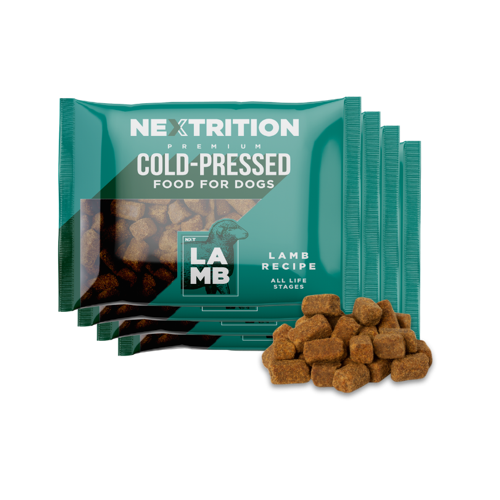
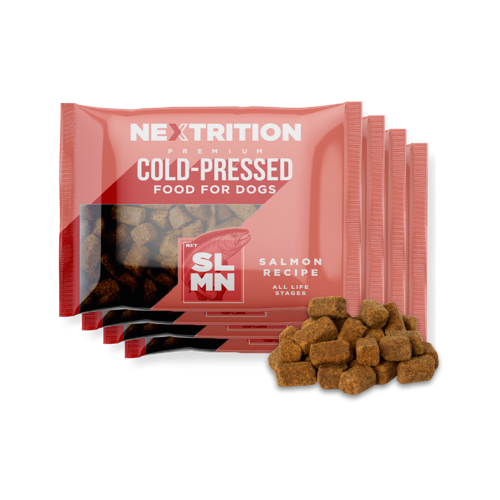


If you're asking "Should I add probiotics to dog food?" the usual mistake is adding a powder before checking the bowl. Loose stools and gas get blamed on the wrong thing.
What matters is why your dog is off. We do not treat probiotics like magic; food quality, digestibility, and feeding consistency matter more than most people think.
Here's where to look first:
- Stress, antibiotics, or a food change
- Whether the daily food is doing enough for stool quality
- What to watch over the next few days so your dog gets steadier
The Short Answer: Sometimes, but Not as a Universal Fix
If you're asking should I add probiotics to dog food, the honest answer is sometimes. Some dogs do benefit. Plenty don't need them at all.
We'd treat probiotics as a targeted tool, not a cure-all for gas, loose stools, or a touchy stomach. Digestive health is shaped by the full routine: food quality, protein digestibility, fiber balance, feeding consistency, stress, treats, and how often the bowl keeps changing. A probiotic can help in the right moment, but it can't clean up a weak foundation.
So before adding anything, ask the better question: why is your dog having symptoms in the first place? That's where the useful decision starts.
And when people ask do dogs need probiotics in their food, we don't answer that as a blanket yes or no. It's a case-by-case call. Healthy dogs with steady digestion usually don't need another powder sprinkled over dinner just because the label sounds smart.
What Probiotics Actually Are and What They Are Not
Let's clear up the category, because a lot of the confusion starts there. Probiotics are live microorganisms intended to provide a health benefit when used appropriately.
That sounds simple until marketing gets involved.
A few distinctions matter:
- Probiotics are live microbes with an intended benefit
- Prebiotics are ingredients that feed beneficial microbes already living in the gut
- Dietary fibers can support gut function more broadly, even when they aren't sold as "biotics"
Here's the part most owners never get told clearly: probiotics are strain-specific. One species or product doesn't automatically stand in for another. If one strain helped in one setting, that doesn't mean any bacteria blend in a jar will do the same thing.
Viability is another real issue. In pet food, especially dry food made with high heat, microorganisms can be inactivated during processing. If the microbes don't survive the kill step, storage, transport, and time sitting on a shelf, they may not function as true probiotics by the time they hit your dog's bowl.
That's why a probiotic capsule, powder, paste, or post-processing topper may behave very differently from microbes listed on a bag of food. The label can look impressive. The biology is less forgiving.
Live on the label isn't the same as alive when your dog eats it.

Do Dogs Need Probiotics in Their Food Every Day?
Usually, no. Not if your dog is healthy, has stable stools, good energy, and no recurring digestive pattern.
The gut microbiome is influenced by what happens every day, not just by a supplement. The main driver is still the daily diet. If the food is hard to digest, low quality, or constantly changing, adding a probiotic on top can turn into a ritual without solving much.
Daily probiotic use makes more sense when there's a reason for it, such as:
- recent antibiotic use
- stress from boarding, travel, or routine changes
- inconsistent stools
- a history of digestive sensitivity
- a rough food transition
Even then, we wouldn't jump straight to "use it forever." Chronic digestive issues often point back to the broader feeding setup. Sometimes the more meaningful move is changing the food, not layering a supplement over the same old routine and hoping the gut sorts it out.
And no, saying no to an unnecessary supplement isn't neglectful. If your dog's food supports digestive resilience well, restraint is often the smarter decision.
What the Research Says, Without the Hype
The research on canine probiotics is promising in places, but it isn't nearly as settled as marketing makes it sound. Many studies are small. Quite a few carry moderate to high risk of bias. That's not a reason to dismiss probiotics. It is a reason to stay grounded.
In studies on dogs with gastrointestinal disease, stool consistency is one of the most commonly measured outcomes. That makes sense because it's practical and visible. Owners can see it. Vets can track it. But a better stool by itself doesn't mean every gut issue has been meaningfully fixed.
For acute gastrointestinal disease overall, evidence has been described as limited and in many cases possibly not clinically important. That's the part the front label usually leaves out.
There is useful nuance, though. Several placebo-controlled trials in dogs with acute diarrhea without an identifiable cause did report better clinical outcomes with daily probiotic use. Those studies looked at things like:
- time to diarrhea resolution
- diarrhea severity
- changes in fecal microbiota
- whether additional medical treatment or antibiotics were needed
That's real. But it still doesn't support the idea that every probiotic helps every dog in every context.
For chronic gastrointestinal disease, diet remains the main lever. We agree with that strongly. If the base food isn't helping the gut do its job, no one should expect a supplement to carry the whole load.
Signs Your Dog May Benefit From a Probiotic Conversation
This is where probiotics become worth discussing, ideally with your veterinarian if the pattern keeps showing up. We're looking for recurring situations, not one random off day after your dog stole a greasy scrap.
A probiotic may make sense when you notice:
- intermittent loose stools
- inconsistent stool quality from week to week
- short-term digestive upset during travel, boarding, or stress
- recovery after antibiotics
- sensitivity during a food transition
- mild gas or stool quality issues in an otherwise bright, active dog
The broader gut-health picture matters too. There's growing interest in the connection between the gut, immune function, and skin health. That's worth paying attention to, especially if your dog has both digestive fussiness and skin flare patterns. But we wouldn't promise that probiotics alone will fix itching, allergies, or coat problems. That's where owners get sold a shortcut.
Look at patterns instead of isolated incidents. Frequency matters. Triggers matter. How your dog responds when the food changes matters. If loose stools happen every time routine gets disrupted, that's different from a dog who struggles all month long no matter what you do.
When a Probiotic Is Unlikely to Solve the Real Problem
Some dogs aren't missing a probiotic. They're reacting to a feeding routine that keeps asking too much of their gut.
A probiotic is usually the wrong first move if the real issue is:
- poor food quality
- low digestibility
- abrupt feeding changes
- too many treats, chews, or table scraps
- ingredient intolerance or a food reaction
We see owners stack supplements while leaving the base diet untouched. Probiotic, pumpkin, digestive enzyme, topper, another topper. Meanwhile the food itself is still the most processed part of the bowl. That's backwards.
Recurring diarrhea, weight loss, vomiting, poor appetite, or signs of chronic discomfort deserve veterinary evaluation. Probiotics do not replace diagnosis for parasites, inflammatory conditions, food reactions, or other gastrointestinal disease.
A useful operator rule here is simple: don't treat every digestive symptom as a microbiome problem. Sometimes the food is the bigger problem. Sometimes the dog needs medical workup. Guessing gets expensive fast.
Food Comes First: The Gut Needs a Better Daily Environment, Not Just an Add-On
If you're serious about digestive health, start with the bowl. Beneficial microbes need a feeding environment that makes sense day after day.
A large share of the immune system is associated with the gut. That's one reason digestion, immune resilience, skin, and overall steadiness tend to travel together. You don't need to chase every new gut claim to respect that. You do need to feed in a way that supports it.
For sensitive dogs, a few basics matter more than they get credit for:
- real meat provides digestible protein
- fruits and vegetables can contribute useful nutrients and fibers
- natural ingredients help avoid some of the unnecessary fillers and heavily processed extras that complicate the bowl
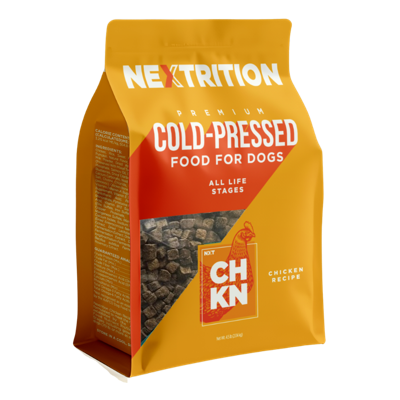
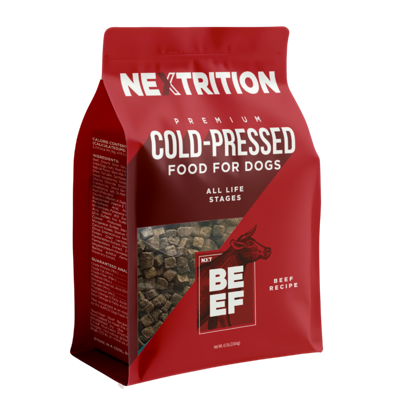
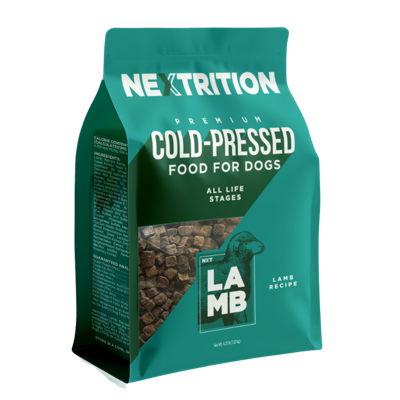
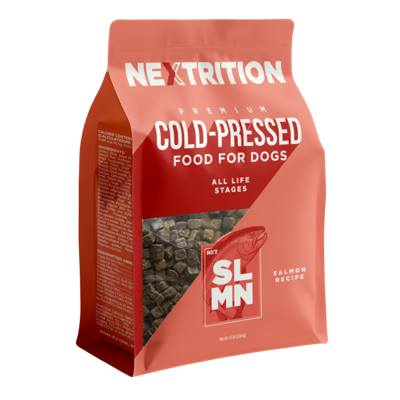
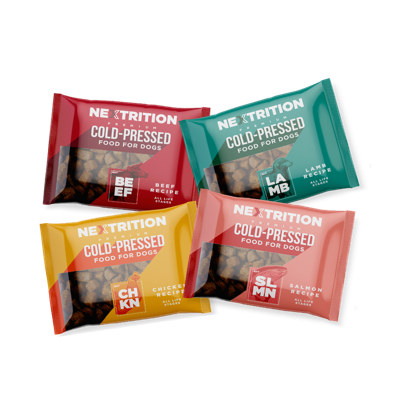
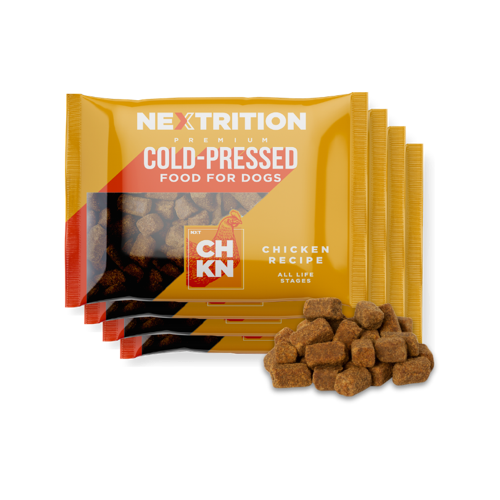
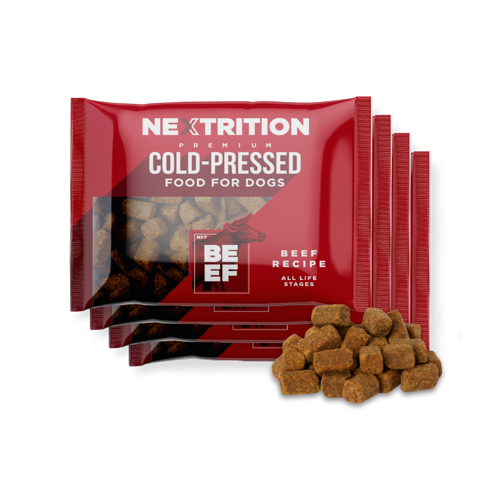
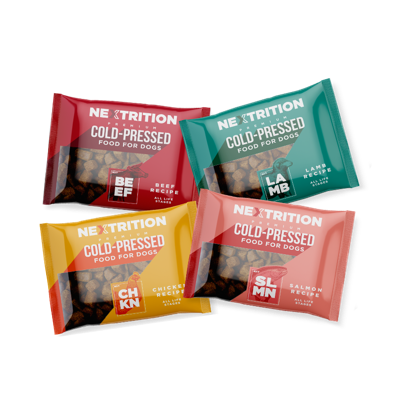
Processing matters too. We care about that a lot. Cold-pressed food made at lower temperatures can help preserve nutrients better than more aggressive heat-heavy methods. That's one reason we build Nextrition around a food-first approach. Our premium cold-pressed recipes come in lamb, chicken, salmon, and beef, made with real meat, fruits and veggies, natural ingredients, and Rocky Mountain waters.
That doesn't mean food is magic. It means the base diet should stop working against the gut.
When the everyday bowl is more thoughtful, many owners find they stop rotating from powder to paste to topper looking for the thing that finally settles digestion. Sometimes the answer isn't another add-on. It's a calmer, cleaner routine.

Probiotics Versus Prebiotics Versus Synbiotics: What Your Dog May Need More
Not every gut-supportive product is doing the same job. That's where the "biotic" language can get messy.
Here's the clean version:
- Probiotics are beneficial live microbes
- Prebiotics are the substrates that nourish beneficial microbes already in the gut
- Synbiotics combine both
In practice, some dogs may benefit more from steady dietary fibers and prebiotic support than from a standalone probiotic supplement. That's especially true when the issue is long-term stool quality rather than a short-term disruption.
This is where the broader conversation in canine nutrition has become more useful. Support for the microbiome isn't limited to one ingredient category. A premium diet with digestible protein and appropriate plant ingredients may do more for long-range digestive steadiness than a probiotic added to a poor nutritional base.
That's less exciting than a "miracle gut blend" claim. It's also usually closer to the truth.
How to Choose a Probiotic Product if You Decide to Try One
If you decide to try a probiotic, choose based on purpose, not marketing noise. The market rewards big promises. Your dog doesn't.
A few filters help:
- Look for named strains. "Beneficial bacteria" is too vague.
- Use a dog-specific product. Human probiotics aren't automatically the right substitute.
- Check how the brand handles viability. Packaging, storage, and delivery matter.
- Match the format to the use case. Powders, capsules, pastes, and post-processing supplements can behave differently.
- Don't assume more strains means better. A crowded formula without a clear reason is still unclear.
Some newer pet nutrition technologies, including microencapsulation and post-processing application, are used to help preserve viability in certain formulations. That's helpful because live organisms need to survive processing and storage to be worth anything.
We'd also be cautious with products built entirely around buzzwords. Transparency beats trendiness every time. If the brand can't tell you what it's using, why it's using it, and how it stays viable, keep moving.
How to Add Probiotics Safely and Evaluate Whether They Are Helping
When owners get confused, it's usually because they changed three things at once. New food, new probiotic, fewer treats. Then the stool improves and nobody knows what actually worked.
Change one variable at a time.
If your veterinarian supports a probiotic trial and the product directions allow for a gradual introduction, ease in rather than dumping a full scoop into the bowl on day one. Then track real outcomes at home:
- stool consistency
- number of bowel movements
- gas
- appetite
- comfort after meals
- overall energy
Keep it practical. A note on your phone is enough.
Acute issues should show movement on a reasonable timeline. Chronic patterns usually need more patience and often a broader plan. If symptoms worsen, new symptoms appear, or nothing changes after a sensible trial, stop and reassess.
Sometimes the better result comes from changing the food, not increasing the supplement stack. That's a frustrating answer if you've already bought the jar. It's still the right answer.
A Smarter Decision Framework for Health-Conscious Dog Owners
If you want a calmer way to think about this, use a simple sequence. It keeps you out of the cycle where every soft stool turns into a new order cart.
Start here
- Identify the pattern. Is this occasional upset or an ongoing issue?
- Assess the base diet. Look at ingredient quality, digestibility, treat load, and feeding consistency.
- Decide the goal. Are you trying to support a short-term disruption or build long-term digestive resilience?
- Choose the smallest useful intervention. Don't add several products at once.
- Bring in your veterinarian when symptoms are persistent, severe, or unclear.
This approach is slower than buying the loudest supplement on the page. It is also more effective.
For owners who want to improve the foundation first, we make that part easier with a personalized meal plan through Nextrition. You can match the food more closely to your dog's needs, settle the base routine, and then decide whether any add-on is still necessary. That's a much better order of operations than supplementing first and asking questions later.

Conclusion
Probiotics can help some dogs in some situations, especially around short-term digestive disturbances. They are not a universal requirement, and they shouldn't be treated like one.
The stronger long-term play is to support the whole gut environment with high-quality daily nutrition, thoughtful ingredients, gentle processing, and consistent feeding. Start with the bowl. Watch your dog closely. Use probiotics as a purposeful tool when the situation calls for it, not as a default habit.
If you're still asking should I add probiotics to dog food, review your current food honestly first. The better answer may be another supplement. But very often, it's a more supportive everyday diet.


Home remedies for dog bad breath can help, but most people waste time on quick fresheners while the real problem keeps brewing in the mouth or gut.
If your dog's breath has gone from normal dog smell to sharp or sour, don't just cover it up. What matters is cutting the gunk on the teeth, cleaning up the treats, and paying attention to the food bowl. That is where the lasting fix usually starts.
What Bad Breath Is Really Telling You
Bad breath is usually a signal, not just a nuisance. When your dog’s mouth smells sharp, sour, metallic, or rotten, something is feeding that odor. Most often it’s oral bacteria producing volatile sulfur compounds, but food residue, gum inflammation, digestive imbalance, and treat quality can all pile on.
By age three, dental disease is already common in dogs. We don’t say that to alarm you. We say it because owners lose time when they dismiss ongoing halitosis as normal. And for health-conscious households, there’s another layer here: breath is not always just a teeth problem.
A dog can have a decent-looking mouth and still have stale, off breath if digestion is sloppy, the food is overly processed, or the gut is under strain. That matters because gut health and immune resilience overlap in a big way. About 70% of the immune system lives in the gut. If you only cover the smell, you miss the pattern.
Fresh breath usually comes from less bacteria, less residue, and a cleaner internal environment.
The strongest home remedies for dog bad breath do three things at once:
- reduce bacterial load
- improve daily oral hygiene
- clean up the diet that may be feeding the problem
1. Daily Tooth Brushing With Dog-Safe Toothpaste
If you’ll do one thing consistently, make it this. Brushing is still the most effective at-home way to reduce odor at the source.
Plaque starts soft, then hardens into tartar fast. That’s why daily is ideal and three times a week is the minimum we’d treat as serious plaque control. Weekend catch-up brushing doesn’t really count. The mouth has already moved on.
Use only dog toothpaste. Never human toothpaste.
For dogs that resist, start smaller than you think:
- brief lip lifts
- a finger or soft cloth
- a finger brush
- then a regular dog toothbrush
Best for mild to moderate plaque, early gum irritation, and owners who can build a repeatable routine. Chews and additives help, but brushing gives direct mechanical cleaning on the tooth itself. That’s the part that changes breath fastest.
2. Textured Dental Chews
Some dogs will never love a toothbrush. Fine. That’s where a well-designed dental chew earns its place.
The key word is textured. Not every chew cleans. The better ones create more all-around contact and friction, which helps reduce plaque and the sulfur compounds tied to bad breath. In comparative testing, all oral-care tools helped to some degree, but the more texturally effective chews stood out for odor compounds and even tongue bacteria.
Choose the right size, supervise chewing, and don’t mistake a chew for a free pass on brushing. We’d also prioritize products with credible dental validation, especially the VOHC seal.
A simple treat is just a treat. A true dental chew should actually do some work.
3. VOHC-Accepted Water Additives
Water additives are low effort, which is exactly why they work for some homes. If your dog refuses brushes and loses interest in chews, this is one of the more practical natural remedies for dog bad breath.
As your dog drinks through the day, the additive helps reduce odor-causing bacteria above the gumline. A pomegranate-based option has been shown to reduce plaque and calculus buildup over about a month and improve gum bleeding versus no homecare.
These fit especially well for:
- multi-dog homes
- busy schedules
- dogs that tolerate mild taste changes
They won’t scrub the tooth surface like a brush. But as part of a layered routine, they’re useful and easy to stick with.

4. Finger Brushes, Gauze, or Oral Wipes
This is the bridge option. And in real life, bridge options matter.
If your dog panics at a toothbrush, wiping the outer tooth surfaces with gauze, a finger brush, or oral wipe still removes fresh film, food residue, and bacteria. It’s not as thorough as brushing, but consistent partial cleaning beats an ideal routine that never happens.
We like this approach for puppies, anxious dogs, and seniors with dental sensitivity. Use it as a progression tool:
- start with touch around the lips
- wipe a few outer teeth
- build to short sessions
- move toward fuller brushing later
It won’t remove tartar. It does help keep new buildup from taking over.
5. Gentle Tongue Cleaning
Sometimes the teeth don’t look terrible, yet the breath is still rough. That’s often the tongue.
The tongue can hold coating, sticky saliva, and debris that keep odor hanging around even when plaque isn’t extreme. That’s one reason some dogs still smell bad despite basic tooth care. Not all cleaning methods reach that surface well.
Use a soft pet wipe, gauze, or oral cloth and stay gentle. If your dog gags or gets tense, you’re going too far. This is best for dogs with visible tongue coating or breath that seems worse than the tartar would suggest.
Breath sprays mostly perfume the problem. Physically lifting residue off the tongue is far more direct.
6. A Cleaner, Less Processed Diet With Fewer Refined Fillers
If bad breath keeps coming back, look in the bowl. Surface cleaning helps, but highly processed food and sticky starch residue can keep feeding the problem.
Refined fillers and low-quality extras tend to leave more behind in the mouth and can aggravate digestion in sensitive dogs. We see this a lot with dogs who freshen up right after brushing, then smell off again by the second afternoon.
Audit the whole intake, not just the main food:
- biscuits
- training treats
- toppers
- table scraps
A cleaner nutritional base often does more than short-term fresheners because it changes the environment odor thrives in. Transition gradually and watch breath, stool quality, energy, and coat. Those clues usually move together.
7. Cold-Pressed Whole-Food Meals That Support Digestion
For some dogs, fresher breath starts with better digestion. That’s where cold-pressed feeding has real value.
At Nextrition, our cold-pressed food is made at three times lower temperatures to preserve more nutritional integrity than harsher processing. We use real meat, fruits and veggies, and Rocky Mountain waters across four recipes: lamb, chicken, salmon, and beef.
This matters because food quality shapes the gut every day, and the gut is where so much immune activity lives. If a dog’s odor is partly digestive, quick-fix breath products won’t touch the root of it.
A personalized meal plan helps match the food to your dog’s actual needs, whether that’s sensitive digestion, skin and coat support, or overall vitality. One-size-fits-all feeding is convenient. It’s not always kind to the dog in front of you.

8. Oral and Gut Microbiome Support With Probiotics or Postbiotics
Newer thinking around breath is less about sterilizing everything and more about improving microbial balance.
Some dogs need support in the mouth. Others show a bigger gut pattern: bad breath plus gas, soft stool, itching, or recurring ear issues. Those cases often respond better when you support the microbiome, not just the smell.
Use pet-specific products and change one variable at a time so you can judge response clearly. That part gets skipped all the time. Then owners don’t know what actually helped.
This is a root-cause strategy, not a masking strategy. It works best when paired with oral hygiene and a better daily diet.
9. Crunchy Carrots as a Breath-Friendly Snack
Carrots are simple, cheap, and useful. We like them because they offer light mechanical cleaning without the sticky residue many treats leave behind.
They won’t remove tartar. Let’s be clear on that. But they can freshen the mouth a bit and redirect dogs away from softer, starchier snacks that cling to teeth.
A few guardrails:
- size pieces to your dog
- supervise strong gulpers
- skip if raw veggies don’t sit well
Compared with many commercial biscuits, carrots are lower in calories and cleaner in the mouth. As a supportive habit, they’re hard to argue with.
10. Curly Parsley in Small Amounts
Curly parsley is a light-touch option for mild odor. Not a treatment. More of a kitchen-level freshener.
It’s often valued for chlorophyll and a modest freshening effect, especially when mixed into food in small amounts. We’re talking a little topper, not a pile of garnish. And curly parsley is the one to use here. Don’t assume all parsley is interchangeable.
This fits dogs with occasional food-related breath and owners who want natural remedies for dog bad breath that feel easy to fold into a whole-food routine. Just keep expectations realistic. Herbs don’t fix dental disease.
11. Dog-Safe Mint Used Sparingly
Mint can help with short-term freshness, but only in dog-safe, food-level amounts. Not essential oils. Not strong extracts. Not human breath products.
It’s more aromatic than parsley, so some owners prefer it for occasional use between bigger oral-care steps. Parsley usually blends into meals more easily. Mint stands out more.
Use it as a finishing touch, not a primary fix. If breath is getting worse, turning rotten, or coming with drooling or pain, mint is the wrong move. Cover-ups waste time when the problem is real.
12. Plain Unsweetened Yogurt if Your Dog Tolerates Dairy
When breath seems tied more to digestion than visible plaque, plain unsweetened yogurt can be worth a cautious trial. Some dogs do well with fermented foods. Others absolutely do not.
Start very small and watch stool quality. No sugar, no flavoring, no xylitol. If your dog has dairy intolerance, loose stools, or chronic GI sensitivity, skip it.
Compared with a dedicated canine probiotic, yogurt is broader and less targeted. Still, for the right dog, it can be a gentle food-based option. Response matters more than theory here.
13. Hydration and Cleaner Water Habits
Saliva helps rinse the mouth. Dry mouths smell worse. It’s that simple.
A stale water bowl also works against every other step you’re taking. Slime builds fast, especially in warm weather and multi-pet homes. Daily bowl washing is not overkill. It’s basic maintenance.
Support better hydration with:
- frequent water refreshes
- clean bowls every day
- extra attention after exercise or heat
- moisture-rich meals when helpful
Breath sprays cover odor for a minute. Hydration supports the body’s own cleaning system all day.

14. Stopping Scavenging, Trash Eating, and Coprophagia
If the breath changed suddenly, think behavior before disease. Garbage, compost, cat litter, and stool can create a very different smell than slow-building dental problems.
Chronic dental breath tends to be steady. Scavenging breath often appears fast after yard time, walks, or unsupervised kitchen access. It can also upset digestion, which makes the odor even worse.
Management beats punishment every time:
- covered bins
- prompt yard cleanup
- leash supervision
- redirect training
When a dog keeps getting access to gross stuff, no herb or chew is going to outwork that.
15. Replacing Sticky, Glycerin-Heavy, or Sugary Treats
A lot of owners upgrade the main food and forget the treats. Then the mouth keeps paying for it.
Sticky, gummy, highly processed treats cling to teeth, feed oral bacteria, and undercut otherwise solid habits. Read labels, yes, but also pay attention to texture and what the treat actually does in the mouth. If it smears, sticks, or leaves a film, it’s part of the problem.
Look for simpler, crunchier options and keep portions sane. Calorie creep usually travels with over-processing. Treat quality is part of the breath plan, not a separate category.
16. Vet-Approved Oral Rinses, Gels, or Dental Powders for Hard-to-Brush Dogs
These are useful support tools, especially for small breeds, crowded mouths, and dogs that fight brushing.
Rinses and gels work more directly in the mouth. Powders are usually added to food for daily support. None of them replace mechanical cleaning, but they can improve bacterial control and help with freshness when perfection isn’t realistic.
Choose pet-formulated options with credible testing and, where possible, VOHC acceptance. Avoid DIY mouth rinses, human mouthwash, and strong essential-oil mixtures. Those shortcuts go sideways fast.
Progress beats perfection here.
How to Choose the Right Remedy and When to See Your Vet

You don’t need to guess. Match the pattern to the tool.
If your dog has mild morning breath, visible plaque, and normal appetite, start with brushing, a textured chew, and maybe a water additive.
If breath stays bad despite oral care, especially with gas, soft stools, itching, or repeat ear issues, look harder at diet quality and gut support.
If the smell changed suddenly after unsupervised time, suspect scavenging first.
Get your vet involved promptly for:
- fruity or urine-like breath
- severe rotten odor
- drooling or mouth pain
- gum bleeding
- trouble eating
- vomiting
- yellow-tinged gums
Home remedies help most when the problem is early, mild, or maintenance-related. They are not a substitute for care when disease is advanced.
Common Mistakes to Avoid With Natural Remedies for Dog Bad Breath
A few mistakes show up again and again, and they slow everything down.
Don’t use human toothpaste, human mouthwash, or essential oils. Dog-safe formulation matters. Apple cider vinegar is also a poor choice. There’s no solid canine upside here, and the acidity can irritate the digestive tract.
Be careful with very hard chews. Owners mean well and end up with cracked teeth. Also, don’t expect parsley, yogurt, or carrots to treat painful dental disease. They won’t.
The bigger mistake is running a mixed message routine:
- premium food, but sticky treats
- brushing once, then nothing for a week
- random hacks with no consistency
If you want a nutrition-led reset, a personalized Nextrition meal plan can make the move to cleaner, cold-pressed feeding much less like guesswork.
Conclusion
Bad breath is usually a clue, not a quirk. The home remedies for dog bad breath that work best combine oral cleaning, smarter treat choices, better hydration, and cleaner daily nutrition.
The goal isn’t to mask smell. It’s to reduce odor-causing bacteria while also supporting digestion and gut balance. That’s where longer-lasting change tends to come from.
Start with the remedy that fits your dog right now. Maybe that’s brushing. Maybe it’s a textured chew, a water additive, or a food upgrade.
Pick one oral-care habit and one nutrition habit to improve this week. Then reassess breath, stool quality, and overall comfort over the next few weeks. Fresh breath is nice. A healthier dog is better.


The ingredients to avoid for a sensitive stomach dog matter a lot more than the pretty claims on the bag. If your dog keeps cycling through loose stool, gas, or random throw ups, the problem is usually sitting right there in the bowl.
We've seen people fixate on protein percentage and miss what actually trips dogs up: vague meats, filler heavy carbs, rich add ons, and extra junk that makes digestion harder. Keep the bowl simpler. Your dog will tell you fast.
Why Ingredient Quality Matters More Than Marketing Claims
A sensitive stomach isn’t a formal diagnosis. It’s a pattern. Soft stool one week, gurgling after dinner the next, then a bout of floor licking, gas, or a random appetite dip that leaves you second-guessing the bowl again.
It also helps to separate food intolerance from food allergy. Intolerances tend to show up in digestion. Allergies involve the immune system and can affect the skin too. In real life, owners often lump them together because the dog is simply not doing well. But when you’re choosing food, that distinction matters.
A lot of foods marketed as premium, gentle, or wholesome still lean on vague proteins, fillers, additives, or formulas that are just too rich. The front of the bag can say all the right things while the ingredient panel tells a different story. For a sensitive stomach dog, that back panel usually matters more.
And gut health isn’t a small side issue. Roughly 70% of a dog’s immune system is connected to the gut. When the digestive system stays irritated, you often see it spill into coat quality, skin flare-ups, and overall resilience.
A quick reality check though. Some symptoms need a vet, not a food experiment.
- Blood in stool
- Weight loss
- Repeated vomiting
- Diarrhea that doesn’t settle
Food can be the problem. It isn’t always the only problem.

1. Meat Meal
Meat meal sounds protein-rich, and technically it is. The problem is clarity.
“Meat meal” is a rendered, dried protein ingredient from mammalian tissue, but the label doesn’t tell you which animal. It could come from cattle, pigs, sheep, goats, or a mix. That matters when you’re trying to identify a trigger and the source can shift from batch to batch.
For digestive troubleshooting, traceability matters almost as much as protein percentage. If your dog has a rough few days, you need to be able to look at the bowl and know what actually changed. Meat meal doesn’t give you that.
A named protein does.
- Chicken
- Lamb
- Beef
- Salmon
Those ingredients make reactions easier to track. If a dog improves on lamb and flares on chicken, you’ve learned something useful. With meat meal, you’re guessing.
Sensitive stomach feeding works better when the food is easy to audit.
2. Animal By-Product Meal
Animal by-product meal runs into the same problem, with even less confidence for the owner reading the label.
This ingredient doesn’t clearly tell you which mammalian species are included, and that mix can vary depending on supplier availability. Nutritionally, by-products aren’t automatically worthless. We’re not interested in cheap fear tactics. But when a dog has chronic digestive sensitivity, unspecified by-product meal is still a poor fit.
It complicates elimination trials. It muddies pattern tracking. And it makes label reading harder than it needs to be.
That’s usually where frustrated owners get stuck. They’ve tried three or four foods, but every formula still has the same core issue: too many unknowns.
If your dog has done poorly on multiple foods, the next move usually isn’t “try another bag with prettier packaging.” It’s to simplify hard. One clearly named primary protein is just easier to work with.
3. Artificial Colors
Artificial colors are there for us, not for dogs.
They don’t improve digestibility. They don’t support gut health. They don’t help stool quality. For a dog already reacting to something in the diet, extra non-essential additives are rarely worth keeping in the mix.
Brightly colored kibble and dyed treats often signal a more processed formula rather than a more nourishing one. That doesn’t make every colored food automatically terrible, but it should make you pause.
Some of the worst ingredients for sensitive stomach dogs aren’t exotic at all. They’re the unnecessary extras that make a product look more appealing on the shelf while doing nothing useful in the bowl.
We’d rather see color come naturally from real meat, fruits, and vegetables. That’s a better signal than red pellets and green shapes.
Short version: if the ingredient exists to impress the human eye, it probably doesn’t belong in a digestive reset.
4. Artificial Preservatives
This one is worth handling with some balance.
Artificial preservatives are used to protect shelf life, especially in heavily processed foods. That alone doesn’t mean they’ll cause a reaction in every dog. But for dogs with touchy digestion, a long list of chemical additives adds complexity to a system that’s already irritated.
And in practice, these ingredients tend to travel in a pack. Foods that rely heavily on artificial preservation often overlap with vague proteins, filler-heavy starches, and lower transparency overall.
If your dog reacts to multiple kibble brands that seem different on the front but read strangely similar on the back, this is one place to look. Same structure, same outcome.
Cleaner ingredient decks usually make life easier:
- recognizable food-based ingredients
- fewer synthetic extras
- less label noise overall
You don’t need a perfect bag. You need a bag with fewer ways to go wrong.
5. Dairy Ingredients and Milk Powders
Dairy is a common suspect when symptoms feel random.
Milk powders, whey, and other lactose-containing add-ins can be hard for some dogs to digest. When lactose doesn’t sit well, you’ll often see bloating, gas, loose stool, or obvious abdominal discomfort not long after eating.
The tricky part is that dairy often isn’t in the main meal. It hides in treats, chews, toppers, and training rewards. So the food gets blamed while the real trigger keeps rotating in through the extras.
That’s a common pattern in the field. The bowl looks stable, but the daily add-ons are different every day.
If you suspect dairy, review the full intake:
- treats
- chews
- meal toppers
- people food
- supplements with flavoring
Not every dog reacts to every dairy ingredient. But repeated stomach upset after dairy exposure is a strong clue. When we need a simpler reward option, straightforward meat-based treats are usually the cleaner play.
6. Soy and Soy Protein Isolates
Soy isn’t universally bad. It’s just often a poor fit for digestive troubleshooting.
This matters most when soy shows up in concentrated forms like soy protein isolate. Those ingredients are often used to push the protein number higher or reduce formulation cost, but high protein on paper doesn’t help much if the source doesn’t sit well in the gut.
If soy appears high on the ingredient list and your dog deals with chronic gas, soft stools, or post-meal discomfort, it’s reasonable to question it.
This is where whole-food thinking beats protein-number marketing. We’d rather see a recipe built around clearly named animal protein than one padded by concentrated plant proteins that complicate the picture.
A dog doesn’t digest the guaranteed analysis. A dog digests the actual ingredients.
7. Wheat and Wheat Middlings
Wheat isn’t the enemy for every dog. That’s too simplistic.
But it is a common ingredient, and some sensitive dogs don’t do well on it, especially when it shows up in formulas that already have vague proteins, multiple additives, and richer fat levels. In that context, wheat can become one more piece of a formula that feels bulked up rather than intentionally built.
Wheat middlings deserve a close look for the same reason. They often read less like a deliberate digestive support ingredient and more like a filler decision.
The goal here isn’t to push you into reflexive grain-free thinking. The real question is whether this grain works for your dog.
If wheat-containing foods reliably lead to flare-ups, step back and simplify. Many dogs do better on recipes using carbohydrate sources such as:
- white rice
- potato
- tapioca
- oats
- buckwheat
Not because grains are bad. Because fit matters more than category.
8. Corn, Corn Gluten Meal, and Corn Starch
Corn gets argued about too much in both directions.
It’s not automatically a problem ingredient, but it can become one for sensitive dogs, especially when it appears in several forms at once. Whole corn, corn gluten meal, and corn starch can all show up in the same formula, making corn more dominant than it first looks.
That’s the part owners often miss. You read the label quickly and don’t realize one ingredient family is doing a lot of the heavy lifting.
Corn deserves more scrutiny when it appears beside unspecified protein sources and a long additive list. At that point, many owners aren’t reacting to corn in isolation. They’re reacting to a formula pattern built around cheaper starches and less transparent proteins.
A better direction is usually simpler and more legible: named meat first, digestible carbohydrate support second, and fewer split starch ingredients trying to hide in plain sight.
9. Pea Protein and Legume-Heavy Add-Ins
Pea protein, split peas, and pea flour can make a food look stronger than it really is.
These ingredients often inflate the protein number on the label without giving you the same digestive ease as named animal proteins. In owner-logged observation of sensitive dogs, pea protein was among the least tolerated protein sources and was linked to more loose stool and gas than the animal proteins tested.
That lines up with what many owners notice at home. The label says high protein. The dog says otherwise.
Legume-heavy formulas can also be harder to troubleshoot because the problem may not be one obvious ingredient. It may be the overall structure of the recipe. Too much plant-derived protein. Too many moving parts. Too much effort spent dressing up the guaranteed analysis.
When you’re reading labels, don’t just admire the numbers. Ask where the nutrition is actually coming from.
10. High-Fat Ingredients and Rich Add-Ons
Sometimes the protein gets blamed when the real issue is richness.
Excess fat is a common digestive irritant. It can trigger diarrhea, nausea, stomach gurgling, and post-meal discomfort even when the protein source itself is fine. We see this all the time with dogs who seem okay on weekday meals, then fall apart after rich treats, greasy chews, or weekend table scraps.
Watch the total bowl, not just the base food.
Where richness sneaks in
- formulas stacking multiple added fats
- heavily coated kibble
- greasy toppers
- rich chews
- too many high-value treats
For many sensitive dogs, a moderate fat range around 12% to 16% is easier to manage than richer recipes hitting 18% and up. That’s not a law. It’s a useful checkpoint.
If symptoms flare after the extras, don’t assume the core food failed. Sometimes the side items are doing all the damage.
11. Multiple Proteins and Known Trigger Proteins
Multi-protein recipes sound appealing until you need answers.
If your dog has digestive issues, combining several proteins in one formula introduces too many variables at once. Chicken and beef are common trigger proteins partly because they’re so commonly fed, not because they’re bad for all dogs. Repeated exposure to a protein your dog doesn’t tolerate just keeps the cycle going.
This is why a single-protein-forward recipe is often the fastest path to clarity. One named protein gives you something real to observe.
If simpler meals help your dog settle, thoughtful rotation is still possible. We prefer doing it with clearly defined recipes like lamb, chicken, salmon, or beef rather than mixed-protein formulas that turn every reaction into detective work.
More variety isn’t always better. Sometimes it just makes the signal harder to hear.
What to Feed Instead and How to Read the Label With More Confidence
Once you know the ingredients to avoid sensitive stomach dog owners should watch for, the next step gets simpler. Look for one clearly named primary protein, a shorter ingredient list, and fewer moving parts.
Carbohydrates that are often easier to work with include white rice, potato, tapioca, oats, and buckwheat. Not every dog will do best on the same one, but these tend to make more sense in gentler formulas than filler-heavy blends.
Prebiotics and probiotics can help some dogs, but they’re not a rescue plan for poor-quality food. If the base recipe is messy, the add-ons won’t fix it.
We also think processing deserves more attention than it gets. Ingredients matter, but how the food is made matters too. Cold-pressed food made at 3x lower temperatures can help preserve nutrients that support digestion and overall wellness. That’s one reason our approach stays centered on real meat, fruits, vegetables, and Rocky Mountain waters instead of overbuilt formulas that read like chemistry projects.
Use this quick label check before you buy:
- identify the first protein
- scan for duplicate fillers like multiple corn or pea ingredients
- note added fats and how many there are
- circle vague or synthetic ingredients you can’t easily explain
A calmer label usually leads to a calmer feeding plan.

How to Switch Foods Without Creating More Digestive Chaos
Even the right food can go badly if the switch is too fast.
Plan on at least 7 to 10 days for a transition. If your dog reacts easily or has a long history of stomach issues, stretching that to 2 to 3 weeks is often smarter. Slow is not overcautious here. Slow is efficient.
During the trial, keep treats, chews, toppers, and table food as minimal and consistent as possible. Otherwise you won’t know what you’re testing.
Track the basics daily:
- stool texture
- stool frequency
- gas
- vomiting
- appetite
Memory is unreliable by day six. Notes are better.
If there’s no clear improvement after a careful trial, or symptoms get worse, bring in your veterinarian. Parasites, pancreatic problems, inflammatory bowel issues, and other medical causes need to be ruled out.
For dogs that need more structure, a personalized meal plan can reduce a lot of guesswork. Consistency matters with sensitive digestion, and regular delivery can help keep the routine steady instead of turning every reorder into a scramble.

Conclusion
The biggest shift is realizing that a sensitive stomach is often a clue, not a mystery. The usual trouble spots are right there on the label: vague proteins, filler-heavy starches, artificial extras, rich fats, and formulas with too many variables packed into one bag.
A calmer gut usually starts with a calmer bowl. Fewer irritants. Clearer protein sourcing. Gentler processing. A slower, more deliberate transition.
If your dog keeps cycling through loose stools, gas, picky eating, or off-and-on vomiting, review the label you’re feeding today. Remove the most likely troublemakers. Then move toward a simpler, gut-first strategy that you can actually trust.


When you move a dog from one food to another, you're changing ingredients, fat levels, fiber, moisture, texture, and often calorie density all at once. That affects stool, appetite, comfort, and sometimes behavior around meals more than people expect. We see this all the time. Owners think the new food is the problem, when the real issue is that the change happened too fast.
A dog's digestive system usually does better when it gets time to adapt. The gut microbes need that time too. If the old food was a standard kibble and the new food has a different protein profile or a more nutrient-dense formula, the body has some catching up to do.
That's why a rushed switch often leads to:
- soft stool or diarrhea
- gas and stomach gurgling
- bloating
- vomiting
- reduced appetite
For health-conscious owners, the goal isn't just replacing one bag with another. It's changing dog food without upset stomach while supporting the gut, where a large share of immune function lives. That matters more than getting to 100 percent new food by a certain date.
Transition is not a red flag. It's part of the process.
If your dog needs a slower pace, that doesn't mean the new food is wrong. It means your dog is being honest with you. That's useful.
What a Dog Food Transition Schedule Actually Means
A dog food transition schedule is a step-by-step plan. You gradually increase the new food while decreasing the old food over several days.
Simple idea, big payoff.
The point of a dog food transition schedule is to reduce digestive stress and make the change easier on your dog's system. It also helps you tell the difference between normal adjustment and a real issue. If you dump a full bowl of new food on day one and your dog gets loose stool, you've learned almost nothing except that the change was abrupt.
A measured schedule is usually the safest default unless your veterinarian tells you otherwise. That's especially true when switching dog food gradually from conventional kibble to a more thoughtful option with different ingredients, a different texture, or a different calorie profile.
A good schedule also prevents two common mistakes people miss:
- Overfeeding by volume - One cup of the old food may not equal one cup of the new food in calories.
- Misreading symptoms - If you move too quickly, mild transition signs can look worse than they really are.
We'd rather have a boring, steady week than a dramatic first two days.
How Long Does It Take a Dog to Adjust to New Food?
For many healthy dogs, the answer is about 7 to 10 days. But that's a starting point, not a promise.
Some dogs adjust almost immediately. Others need 10 to 14 days. And dogs with sensitive digestion, a history of stomach issues, or years on the same food may need 4 to 6 weeks to fully settle in. That sounds slow until you've had to restart twice. Then slow starts to look efficient.
Several things affect how long it takes a dog to adjust to new food:
- digestive sensitivity
- prior stomach upset
- age and life stage
- how different the new food is from the old one
- changes in fat, fiber, or protein profile
An older dog who's eaten the same dry kibble for years may need a gentler runway than a young adult with a sturdy stomach. A dog moving to a richer recipe may also need more time, even if the ingredients are excellent.
Watch your dog, not the calendar.
If stool stays formed, energy is normal, and appetite is steady, you're probably on track. If day seven arrives and your dog is telling you the pace is too fast, don't push through just because the chart says so. Dog adjusting to new food is individual. The body sets the timeline.
Before You Start the Switch
A smoother transition usually starts before the first mixed bowl.
Pick a quiet week. Don't start during travel, boarding, a move, guests in the house, or any stretch where your dog's routine is already off. Stress and food change stacked together can muddy the picture fast.
Before you begin, set yourself up properly:
- make sure you have enough of both foods to finish the switch
- check feeding guidelines on each food
- write down current meal amounts per meal and per day
- keep treats, toppers, and scraps consistent
- decide whether your dog needs a standard or slower starting pace
One of the easiest mistakes here is using the same scoop size for both foods and assuming it balances out. It often doesn't. When moving from a conventional kibble to a premium cold-pressed food, calories per cup can change. So can how filling the food feels.
If your dog is older, very active, underweight, prone to loose stool, or just a little finicky, don't guess at portions. This is where a personalized meal plan helps. We built ours for exactly this reason. It takes some of the noise out of recipe choice and feeding amount so you're not trying to solve digestion and portioning at the same time.
The Standard 7-Day Dog Food Transition Schedule
For many healthy adult dogs, this is the most practical schedule. It's steady, easy to follow, and usually slow enough to avoid unnecessary drama.
- Days 1 to 2: 75% old food, 25% new food
- Days 3 to 4: 50% old food, 50% new food
- Days 5 to 6: 25% old food, 75% new food
- Day 7 onward: 100% new food
This structure works because it gives the digestive tract time to adapt while still moving forward. You're not dragging it out for weeks, but you're not forcing a full swap overnight either.
Mix the foods thoroughly. Really mix them. Some dogs will sort through the bowl and eat around the part you want them to get used to. Then owners think they followed the schedule when the dog was quietly editing it.
A little temporary stool softening can happen during a normal transition. That alone isn't a reason to panic. But it shouldn't keep escalating. If your dog is doing well, this 7-day dog food transition schedule is often enough. If not, slow down. Pushing through usually creates more mess, not more progress.

A Slower Transition Schedule for Sensitive Dogs
Some dogs need a longer runway. That's normal.
If your dog has a history of GI issues, is older, is picky, or has eaten the same kibble for years, use a slower transition from the start. It's often the fastest way to finish without backtracking.
A good 10 to 14 day approach looks like this:
- Days 1 to 3: about 80% old, 20% new
- Days 4 to 6: about 60% old, 40% new
- Days 7 to 9: about 40% old, 60% new
- Days 10 to 12: about 20% old, 80% new
- Days 13 to 14: 100% new food
Some especially sensitive dogs may need even longer, sometimes several weeks. That's not being overcautious. It's how you avoid the stop-start cycle that frustrates everyone and makes the dog feel worse.
Here's the part people miss: changing dog food without upset stomach often depends more on pace than on perfection. You do not need a magical ratio. You need a calm, consistent progression your dog can tolerate.
Slow is not failure. Slow is often the cleanest route.
How to Switch From Kibble to a More Digestive-Friendly Food
Most owners making this change aren't doing it for novelty. They're doing it because the old bowl doesn't feel good enough anymore.
You may want better ingredient quality, gentler digestion, improved stool quality, or nutrition that feels more intentional. That's a reasonable shift. And moving from conventional kibble to a more digestive-friendly food can be meaningful when the new formula is built around real meat, fruits, and vegetables rather than heavily processed filler-driven formulas.
Cold-pressed food is part of that conversation for a reason. Food made at lower temperatures is chosen by many owners because they want a less aggressively processed option that aims to preserve more nutritional value. We take that approach with our recipes. Nextrition cold-pressed food is made at 3x lower temperatures and includes real meat, fruits, vegetables, and Rocky Mountain waters.
The gut-health lens matters here. The digestive tract doesn't just handle meals. It supports a large share of immune function too. So a food switch should respect that system, not bulldoze it.
Recipe choice matters as well. Some dogs do better with one protein than another, or simply prefer one more. That's why we offer lamb, chicken, salmon, and beef. Not for novelty. For fit.
What to Watch for When Your Dog Is Adjusting to New Food
During the switch, stool tells the truth faster than marketing ever will.
You want to know the difference between normal adjustment and signs that the pace or food isn't working. A dog adjusting to new food may show small changes. That's not unusual. The pattern matters more than one imperfect bowel movement.
Signs your dog is adjusting well:
- stool stays formed, or is only slightly softer briefly
- normal energy
- normal appetite
- no repeated vomiting
- no obvious discomfort
Mild signs that usually mean slow down, not stop:
- soft stool
- mild stomach gurgling
- a small increase in gas
More concerning signs include:
- repeated vomiting
- liquid diarrhea
- constipation
- painful bloating
- unusual lethargy
- refusing food beyond a day
Track stool quality daily if you can. Nothing complicated. Just note whether it's firm, soft, loose, or urgent. By the second or third day at a new ratio, the pattern usually starts to show itself. That's a more useful signal than whether your dog looked excited at breakfast.

What to Do if the Transition Causes Digestive Upset
If symptoms are mild and your dog otherwise seems normal, don't overreact. Adjust the pace first.
Usually, the right move is to stay at the most recent ratio that didn't cause issues for another day or two before increasing the new food again. If loose stool starts at the 50-50 stage, go back to the earlier ratio or hold there longer until things settle.
That solves more cases than people think.
The fix is often a slower transition, not abandoning the food immediately. But there is a line. If symptoms are more serious, contact your veterinarian instead of experimenting at home.
Call your vet if you see:
- continued vomiting
- watery diarrhea
- signs of pain
- marked lethargy
- refusal to eat for more than 24 to 48 hours
Also keep in mind that sometimes the issue isn't just the speed of change. It may be the new fat level, fiber level, or a specific ingredient your dog isn't tolerating well. That's why a structured switch is so helpful. It lets you separate normal adjustment from a genuine mismatch.
Common Mistakes That Make Food Switches Harder
Most rough transitions aren't bad luck. They're self-inflicted.
A few patterns show up again and again:
- changing too much too fast because the dog loves the new food
- forgetting that portion size may need to change with calorie density
- adding new treats, toppers, chews, or supplements at the same time
- starting during a stressful week
- treating every soft stool like proof the food failed
- letting the dog pick out only one food from the bowl
- rotating foods too often for variety
- choosing based on marketing instead of digestibility and fit
The non-obvious one is excitement. Owners see enthusiasm and jump ahead in the schedule. But appetite is not the same thing as tolerance. A dog can love a food and still need a slower introduction.
Consistency is underrated here. During a transition, boring is your friend.
When a Quick Food Change May Be Necessary
A gradual transition is ideal most of the time, but real life doesn't always wait for ideal.
There are situations where a faster change may be necessary:
- a food recall
- the current food is unavailable or discontinued
- your veterinarian recommends an immediate diet change
- you suspect the old food is causing an adverse reaction
If that happens, be honest about the tradeoff. Digestive upset may be more likely with an urgent switch. That doesn't mean you've done something wrong. It means you're managing a less flexible situation.
In those cases, keep the basics tight:
- feed measured portions
- monitor stool and hydration closely
- keep everything else in the diet stable
- contact your veterinarian if symptoms escalate
Urgent changes are the exception, not the standard. Most planned upgrades from kibble can and should be done more gently.
How to Choose the Right New Food for a Smooth Transition
The easiest switch isn't to the trendiest food. It's to the food that fits your dog and gets introduced at the right pace.
For this audience, the real decision points are pretty clear:
- ingredient quality
- recognizable protein sources
- supportive fruits and vegetables
- processing method
- digestive tolerance
- life stage and activity level
Look past the label language. Ask whether the food aligns with your dog's digestion, stool quality, skin and coat goals, and long-term wellness. Premium only matters if the dog does well on it.
Recipe choice can help. Lamb, chicken, salmon, and beef don't all land the same way for every dog. Having options makes it easier to choose a formula your dog is more likely to accept and tolerate. A personalized meal plan can also remove a lot of second-guessing around recipe selection and feeding amount, which is usually where avoidable mistakes happen.
The Mindset Shift That Makes Switching Dog Food Easier
This process gets easier when you stop treating it like a risky leap and start treating it like a routine adjustment.
If you go slowly, you are not failing your dog. You're taking the digestive system seriously. That's good care.
Thoughtful nutrition isn't about chasing novelty. It's about choosing ingredients and processes that support the body more intentionally. Real meat over vague fillers. Less harsh processing when possible. Digestive comfort as part of whole-body wellness, not an afterthought.
A careful transition also protects you from buyer's remorse. When you give your dog time to adjust, you're making a fair evaluation instead of reacting to a preventable upset. That's a much better way to decide what belongs in the bowl long term.
Making the New Routine Sustainable After the Switch
Once your dog is fully on the new food, keep the routine steady for a while.
Feed consistent amounts and keep an eye on stool, appetite, energy, and coat condition. Avoid changing formulas frequently unless there's a clear reason. Some dogs handle variety well. Many do better with consistency than people expect.
A few habits help more than they seem like they would:
- store the food properly
- keep mealtimes predictable
- revisit portion needs as age, activity, or body condition changes
- don't let yourself run out and scramble mid-routine
Convenience matters because consistency matters. That's one reason we offer both one-time purchases and subscription delivery. Not as a pitch, just as a practical solution. Running out during a transition or right after a successful switch is a frustrating way to create avoidable problems.
Keep using the same observational mindset after the switch. Your dog's response is still the best guide.

Conclusion
A safe dog food transition schedule is less about rigid rules and more about introducing new food at a pace your dog can handle.
Most dogs do well with a 7-day switch. Sensitive dogs often need 10 to 14 days or longer. And if you're wondering how long does it take a dog to adjust to new food, the best answer is still the same: watch the stool, watch the energy, and let the dog set the pace when needed.
Switching dog food gradually is the best path for owners who want to move beyond conventional kibble without creating unnecessary digestive stress. Start with the schedule that fits your dog, measure the first few meals carefully, and let comfort guide the rest.


Most people only think about their dogs gut health when the poop is bad. We don't. If you're trying to figure out how to improve dog gut health, it helps to stop treating it like a narrow digestion problem and start seeing it as a whole-body issue.
Roughly 70% of a dog's immune system is associated with the gut. That changes the conversation fast. The bowl isn't just about calories. It's where digestion, immune signaling, nutrient absorption, and daily resilience all start to take shape.
When the gut is working well, you usually see it in ordinary ways:
- firmer, more predictable stools
- less gas and less odor
- steadier appetite
- better day-to-day energy
- healthier skin and coat
- fewer setbacks during stress, travel, diet changes, or recovery
A lot of health-conscious owners feel stuck here. Not negligent. Stuck. They've tried switching foods, cutting treats, adding a powder, then second-guessing everything when symptoms come back three days later.
We've seen that cycle enough to say it plainly:
Temporary fixes often fail because they don't change what reaches the gut every single day.
Food is the most consistent lever you have. It shapes what your dog digests, what the microbiome ferments, and how much stress the gut has to absorb meal after meal. That's why the question isn't just what's in the bag. It's also how that food was made.
The Signs Your Dog’s Gut May Need Support
Gut issues aren't always dramatic. In real life, they often show up as patterns that are easy to downplay until they've been going on for months.
You might notice:
- soft stools or messy pick-up
- bowel movements that look different from one day to the next
- frequent gas
- stool odor that's stronger than it should be
- occasional vomiting
- obvious food sensitivity
- low enthusiasm around meals
- itchy skin or a dull coat that seems disconnected, but often isn't
The key point is this: mild and recurring still matters. "Not severe" is not the same as "healthy."
A dog with decent stools four days out of seven is not necessarily doing fine. A dog who gets loose stool every time treats change is telling you something. Sensitivity during transitions, random setbacks after a perfectly normal weekend, or a stomach that seems fragile for no clear reason all count.
One practical operator note here: don't wait for a disaster to start paying attention. Most digestive imbalance starts as inconsistency, not crisis.
That said, some symptoms need veterinary evaluation, not a food experiment. If your dog has persistent or worsening diarrhea, repeated vomiting, blood in the stool, black stool, weight loss, marked lethargy, or obvious pain, get your vet involved. Nutrition can support recovery, but it shouldn't replace diagnosis when the signs are serious.
What Actually Helps Improve Dog Gut Health
There are plenty of ways to improve dog digestive health, but most people overcomplicate it. They start with supplements and leave the core problem untouched. We prefer a simpler framework.
Start with a diet that is:
- highly digestible
- built from real, recognizable ingredients
- not excessively processed
- consistent enough to reduce digestive swings
That foundation does more than any long list of add-ons.
The main levers that move the needle
Protein quality and digestibility matter because the gut has to break down what you feed. Real, well-chosen animal protein is usually a better starting point than a formula that looks clever on paper but asks too much of a sensitive stomach.
Fiber matters too, but not as a trend word. The right fibers help support fermentation by beneficial microbes, which can improve stool quality and gut comfort.
Hydration support is often overlooked. Digestion works better when the body isn't fighting uphill.
Fewer unnecessary additives can help sensitive dogs by removing extra variables. Some dogs don't need more complexity. They need less noise.
Nutrient integrity matters more than most labels reveal. If the process is harsh, some of what made the ingredients valuable in the first place gets compromised.
The microbiome is just the community of microbes living in the gut. Useful ones help digest parts of food your dog can't fully handle alone. They also produce compounds that support the gut lining and influence inflammation and immune signaling. That's why how to improve dog gut health usually comes back to one thing: feed the gut in a way that gives it less to fight and more to work with.

Why Processing Method Matters More Than Many Ingredient Lists Let On
This is the blind spot. Owners compare ingredient panels line by line and never ask how the food was manufactured.
Processing changes the end result. Heat and manufacturing intensity affect nutritional integrity, digestibility, and how close the final food stays to the ingredients it started with. Two foods can both be complete diets and still be very different in how they align with a gut-health goal.
Cold-pressed food gives owners a gentler option. At Nextrition, our food is made at 3x lower temperatures, which helps preserve more of what real ingredients naturally offer. We build our recipes around real meat, fruits, vegetables, and clean Rocky Mountain waters. That's not window dressing. It's part of a less processed feeding philosophy.
Here's the practical difference:
- standard kibble often relies on heavier processing
- cold-pressed food uses a gentler method
- both can feed a dog
- only one is designed around lower processing stress
That matters most when your dog is already sensitive. If the bowl is supposed to support the gut, it shouldn't ask the gut to work harder than necessary. Processing isn't a side detail. It's part of the nutrition.
What the Research Suggests About Food, Fiber, and the Gut Microbiome
The useful takeaway from gut research is not that one magic ingredient fixes everything. It doesn't. Better gut health comes from feeding the microbiome in a way that shifts digestion in a healthier direction.
In dogs with chronic large bowel diarrhea, fiber-enriched dietary approaches have been associated with improved stool quality and a shift away from protein putrefaction toward more beneficial carbohydrate fermentation. That's worth paying attention to.
Less putrefaction can mean:
- less odor
- less irritation
- a calmer digestive environment
Better fermentation can support stool consistency and gut comfort. Some studies have also found increases in helpful microbial byproducts, including indole-related compounds and plant-derived metabolites. You don't need to memorize those names. You just need to know they point to a gut environment moving in a better direction.
Research on prebiotics, probiotics, postbiotics, and synbiotics is also promising. Certain combinations have improved digestive signs, increased beneficial short-chain fatty acids, lowered markers associated with intestinal barrier stress and inflammation, and reduced diarrhea severity in dogs under gut stress.
But here's the nuance that gets lost online:
A healthier gut does not always show up as one dramatic microbiome number.
In some studies, microbial composition shifted even when broad diversity scores stayed similar. For owners, that means chasing a single test metric can distract from what matters most. Look at the dog. Stool stability, appetite, comfort, and consistency tell you more than a trendy graph in many cases.
Food is still the daily foundation. Biotic ingredients can be useful tools, but they work best when the base diet is doing its job.
How Premium Cold-Pressed Food Supports Digestion From the Inside Out
This is where the science meets the bowl. A well-built cold-pressed formula can support digestion through several pathways at once without turning feeding into a chemistry project.
Real meat gives your dog digestible protein. Fruits and vegetables can contribute fiber and complementary nutrients. Gentler processing supports nutrient preservation goals. And the recipe can stay simpler than many mass-market formulas that lean harder on manufacturing than on ingredient quality.
That combination can support:
- a calmer stomach
- more predictable stools
- steadier energy
- immune support through the gut
- visible skin and coat improvements over time
Some dogs do especially well when the food gets less engineered and more straightforward. That's a real-world pattern we've seen again and again. Not every dog needs a complicated formula with ten functional claims on the front of the bag.
Sometimes the smarter move is simpler food, better made.
This isn't just for dogs with obvious digestive trouble either. Proactive feeding matters. You don't need to wait for chronic issues before choosing a diet that supports gut resilience.
The Best Ingredients to Look for in a Gut-Friendly Food
If you're scanning labels, keep your checklist tight. More ingredients do not equal better nutrition.
Start here:
- real animal protein as the core of the recipe
- whole-food fruits and vegetables for natural fiber and complementary nutrients
- supportive fiber sources that can help fermentation and stool quality
- a relatively simple ingredient deck, especially for sensitive dogs
Ingredient simplicity is underrated. When a dog is reacting to something, fewer moving parts make it easier to see what's helping and what's not. That's not glamorous advice, but it's good operational advice.
You can also look for supportive categories when they fit the formula well:
- prebiotics that feed beneficial microbes
- probiotics or postbiotics when used appropriately
- yeast fractions or beta-glucans in some formulations
Be cautious with foods that feel overbuilt. If the formula depends on a long list of fillers, additives, or hard-to-justify extras, we get skeptical fast. The same goes for ultra-processed foods that ask you to ignore how they were made and focus only on the label story.
And don't keep switching every week. That's one of the fastest ways to lose the signal.
How to Choose the Right Recipe for Your Dog’s Digestive Needs
The best food on paper is not the best food for your dog. The right choice is the one your dog consistently digests well.
A few factors matter more than the marketing copy:
Use your dog's history, not just the label
Look at:
- current digestive sensitivity
- proteins your dog has done well on before
- stool quality patterns
- activity level
- age and overall condition
At Nextrition, we offer lamb, chicken, salmon, and beef recipes because personalization matters. One dog settles beautifully on salmon. Another does better on lamb simply because that's the protein their system has handled well for years.
A practical way to think about it:
- Pick a protein your dog has historically tolerated well.
- Keep variables limited during the transition.
- Don't pile on new toppers, treats, and supplements at the same time.
That's where owners often sabotage a good trial without realizing it. They change the main food, add a probiotic chew, test a new topper, then blame the recipe when stools get weird.
If you'd rather have more structure, a personalized meal plan can remove a lot of guesswork. Sometimes clarity is what helps most.
A Step-by-Step Plan to Transition Your Dog Without Upsetting the Gut
Even an excellent food can backfire if the switch is rushed. Sensitive dogs often react more to abrupt change than to the new recipe itself.
Before you transition, establish a baseline. For three to five days, pay attention to stools, appetite, gas, energy, and skin. Not perfectly. Just honestly.
Then use a gradual sequence:
- Start with a small blend of the new food into the current food.
- Increase the new portion steadily over several days if tolerance stays good.
- Keep treats, table scraps, and supplements stable during the change.
- Feed at consistent times and avoid casual over-portioning.
- Watch stool changes without panicking over one off day.
The digestive system and microbiome need time to adapt. That's normal. A single softer stool on day two isn't necessarily failure. A clear escalation is different.
If symptoms ramp up instead of settling, pause and reassess. Don't force your way through a bad transition just because the food is premium. Good operators don't confuse persistence with discipline.
And once you've found a food that works, consistency matters. Regular subscription delivery can help prevent the all-too-common mistake of running out, grabbing a replacement, and creating a setback you didn't need.

What Improvements You May Notice and When
You should expect some changes early, but not every benefit shows up in the first few days.
In the short term, many owners notice:
- firmer, more consistent stools
- less gas
- less stool odor
- calmer mealtimes
Some digestive support interventions in research have shown noticeable improvement in stool consistency, odor, or flatulence within the first week. That's encouraging, but don't make day five your final judgment.
Medium-term changes often need more consistency, closer to several weeks:
- steadier energy
- fewer digestive flare-ups
- less visible sensitivity
- a softer or shinier coat
Around four weeks is a more useful checkpoint for many dogs. Longer if the gut has been irritated for a while.
Track a few simple markers instead of relying on memory:
- stool score
- bowel movement frequency
- appetite
- gas
- energy
- scratching or coat changes
Memory is generous when things are going well and dramatic when they aren't. A simple note on your phone is better.
Common Mistakes That Can Undermine Gut Health Even With a Premium Food
This is the frustrating part. A dog can be on a quality diet and still stay stuck because the routine around the food keeps creating noise.
The most common mistakes are familiar:
- switching foods too quickly
- feeding a premium main diet but adding random treats and scraps
- changing multiple variables at once
- chasing trendy ingredients instead of digestibility
- expecting food alone to solve a chronic medical issue
Overreacting to every minor stool change is another big one. If you switch the diet every time one bowel movement looks off, you never give the gut a chance to stabilize. That cycle creates more confusion than clarity.
More additives aren't always better either. Some dogs do best with a simpler, steadier plan. One of the most overlooked ways to improve dog digestive health is consistency over novelty. It isn't flashy, but it works.
When Food Is Enough and When It Is Time to Involve Your Veterinarian
Food is foundational. It is not a cure-all.
A digestively thoughtful diet can support a lot, especially when the issue is mild, recurring, or tied to food quality and tolerance. But not every gut issue is a food issue, and pushing nutrition beyond its role can delay the care your dog actually needs.
Call your veterinarian if you see:
- persistent diarrhea
- repeated vomiting
- blood or black stool
- weight loss
- marked lethargy
- refusal to eat
- signs of pain
Diet can still be part of the solution in those cases. In fact, it often should be. A premium, less processed food can provide a supportive base while your vet helps identify the underlying problem. The best outcomes usually come from using both nutrition and diagnosis properly, not choosing one over the other.

Why a Personalized, Less Processed Approach Often Works Better Than Constant Trial and Error
There are two ways most owners end up feeding. One is reactive. Something flares up, they search late at night, swap foods, add three extras, then start over when the results get messy. The other is more deliberate.
We prefer the second path.
A proactive approach looks at ingredient quality, gentler processing, and individual fit. It accepts that dogs vary in tolerance, preferences, and digestive patterns. It doesn't chase universal rules. It asks a better question: what can your dog thrive on consistently?
That's why personalization matters more than hype. Our personalized plan option is built to make premium nutrition feel clearer and more doable, especially when you're tired of guessing. Not because structure is exciting, but because it reduces avoidable mistakes.
A cleaner routine often changes more than the stool. It gives you confidence back. And your dog usually feels that shift before you fully trust it.
Conclusion
If you're serious about how to improve dog gut health, start with the basics that actually move the needle. Gut health sits close to the center of immunity, digestion, energy, skin, coat, and daily resilience. It's not a side issue.
Food quality matters. Processing method matters too. Premium cold-pressed nutrition offers a gentler, more intentional way to support digestion by preserving more of what real ingredients bring to the bowl. Then the rest is execution: choose a recipe that fits your dog, transition gradually, and stay consistent long enough to see the difference.
The practical next step is simple. Look at your dog's current digestive patterns, choose a simpler premium food that fits their needs, and give the new routine enough stability to show you what better gut health can actually look like.


When people ask about the best meat for dogs, they're usually thinking about protein first. Fair enough. But in real feeding, the gut tells you whether that protein is actually working.
A dog that digests a food well usually shows it in obvious ways:
- firmer, more consistent stools
- less gas and post-meal discomfort
- steadier energy
- better skin and coat over time
- fewer little issues that seem unrelated until they keep repeating
About 70% of a dog’s immune system resides in the gut, so this isn't just about avoiding an upset stomach. It's about resilience. Prevention matters more than cleanup.
A high-protein food can still be the wrong fit if the meat is hard for your dog to tolerate or if the food has been processed so aggressively that the natural value is stripped down. We see owners get stuck on the protein name on the bag and miss the bigger question: how does this food behave in your dog’s body?
There isn't one universally perfect meat. There is a best fit, and the way that meat is prepared matters almost as much as the source itself.
What Actually Makes a Meat “Best” for Dogs
The best meat for dogs isn't the most exotic or the loudest on the label. It's the protein your dog can digest, absorb, and do well on consistently in a complete recipe.
Here's the checklist we use:
- Is the protein easy for this dog to digest?
- Is it part of a balanced recipe?
- Is the ingredient quality high?
- How is the food processed?
- Does the dog stay well on it over time?
Digestibility is a big one. If a dog digests a meat well, they absorb more amino acids and nutrients and leave less waste behind. That's practical, not theoretical. Better in. Less trouble out.
Research on dog foods made with high-quality ingredients has shown strong amino acid digestibility. That lines up with what careful owners see at home. Ingredient quality isn't marketing fluff when stool quality, appetite, and comfort are on the line.
Palatability matters, but it's not the whole story. Plenty of dogs will inhale a food that doesn't really love them back.
And plain cooked meat on its own is not complete nutrition. Dogs need balanced vitamins, minerals, fats, and supporting ingredients. Meat should be judged as part of the whole bowl, not in isolation.
Why Processing Matters as Much as Protein Choice
The same meat can perform very differently depending on how the food is made. That's where a lot of otherwise smart buying decisions go sideways.
Mild heating can help digestibility. Push heat too far and you start reducing it. That's the practical takeaway. More processing isn't automatically more helpful.
This is one reason gut-focused owners start looking beyond standard kibble logic. Lower-temperature preparation can preserve more of the food's natural value, which matters when you're trying to support digestion instead of just checking the protein box.
At Nextrition, our cold-pressed recipes are made at 3x lower temperatures and built around real meat, fruits, vegetables, and Rocky Mountain waters. We like this approach because you're not just choosing lamb, chicken, salmon, or beef. You're choosing how that protein reaches the bowl.
Research comparing fresh-meat formulations with more meat-meal-heavy approaches has found that fresh-meat-based formulas can compare favorably on protein quality, lipid quality, and digestibility. That's worth paying attention to.
You're not buying "protein." You're buying a finished food and the consequences of how it was made.

The Four Main Proteins Most Readers Compare
Most healthy, practical comparisons come back to four proteins: lamb, salmon, chicken, and beef. Familiar choices tend to beat trendy ones because you can evaluate them more clearly and feed them more consistently.
No single option wins for every dog. The right pick depends on digestion, skin and coat needs, energy, sensitivities, and the rest of the formula.
A quick way to frame them:
- Lamb: rich, hearty, and often useful when you want a break from common proteins
- Salmon: fish-based, often chosen for skin, coat, and fatty acid support
- Chicken: lean, common, and often easy for many dogs to digest
- Beef: satisfying, nutrient-dense, and a strong fit for many dogs, though richer for some
Online hype tends to turn protein choice into a ranking contest. It isn't. Your dog decides.

Chicken for Dogs: Lean, Familiar, and Often Easy to Digest
Chicken is common for a reason. It's lean, broadly accepted by dogs, and often easy to digest when it's part of a well-made recipe.
Cooked lean meats such as chicken are widely regarded as highly digestible and palatable for many dogs. In practice, chicken is often a strong starting point for dogs that need a familiar, simple protein without too much richness getting in the way.
Chicken usually makes sense for:
- dogs that do well on straightforward proteins
- dogs needing a leaner option
- owners testing tolerance and wanting a stable baseline
That said, common doesn't mean superior. Some dogs do better with rotational variety. Others need a break from proteins they've eaten over and over.
If a dog is thriving on chicken, you usually see calm signs: consistent stools, a good appetite, stable skin, no drama after meals. That's the kind of result we trust.
Beef for Dogs: Richer Flavor, Strong Nutrition, and When It Fits Best
Beef tends to bring more flavor and a little more richness than chicken. Many dogs love that. Some dogs really do better on it. Others look fine for three days and then start telling you otherwise.
Beef can be an excellent option when it's part of a balanced recipe and your dog digests it comfortably. It's especially useful for dogs with strong appetites or owners who want variety beyond chicken without getting overly complicated.
Beef often fits well for:
- dogs that enjoy richer proteins
- households wanting a more satisfying, nutrient-dense option
- dogs that stay steady on red meat
This is where the beef vs chicken dog food question gets more practical. Chicken is often the leaner starting point. Beef may be the better fit if your dog handles richness well and seems more satisfied on it. Watch stools and digestive comfort closely. Richer isn't always better.
Lamb for Dogs: A Useful Option for Variety and Sensitive Stomachs
Lamb is often where owners land when they want something different from the usual proteins without wandering into novelty for novelty's sake.
For some dogs, especially those who've eaten the same common meats for a long time, lamb can be a useful reset. That doesn't make it the best protein for sensitive dogs by default. It just makes it worth considering when a dog may do better with a different protein source in a simpler formula.
What matters with lamb is pretty straightforward:
- how your dog digests it
- how simple the ingredient deck is
- the quality of the full recipe
- how gently the food is prepared
A dog doesn't benefit from novelty alone. Lamb still needs to be complete, balanced, and easy to live with day after day. Our lamb recipe is one example of a gently prepared option for owners who want to compare a red-meat formula without jumping to something extreme.
Salmon for Dogs: When Skin, Coat, and Fatty Acids Are Part of the Goal
Salmon stands apart because it brings a different fat profile than land-animal proteins. That's why owners often reach for it when skin and coat are part of the goal.
And yes, appearance matters. But fat quality also affects how a dog feels on a food. Sometimes a coat improves only after digestion settles down too. Those two things aren't as separate as they look.
Good reasons to consider salmon:
- coat feels softer or looks dull
- skin seems dry or reactive
- you want fish-based variety
- your dog does well on the recipe's fat level
Salmon can be excellent, but fish-based formulas aren't automatically easier on every stomach. Look for real outcomes: comfortable digestion, good stools, steady mealtime enthusiasm, a coat that improves without trading for digestive mess.
Lamb vs Salmon Dog Food: How to Choose Between Two Strong Options
Lamb vs salmon dog food usually comes down to what you're solving for first. Not forever. Just first.
Choose lamb if your dog may need a break from common proteins or tends to do well on a simple, hearty recipe. Choose salmon if skin, coat, and fatty acid support are high on the list along with overall digestibility.
When owners compare salmon vs lamb dog food, we encourage them to zoom out a little:
- Are there gentle supporting ingredients like fruits and vegetables?
- Is the food heavily processed or more gently prepared?
- Has your dog reacted poorly to richer fats before?
- Are you solving for skin, digestion, or both?
This isn't a ranking battle. It's a fit question. If your dog has multiple concerns, a personalized meal plan can narrow the choice without turning every bag into a gamble.
Beef vs Chicken Dog Food: Which One Is Better for Digestion and Daily Feeding?
This comparison is usually simpler than people make it. Chicken is often the leaner, more neutral option. Beef tends to be richer and more flavorful.
Choose chicken if your dog does well on lean, familiar proteins or you want a dependable starting point. Choose beef if your dog enjoys richer food and digests it without trouble.
Pay attention to the boring signals. They're the useful ones:
- appetite
- stool consistency
- gas or bloating
- skin condition
- energy after meals
Many owners assume a stronger-smelling or meatier-feeling food must be better. For gut health, that logic falls apart fast. The best food is the one your dog digests cleanly and tolerates over time.
Best Protein for Sensitive Dogs: What to Prioritize First
There is no single best protein for sensitive dogs. Sensitivity is a category, not a diagnosis.
Loose stools, gas, itching, vomiting after meals, and appetite swings can point in different directions. That's why panic-switching foods every few days usually makes things worse. You stop learning.
For sensitive dogs, prioritize this order:
- one clearly identified meat source
- a balanced recipe without unnecessary complexity
- high ingredient quality
- gentle processing
- a slow transition
Lamb or salmon may help some sensitive dogs. Chicken can also work very well when tolerated and thoughtfully prepared. The point isn't to chase the least common protein. It's to reduce friction for the gut and then observe calmly.
Our personalized meal plan can help narrow the choice based on your dog's needs instead of guesswork, which is often the piece owners need most.
Fresh Meat, Meat Meals, and Raw: What Matters for Gut-Conscious Owners
This topic gets ideological fast. It doesn't need to.
Fresh meat is often preferred by premium-focused owners, and research suggests fresh-meat-based formulations can compare favorably for protein quality, lipid quality, and digestibility. Meat meals are common in dry food and can play a role in formulation, but quality varies and processing is more intensive.
Raw gets chosen because it feels closer to ancestral feeding. It can work when properly formulated, but it also carries bacterial handling risks for dogs and people in the home. That's not fear-mongering. It's just part of the decision.
A food can sound premium because of the meat source while still missing the mark on processing, balance, or safety. We prefer a middle ground: complete, gently prepared food that respects the ingredient without making daily feeding harder than it needs to be.
How to Read a Dog Food Label Without Falling for Protein Marketing
The front of the bag is designed to pull you in. The actual recipe tells the truth.
When you're reading a label, look for:
- named animal protein sources
- clear recipe language instead of vague meat wording
- supporting whole-food ingredients
- confirmation that the food is complete and balanced
- some explanation of how the food is made
Red flags are usually easy to spot once you stop getting distracted by the headline claim:
- overly complicated formulas for sensitive dogs
- exotic ingredients with no explanation of digestibility
- no clarity around processing
More meat is not the same as better for your dog. Compare label promises to what happens in the bowl and then in the yard the next morning. That's still one of the best filters we've got.
The Best Meat Choice Still Needs the Right Supporting Ingredients
Meat matters a lot. It just doesn't do the whole job by itself.
Dogs need complete recipes with supporting nutrients from thoughtfully chosen ingredients. That's where fruits and vegetables earn their place. Not as decoration. As part of a more balanced bowl.
Health-conscious owners usually feel better with recipes built around real meat plus recognizable supporting ingredients instead of bare-minimum formulas engineered mostly for shelf life and label appeal. We agree with that instinct.
Our own point of view is simple: quality should show up across the bowl, from the meat to the fruits and vegetables to the Rocky Mountain waters used in production. Once you start looking at the whole bowl, the decision gets calmer.
How to Transition to a New Protein Without Upsetting the Gut
Even a great food can look like a bad fit if the transition is rushed. We see this all the time.
Move gradually, especially if your dog has any digestive sensitivity. Change one major variable at a time when possible. Don't switch protein, format, toppers, and treats all in the same week and then try to interpret the result.
Track these during the change:
- stool quality
- appetite
- gas
- energy
- scratching or skin changes
One-time purchases can be useful when you want to trial a recipe without overcommitting. Once your dog is doing well, subscription delivery makes a lot more sense because consistency becomes part of what's helping.

Signs You Chose the Right Meat for Your Dog
The right food usually doesn't create drama. It creates steadiness.
Look for:
- comfortable digestion
- consistent, well-formed stools
- steady energy
- healthy skin and coat
- eagerness to eat without post-meal discomfort
The best meat for dogs should feel sustainable. Calm consistency is the win.
Also, don't give all the credit to the protein name alone. Better outcomes often come from the combination of the right meat, a complete recipe, and gentler processing. One good week is encouraging. A good month tells you more.

When to Get Extra Help Instead of Continuing to Experiment
Some issues are bigger than a simple protein mismatch. If symptoms are persistent, severe, or unclear, it's time to bring in your veterinarian.
Pay attention to signs like:
- ongoing vomiting
- chronic diarrhea
- significant itchiness
- weight loss
- refusal to eat
Asking for help isn't failure. It's part of making a smart nutrition decision.
The best outcomes usually come from two things working together: careful observation at home and professional guidance when the pattern doesn't add up.
Conclusion
Choosing the best meat for dogs isn't about finding the most impressive protein on the label. It's about digestibility, ingredient quality, balance, and how the food is prepared.
Chicken and beef should be judged by how lean or rich your dog handles them. Lamb and salmon should be chosen based on digestive needs, skin and coat goals, and real tolerance. Sensitive dogs usually do best with simpler, well-made recipes and slower transitions, not frantic switching.
If you want a grounded next step, keep it simple: pick one high-quality protein, choose a gently prepared complete recipe, watch your dog closely, and use a personalized plan if you want more confidence before you commit. That's how this gets easier.


Cold-pressed and dehydrated foods both live in the minimally processed dog food category, and both are usually chosen by owners who want something better than standard kibble.
The difference starts with process and ends in the bowl.
- Dehydrated food removes moisture using low heat and airflow over time. It usually needs water added back before serving.
- Cold-pressed food is formed at lower temperatures than traditional extruded kibble, with the goal of protecting more of the food's original nutritional value.
- Cold-pressed tends to suit owners who want a scoop-and-serve routine with a lower-temperature nutrition philosophy.
- Dehydrated tends to suit owners who like a shelf-stable, rehydratable meal and don't mind a little prep.
Don't choose the label that sounds fancier. Choose the process that makes more sense for your dog.
What Is Cold-Pressed Dog Food
Let's answer the search intent directly. If you've been asking what is cold pressed dog food, it's dog food made by combining ingredients and forming them at lower temperatures than traditional extruded kibble.
That lower-temperature approach is the point. Not the name.
Extrusion uses significantly higher heat. Cold pressing focuses on gentler processing. That matters because heat and time can change protein quality, digestibility, and some delicate nutrients in ways owners don't always see on the front of the bag.
A lot of people assume cold-pressed means automatically better. That's too loose. Ingredient quality still matters. Formula matters. Manufacturing standards matter. We've seen plenty of premium-sounding foods that still hide behind vague ingredients or weak formulation.
At Nextrition, our view is simple. Processing should protect nourishment, not just create a shelf-stable pellet. That's why some cold-pressed foods, including ours, are made at temperatures about 3x lower than conventional high-heat processing. Lower heat isn't a marketing trick. It's part of a wider belief that food should stay closer to its original potential.
What Dehydrated Dog Food Is and How It Is Made
Dehydrated dog food is food that has had its moisture removed through evaporation using low heat and air circulation over an extended period. It isn't freeze-dried, and that distinction matters more than most labels let on.
Here's the practical difference:
- Dehydrated food uses heat plus airflow
- Freeze-dried food removes water under very low temperatures and pressure
Because dehydrated food uses more heat than freeze-drying, nutrient retention may be lower depending on the recipe and the process. Not always dramatically, but enough that serious buyers should pay attention.
Owners usually choose dehydrated food for a few clear reasons:
- it's lightweight
- easy to store
- shelf-stable before opening
- often made with visibly recognizable ingredients
- it can feel like a middle ground between kibble and raw-style feeding
The routine is different, though. Many dehydrated foods are meant to be rehydrated with water before serving, and prep often takes around 5 to 10 minutes. After that, it should be treated more like fresh food than dry food.
One thing dehydrated dog food comparison articles often miss: removing moisture changes texture, storage, and convenience, but it doesn't automatically guarantee better nutrition or better safety. The recipe still does a lot of the heavy lifting.
Cold-Pressed vs Dehydrated Dog Food Comparison at a Glance
This is where most people need a clean framework. Not a winner yet. Just the right lens.
| Factor | Cold-Pressed | Dehydrated |
|---|---|---|
| Processing | Lower-temperature forming | Low heat and air circulation over time |
| Serving style | Usually ready to serve | Usually needs rehydration |
| Nutrition philosophy | Reduce heat exposure during production | Preserve more whole-food character than heavily processed dry food |
| Convenience | Fast, low-prep feeding | More hands-on |
| Storage | Pantry-friendly | Pantry-friendly before rehydration |
| After serving prep | Minimal | Rehydrated leftovers handled like fresh food |
| Typical buyer | Wants low-temperature nutrition with less fuss | Likes a meal-like, rehydratable feeding experience |
Cold-pressed often wins on daily ease and lower-temperature positioning. Dehydrated can win for owners who specifically want a softer, rehydratable whole-food format.
That's the real split.

How Processing Affects Nutrients and Digestibility
The label matters less than what the process does to the food itself. That's the part worth slowing down for.
Temperature and time both influence nutrient retention, protein structure, and digestibility. Mild thermal processing can sometimes improve digestibility. More intensive heat can reduce it. Both things can be true, which is exactly why this topic gets muddy fast.
Dehydrated foods are generally gentler than high-heat kibble, but they're still exposed to heat over a longer period than freeze-dried foods and may lose more nutrients than foods processed under colder conditions. Cold pressing matters because it aims to reduce that heat burden in the first place.
Why do health-conscious owners care?
- Amino acid integrity supports muscle maintenance and repair
- Fats can be affected by heat
- Delicate nutrients are more vulnerable than marketing copy suggests
- Digestibility often shows up later, in stool quality and steady energy
The value of cold pressing isn't hype around the word cold. The value is that lower-temperature processing can help reduce the nutrient damage associated with harsher cooking methods.
A better question is this: how much did the manufacturing process change the food before it reached the bowl?
Gut Health, Immune Support, and Why This Comparison Matters More Than It Seems
Most people don't start this search because they're bored. They're trying to solve something small but persistent. Soft stools every few days. A dull coat. Low-grade digestive drama that never quite turns into an emergency, but never fully settles either.
The gut is where food is broken down, nutrients are absorbed, and stool quality often tells you if a diet is working. Around 70% of immune function is associated with the gut, which is why digestibility isn't a niche concern. It's central.
From that angle, each format has a different appeal.
Cold-pressed may suit owners who want gentler processing and daily consistency without turning feeding into a project. Dehydrated may suit dogs that do better with rehydrated meals and extra moisture at feeding time.
But no format guarantees gut health by itself. These still matter:
- protein source
- ingredient quality
- fiber balance
- complete and balanced formulation
- your dog's own sensitivities
The signs of a good fit are usually boring, which is exactly what you want. Steady appetite. Predictable stools. Less turbulence during transitions. Stable energy. Better skin and coat over time.
For owners who prioritize digestive support, a cold-pressed formula built around real meat, fruits, and vegetables can align well with a gut-first feeding philosophy.
Safety, Pathogen Risk, and Handling Differences
Premium food conversations sometimes get a little selective here. Minimal processing and safety are not the same thing.
Dehydrated foods can reduce bacteria through heat, but dehydration alone doesn't necessarily eliminate all pathogens. Foods positioned closer to raw-style feeding may still carry more contamination concern than fully cooked formats, so handling matters.
A few practical realities:
- unopened dehydrated food stores easily
- once rehydrated, leftovers should be treated more like fresh food
- warm water, bowls, and counters still need normal hygiene discipline
We wouldn't turn this into fear. That's not useful. The point isn't that dehydrated food is unsafe. It's that owners should understand the handling expectations of the format they choose.
For any brand, ask the plain questions:
- Where are the ingredients sourced?
- How is the food processed?
- Is the recipe complete and balanced?
- What quality-control standards are in place?
If a company gets vague when you ask basic safety questions, that's your answer.
Texture, Palatability, and the Actual Mealtime Experience
This part gets overlooked by people who read labels more than they feed dogs. Day-to-day experience matters.
Dehydrated food needs water added, and once rehydrated it becomes softer and more meal-like. That can be helpful for dogs who prefer moist food or need gentler chewing. Some owners love that ritual. Some are done with it by the second week.
Cold-pressed appeals for the opposite reason. It's ready to serve, but still fits a minimally processed dog food philosophy. In busy households, that matters more than people admit.
A few questions tend to decide this section in real life:
- Will your dog care more about texture than the ingredient deck?
- Is added water helpful or just another step you'll resent?
- Do you need a feed-and-go option to stay consistent?
Palatability often depends more on named animal proteins, fat quality, and freshness than on format alone. That's why having multiple protein options can help. A dog that turns away from one recipe may do well on another, especially if sensitivities are involved.

Ingredient Quality Still Matters More Than Format Hype
Savvy owners usually figure this out eventually. Format alone doesn't make a food good.
Cold-pressed, dehydrated, air-dried, and freeze-dried can all be marketed as premium. None of that saves a weak recipe. The best minimally processed dog food isn't defined only by a gentle process. It's defined by gentle processing plus genuinely strong ingredients.
Read with a harder eye:
- named animal proteins, not vague meat terms
- real fruits and vegetables, not filler-heavy formulas with a little produce for decoration
- natural ingredients without unnecessary artificial additives
- complete and balanced nutrition, not just visual whole-food appeal
This is where a lot of premium packaging falls apart. You'll see attractive ingredient stories sitting on top of starch-heavy formulations, vague by-products, or labels that sound healthy without saying much.
A cold-pressed food made with real lamb, chicken, salmon, or beef plus fruits and vegetables gives you a clearer ingredient story than a product that leans too heavily on format buzzwords.
Cost, Storage, and Everyday Practicality
Wanting better food is one thing. Buying and using it consistently is another.
Dehydrated food does a few things very well. It's light to store, shelf-stable before preparation, and easier for travel or pantry use than frozen fresh diets. That's a real advantage.
The tradeoffs aren't small, though:
- it usually costs more than standard kibble
- it requires prep at each meal
- rehydrated portions need fresh-food handling
Cold-pressed often feels stronger in daily life for owners who want premium nutrition without another task. It's simpler to feed, easier to keep consistent, and avoids freezer logistics.
Price per bag matters, of course. But so do stool quality, ingredient trust, and whether the food actually gets fed correctly every day. A theoretically perfect food that you rush, skip, or prep inconsistently isn't really winning.
Which Dogs May Do Better on Cold-Pressed vs Dehydrated Food
There isn't a universal winner here. There is only fit.
Cold-pressed may be a stronger fit for:
- owners who want a minimally processed dog food without daily rehydration
- dogs that do well on consistent portions and routine
- households wanting an easier alternative to fresh or raw-style feeding
Dehydrated may be a stronger fit for:
- dogs that prefer softer meals once water is added
- owners who enjoy preparing a more stew-like bowl
- households that want shelf stability but don't mind fresh-style serving habits
If your dog has specific medical, digestive, or protein-related issues, it's smart to involve your veterinarian during transitions. That's especially true if you're already seeing warning signs.
Watch for:
- chronic stool inconsistency
- reluctance to eat
- bloating or visible discomfort
- coat decline
- energy that doesn't match age and health
Dogs don't read the label. They answer with their body.
How to Choose the Best Minimally Processed Dog Food for Your Dog
You don't need a perfect system. You need a reliable filter.
Start here:
- Look at your dog's digestion, stool quality, appetite, and sensitivities.
- Compare the processing method, not just the package language.
- Read the first several ingredients closely.
- Be honest about whether the feeding method fits your life.
- Confirm the recipe is complete and balanced.
A few label-reading prompts help fast:
- Are the proteins clearly named?
- Are fruits and vegetables there to nourish, or just decorate the bag?
- Will you realistically keep up with the prep this format requires?
- Are you paying for ingredient quality or premium language?
If you're leaning cold-pressed, a personalized meal plan can narrow the right recipe and feeding amount faster than trial and error. Owners looking for a low-temperature route can look for options with multiple protein recipes, natural ingredients, and flexible purchase choices like one-time orders or subscriptions for regular delivery.
The right food is the one you can trust and sustain.

Where Cold-Pressed and Dehydrated Fit Among Non Kibble Dog Food Options
If you're exploring non kibble dog food options, cold-pressed and dehydrated sit in a broader premium landscape that includes freeze-dried, air-dried, fresh cooked, and raw frozen.
The core differences come down to heat, moisture, convenience, and safety.
- Freeze-dried often prioritizes nutrient retention but can raise raw-style safety questions
- Dehydrated offers rehydratable convenience with some heat exposure
- Fresh cooked can be highly palatable but often needs fridge or freezer space
- Raw frozen appeals to some owners but comes with more handling friction
- Cold-pressed aims for a useful middle ground with lower-temperature processing and practical feeding
You're not just choosing between two bags. You're choosing the kind of feeding relationship you want to maintain long term.

Common Misconceptions That Confuse This Decision
A few myths keep this decision harder than it needs to be.
Myth: Dehydrated always means better nutrition than any dry food.
Dehydration can be gentler than extrusion, but ingredient quality and formulation still decide a lot.
Myth: Minimally processed means no safety concerns.
Lower processing may preserve more nutrition, but it doesn't replace sound handling or manufacturing standards.
Myth: The most expensive format is automatically the healthiest.
Price can reflect quality. It can also reflect positioning. Judge the process, recipe, digestibility, and fit.
Myth: Visible whole foods mean the recipe is complete and balanced.
Visual appeal and nutritional completeness are not the same thing.
Myth: All non kibble dog food options are basically interchangeable.
They're not. Processing changes moisture, nutrient retention, prep, shelf life, and safety expectations in meaningful ways.
Conclusion
Cold-pressed and dehydrated foods can both be a meaningful step up from heavily processed feeding. They just solve different problems for different dogs and households.
The right question isn't which format sounds more premium. It's which process better protects nutrition, supports gut health, and fits your dog's actual needs.
Shortlist the formulas that meet your standards for ingredient quality, processing transparency, and daily usability. Then choose the one you can feed with confidence, and keep feeding consistently.


The best dog food for shedding is rarely the one yelling about skin and coat on the front. Most misses come from weak ingredients, heavy processing, or formulas that ignore digestion, which is usually where the mess starts.
The options here made the cut because they do more than toss in omega claims. We looked for better protein, smarter ingredient quality, and formats that make sense if your dog has dry skin, loose stools, or a dull coat.
This is the shortlist worth your attention.
1. Nextrition Cold Pressed Dog Food: All-Natural Salmon Recipe

Pros
- Real salmon supports coat health
- Cold-pressed for gentler processing
- More digestible than kibble
- Nutrient-dense, concentrated formula
- Easy pantry-friendly fresh alternative
Cons
- Pricier than standard kibble
- Less personalized than fresh plans
- Not ideal for tight budgets
If you're looking for the best dog food for shedding and you don't want to default to standard kibble, this is the kind of option worth paying attention to. Our All-Natural Salmon Recipe sits in a useful middle ground: more nutrient-conscious than typical dry food, but easier to handle day to day than full fresh meals.
Real salmon is the anchor here, which matters for dogs dealing with a dry coat, dull fur, or skin that just doesn't look settled. But the bigger point is the format. We cold-press at 3x lower temperatures, using real meat, premium grains, fruits, and veggies with Rocky Mountain water. That gentler process is there for a reason. You can put good ingredients on a label and still process the life out of them.
A detail most owners miss is density. Over 12 pounds of whole fresh ingredients are cold-pressed into a 4.5-pound bag. You're not buying puffed-up volume. You're buying concentrated nutrition.
For shedding, that matters in two ways:
- salmon supports skin and coat quality
- better digestibility can help when shedding is tied to stomach stress
- preserved nutrients give you a more complete formula than heavily processed dry food
We've seen this appeal most to owners who are not just searching for dog food for shiny coat claims. They're trying to solve the full pattern: loose stools, itchy skin, dull fur, and more hair on the couch than usual. When the gut is off, the coat often tells on it first.
Compared with conventional dry formulas, this is a more premium bet. Compared with fresh subscriptions, it's simpler to store, scoop, and stick with. That's not a small thing. The best food on paper still has to work on a Tuesday morning.
Good coat support starts before the skin. It starts with what your dog can actually digest and use.
This isn't the lowest-cost option, and it shouldn't pretend to be. It's for owners who care about ingredient quality, nutrient preservation, and a feeding format that makes sense long term.

2. Purina Pro Plan Sensitive Skin & Stomach

Pros
- Targeted skin and stomach support
- Salmon-first familiar dry formula
- Easy switch from standard kibble
- Convenient pantry-stable feeding
- Helpful for itchy skin patterns
Cons
- Still a conventional dry food
- More processed than fresh options
- Less premium ingredient differentiation
Some dogs don't need a full feeding overhaul. They need a formula that is clearly aimed at irritation and digestive friction. That's where Purina Pro Plan Sensitive Skin & Stomach earns its place on this list.
It's a salmon and rice dry formula built around a familiar problem set: itchy skin, inconsistent stools, and shedding that feels heavier than normal. For readers searching for dog food for itchy skin or sensitive skin dog food, this is one of the more direct mainstream answers.
The advantage here is clarity. It doesn't ask you to adopt a fresh-food routine or rethink storage. It gives you a targeted dry-food option that many owners can transition to without much disruption.
Where it fits best:
- dogs already doing reasonably well on dry food
- owners who want a condition-specific formula
- households where convenience matters a lot
Where it falls short is less about intent and more about format. It's still conventional dry food. If you're specifically trying to avoid heavier processing, or you suspect your dog's coat issues are tied to broader ingredient quality, this may not feel like enough of a step up.
Still, for a dog with sensitive skin and stomach patterns, this is a practical place to start. Not every fix needs to be dramatic.
3. The Farmer’s Dog
Pros
- Personalized plans for individual needs
- Fresh meals support whole-body wellness
- May help improve coat condition
- Encourages closer feeding consistency
Cons
- Requires refrigeration and thawing
- Subscription logistics can feel cumbersome
- Less convenient than dry food
The Farmer’s Dog is for owners who look at shedding as part of whole-body health, not just a skin issue. If that sounds like you, fresh food becomes more appealing fast.
Its draw is personalization. You answer questions, get a plan, and feed fresh meals built around that profile. For some dogs with recurring coat issues, that higher-touch model is exactly the point. You're not grabbing a generic bag and hoping for the best.
This kind of setup tends to appeal when:
- your dog has had the same low-grade issues for a while
- you've tried a couple of standard foods already
- you're willing to trade convenience for a more tailored approach
The upside is not just freshness. It's commitment. Owners who choose fresh subscriptions usually pay closer attention to portions, stool quality, energy, and coat changes. That sounds small, but it often leads to better decisions.
The tradeoff is obvious. Refrigeration, delivery cadence, thawing, and subscription management are part of the deal. Some people love that structure. Others get tired of it by the second month.
If you want personalized fresh feeding and you're ready for the logistics, it makes sense. If you want pantry-stable simplicity, it doesn't.
4. JustFoodForDogs

Pros
- Fresh format supports whole-body health
- Nutrition-first, clinical brand feel
- Good fit for gut-skin issues
- Strong credibility for cautious owners
Cons
- Requires refrigeration and meal handling
- Less personalized than some rivals
- Higher-effort daily feeding routine
JustFoodForDogs has a different feel from many fresh brands. It leans more vet-informed, which will matter to some owners and not at all to others. For readers trying to solve shedding alongside digestive concerns, that positioning has real value.
This is still fresh food, so you're signing up for many of the same practical realities: refrigerated storage, meal handling, and a more involved feeding routine. But the brand stands out because it tends to attract owners who want nutritional credibility, not just premium presentation.
A few reasons it keeps showing up in skin and coat conversations:
- fresh-food format
- reputation for a more clinical, nutrition-aware approach
- relevance for dogs whose shedding isn't happening in isolation
That last part matters. Excess shedding plus stool issues, skin irritation, or inconsistent appetite usually points to a bigger pattern. Experienced owners know not to treat the fur as a standalone problem.
Compared with The Farmer's Dog, the personalization story is less central. Compared with standard dry food, it asks more from you. But if you want fresh feeding with a stronger nutrition-first feel, this is a sensible option.
5. Diamond Naturals Skin & Coat Formula

Pros
- Direct skin-and-coat support
- Omega-rich everyday nutrition
- All life stages convenience
- Easy dry-food routine
- Good for multi-dog homes
Cons
- Still a standard kibble
- Less appealing if avoiding processing
- Not highly specialized for digestion
Diamond Naturals Skin & Coat Formula is one of the cleaner fits for someone who wants a dog food for shiny coat support in a familiar dry-food format. It doesn't make the category more complicated than it needs to be.
It's directly positioned around skin and coat support and is commonly recommended for shedding management, especially when owners want omega-rich nutrition without moving into refrigerated meals. The all life stages angle also makes it practical for multi-dog homes. That's not glamorous, but it matters in real life.
This tends to work best for owners who want:
- one dry formula that can cover more than one dog
- a clear coat-health angle
- lower feeding friction than fresh or subscription models
The limitation is the same one that follows most kibble. If your priority is minimizing processing, this won't be your first pick. It's a coat-focused dry food, not a different feeding philosophy.
Still, if your dog has a dull coat and otherwise handles kibble well, Diamond Naturals is a pretty straightforward answer. Sometimes straightforward is enough.
6. Ollie

Pros
- Fresh meals with premium ingredients
- Supports cleaner overall nutrition
- Good for mild coat dullness
- Convenient subscription delivery model
- Balanced wellness-focused approach
Cons
- Not tailored for itchy skin
- Requires refrigeration and meal handling
- Less targeted for stomach sensitivity
Ollie sits in the premium fresh-food lane, but the tone is more balanced wellness than problem-solving. That distinction matters when you're comparing options for shedding.
If your dog has mild shedding, a dry coat, or just looks like they could use a cleaner nutrition upgrade, Ollie makes sense. It's less about a narrow skin condition and more about better overall inputs. Higher-quality ingredients, fresher meals, and a polished subscription setup are the pitch.
That makes it a good match for owners who are upgrading on purpose, not reacting to a severe issue. It's fresh food for people who want to feed better and expect the coat to reflect that over time.
A practical way to think about it:
- choose Ollie if you're after premium fresh convenience
- skip it if you need a formula explicitly centered on itchy skin or stomach sensitivity
That's not a knock. It's just the right frame. Not every dog with shedding needs a condition-specific solution. Some need a cleaner baseline and consistency.
7. Spot & Tango

Pros
- Flexible fresh or UnKibble choice
- Easier transition from standard kibble
- Premium ingredient-focused positioning
- Convenient alternative to full fresh
Cons
- Less targeted for sensitive skin
- Fresh meals add feeding logistics
- Premium pricing versus basic dry food
Spot & Tango is interesting because it gives you a choice many brands don't. You can go fresh, or you can use UnKibble for a less traditional dry-style approach. For owners who aren't fully sold on fresh feeding, that flexibility is real leverage.
This is a strong option for transition-minded shoppers. Maybe you want better ingredients. Maybe you're trying to move away from standard kibble. But maybe you also don't want to commit to thawing fresh meals forever. Fair enough.
What makes it useful in this roundup is format flexibility:
- fresh meals if you want the full upgrade
- UnKibble if you want something more convenient
- premium positioning without locking you into one feeding style
Compared with other fresh brands, it asks a different question. Not "do you want fresh or not?" More like "how far do you want to go right now?"
That makes it less specialized for sensitive skin than Purina Pro Plan Sensitive Skin & Stomach, but more adaptable than a pure fresh subscription. For some households, that adaptability is the deciding factor.
8. Nom Nom

Pros
- High-quality fresh ingredients
- Simple recurring delivery model
- Less processed than kibble
- May support healthier coat
- Easy low-decision feeding
Cons
- Not very condition-specific
- Requires refrigeration and handling
- Subscription model won't suit everyone
Nom Nom is a simple fresh subscription built around high-quality ingredients. It doesn't try to win on complexity. That's part of the appeal.
For shedding, Nom Nom is most relevant to owners who believe coat quality improves when the food gets cleaner and less processed. That's often a reasonable assumption, especially for dogs with a dull coat and no obvious allergy pattern.
The fit is strongest when you want:
- fresh food delivered regularly
- high ingredient quality
- less decision fatigue around feeding
It's in the same general category as Ollie and The Farmer's Dog, though it feels a bit more straightforward in how it presents itself. Less about special framing, more about doing fresh food cleanly.
The limitation is also straightforward. If your dog clearly needs a more explicit dog food for itchy skin or sensitive stomach support, Nom Nom may not be the sharpest tool for that job. It's a quality-first option, not the most condition-specific one.
9. Open Farm
Pros
- Quality proteins support coat health
- Omega-rich recipes for dry coats
- Premium upgrade from mainstream food
- Easy dry-food storage and feeding
Cons
- Less targeted for skin sensitivities
- Standard dry format feels conventional
- Less differentiated than fresh options
Open Farm works well for owners who want to trade up from mainstream food without changing feeding logistics too much. That's a larger group than people admit.
It brings premium positioning, quality proteins, and omega-rich ingredients that are relevant for coat health. For a dog with a dry coat or moderate shedding, that can be enough to justify the move. You get a better ingredient standard without needing freezer space or a feeding subscription.
Where Open Farm fits nicely:
- dogs that need a broader nutrition upgrade
- owners who want premium dry food
- households not interested in refrigerated feeding
Compared with highly targeted formulas, it's broader. Compared with cold-pressed or fresh options, it's less differentiated in format. But broader isn't always worse. Sometimes the issue isn't sensitivity. Sometimes it's just average food showing up in your dog's coat.
A shiny coat is often a lagging indicator. It tells you how the last few weeks of feeding went.
How to Choose the Right Dog Food for Shedding
Start with the cause, not the hair on the floor. Seasonal shedding is normal. Sudden excessive shedding, a dry coat, flaky skin, itching, or loose stools suggest food may be part of the picture.
A quick way to narrow the field:
- Itchy skin and loose stools: look first at All-Natural Salmon Recipe, Purina Pro Plan Sensitive Skin & Stomach, or JustFoodForDogs
- Dull coat but otherwise doing well: Diamond Naturals Skin & Coat Formula, Open Farm, or Ollie make more sense
- Premium nutrition without refrigeration: All-Natural Salmon Recipe is the cleanest answer here
- You want personalization and delivery convenience: The Farmer's Dog, Ollie, and Nom Nom are the obvious lanes
Food type matters too. Cold-pressed suits owners who care about digestibility and handling ingredients more carefully. Fresh food fits people who want minimally processed meals and don't mind the routine. Dry food still wins on simplicity.
Don't overcomplicate it, but don't ignore the clues. Shedding rarely shows up alone. The coat, skin, and gut usually tell the same story from different angles.

Fresh, Cold-Pressed, or Dry: Which Format Makes the Most Sense?
The format changes the daily experience as much as the nutrition.
Fresh food
Fresh is for owners who want premium ingredient quality and are comfortable with a subscription rhythm. The Farmer's Dog, JustFoodForDogs, Ollie, and Nom Nom all fit here. You get less processing, but more logistics.
Cold-pressed food
Cold-pressed is the middle path. It gives you a more nutrient-conscious option than standard kibble without asking you to manage refrigerated meals. Our All-Natural Salmon Recipe is the clearest example on this list.
Dry food
Dry food still makes sense for a lot of households. Purina Pro Plan Sensitive Skin & Stomach, Diamond Naturals Skin & Coat Formula, and Open Farm all keep storage easy and feeding familiar.
The real tradeoffs aren't complicated:
- fresh usually means better ingredient freshness but more work
- dry usually means easier feeding but more processing
- specialized formulas can solve a narrow issue faster
- broader premium nutrition may be better if the problem is more general
Convenience matters. So does sticking with the plan long enough to see the coat change.

What Matters Most if Your Dog Has a Dry Coat, Itchy Skin, or a Sensitive Stomach
Once you know the pattern, choosing gets easier.
For a dry coat, look for omega-rich recipes and better overall ingredient quality. All-Natural Salmon Recipe, Diamond Naturals Skin & Coat Formula, and Open Farm are the strongest fits here.
For a shinier coat, premium proteins and consistency matter more than flashy claims. All-Natural Salmon Recipe, Ollie, and Nom Nom stand out.
For itchy skin, be more direct. Purina Pro Plan Sensitive Skin & Stomach and Diamond Naturals Skin & Coat Formula are the most clearly aligned with that need.
For a sensitive stomach plus shedding, don't split the issue in half. All-Natural Salmon Recipe, Purina Pro Plan Sensitive Skin & Stomach, and JustFoodForDogs all make sense because they address digestion and skin together.
One mistake we see often: switching foods based on marketing language alone. If the real issue is heavy processing, low ingredient quality, or digestive strain, a bag that says "skin and coat" may not fix much.
The right food solves the pattern, not just the symptom you notice first.
Conclusion
The best dog food for shedding depends on what is actually driving the shedding. Sometimes it's a dry coat. Sometimes it's itchy skin. Sometimes the fur is just the visible part of a gut issue that's been building for a while.
If you want a more premium, ingredient-conscious option that doesn't force you into refrigerated feeding, our All-Natural Salmon Recipe is a strong place to start. It brings together real salmon, cold-pressed nutrition, and gut-focused support in a format that's practical to use every day.
If you want targeted dry-food support, Purina Pro Plan Sensitive Skin & Stomach and Diamond Naturals Skin & Coat Formula are the clearest fits. If you're ready to explore fresh feeding, The Farmer's Dog, JustFoodForDogs, Ollie, Spot & Tango, and Nom Nom each offer a different balance of convenience, quality, and personalization.
Start with your dog's main pattern first. Itchy skin. Dry coat. Sensitive stomach. General coat dullness. Once you're honest about that, the right choice gets a lot easier.


If you're hunting for dog food for gassy dogs sensitive stomach problems, you already know most bags start sounding the same. People get fooled by the front label, then wonder why the gas, loose stools, or post-dinner belly noise never really changes.
The better picks are easier on digestion and less cluttered where it counts. We looked harder at ingredients, protein choices, and feeding format than the marketing copy.
We've cut this down to the options worth your attention.
Nextrition All-Natural Dog Food
Pros
- Lamb-first recipe for sensitive dogs
- Cold-pressed for gentler digestion
- Whole-food ingredients feel less processed
- Shelf-stable alternative to fresh
- Strong fit for gas-prone stomachs
Cons
- Premium price versus standard kibble
- Less flexible than custom fresh plans
- Not ideal for budget shoppers
If you're looking for dog food for gassy dogs sensitive stomach issues and you don't want to default to another standard kibble, this is where we'd start. The format matters here, not just the ingredient list.
Our All-Natural Lamb Recipe uses real lamb as the number one ingredient, and more than 12 pounds of whole fresh ingredients are cold-pressed into a 4.5 lb bag. That's a very different feeding philosophy from the usual extruded dry food. We make it at 3x lower temperatures to help preserve nutrients, which is one reason many owners see it as a gentler everyday option for digestion.
A few things make it especially relevant for sensitive dogs:
- lamb-forward instead of chicken-heavy
- cold-pressed rather than conventional kibble
- whole-food ingredients including fruits and veggies
- shelf-stable enough for real life, without moving into freezer logistics
This sits in a useful middle lane. It's more premium than mainstream sensitive-stomach kibble, but easier to manage day to day than fresh subscriptions. For a lot of households, that's the sweet spot.
When gas is coming from poor digestion, not just one obvious trigger ingredient, processing can matter more than people expect.
It's not the cheapest path, and it isn't trying to be. This is for owners who care about ingredient quality, digestibility, and what happens after the food hits the bowl. If your dog gets gassy on ordinary dry food and you want the best dog food for sensitive stomach and gas without going fully fresh, this is a strong fit.

2. Hill's Science Diet Adult Sensitive Stomach & Skin Chicken Recipe
Pros
- Built for stomach and skin support
- Familiar, easy kibble transition
- Trusted mainstream brand recognition
- Straightforward adult maintenance formula
Cons
- Still a conventional processed kibble
- Chicken may not suit every dog
- Less whole-food focused approach
Hill's is usually one of the first foods people look at, and that's not a mistake. For many owners, a familiar kibble is the easiest starting point.
This is an adult maintenance, chicken-based recipe built specifically for sensitive stomach and skin support. That focus is part of the appeal. You're not buying a broad wellness claim and hoping digestion improves. You're buying a formula that says exactly what it's for.
Why owners often choose it first:
- it's a standard kibble routine
- it's from a widely recognized brand
- it feels lower-risk for cautious shoppers
- it's easy to compare against your dog's current food
That said, it's still a conventional kibble. If you're the kind of owner who reads ingredient panels closely and cares about processing as much as formula labeling, you may hit the limit of what Hill's offers pretty quickly. It solves for familiarity better than it solves for a whole-food feeding philosophy.
We see it as a benchmark food. A lot of people start here before deciding whether their dog needs a simpler ingredient deck, a different protein, or a more significant format change.
3. Purina Pro Plan Sensitive Skin & Stomach Salmon & Rice
Pros
- Salmon-first alternative to chicken
- Targets stomach and skin support
- Mainstream brand feels approachable
- Good fit for skin issues
- Easy dry-food routine
Cons
- Still a conventional kibble
- Less whole-food focused
- Not ideal for fresh-food shoppers
Purina Pro Plan fills a similar role to Hill's, but the salmon-led recipe changes the conversation. For dogs that don't seem to do their best on chicken, that's a practical reason to take it seriously.
It's an adult formula positioned specifically for sensitive skin and stomach needs. So if your dog has gas, softer stools, and coat or skin issues showing up at the same time, this kind of fish-first option is often where owners start comparing more closely.
The useful distinction here is simple:
- Hill's is the more familiar chicken-based baseline.
- Purina Pro Plan gives you a mainstream digestive-support option with a different primary protein.
That doesn't make it automatically better. It just makes it more relevant when chicken feels like part of the problem, or at least part of the question.
This is still mass-market kibble. It won't appeal as much to buyers who want minimally processed, whole-food style feeding. But if you want a recognizable brand and you need to move away from chicken without jumping into fresh food, it earns its spot.
4. Nom Nom Fresh Dog Food Subscription
Pros
- Fresh format may aid digestion
- Home delivery simplifies fresh feeding
- Good for kibble non-responders
- Premium whole-food feeding approach
Cons
- Requires refrigerator space
- Subscription model limits flexibility
- Less convenient for chaotic routines
Some dogs keep struggling no matter how many sensitive-stomach kibbles you try. That's usually the point where owners stop asking which bag is best and start asking whether the format itself is wrong.
Nom Nom makes sense in that moment. It's a fresh food subscription with strong relevance for dogs dealing with gas-related digestive discomfort, and the home-delivery model makes the switch easier than doing fresh feeding on your own.
A few realities to weigh before you pick it:
- you're choosing a feeding system, not just a formula
- refrigerator space and delivery rhythm become part of the decision
- it's often better suited to owners ready for a more hands-on routine
Fresh food appeals to many of the same premium-minded owners who consider cold-pressed food, but the tradeoff is obvious by the second week. Fresh can be easier on some dogs. It's also less forgiving if your routine is chaotic.
If your dog seems consistently uncomfortable on standard dry food, even the ones labeled for sensitivity, Nom Nom becomes much more interesting. At that point, convenience alone shouldn't be deciding the case.
5. Canidae PURE

Pros
- Simplifies ingredient troubleshooting
- Dry format stays easy to feed
- Good for elimination-style trials
- Less cluttered recipe approach
Cons
- Not automatically lower-gas
- Formula fit still matters
- Less focused on processing quality
Canidae PURE is for the owner who wants fewer moving parts in the bowl. That's often smart when gas feels random and you need to reduce variables instead of layering on more features.
Its limited-ingredient positioning is the point. Not premium storytelling. Not broad wellness. Simplification.
Here's where it fits well:
- you suspect ingredient overload is part of the issue
- you want a dry food format
- you need an elimination-style approach without going fully fresh
Compared with Hill's or Purina, Canidae PURE is more stripped back. Compared with cold-pressed or fresh foods, it's less about processing and more about narrowing the ingredient question.
One thing we'd say plainly: limited ingredient doesn't mean automatically low gas. If the recipe still includes something your dog doesn't handle well, the simplicity won't save it. But when you need a clearer read on what is and isn't working, simpler can beat fancier.
6. Wellness Complete Health

Pros
- Supports everyday digestive balance
- Includes probiotic support
- Moderate fiber may reduce gas
- Premium dry food convenience
- Less restrictive long-term option
Cons
- Not specifically stomach-targeted
- Not a limited-ingredient formula
- May be too broad for triggers
Wellness Complete Health is less narrowly targeted than some of the digestive formulas on this list, but that's also why it works for certain dogs. Not every gassy dog needs an intervention-style food.
This line gets attention because of digestive support elements like moderate fiber and probiotic support. That's relevant when your dog isn't dealing with one obvious trigger, but instead seems a little off more generally. Mild gas. Inconsistent stools. Appetite that's mostly fine until it isn't.
It tends to appeal to owners who want:
- a premium dry food
- everyday digestive balance
- support that doesn't feel overly clinical or overly restrictive
The tradeoff is focus. It's not as direct as Hill's or Purina for sensitive stomach labeling, and it's not as simplified as Canidae PURE. But that broader balance can be exactly right for a dog who needs steadier digestion, not a complete dietary reset.
Sometimes the best dog food for sensitive stomach and gas is not the most specialized one. It's the one your dog can stay on comfortably for months.
7. The Farmer's Dog
Pros
- Whole-food fresh feeding approach
- Good fit after kibble failures
- May feel easier to digest
- Convenient recurring home delivery
- Strong option for chronic sensitivity
Cons
- Requires refrigeration and meal planning
- Subscription model won't suit everyone
- Higher cost than standard kibble
The Farmer's Dog usually enters the picture after a dog has already burned through a few dry food attempts. Owners who end up here are often less interested in tweaking kibble and more interested in changing the whole feeding approach.
It's a whole-food, service-based delivery model with strong relevance for chronic digestive sensitivity. That's the key phrase. Chronic. Not occasional gas after a rich treat. Ongoing stomach issues that haven't really settled.
Compared with Nom Nom, the buyer mindset is similar:
- you're open to fresh delivery
- you care about whole-food feeding
- you're willing to manage fresh food logistics
The difference often comes down to how you think about the switch. Some owners want a fresh option because it sounds better. Others want it because standard dry food has clearly stopped being a good answer. The second group tends to make cleaner decisions.
If your dog has had repeated digestive setbacks across multiple kibble trials, The Farmer's Dog becomes a serious option. At that point, sticking to dry food just because it's familiar can be the expensive choice in disguise.
8. JustFoodForDogs

Pros
- Sensitive-stomach formula available
- Fresh-frozen, digestibility-forward format
- More targeted than broad fresh food
- Good fit for chronic gas issues
Cons
- Requires freezer and fridge space
- Thawing adds daily routine
- Less convenient than shelf-stable food
JustFoodForDogs is one of the stronger picks for owners who want fresh feeding but still want the decision anchored in stomach-specific relevance. That's an important distinction.
It offers a sensitive stomach formula and uses a fresh-frozen format, which puts it in a more digestibility-forward category than broad fresh-food wellness alone. If you're deciding between "fresh because it's premium" and "fresh because digestion is the problem," this leans toward the second camp.
That makes it useful for readers who want:
- a fresh option tied directly to sensitive stomach needs
- more formula specificity than some other fresh brands
- a middle ground between premium feeding and digestive focus
The friction is practical. Fresh-frozen food asks more from your routine. Storage matters. Thawing matters. Running low matters. These aren't minor details when you're feeding every day.
Still, for dogs with gas, loose stool, and obvious stomach sensitivity, this can be a more purpose-built alternative than simply moving to fresh food in general.
9. The Honest Kitchen

Pros
- Whole-food ingredient philosophy
- Less processed-feeling than standard kibble
- Flexible alternative to fresh delivery
- Simple, recognizable ingredient approach
Cons
- Less targeted for symptom-specific issues
- Premium price versus mainstream kibble
- Not ideal for severe cases
The Honest Kitchen works for a specific kind of owner. Usually someone who wants whole-food ingredients, wants less processed-feeling feeding, but doesn't want a refrigerated subscription showing up on the porch.
That in-between position is why it belongs here. It's relevant to sensitive-stomach shoppers who care about ingredient recognizability and want a format shift without going all the way into fresh delivery.
Its appeal is less about symptom targeting alone and more about feeding philosophy:
- whole-food positioning
- a simpler ingredient approach
- more flexibility than many fresh-frozen plans
This isn't the same buyer as the one choosing Hill's for familiarity. It's also not quite the same buyer choosing fresh for a dog with chronic digestive trouble. It's a premium-minded household trying to clean up the bowl without overcomplicating life.
That can be a very reasonable place to land. Not every dog needs a full reboot. Some just need a better input.
10. Open Farm
Pros
- Premium sourcing and cleaner ingredients
- Digestive-health focused dry food
- Good fit for ingredient-conscious owners
- Convenient alternative to fresh feeding
Cons
- Not a true limited-ingredient trial
- Less familiar than mainstream brands
- Premium pricing for dry food
Open Farm tends to attract ingredient-conscious owners who still want the convenience of dry food. If that sounds like you, it's one of the more natural comparisons to make.
It's positioned around digestive-health relevance, gentler formulation choices, and premium sourcing. So while it overlaps a bit with Canidae PURE in attracting thoughtful shoppers, it comes from a different angle. Canidae is about stripping things down. Open Farm is more about keeping the ingredient deck cleaner and more intentionally premium.
That distinction matters in real buying decisions.
Choose Open Farm if you're thinking along these lines:
- you want dry food, not fresh delivery
- you care a lot about sourcing and ingredient philosophy
- you want digestive support without moving to a bare-bones formula
It won't satisfy someone who wants the trust signal of a mainstream sensitive-stomach kibble. It also won't replace a true limited-ingredient trial when you're trying to isolate a trigger. But as an elevated dry-food path before considering fresh feeding, it's easy to justify.
How to Choose the Right Dog Food for a Gassy Dog with a Sensitive Stomach
Before you compare brands, get specific about the problem. "My dog is gassy" is too broad to shop well.
Try to pin down the real goal:
- less flatulence
- firmer stools
- fewer vomiting episodes
- steadier appetite
- less discomfort after meals
Then narrow by format. That's usually where the cleaner decision happens.
Start with feeding format
If you want gentler processing and premium natural feeding, start with our All-Natural Lamb Recipe. If you want the comfort of a familiar sensitive-stomach kibble, compare Hill's and Purina first. If your instinct is to simplify ingredients, line up Canidae PURE and Open Farm. If you're ready to move beyond dry food entirely, compare Nom Nom, The Farmer's Dog, and JustFoodForDogs.
Then look at protein and philosophy
Some dogs do better on lamb. Some do better away from chicken. Some need the simplest possible recipe before anything becomes clear.
You're also choosing between two mindsets:
- mainstream digestive support
- whole-food premium nutrition
Neither is automatically right. But mixing them up usually leads to frustration. If you want convenience and brand familiarity, don't pretend you're shopping for fresh-food principles. If you want natural ingredients and gentler processing, don't expect a standard kibble to scratch that itch.
Pick the format first. Then choose the formula inside that lane.
Household fit matters too. Shelf stability, freezer space, delivery cadence, and feeding routine are not side issues. They're part of whether the food will work for long enough to judge it honestly.
What Actually Helps Reduce Gas and Digestive Upset
Gas is a clue. Annoying, yes. But still a clue.
Across this shortlist, a few patterns show up again and again. Highly digestible, animal-protein-forward feeding tends to matter. Simpler formulas often make it easier to see what's going wrong. Some dogs really do improve when owners move away from heavily conventional dry-food routines. And digestive support features like probiotics or moderate fiber can help, but only in the right dog.
A few likely matchups are worth keeping in mind:
- suspected ingredient sensitivity often points toward Canidae PURE
- repeated failure on standard kibble makes fresh options like Nom Nom, The Farmer's Dog, or JustFoodForDogs more relevant
- a premium dry-food compromise often lands with our All-Natural Lamb Recipe, Open Farm, or Wellness Complete Health
Not every case should be solved with another casual switch. If you're dealing with chronic loose stool, recurrent vomiting, ongoing bloating, or multiple failed food trials, the next change should be more structured.
The best food isn't the one with the cleanest marketing. It's the one that gives you better stool quality, less gas, and a dog that looks more comfortable after eating.
Fresh, Cold-Pressed, Limited-Ingredient, or Traditional Kibble
The right format depends as much on your life as your dog's symptoms. That's not glamorous, but it's true.
Cold-pressed makes sense when you want a premium dry-food alternative with gentler processing. That's where our All-Natural Lamb Recipe stands apart. Traditional sensitive-stomach kibble works when you want routine simplicity and a familiar feeding pattern, which is why Hill's and Purina remain common starting points.
If you're trying to reduce variables, limited-ingredient dry food like Canidae PURE is often the cleanest move. If you want premium dry-food support without going narrow, Wellness Complete Health and Open Farm fit better.
Fresh or fresh-frozen options such as Nom Nom, The Farmer's Dog, and JustFoodForDogs usually make the most sense for dogs who keep struggling across multiple dry foods. And The Honest Kitchen occupies that useful middle ground for owners who want a whole-food alternative without fully taking on fresh-food logistics.
Here's the practical version:
- busy households often need consistency and convenience
- ingredient-focused households usually care more about quality and processing
- dogs with repeated digestive setbacks may need a bigger format change, not just a different bag in the same aisle
That's the part many owners resist. But sometimes the answer isn't a better kibble. It's a different category.

Conclusion
If you want premium cold-pressed nutrition with a sensitive-stomach focus and a lamb-forward approach, choose All-Natural Lamb Recipe. If you want a mainstream starting point built around digestive sensitivity, Hill's and Purina are the cleanest comparisons.
If ingredient simplicity is the priority, look closely at Canidae PURE and Open Farm. If your dog hasn't done well on standard dry food and you're ready to consider fresh feeding, compare Nom Nom, The Farmer's Dog, and JustFoodForDogs. If you want a broader premium wellness path with digestive relevance, Wellness Complete Health and The Honest Kitchen both make sense.
The next step is simple. Match your dog's main symptom pattern to the right format first. Then compare proteins and ingredient philosophy inside that smaller group before you switch.
That usually leads to a better answer, faster. And your dog feels the difference.


Foods that cause gas in dogs are usually not random table scraps. More often, you are dealing with everyday ingredients that look harmless until your dog gets bloated, noisy, or clears the room after dinner.
What people miss is the pattern: rich dairy, legume-heavy recipes, and fibers that ferment hard in the gut. You do not need guesswork, you need a better read on what your dog is actually eating.
That makes feeding your dog a lot easier.
Why Some Dogs Get Gassy More Easily Than Others
Gas isn't always about a "bad stomach." Most of the time, it starts with digestion that didn't finish the job.
In dogs, gas can come from swallowed air, gas made inside the digestive tract, or gases moving into the gut from the bloodstream. But food-related gas usually shows up when undigested material reaches the colon and bacteria ferment it. That's the part many owners miss. The fart is the ending. The real story started earlier.
A little burping, stomach noise, or occasional flatulence can be normal. Frequent gas that smells terrible, shows up after most meals, or comes with loose stools, weight loss, or discomfort deserves a closer look.
Highly digestible, low-residue food tends to leave less behind for gut bacteria to work on. Less leftover material usually means less gas. That tracks with what we've seen in practice, and it matches research comparing canine diets. Animal-protein formulas generally show better digestibility and lower hindgut gas than more fiber-heavy, vegetarian-style approaches, even when both technically meet maintenance needs.
Carbohydrates matter too. Some dogs do better on rice-based foods than on formulas built around wheat or corn. And fiber is not automatically gentle. That's one of those label truths that sounds healthy until your dog proves otherwise. Some fruit and vegetable fibers ferment aggressively and create a surprising amount of gas.
Processing also affects how digestible a food is. Gentler methods can help preserve nutrients in a form the body can actually use. That's one reason we believe cold-pressed food deserves a serious look for dogs with touchy digestion. Our recipes are made at 3x lower temperatures, using real meat, fruits, vegetables, and Rocky Mountain water. The goal isn't to make food sound fancy. It's to support gut health where about 70% of your dog's immune system resides.
Repeated gas is often a food signal, not just a social problem.

1. Soybean Meal and Soy Protein
Soy is one of the first ingredients we question when a dog has frequent, offensive gas but otherwise seems fine.
The issue is simple. Soy contains fermentable compounds that may not get fully digested in the small intestine. When that material reaches the large intestine, bacteria go to work. That's where the smell starts earning its reputation.
This shows up most often in dry foods that lean heavily on plant protein. And it gets easy to miss when soy appears in several forms on the label:
- soybean meal
- soy protein concentrate
- soy flour
A food can look protein-rich on paper while doing too much of the lifting with soy. That's not the same as building a recipe around named animal proteins your dog is more likely to digest cleanly.
If your dog is gassy every evening but still eager to eat, we'd look here early.
2. Peas and Pea Protein
Peas get marketed as clean and modern. They also show up often in the real answer to what foods make dogs gassy.
The problem usually isn't a few peas. It's when peas become structural. Many formulas stack peas, pea protein, pea starch, and pea fiber in ways that push legumes much higher than the front of the bag suggests. That's a common label trick, and experienced owners learn to spot it fast.
Legume-heavy foods can leave more fermentable residue behind, especially in dogs with sensitive digestion. If your dog has chronic gas, softer stools, or a bloated look after meals, compare ingredient lists carefully. When several pea ingredients appear near the top, that's not a small detail.
Sometimes the fix isn't dramatic. You just move peas lower on the list and let real meat do the heavy lifting.
3. Milk
Milk is one of the most common table foods that cause gas in dogs, mostly because of lactose.
Many adult dogs don't digest lactose efficiently. Even a small serving can lead to bloating, gas, loose stool, or loud stomach rumbling a few hours later. Small dogs usually show it faster, but sensitive large dogs can react just as clearly.
If your dog gets gassy after licking a cereal bowl, a coffee drink lid, or leftover milk in the kitchen, you probably found your answer.
A practical rule we use is this:
- don't make milk a regular treat
- don't assume "just a little" means harmless
- use water or dog-appropriate hydration options instead
This one is usually easy to clean up.
4. Yogurt
Yogurt gets a health halo. Sometimes it earns it. Sometimes it doesn't.
Because yogurt is fermented, it may contain less lactose than milk, which is why some dogs tolerate it better. But "better" isn't the same as "good for every dog." If your dog already has a reactive gut, yogurt can still trigger gas.
Sweetened or flavored yogurts make things worse by adding sugar and extra ingredients your dog doesn't need. That's where a well-meant spoonful turns into midnight stomach noise.
Treat yogurt like a tolerance test, not a digestive cure. Start tiny. Plain only. Then watch what actually happens by the next afternoon, not what the packaging promises.
5. Ice Cream
Ice cream is a stack of digestive stressors in one scoop.
You get dairy, lactose, sugar, and fat all at once. For a sensitive dog, that combination is asking for gas, loose stool, or both. This is especially true with pup-cup habits that become routine. The problem isn't the celebration. It's the repetition.
Even human lactose-free versions aren't ideal if they're still rich in sugar and fat. Owners often focus on lactose and miss the rest of the load.
If dessert-sharing is part of your routine, swap it out for simpler dog treats. When a dog is already prone to gas, don't pile on ingredients that all work against digestion at the same time.
6. Soft Cheeses and Creamy Dairy
Not all cheese hits the same. Soft and creamy dairy products usually contain more lactose than hard, aged cheeses.
That makes foods like cream cheese and ricotta more likely to trigger gas than a tiny bite of an aged cheese. This matters because many owners use cheese for pill delivery or as a high-value reward and never connect it to the evening gas.
We've seen that pattern more than once. The food bowl gets blamed. The real trigger was medication time.
A few smarter swaps:
- use non-dairy pill pockets or a small meat-based wrap
- reserve dairy for dogs that clearly tolerate it
- avoid making creamy cheese a daily training reward
The smallest habits are often the ones that keep a problem going.
7. Wheat
Wheat isn't automatically bad. But in some dogs, wheat-based foods create more flatulence than foods built around rice.
Usually, this isn't a dramatic intolerance story. It's more about digestibility and residue. Some dogs simply leave more fermentable material behind when wheat is a major carbohydrate source.
Watch for wheat showing up across several ingredients, such as wheat flour, wheat middlings, and wheat gluten. When that happens, wheat may be doing more of the formula's work than you realized.
A smart way to test it is to keep the protein source stable and change the carbohydrate base. That's how you learn something useful instead of creating label chaos.
8. Corn
Corn falls into a similar category. It isn't always the villain, but it can be a factor in dogs that get gassier after a switch to corn-heavy dry food.
The full formula still matters. Processing quality, fiber load, and protein digestibility all shape the outcome. Corn becomes more suspicious when it's paired with other fermentable ingredients or when the overall food already looks harder to digest.
If you're troubleshooting foods that cause gas in dogs, ask a blunt question: is corn one ingredient, or is it helping hold up the whole formula? That answer changes how much attention it deserves.
9. Apple Pomace
Apple pomace sounds wholesome. Sensitive dogs don't care how wholesome it sounds.
Canine fermentation research found that apple pomace can produce high amounts of gas. That's important because pomace is often used as a fiber source in foods marketed as fruit-forward or natural.
Fresh apple slices in tiny amounts are not the same issue. Concentrated pomace behaves differently in the colon, and that distinction matters.
If your dog has bulky stools, gas after fiber-rich meals, or trouble with foods that advertise a lot of fruit, check for apple pomace high on the label. "Natural" is not the same as easy to digest.

10. Carrot Pomace
Carrot gets treated like a gentle ingredient. Carrot pomace can tell a different story.
Among fruit and vegetable fibers studied with canine gut microflora, carrot pomace produced particularly high gas and fermentation output. That's a useful reminder that concentrated fiber ingredients don't act like a few fresh carrot pieces from the cutting board.
If your dog becomes bloated or noisy on formulas packed with vegetable matter, this is worth noticing. Especially when the food leans hard on mixed vegetable fiber sources and the marketing keeps talking about garden ingredients.
Sometimes the gut gives a clearer read than the front label does.
11. Tomato Pomace
Tomato pomace tends to sit in the middle. Not the worst offender, not always harmless either.
In canine fiber testing, it showed intermediate fermentation and gas production. On its own, some dogs tolerate it just fine. The issue is when it gets layered with several other pomaces and added fibers in the same formula.
That's where owners get misled. One fiber source might be manageable. A stack of them can push a sensitive dog over the line.
If gas improves after simplifying the ingredient list, tomato pomace may have been part of the problem, even if it wasn't the only one.
12. Broccoli
Broccoli is healthy for people. For dogs, it can lead to especially smelly gas.
Cruciferous vegetables contain sulfur compounds, and sulfur drives the odor owners notice most. That's why even a small serving can create a smell problem out of proportion to the amount fed.
Raw scraps, steamed leftovers, and repeated "healthy bites" from dinner all count. This isn't about one accidental floret. It's about the pattern that follows.
If your dog's gas is less frequent than it is powerful, broccoli is worth remembering.
13. Cauliflower
Cauliflower causes trouble for a lot of the same reasons.
It's another cruciferous vegetable, so the smell can get strong fast. It also contains fiber that can ferment if larger amounts reach the colon undigested. Dogs with sensitive stomachs or dogs already eating a fiber-rich kibble usually show this more clearly.
This comes up often in homes where dogs get bites of low-carb meals and vegetables feel like the safest thing to share. Fair idea. Wrong vegetable.
Skip generous portions and watch for repeat symptoms after cauliflower-heavy meals. Dogs are usually pretty consistent once you've spotted the trigger.
14. Cabbage
Cabbage has a reputation for a reason.
It can cause digestive rumbling and sulfur-heavy gas, especially when dogs get raw cabbage, coleslaw scraps, or repeat servings from soups and cooked greens. Owners tend to notice this one quickly because the smell factor can be bigger than the serving size suggests.
Cabbage is not useful as a healthy filler for a dog already dealing with gas. It just adds more friction to a system that's already telling you it's struggling.
When shared meals are part of the issue, this is an easy ingredient to remove.
How to Avoid Foods That Cause Gas in Dogs Without Guessing
You don't need to panic and you don't need to change everything at once. In fact, changing too much too fast is how owners lose the trail.
Start with patterns. Track when the gas happens, how strong the odor is, whether stools changed, and whether your dog is burping, bloated, or eating too fast. A simple note on your phone for a few days is usually enough to make the pattern obvious.
Then read labels with more skepticism than most marketing deserves. Look for repeated forms of the same trigger:
- several pea ingredients in one formula
- stacked pomaces and mixed fibers
- dairy showing up across treats, toppers, and shared food
Change one major variable at a time. That's how you learn what foods make dogs gassy for your dog, not just what sounds suspicious online.
A few principles help most dogs:
- favor highly digestible animal protein
- keep fiber moderate, not overloaded
- choose cleaner formulas over foods padded with trendy extras
- if carbs seem to matter, compare rice-based recipes with wheat- or corn-centered ones
- transition slowly so adjustment gas doesn't get mistaken for a true ingredient issue
For owners ready to simplify the process, we like a more intentional reset. A personalized meal plan paired with a cold-pressed recipe built around real meat, fruits, and vegetables can remove a lot of the noise. Our lamb, chicken, salmon, and beef recipes were built for exactly this kind of practical decision-making. Not because every dog needs something complicated, but because many dogs do better when the food is simpler, more digestible, and less processed.
And if gas comes with diarrhea, vomiting, weight loss, abdominal pain, or a swollen belly, stop troubleshooting at home and call your veterinarian. That's not the moment for another ingredient experiment.
Conclusion
Most gas isn't random bad luck. It usually points back to digestibility, ingredient choice, or feeding habits.
The common offenders are fairly consistent: lactose-rich dairy, legume-heavy formulas, certain grain bases for some dogs, concentrated fermentable fibers, and sulfur-rich vegetables. Once you know where to look, the problem gets less mysterious.
The next step is usually straightforward. Remove the most likely trigger, simplify the diet, and watch your dog's response closely. A calmer gut often starts with a cleaner food decision. And when mealtime works better, everything around it gets easier too.


Gas is part of digestion. Dogs produce it, move it through the gut, and release it through belching, intestinal rumbling, or passing gas. None of that is automatically a problem.
A healthy dog can have occasional gas after a meal and still be digesting just fine. The issue starts when the pattern changes. More frequency, worse odor, a tight belly, visible discomfort, softer stools, or a dog who suddenly seems off after eating. That's where we stop treating it like a nuisance and start reading it as feedback.
The better question isn't whether gas exists. It's whether your dog's digestion still looks efficient.
When people ask us what causes gas in dogs, the honest answer is usually not one neat thing. It's often a mix of food quality, how well the dog digests that food, the state of the gut bacteria, and sometimes plain old swallowed air. Gas is often a gut health signal. It tells you something about digestion upstream, absorption in the small intestine, and fermentation further down.
A little gas is normal. A new pattern is information.
What Actually Creates Gas Inside a Dog’s Digestive Tract
If you want to understand why one dog is fine and another clears a room, it helps to know where gas comes from in the first place. There are a few sources, and they don't all mean the same thing.
Some gas is simply swallowed air. Dogs take in air when they eat fast, drink fast, bark, pant, or get worked up around meals. Brachycephalic dogs tend to do this more, which is one reason some of them are reliably gassier.
There is also a normal chemical piece. As food leaves the stomach and enters the small intestine, stomach acid gets neutralized by bicarbonate from the pancreas. That reaction produces carbon dioxide. Some gas can even move into the gut from the bloodstream. So yes, gas can happen even when the diet is pretty solid.
The source that matters most for gut health is bacterial fermentation in the colon. Here's the plain version:
- Food that isn't fully digested earlier in the tract reaches the large intestine
- Gut bacteria ferment that leftover material
- That process creates gases like hydrogen, carbon dioxide, and sometimes methane
- The smell usually comes from sulfur compounds, not the bulk gases themselves
That last point matters. Volume and odor are not exactly the same story.
In practice, the more efficiently your dog breaks down and absorbs nutrients before food reaches the colon, the less leftover material there is for messy fermentation. That's one of the clearest reasons digestive efficiency matters. Better upstream digestion usually means quieter downstream consequences.

The Most Common Causes of Excessive Flatulence in Dogs
When we're talking about the causes of excessive flatulence in dogs, we usually see overlap, not a single villain. A dog eats too fast, gets a few rich treats, changes food abruptly, then the microbiome gets pushed off balance. That is a very normal real-world pattern.
Common triggers include:
- Sudden food changes that don't give the digestive system time to adapt
- Table scraps and rich human foods, especially fatty leftovers, dairy, seasoning, or unfamiliar ingredients
- Low-quality treats, chews, and fillers that leave more residue behind
- More fermentable carbohydrates or fibers that some dogs handle poorly
- Ingredient intolerance, including proteins or other components that don't sit well with that individual dog
- Fast eating, which increases swallowed air
- Breed-related air swallowing, especially in flatter-faced dogs
- Stressful mealtimes, often in multi-dog homes where meals feel competitive
Then there are the cases where gas is more than a feeding mistake. Chronic flatulence paired with stool changes can point to gut imbalance, poor digestion, parasites, inflammatory bowel disease, or pancreatic insufficiency. Those aren't guess-and-see issues forever.
One thing we'd say out loud to any experienced dog owner is this: chronic gas is usually an interaction problem. Food, digestion, motility, and microbes all get a vote.
How Food Quality, Digestibility, and Processing Can Affect Gas
Two foods can look similar on paper and behave very differently in the bowl. That's where digestibility comes in.
Digestibility is simply how much of the food your dog can actually break down and absorb before it reaches the colon. If more nutrients are used well upstream, less residue is left behind for bacteria to ferment. Less residue often means less gas. Cleaner stools too.
Ingredient choice matters, but processing can matter just as much. The way a food is made changes how accessible nutrients are to digestive enzymes. We've seen dogs do poorly on foods that sounded premium, then settle down once the formula and processing matched their gut a bit better.
A few practical examples:
- Some dogs produce less gas on rice-based formulas than on foods built more heavily around wheat or corn
- Soy and peas are common in dog food and can contribute to flatulence in some dogs, depending on amount and tolerance
- Fiber isn't automatically good or bad. Some fibers support gut health well, but highly fermentable fibers can increase gas, especially in the short term or when the amount is off
This is where many owners get stuck. They focus only on ingredient buzzwords and miss the larger point. Better digestion isn't just about fewer farts. It's about comfort after meals, steadier appetite, firmer stools, and more reliable nutrient use. A dog who digests well usually shows it in more than one place.
Why Gut Health Is the Missing Piece Most Owners Overlook
A dog's gut is not just a food tube. It's an active system made up of stomach acid, enzymes, bile, the intestinal lining, immune tissue, and the microbiome. If one part is underperforming, the rest feels it.
This matters because so much immune activity is tied to the gut. Roughly 70% of the immune system resides there. That's why digestive health can show up as more than bathroom issues. Skin, coat, resilience, and general vitality are often downstream of what the gut is doing every day.
Where the microbiome fits
A balanced microbiome helps turn appropriate fibers into useful compounds that support the colon. An imbalanced one can contribute to odor, bloating, and poor stool quality.
Dysbiosis is the plain-language term for that imbalance. It can happen after a sudden diet change, stress, illness, or antibiotics. Sometimes the first sign isn't dramatic diarrhea. It's just a dog who's suddenly much gassier, a little noisier in the belly, and not quite as comfortable after meals.
That early signal gets dismissed all the time.
The goal isn't a silent gut. It's an efficient one.
When you start viewing gas as feedback from the whole digestive environment, your decisions get better. You stop chasing odor and start supporting the system producing it.
What Your Dog’s Gas, Stool, and Behavior May Be Telling You
One bad night after a stolen pizza crust is not the same as a pattern. You want to read clusters of signs, not isolated moments.
Occasional gas after a diet change or indulgent treat may be temporary. Frequent gas with a strong odor suggests something less clean is happening in digestion or fermentation. Often that points to poor ingredient tolerance or more protein putrefaction in the colon.
Gas means more when it travels with other symptoms:
- Soft stools or diarrhea can suggest incomplete digestion, dysbiosis, parasites, or food intolerance
- Weight loss, poor body condition, or a big appetite with poor weight maintenance raise concern for malabsorption or pancreatic issues
- Vomiting, reduced appetite, or obvious belly discomfort deserve more attention
- Audible intestinal rumbling can be harmless, but paired with stool changes or discomfort it becomes more meaningful
The useful habit here is observation. Notice timing. Did it happen within a few hours of a certain meal? Is your dog bolting food in under a minute? Did the gas start when a new chew entered the routine, not when the main food changed?
We'd track five things for a week or two:
- Meal timing and recipe
- Treats and extras
- Stool texture and frequency
- Gas frequency and odor
- Whether your dog seems uncomfortable or completely normal
Patterns save time. Guessing doesn't.
When Gas Is a Reason to Call Your Veterinarian
Some gas can be managed at home. Some shouldn't be.
If your dog's gas lasts more than a couple of weeks, or keeps coming back even after you clean up treats and stabilize the diet, it's worth discussing with your veterinarian. Persistent gas on its own may not be urgent, but it is still useful clinical information.
Move beyond home observation if you also see:
- Chronic diarrhea
- Vomiting
- Weight loss
- Poor appetite
- Ongoing abdominal discomfort
- A pot-bellied look or visible bloating
A few signs are more urgent and need immediate veterinary care:
- Hard or rapidly swollen abdomen
- Repeated unproductive retching
- Collapse
- Marked lethargy
- Severe pain or restlessness
Those can overlap with serious conditions including gastric dilatation and volvulus. That is not a wait-and-see situation.
Depending on the full picture, your veterinarian may look at fecal testing for parasites such as Giardia, or consider diet-responsive intestinal disease, inflammatory bowel disease, or exocrine pancreatic insufficiency. Gas is sometimes the smallest symptom attached to a bigger digestive story.
How to Reduce Gas at Home Without Just Covering It Up
The basics usually do more than the fancy fixes. Start there.
Pull out table scraps, rich extras, and hard-to-digest treats for a few weeks. That alone removes a huge amount of noise from the system. If your dog is a fast eater, slow the meal down with pacing strategies or a slow feeder so less air gets swallowed.
A few straightforward moves help most:
- Transition foods gradually instead of overnight
- Keep a simple log of meals, treats, stools, and gas
- Review treat ingredients, not just the main food
- Keep portions consistent
- Limit the urge to add random toppers because the dog seems bored
Probiotics or digestive support products can help some dogs, but they work best when the base diet isn't driving the problem. If the food and extras are still chaotic, supplements tend to get too much credit or too much blame.
Give the gut time. Some dogs improve within days. Others need a few weeks of consistency for the microbiome to settle. Aim for better digestion, not just fewer odors. That mindset keeps you from changing direction every third day.

Choosing a Food That Supports Digestive Comfort and a Healthier Gut
If gas is part of the concern, choose food with a digestive lens, not just a marketing lens. A premium bag can still be hard on the gut.
Look for clearly named animal proteins and straightforward ingredient panels built around real food. Favor formulas designed for digestibility rather than bulk and filler volume. Fruits and vegetables can support balanced nutrition well, but leaning too heavily on cheap fermentable fillers usually doesn't end nicely.
Processing matters too. More aggressive processing can change the food in ways that don't help every dog. That's one reason some owners explore cold-pressed food for digestive comfort. Gentler preparation can preserve more of the food's natural value.
At Nextrition, this is exactly how we think about feeding. Our cold-pressed recipes are made at 3x lower temperatures using real meat, fruits and vegetables, natural ingredients, and Rocky Mountain waters. We keep recipe options practical too: lamb, chicken, salmon, and beef. That variety helps when you're trying to identify sensitivities or simply find a better fit for one dog's digestion.
The useful decision filter is simple:
- Can you feed it consistently?
- Can you monitor your dog's response clearly?
- Does it match your dog's needs instead of just sounding premium on the bag?
A personalized meal plan helps with that. Portioning and recipe choice both affect digestive comfort more than people think, especially by the second week when the novelty is gone and the true response starts showing.
How to Transition a Gassy Dog to a Better Feeding Routine
The biggest mistake here is changing too many variables at once. New food, new treats, a probiotic, bone broth, toppers. Then nobody knows what helped or what made things worse.
Go gradually so the digestive system and microbiome have time to adapt. During the transition, simplify the menu. Limit extras, toppers, and surprise treats. Keep the routine boring for a bit. Boring is useful.
Watch these three markers
- Gas frequency and odor
- Stool consistency and regularity
- Energy, appetite, and visible comfort after meals
Some dogs improve fast once the food is more digestible. Others take longer because gut balance needs time to settle. If you're using a more individualized feeding approach, stick with it long enough to see a real response. A few scattered good days don't tell you much.
Consistency is easier when the food keeps showing up on time. For owners who like stable routines, regular doorstep delivery through a subscription can remove one more reason for frequent food switching. That matters more than it sounds. Digestive systems tend to like predictability, even when humans don't.

Conclusion
Gas is common in dogs, but frequent or foul-smelling gas is often useful feedback. It can point to digestion issues, ingredient tolerance problems, food quality concerns, or an unsettled gut.
The better frame is to see the digestive system as an ecosystem. Not just a smell problem. When you understand that, your next steps get clearer. Clean up the extras, observe patterns, transition thoughtfully, and choose a food that is more digestible and less complicated.
If your dog's gas seems tied to food quality or digestive comfort, exploring a personalized cold-pressed feeding plan can be a smart next move. Sometimes the quietest improvement is the one your dog feels first.


Loose stools can turn into a guessing game fast. If you're looking for how to fix loose stools in dogs, the usual mistake is changing food too fast and throwing in extras when the gut needs less, not more.
What matters is the pattern: stool shape, frequency, appetite, energy. If your dog is otherwise bright, food is often the first thing to fix.
Start with the stuff that actually moves the needle:
- Pause treats, chews, toppers, and scraps.
- Watch the next 48 hours, not one bad poop.
- Know when to stop guessing and call your vet.
Start With the Safety Check
Loose stools are common. They also get dismissed too easily.
Most cases of acute diarrhea in dogs are mild and self-limiting, and it's one of the most common reasons dogs end up at the vet. That should reassure you a bit, but not lull you into guessing when your dog needs real help.
Get veterinary guidance right away if you’re seeing any of the following:
- repeated vomiting
- blood in the stool
- marked lethargy
- signs of dehydration
- fever
- abdominal pain
- a very young, senior, or medically fragile dog
- stools that stay loose for more than a few days or keep recurring
If your dog is still bright, hydrated, interested in food, and otherwise acting normal, diet is often the most practical first lever to pull.
Stool quality is daily feedback from the gut, not just a cleanup problem.
That mindset matters. Once you start reading the stool as information instead of inconvenience, the next step gets clearer.
Why Loose Stools Usually Point Back to the Gut
Loose stools can show up in a few different ways. Sometimes they’re soft but still formed. Sometimes they’re pudding-like, urgent, more frequent, or streaked with mucus. You may also see a little straining even when the stool itself isn’t hard.
All of that reflects what’s happening upstream.
Stool consistency is shaped by digestion, absorption, transit time, and microbial balance in the gut. If food isn’t being broken down well, if the gut is irritated, or if things are moving too fast, the stool usually tells you first.
The digestive tract does more than move food through. It’s where nutrients get absorbed and where a huge amount of immune activity is centered. In practical terms, when the gut is under strain, the stool often becomes your first visible sign that something is off.
A one-off loose stool after your dog stole something greasy off the counter is one thing. Repeated episodes are different. That usually points to a gut environment that’s being challenged by food, stress, poor digestibility, abrupt switches, or some combination that keeps getting overlooked.
Better stools often come from feeding more gently, more consistently, and in a way your dog can actually handle. Not just feeding something expensive and hoping for the best.
The Most Common Diet-Related Triggers Behind Loose Stools
If you want to understand how to fix loose stools in dogs, start with what commonly destabilizes them. In real life, it’s usually not mysterious.
The usual suspects are familiar:
- sudden food changes
- overfeeding
- rich treats or table scraps
- scavenging outside
- spoiled food
- too many toppers or supplements added at once
- inconsistent meal timing
Health-conscious owners run into a few less obvious traps too. We see it all the time.
Frequent rotation between premium foods can backfire if there’s no proper transition. Home-cooked meals can look clean on paper but still be digestively inconsistent from day to day. And adding three new wellness products in the same week makes it nearly impossible to tell what helped and what caused the setback.
Stress matters more than many people think. So do kennel stays, parasites, infectious causes, and classic dietary indiscretion. A dog doesn’t need to eat something dramatic to throw off the gut. Sometimes it’s just a new chew, a weekend routine change, and a big dinner on top of it.
This is where diet changes for dog loose stools become both the problem and the solution. Random food swaps can absolutely make things worse. Thoughtful diet changes can calm everything down.
There’s a big difference between a single upset after an unusual event and a pattern of recurring sensitivity. One deserves patience. The other deserves a plan.
Why Food Often Matters More Than Reaching for Medication
When a stable dog has uncomplicated loose stools, our bias is simple: start by looking at the bowl before you reach for something harsh.
Antibiotics are often prescribed for diarrhea, but they’re not automatically the best answer for mild acute cases. Practical evidence backs that up. In a placebo-controlled trial, a commonly prescribed antibiotic didn’t clearly outperform placebo in mild acute diarrhea. Probiotics showed a trend toward faster improvement in that study, but not enough to treat them like a cure-all. Other clinical work has found nutraceutical support performed comparably to antimicrobial treatment in uncomplicated cases.
That doesn’t mean medication never has a place. It means loose stools shouldn’t trigger a reflex.
If your dog is stable, the first question is often what to feed and how to feed it. A disrupted gut usually responds better to support than to chaos. And yes, unnecessary intervention can become its own kind of disruption.
The practical takeaway
Focus on digestive recovery through highly digestible, supportive nutrition.
That’s less dramatic than medication. It’s often more useful.
A Simple Diet Reset for the Next 48 to 72 Hours
This is the part most owners need. Not theory. A calm process.
If your dog has mild loose stools and no red flags, here’s a practical reset:
-
Pause the extras
Stop treats, chews, scraps, flavored supplements, and unnecessary toppers. Simplicity reduces digestive workload and helps isolate the cause. If five things went into the bowl, you can’t learn much from the result. -
Feed small, measured meals
Split the day’s intake into smaller portions. A gut that’s irritated often handles less volume better. Overloading it can worsen urgency and poor stool formation fast, sometimes by the second afternoon. -
Choose a highly digestible food approach
Feed something gentle, consistent, and easy to absorb. Don’t bounce between two or three foods because the first one didn’t produce a perfect stool overnight. That’s how owners accidentally extend the problem. -
Keep hydration front and center
Loose stools mean more fluid loss. Make sure fresh water is always available and keep an eye on energy, appetite, and gum moisture. -
Watch the trend, not one bowel movement
Improvement usually shows up as less urgency, fewer trips outside, and stools that begin holding shape better over several days.
The goal is to calm the gut, not to win the next walk.
We’re not trying to starve the system into silence. We’re trying to make digestion predictable again.

What a Gut-Healthy Recovery Diet Should Actually Look Like
A recovery diet should be boring in the best way. Clean, digestible, consistent.
Start with highly digestible animal protein from real meat. When the gut is irritated, digestibility matters more than label theater. Lower-quality fillers or overly rich formulas can keep stools loose even if the ingredient panel looks impressive at first glance.
Fat level matters too. Dogs need fat, but very fatty meals, greasy leftovers, and indulgent treats commonly aggravate diarrhea. During a flare, moderate and appropriate usually beats rich and exciting.
Simple, recognizable ingredients help. Real meat, thoughtfully used fruits and vegetables, and fewer unnecessary extras make sense when the goal is to reduce friction in the gut.
Processing matters more than many owners realize
Some owners prefer foods made with less harsh heat exposure because it aligns with preserving nutritional value. That’s a reasonable instinct. Gentle processing won’t solve every digestive issue on its own, but when you’re trying to support a stressed gut, nutrient integrity and digestibility are not small details.
Research on acute diarrhea supports the use of highly digestible diets, and newer diet-based approaches that combine digestibility with microbiome-supportive ingredients have led to faster recovery than a control diet.
Short term, the job is to calm the system. Long term, the job is different. You’re building resilience so loose stools happen less often and recover faster when life gets messy.

How to Make Diet Changes for Dog Loose Stools Without Making Things Worse
Most problems here come from speed and emotion. Owners switch foods too fast, too often, and usually after one bad cleanup.
If the upset seems tied to an obvious dietary indiscretion, simplify and stabilize first. Don’t introduce a brand-new routine in the middle of a one-day blip. But if the current food repeatedly lines up with poor stools, then yes, a structured transition is worth doing once your dog is stable.
A sensible framework looks like this:
- keep portions measured
- introduce the new food gradually
- don’t add new treats at the same time
- give the dog enough days to respond before judging the food
You’re looking for more than stool firmness. Monitor:
- stool consistency
- frequency
- gas
- appetite
- scratching or skin changes if food sensitivity is on your radar
A basic food and stool log helps more than people expect. Date, food, treats, stool quality, anything unusual. It sounds simple because it is. It also cuts down on second-guessing, which is usually where the sloppy decisions begin.
The right diet changes for dog loose stools should feel calming and predictable. If it feels like constant experimentation, you’re probably still feeding noise into the system.
Ingredients and Food Qualities Worth Looking for Long Term
Once the immediate flare settles, prevention becomes the real job.
For long-term gut support, we’d prioritize a food with real meat as the lead ingredient, balanced nutrition, digestible fruits and vegetables, and a formula that doesn’t lean on heavy fillers. Consistency across batches and in your feeding routine matters more than many marketing claims.
Many health-conscious dog owners also look for preparation methods that are less harsh. That’s one reason cold-pressed food keeps coming up in these conversations. It’s made at lower temperatures than conventional extrusion, which fits a nutrient-preserving philosophy and can make sense for owners trying to support digestion more thoughtfully.
At Nextrition, our cold-pressed recipes are made at 3x lower temperatures and built around real meat with fruits and vegetables. We offer four recipes, including lamb, chicken, salmon, and beef. For dogs who do better on gentler, more digestible feeding routines, that approach can fit the goal of supporting stool quality and gut balance without turning mealtime into a science project.
We also offer a personalized meal plan, which is useful when you want to stop guessing on portions or forcing your dog into a one-size-fits-all formula. A lot of loose stool issues aren’t just about ingredients. They’re about feeding the wrong amount, the wrong way, for the dog in front of you.

Supportive Add-Ons That Can Help, and Their Limits
Owners always ask about supplements. Fair question. Some can help. None should be expected to rescue a poor diet.
Probiotics may help some dogs, especially when the gut microbiome is under stress. The evidence in acute canine diarrhea is mixed. Some studies show faster improvement trends, others don’t show clear superiority over other supportive care. That’s why we don’t position them like magic.
Prebiotics and fermentable fibers are useful because they feed beneficial gut microbes. Research on diets that include prebiotic fibers and related gut-supportive ingredients has shown encouraging results in acute diarrhea recovery. That’s usually more interesting than tossing a random powder on top of an unstable feeding plan.
Bland diets can be helpful short term. They’re simple and often easy on the gut. But they’re not something to rely on too long if your dog needs complete, balanced nutrition.
Clay-based or over-the-counter anti-diarrheal products get a lot of attention, though evidence in dogs is limited.
A good rule here: support is support. It doesn’t replace food quality, digestibility, or consistency.
Common Mistakes That Keep Stools Loose Longer
Most owners aren’t careless. They’re trying to help. But a few common mistakes keep dogs stuck in the cycle longer than necessary.
Here’s what we’d avoid:
- cycling through multiple foods in the same week
- giving treats because your dog seems hungry or pitiful during recovery
- assuming natural always means gentle
- overfeeding a premium food that’s otherwise well chosen
- restarting normal chews and snacks too soon
- using antibiotics as the default for every mild episode
- ignoring stress, daycare, boarding, scavenging, compost, or garbage access
That “natural equals safe” mistake catches a lot of smart people. Rich raw toppers, organ-heavy additions, and homemade extras can still overwhelm a sensitive gut.
And overfeeding matters. Even a high-quality food can create sloppy stools if the volume is too high. Good food doesn’t cancel out too much food.
How to Tell if the Diet Is Working
Don’t judge success by one slightly firmer stool. That’s how people get fooled.
Real improvement looks like fewer bowel movements, less urgency, more consistent stool shape, reduced mucus, better appetite, and steadier energy. You’re looking for a pattern that holds across several days.
Many uncomplicated cases improve within a few days with supportive feeding. Full stabilization can take longer, especially if your dog has had repeated flare-ups or a lot of food changes piled on top of each other.
One useful clue owners miss
If stools improve on a structured diet but relapse when treats or old foods return, that’s useful diagnostic information. The diet just told you something. Listen to it.
For dogs who do best when routine stays stable, a tailored feeding plan and regular subscription delivery can help keep that consistency in place. Sometimes convenience is part of gut health. Missed orders and backup foods create more digestive drama than people admit.

When Recurring Loose Stools Mean It Is Time for a Deeper Workup
Occasional dietary mishaps happen. Recurring loose stools are different.
If loose stools keep returning, your dog is losing weight, appetite is poor, vomiting is becoming part of the picture, skin issues are showing up, or there’s no improvement despite a careful diet reset, it’s time for a more complete veterinary workup.
That may include fecal testing and other baseline assessment to rule out parasites or more serious gastrointestinal disease. Seeking help here isn’t overreacting. Persistent patterns deserve actual answers.
When you talk to your vet, bring observations that matter:
- food history
- timing of transitions
- stool changes
- treat exposure
- stress events like boarding or travel
That kind of detail makes the conversation more productive. It also helps separate a true chronic issue from a management problem that just kept repeating.
Conclusion
Most mild loose stools improve with a calm, supportive approach. Not panic, not random swaps, not throwing six products at the bowl.
Stool quality is one of the clearest daily signals of gut health. When digestion improves, you usually see it there first. Better stools often start with simpler, more digestible nutrition, consistent feeding, and fewer reactive diet changes.
If you’re trying to figure out how to fix loose stools in dogs, strip the diet back to what is gentle and consistent, monitor the trend for a few days, and let the gut settle before you make your next move. If your dog needs a longer-term reset, a more tailored gut-supportive food approach, including a personalized cold-pressed plan built around your dog’s needs, can make that routine a lot more stable.